How to multiply fractions - GRE Quantitative Reasoning
Card 1 of 56
There are 340 students at Saint Louis High School in the graduating senior class. Of these students, 9/10 are going to college. Of those going to college, 2/5 are going to Saint Louis University. How many students are going to Saint Louis University?
There are 340 students at Saint Louis High School in the graduating senior class. Of these students, 9/10 are going to college. Of those going to college, 2/5 are going to Saint Louis University. How many students are going to Saint Louis University?
Tap to reveal answer
122 students are going to Saint Louis University. To answer this question, the following equation can be used: 340*(9/10)*(2/5) . This is then rounded down to 122 students attending Saint Louis University.
122 students are going to Saint Louis University. To answer this question, the following equation can be used: 340*(9/10)*(2/5) . This is then rounded down to 122 students attending Saint Louis University.
← Didn't Know|Knew It →
At a certain company, one quarter of the employees take the bus to work and one third drive. Of the remaining employees, half walk, one third ride a bike, and the rest take the subway.
Out of the total number of employees, what fraction ride a bike to work?
At a certain company, one quarter of the employees take the bus to work and one third drive. Of the remaining employees, half walk, one third ride a bike, and the rest take the subway.
Out of the total number of employees, what fraction ride a bike to work?
Tap to reveal answer
First we want to find the fraction of employees that neither take the bus nor drive, so we’ll add the fractions that do take the bus or drive and subtract that result from the total.
Bus: 
Drive: 
Remaining: 
Now we need the fraction representing one third of these remaining employees (the fraction that ride a bike). Since "of " means multiply, we'll multiply.

First we want to find the fraction of employees that neither take the bus nor drive, so we’ll add the fractions that do take the bus or drive and subtract that result from the total.
Bus:
Drive:
Remaining:
Now we need the fraction representing one third of these remaining employees (the fraction that ride a bike). Since "of " means multiply, we'll multiply.
← Didn't Know|Knew It →
If  of a number is
  , what is
  of that number?
If
Tap to reveal answer
The least common multiple of 4 and 6 is 12.
So we know if  of the number is
  then
then
 of the number is
 .
.
So then it follows that
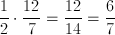 of the number is
 .
.
The least common multiple of 4 and 6 is 12.
So we know if
So then it follows that
← Didn't Know|Knew It →
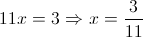
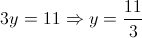
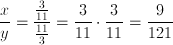
If  and
and  , what is the value of
  ?
?
If
Tap to reveal answer
← Didn't Know|Knew It →
Simplify:

Simplify:
Tap to reveal answer
Multiplying fractions is very easy. All you do is multiply all the numerators by each other and all the denominators by each other. You do not have to do anything that has to do with fancy common denominators like you do for adding and subtracting. For a question like this, it is often easiest just to cancel factors before you start your final multiplication. First, note:
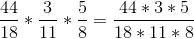
Now, cancel the  from the
  :
:

Next, the  in the numerator cancels with the
  in the denominator:

Finally, the  in the numerator cancels with the
  in the denominator:

Multiplying fractions is very easy. All you do is multiply all the numerators by each other and all the denominators by each other. You do not have to do anything that has to do with fancy common denominators like you do for adding and subtracting. For a question like this, it is often easiest just to cancel factors before you start your final multiplication. First, note:
Now, cancel the
Next, the
Finally, the
← Didn't Know|Knew It →
Simplify:

Simplify:
Tap to reveal answer
Multiplying fractions is very easy. All you do is multiply all the numerators by each other and all the denominators by each other. You do not have to do anything that has to do with fancy common denominators like you do for adding and subtracting. For a question like this, it is often easiest just to cancel factors before you start your final multiplication. First, note:
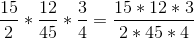
Now, cancel the  in the denominator with the
  in the numerator:

Next, the  in the numerator cancels with the
  in the denominator:

Finally, cancel the  in the denominator with the
  in the numerator:

Multiplying fractions is very easy. All you do is multiply all the numerators by each other and all the denominators by each other. You do not have to do anything that has to do with fancy common denominators like you do for adding and subtracting. For a question like this, it is often easiest just to cancel factors before you start your final multiplication. First, note:
Now, cancel the
Next, the
Finally, cancel the
← Didn't Know|Knew It →
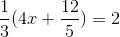
Solve for  :
:
Solve for
Tap to reveal answer
Begin by distributing the group on the left side of the equation. Remember that it is easy to multiply fractions. You only need to multiply the denominators and numerators. There are no "fancy" steps in between.
Therefore,
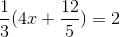
is the same as:
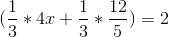
You can cancel part of the second fraction out, so you get:

Now, subtract  from both sides:

Simplifying the right side of the equation, you get...
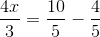

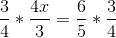
Now, multiply both sides by  :
:
Simplify:
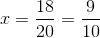
Begin by distributing the group on the left side of the equation. Remember that it is easy to multiply fractions. You only need to multiply the denominators and numerators. There are no "fancy" steps in between.
Therefore,
is the same as:
You can cancel part of the second fraction out, so you get:
Now, subtract
Simplifying the right side of the equation, you get...
Now, multiply both sides by
Simplify:
← Didn't Know|Knew It →
There are 340 students at Saint Louis High School in the graduating senior class. Of these students, 9/10 are going to college. Of those going to college, 2/5 are going to Saint Louis University. How many students are going to Saint Louis University?
There are 340 students at Saint Louis High School in the graduating senior class. Of these students, 9/10 are going to college. Of those going to college, 2/5 are going to Saint Louis University. How many students are going to Saint Louis University?
Tap to reveal answer
122 students are going to Saint Louis University. To answer this question, the following equation can be used: 340*(9/10)*(2/5) . This is then rounded down to 122 students attending Saint Louis University.
122 students are going to Saint Louis University. To answer this question, the following equation can be used: 340*(9/10)*(2/5) . This is then rounded down to 122 students attending Saint Louis University.
← Didn't Know|Knew It →
At a certain company, one quarter of the employees take the bus to work and one third drive. Of the remaining employees, half walk, one third ride a bike, and the rest take the subway.
Out of the total number of employees, what fraction ride a bike to work?
At a certain company, one quarter of the employees take the bus to work and one third drive. Of the remaining employees, half walk, one third ride a bike, and the rest take the subway.
Out of the total number of employees, what fraction ride a bike to work?
Tap to reveal answer
First we want to find the fraction of employees that neither take the bus nor drive, so we’ll add the fractions that do take the bus or drive and subtract that result from the total.
Bus:
Drive:
Remaining:
Now we need the fraction representing one third of these remaining employees (the fraction that ride a bike). Since "of " means multiply, we'll multiply.
First we want to find the fraction of employees that neither take the bus nor drive, so we’ll add the fractions that do take the bus or drive and subtract that result from the total.
Bus:
Drive:
Remaining:
Now we need the fraction representing one third of these remaining employees (the fraction that ride a bike). Since "of " means multiply, we'll multiply.
← Didn't Know|Knew It →
If of a number is , what is of that number?
If
Tap to reveal answer
The least common multiple of 4 and 6 is 12.
So we know if of the number is then
of the number is
.
So then it follows that
of the number is
.
The least common multiple of 4 and 6 is 12.
So we know if
So then it follows that
← Didn't Know|Knew It →
If and , what is the value of ?
If
Tap to reveal answer
← Didn't Know|Knew It →
Simplify:
Simplify:
Tap to reveal answer
Multiplying fractions is very easy. All you do is multiply all the numerators by each other and all the denominators by each other. You do not have to do anything that has to do with fancy common denominators like you do for adding and subtracting. For a question like this, it is often easiest just to cancel factors before you start your final multiplication. First, note:
Now, cancel the from the :
Next, the in the numerator cancels with the in the denominator:
Finally, the in the numerator cancels with the in the denominator:
Multiplying fractions is very easy. All you do is multiply all the numerators by each other and all the denominators by each other. You do not have to do anything that has to do with fancy common denominators like you do for adding and subtracting. For a question like this, it is often easiest just to cancel factors before you start your final multiplication. First, note:
Now, cancel the
Next, the
Finally, the
← Didn't Know|Knew It →
Simplify:
Simplify:
Tap to reveal answer
Multiplying fractions is very easy. All you do is multiply all the numerators by each other and all the denominators by each other. You do not have to do anything that has to do with fancy common denominators like you do for adding and subtracting. For a question like this, it is often easiest just to cancel factors before you start your final multiplication. First, note:
Now, cancel the in the denominator with the in the numerator:
Next, the in the numerator cancels with the in the denominator:
Finally, cancel the in the denominator with the in the numerator:
Multiplying fractions is very easy. All you do is multiply all the numerators by each other and all the denominators by each other. You do not have to do anything that has to do with fancy common denominators like you do for adding and subtracting. For a question like this, it is often easiest just to cancel factors before you start your final multiplication. First, note:
Now, cancel the
Next, the
Finally, cancel the
← Didn't Know|Knew It →
Solve for :
Solve for
Tap to reveal answer
Begin by distributing the group on the left side of the equation. Remember that it is easy to multiply fractions. You only need to multiply the denominators and numerators. There are no "fancy" steps in between.
Therefore,
is the same as:
You can cancel part of the second fraction out, so you get:
Now, subtract from both sides:
Simplifying the right side of the equation, you get...
Now, multiply both sides by :
Simplify:
Begin by distributing the group on the left side of the equation. Remember that it is easy to multiply fractions. You only need to multiply the denominators and numerators. There are no "fancy" steps in between.
Therefore,
is the same as:
You can cancel part of the second fraction out, so you get:
Now, subtract
Simplifying the right side of the equation, you get...
Now, multiply both sides by
Simplify:
← Didn't Know|Knew It →
There are 340 students at Saint Louis High School in the graduating senior class. Of these students, 9/10 are going to college. Of those going to college, 2/5 are going to Saint Louis University. How many students are going to Saint Louis University?
There are 340 students at Saint Louis High School in the graduating senior class. Of these students, 9/10 are going to college. Of those going to college, 2/5 are going to Saint Louis University. How many students are going to Saint Louis University?
Tap to reveal answer
122 students are going to Saint Louis University. To answer this question, the following equation can be used: 340*(9/10)*(2/5) . This is then rounded down to 122 students attending Saint Louis University.
122 students are going to Saint Louis University. To answer this question, the following equation can be used: 340*(9/10)*(2/5) . This is then rounded down to 122 students attending Saint Louis University.
← Didn't Know|Knew It →
At a certain company, one quarter of the employees take the bus to work and one third drive. Of the remaining employees, half walk, one third ride a bike, and the rest take the subway.
Out of the total number of employees, what fraction ride a bike to work?
At a certain company, one quarter of the employees take the bus to work and one third drive. Of the remaining employees, half walk, one third ride a bike, and the rest take the subway.
Out of the total number of employees, what fraction ride a bike to work?
Tap to reveal answer
First we want to find the fraction of employees that neither take the bus nor drive, so we’ll add the fractions that do take the bus or drive and subtract that result from the total.
Bus:
Drive:
Remaining:
Now we need the fraction representing one third of these remaining employees (the fraction that ride a bike). Since "of " means multiply, we'll multiply.
First we want to find the fraction of employees that neither take the bus nor drive, so we’ll add the fractions that do take the bus or drive and subtract that result from the total.
Bus:
Drive:
Remaining:
Now we need the fraction representing one third of these remaining employees (the fraction that ride a bike). Since "of " means multiply, we'll multiply.
← Didn't Know|Knew It →
If of a number is , what is of that number?
If
Tap to reveal answer
The least common multiple of 4 and 6 is 12.
So we know if of the number is then
of the number is
.
So then it follows that
of the number is
.
The least common multiple of 4 and 6 is 12.
So we know if
So then it follows that
← Didn't Know|Knew It →
If and , what is the value of ?
If
Tap to reveal answer
← Didn't Know|Knew It →
Simplify:
Simplify:
Tap to reveal answer
Multiplying fractions is very easy. All you do is multiply all the numerators by each other and all the denominators by each other. You do not have to do anything that has to do with fancy common denominators like you do for adding and subtracting. For a question like this, it is often easiest just to cancel factors before you start your final multiplication. First, note:
Now, cancel the from the :
Next, the in the numerator cancels with the in the denominator:
Finally, the in the numerator cancels with the in the denominator:
Multiplying fractions is very easy. All you do is multiply all the numerators by each other and all the denominators by each other. You do not have to do anything that has to do with fancy common denominators like you do for adding and subtracting. For a question like this, it is often easiest just to cancel factors before you start your final multiplication. First, note:
Now, cancel the
Next, the
Finally, the
← Didn't Know|Knew It →
Simplify:
Simplify:
Tap to reveal answer
Multiplying fractions is very easy. All you do is multiply all the numerators by each other and all the denominators by each other. You do not have to do anything that has to do with fancy common denominators like you do for adding and subtracting. For a question like this, it is often easiest just to cancel factors before you start your final multiplication. First, note:
Now, cancel the in the denominator with the in the numerator:
Next, the in the numerator cancels with the in the denominator:
Finally, cancel the in the denominator with the in the numerator:
Multiplying fractions is very easy. All you do is multiply all the numerators by each other and all the denominators by each other. You do not have to do anything that has to do with fancy common denominators like you do for adding and subtracting. For a question like this, it is often easiest just to cancel factors before you start your final multiplication. First, note:
Now, cancel the
Next, the
Finally, cancel the
← Didn't Know|Knew It →