How to find the common factor of square roots - GRE Quantitative Reasoning
Card 1 of 56
Which of the following is equivalent to:
 ?
?
Which of the following is equivalent to:
Tap to reveal answer
To begin with, factor out the contents of the radicals. This will make answering much easier:

They both have a common factor  . This means that you could rewrite your equation like this:

This is the same as:

These have a common  . Therefore, factor that out:

To begin with, factor out the contents of the radicals. This will make answering much easier:
They both have a common factor
This is the same as:
These have a common
← Didn't Know|Knew It →
Simplify:

Simplify:
Tap to reveal answer
These three roots all have a  in common; therefore, you can rewrite them:

Now, this could be rewritten:

Now, note that 
Therefore, you can simplify again:

Now, that looks messy! Still, if you look carefully, you see that all of your factors have  ; therefore, factor that out:

This is the same as:

These three roots all have a
Now, this could be rewritten:
Now, note that
Therefore, you can simplify again:
Now, that looks messy! Still, if you look carefully, you see that all of your factors have
This is the same as:
← Didn't Know|Knew It →
Simplify the following:

Simplify the following:
Tap to reveal answer
Begin by factoring each of the roots to see what can be taken out of each:

These can be rewritten as:

Notice that each of these has a common factor of  . Thus, we know that we can rewrite it as:

Begin by factoring each of the roots to see what can be taken out of each:
These can be rewritten as:
Notice that each of these has a common factor of
← Didn't Know|Knew It →
Simplify the following:

Simplify the following:
Tap to reveal answer
Clearly, all three of these roots have a common factor  inside of their radicals. We can start here with our simplification. Therefore, rewrite the radicals like this:

We can simplify this a bit further:

From this, we can factor out the common  :
:

Clearly, all three of these roots have a common factor
We can simplify this a bit further:
From this, we can factor out the common
← Didn't Know|Knew It →

Tap to reveal answer
To attempt this problem, attempt to simplify the roots of the numerator and denominator:
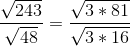
Notice how both numerator and denominator have a perfect square:
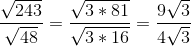
The  term can be eliminated from the numerator and denominator, leaving

To attempt this problem, attempt to simplify the roots of the numerator and denominator:
Notice how both numerator and denominator have a perfect square:
The
← Didn't Know|Knew It →

Tap to reveal answer
For this problem, begin by simplifying the roots. As it stands, numerator and denominator have a common factor of  in the radical:
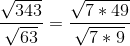
And as it stands, this  is multiplied by a perfect square in the numerator and denominator:
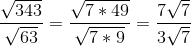
The  term can be eliminated from the top and bottom, leaving

For this problem, begin by simplifying the roots. As it stands, numerator and denominator have a common factor of
And as it stands, this
The
← Didn't Know|Knew It →

Tap to reveal answer
To solve this problem, try simplifying the roots by factoring terms; it may be noticeable from observation that both numerator and denominator have a factor of  in the radical:
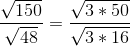
We can see that the denominator has a perfect square; now try factoring the  in the numerator:

We can see that there's a perfect square in the numerator:

Since there is a  in the radical in both the numerator and denominator, we can eliminate it, leaving

To solve this problem, try simplifying the roots by factoring terms; it may be noticeable from observation that both numerator and denominator have a factor of
We can see that the denominator has a perfect square; now try factoring the
We can see that there's a perfect square in the numerator:
Since there is a
← Didn't Know|Knew It →
Which of the following is equivalent to:
?
Which of the following is equivalent to:
Tap to reveal answer
To begin with, factor out the contents of the radicals. This will make answering much easier:
They both have a common factor . This means that you could rewrite your equation like this:
This is the same as:
These have a common . Therefore, factor that out:
To begin with, factor out the contents of the radicals. This will make answering much easier:
They both have a common factor
This is the same as:
These have a common
← Didn't Know|Knew It →
Simplify:
Simplify:
Tap to reveal answer
These three roots all have a in common; therefore, you can rewrite them:
Now, this could be rewritten:
Now, note that
Therefore, you can simplify again:
Now, that looks messy! Still, if you look carefully, you see that all of your factors have ; therefore, factor that out:
This is the same as:
These three roots all have a
Now, this could be rewritten:
Now, note that
Therefore, you can simplify again:
Now, that looks messy! Still, if you look carefully, you see that all of your factors have
This is the same as:
← Didn't Know|Knew It →
Simplify the following:
Simplify the following:
Tap to reveal answer
Begin by factoring each of the roots to see what can be taken out of each:
These can be rewritten as:
Notice that each of these has a common factor of . Thus, we know that we can rewrite it as:
Begin by factoring each of the roots to see what can be taken out of each:
These can be rewritten as:
Notice that each of these has a common factor of
← Didn't Know|Knew It →
Simplify the following:
Simplify the following:
Tap to reveal answer
Clearly, all three of these roots have a common factor inside of their radicals. We can start here with our simplification. Therefore, rewrite the radicals like this:
We can simplify this a bit further:
From this, we can factor out the common :
Clearly, all three of these roots have a common factor
We can simplify this a bit further:
From this, we can factor out the common
← Didn't Know|Knew It →
Tap to reveal answer
To attempt this problem, attempt to simplify the roots of the numerator and denominator:
Notice how both numerator and denominator have a perfect square:
The term can be eliminated from the numerator and denominator, leaving
To attempt this problem, attempt to simplify the roots of the numerator and denominator:
Notice how both numerator and denominator have a perfect square:
The
← Didn't Know|Knew It →
Tap to reveal answer
For this problem, begin by simplifying the roots. As it stands, numerator and denominator have a common factor of in the radical:
And as it stands, this is multiplied by a perfect square in the numerator and denominator:
The term can be eliminated from the top and bottom, leaving
For this problem, begin by simplifying the roots. As it stands, numerator and denominator have a common factor of
And as it stands, this
The
← Didn't Know|Knew It →
Tap to reveal answer
To solve this problem, try simplifying the roots by factoring terms; it may be noticeable from observation that both numerator and denominator have a factor of in the radical:
We can see that the denominator has a perfect square; now try factoring the in the numerator:
We can see that there's a perfect square in the numerator:
Since there is a in the radical in both the numerator and denominator, we can eliminate it, leaving
To solve this problem, try simplifying the roots by factoring terms; it may be noticeable from observation that both numerator and denominator have a factor of
We can see that the denominator has a perfect square; now try factoring the
We can see that there's a perfect square in the numerator:
Since there is a
← Didn't Know|Knew It →
Which of the following is equivalent to:
?
Which of the following is equivalent to:
Tap to reveal answer
To begin with, factor out the contents of the radicals. This will make answering much easier:
They both have a common factor . This means that you could rewrite your equation like this:
This is the same as:
These have a common . Therefore, factor that out:
To begin with, factor out the contents of the radicals. This will make answering much easier:
They both have a common factor
This is the same as:
These have a common
← Didn't Know|Knew It →
Simplify:
Simplify:
Tap to reveal answer
These three roots all have a in common; therefore, you can rewrite them:
Now, this could be rewritten:
Now, note that
Therefore, you can simplify again:
Now, that looks messy! Still, if you look carefully, you see that all of your factors have ; therefore, factor that out:
This is the same as:
These three roots all have a
Now, this could be rewritten:
Now, note that
Therefore, you can simplify again:
Now, that looks messy! Still, if you look carefully, you see that all of your factors have
This is the same as:
← Didn't Know|Knew It →
Simplify the following:
Simplify the following:
Tap to reveal answer
Begin by factoring each of the roots to see what can be taken out of each:
These can be rewritten as:
Notice that each of these has a common factor of . Thus, we know that we can rewrite it as:
Begin by factoring each of the roots to see what can be taken out of each:
These can be rewritten as:
Notice that each of these has a common factor of
← Didn't Know|Knew It →
Simplify the following:
Simplify the following:
Tap to reveal answer
Clearly, all three of these roots have a common factor inside of their radicals. We can start here with our simplification. Therefore, rewrite the radicals like this:
We can simplify this a bit further:
From this, we can factor out the common :
Clearly, all three of these roots have a common factor
We can simplify this a bit further:
From this, we can factor out the common
← Didn't Know|Knew It →
Tap to reveal answer
To attempt this problem, attempt to simplify the roots of the numerator and denominator:
Notice how both numerator and denominator have a perfect square:
The term can be eliminated from the numerator and denominator, leaving
To attempt this problem, attempt to simplify the roots of the numerator and denominator:
Notice how both numerator and denominator have a perfect square:
The
← Didn't Know|Knew It →
Tap to reveal answer
For this problem, begin by simplifying the roots. As it stands, numerator and denominator have a common factor of in the radical:
And as it stands, this is multiplied by a perfect square in the numerator and denominator:
The term can be eliminated from the top and bottom, leaving
For this problem, begin by simplifying the roots. As it stands, numerator and denominator have a common factor of
And as it stands, this
The
← Didn't Know|Knew It →