Perimeter and Sides of Quadrilaterals - GED Math
Card 1 of 215
Use the following rectangle to answer the question:

Find the perimeter.
Use the following rectangle to answer the question:
Find the perimeter.
Tap to reveal answer
To find the perimeter of a rectangle, we will use the following formula:

where l is the length and w is the width of the rectangle.
Now, given the rectangle
we can see the length is 9cm and the width is 7cm. So, we can substitute. We get


To find the perimeter of a rectangle, we will use the following formula:
where l is the length and w is the width of the rectangle.
Now, given the rectangle
we can see the length is 9cm and the width is 7cm. So, we can substitute. We get
← Didn't Know|Knew It →
What is the perimeter of a square if the side length is  ?
?
What is the perimeter of a square if the side length is
Tap to reveal answer
A square has four congruent sides.
Multiply the quantity by four.

The answer is: 
A square has four congruent sides.
Multiply the quantity by four.
The answer is:
← Didn't Know|Knew It →
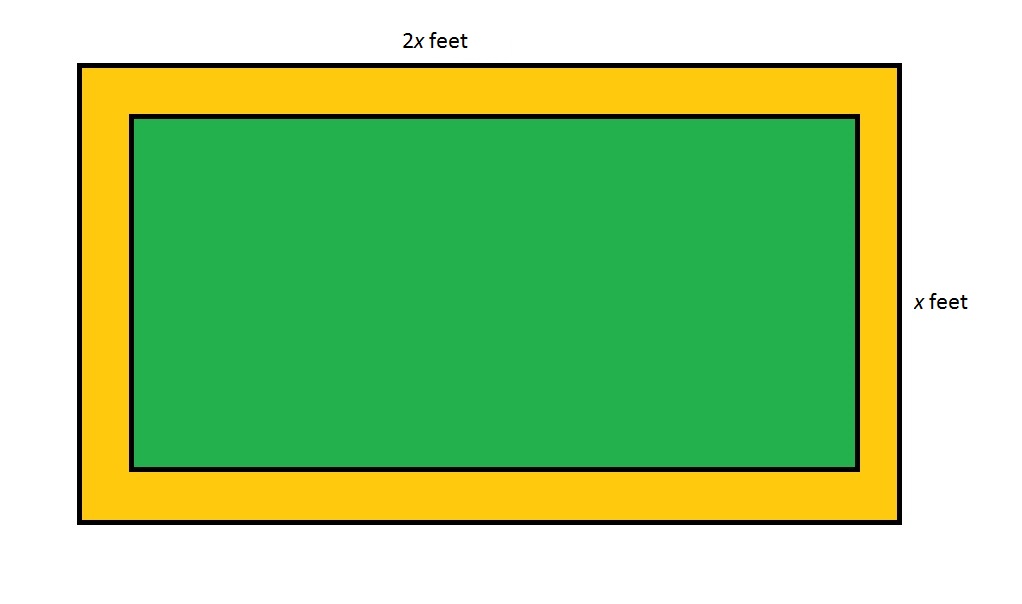
Note: Figure NOT drawn to scale
Refer to the above figure, which shows a rectangular garden (in green) surrounded by a dirt path (in brown). The dirt path is six feet wide throughout. Which of the following polynomials gives the perimeter of the garden, in feet?
Note: Figure NOT drawn to scale
Refer to the above figure, which shows a rectangular garden (in green) surrounded by a dirt path (in brown). The dirt path is six feet wide throughout. Which of the following polynomials gives the perimeter of the garden, in feet?
Tap to reveal answer
The length of the garden, in feet, is  feet less than that of the entire lot, or
 .
.
The width of the garden, in feet, is  less than that of the entire lot, or
 .
.
The perimeter, in feet, is twice the sum of the two:


The length of the garden, in feet, is
The width of the garden, in feet, is
The perimeter, in feet, is twice the sum of the two:
← Didn't Know|Knew It →
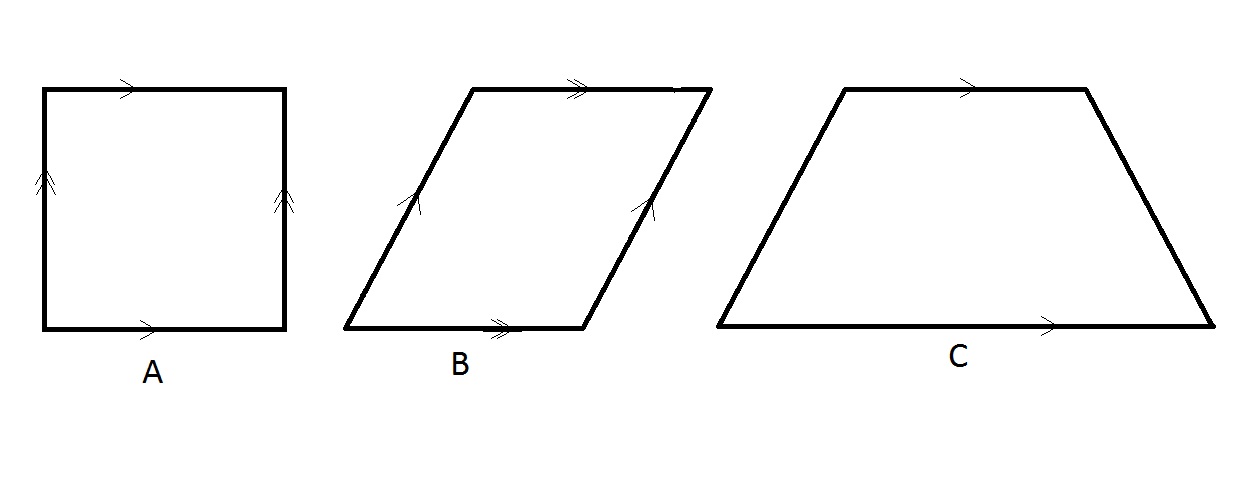
Refer to the above three figures. All parallel sides are so indicated.
Which of the figures can be called a quadrilateral?
Refer to the above three figures. All parallel sides are so indicated.
Which of the figures can be called a quadrilateral?
Tap to reveal answer
By definition, any polygon with four sides is called a quadrilateral. All three figures fit this description.
By definition, any polygon with four sides is called a quadrilateral. All three figures fit this description.
← Didn't Know|Knew It →
Refer to the above three figures. All parallel sides are so indicated.
Which of the figures can be called a parallelogram?
Refer to the above three figures. All parallel sides are so indicated.
Which of the figures can be called a parallelogram?
Tap to reveal answer
A parallelogram, by definition, has two pairs of parallel sides. Figures A and B fit that criterion, but Figure C does not.
A parallelogram, by definition, has two pairs of parallel sides. Figures A and B fit that criterion, but Figure C does not.
← Didn't Know|Knew It →
The length of each side of a square is increased by 12%. By what percent has its perimeter increased?
The length of each side of a square is increased by 12%. By what percent has its perimeter increased?
Tap to reveal answer
Let  be the original sidelength of the square. Increasing this by 12% is the same as adding 0.12 times that sidelength to the original sidelength. The new sidelength is therefore
 .
.
The perimeter of a square is four times its sidelength. Its original perimeter was  ; after the increase, it is
  . The percent of increase is therefore
 .
.
Let
The perimeter of a square is four times its sidelength. Its original perimeter was
← Didn't Know|Knew It →
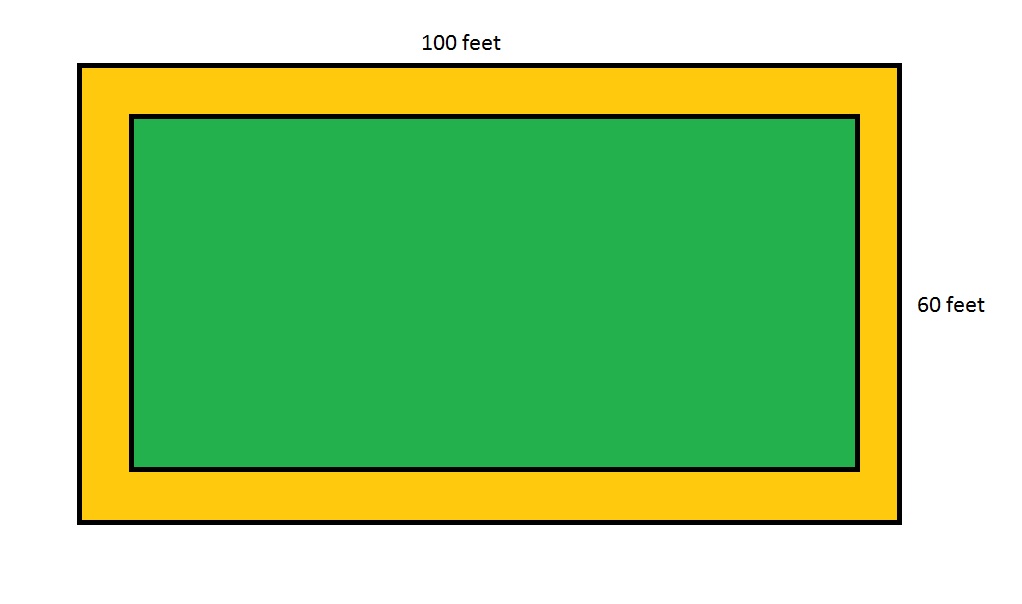
Note: Figure NOT drawn to scale
Refer to the above figure, which shows a rectangular garden (in green) surrounded by a dirt path (in brown) six feet wide throughout. What is the perimeter of the garden?
Note: Figure NOT drawn to scale
Refer to the above figure, which shows a rectangular garden (in green) surrounded by a dirt path (in brown) six feet wide throughout. What is the perimeter of the garden?
Tap to reveal answer
The inner rectangle, which represents the garden, has length and width  feet and
  feet, respectively, so its perimeter is
 feet.
feet.
The inner rectangle, which represents the garden, has length and width
← Didn't Know|Knew It →
Note: Figure NOT drawn to scale.
Refer to the above figure, which shows a rectangular garden (in green) surrounded by a dirt path (in brown). The dirt path is  feet wide throughout. Which of the following polynomials gives the perimeter of the garden?
Note: Figure NOT drawn to scale.
Refer to the above figure, which shows a rectangular garden (in green) surrounded by a dirt path (in brown). The dirt path is
Tap to reveal answer
The length of the garden is  than that of the entire lot, or
 .
.
The width of the garden is  than that of the entire lot, or
 .
.
The perimeter is twice the sum of the two:


The length of the garden is
The width of the garden is
The perimeter is twice the sum of the two:
← Didn't Know|Knew It →
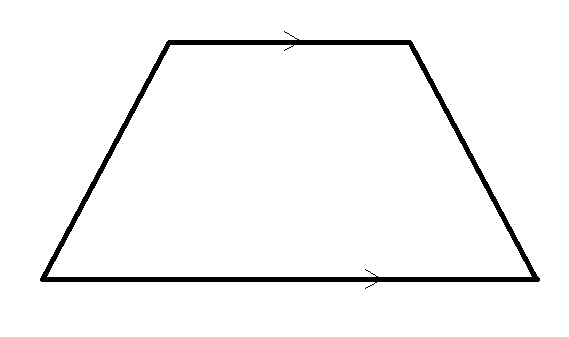
Refer to the above diagram. Parallel sides are so indicated.
Identify the above polygon.
Refer to the above diagram. Parallel sides are so indicated.
Identify the above polygon.
Tap to reveal answer
A four-sided figure, or quadrilateral, with one pair of parallel sides and its other sides nonparallel is called a trapezoid.
A four-sided figure, or quadrilateral, with one pair of parallel sides and its other sides nonparallel is called a trapezoid.
← Didn't Know|Knew It →
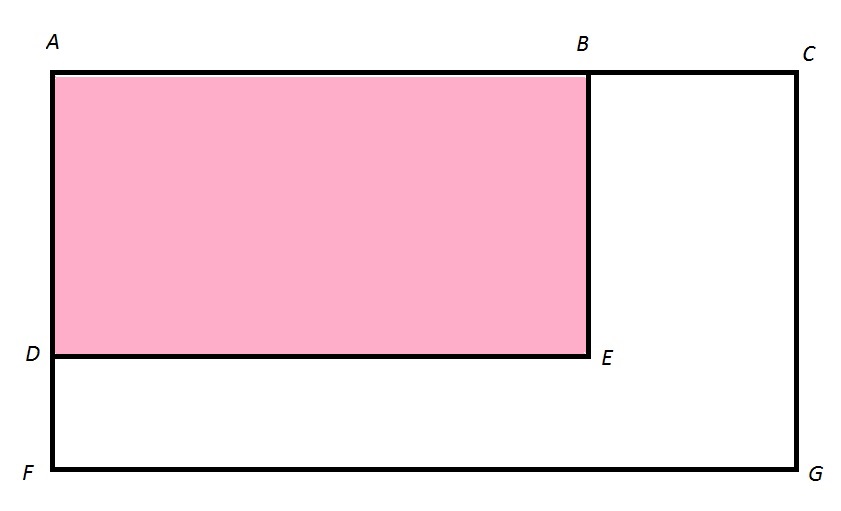
Note: Figure NOT drawn to scale

Give the ratio of the perimeter of Rectangle  to that of Rectangle
  .
.
Note: Figure NOT drawn to scale
Give the ratio of the perimeter of Rectangle
Tap to reveal answer
The perimeter of Rectangle  is
is
 .
.
Opposite sides of a rectangle are congruent, so

and
 .
.
The perimeter of Rectangle  is
is
 .
.
Opposite sides of a rectangle are congruent, so
 ,
,
 ,
,
and
 .
.
The ratio of the perimeters is
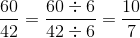 - that is, 10 to 7.
The perimeter of Rectangle
Opposite sides of a rectangle are congruent, so
and
The perimeter of Rectangle
Opposite sides of a rectangle are congruent, so
and
The ratio of the perimeters is
← Didn't Know|Knew It →
Given Square  , the distance from
  to
to  is one mile. Which of the following gives the perimeter of the square, to the nearest foot?
Given Square
Tap to reveal answer
The segment  is a diagonal of the square. It is also the hypotenuse of a right triangle whose legs both measure the same length, which we will call
  ; this is also the length of one side of the square.
The right triangle formed is an isosceles triangle - and, subsequently, a  triangle - and therefore,

 is one mile, or 5,280 feet, long, so we substitute
  and solve for
  :
:


The perimeter, in feet, is four times this, or
 feet.
feet.
The segment
The right triangle formed is an isosceles triangle - and, subsequently, a
The perimeter, in feet, is four times this, or
← Didn't Know|Knew It →
Which of the following can be the sidelengths of a rhombus?
Which of the following can be the sidelengths of a rhombus?
Tap to reveal answer
The four sides of a rhombus have equal length, so we can eliminate three choices by demonstrating that at least two sidelengths are not equal.
 :
:
1,000 meters is, by definition, equal to 1 kilometer, not 0.1 kilometers. Therefore,

and this choice is incorrect.
 :
:
1 mile is, by definition, equal to 5,280 feet, not 1,760 feet. Therefore,

and this choice is incorrect.

By definition, 1 decimeter, not 0.1 decimeter, is equal to 1 meter. Therefore,

and this choice is incorrect.
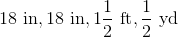 :
:
 yard is equal to
  inches and, also,
  feet. Therefore,

All four sides have equal length so this is the rhombus. This is the correct choice.
The four sides of a rhombus have equal length, so we can eliminate three choices by demonstrating that at least two sidelengths are not equal.
1,000 meters is, by definition, equal to 1 kilometer, not 0.1 kilometers. Therefore,
and this choice is incorrect.
1 mile is, by definition, equal to 5,280 feet, not 1,760 feet. Therefore,
and this choice is incorrect.
By definition, 1 decimeter, not 0.1 decimeter, is equal to 1 meter. Therefore,
and this choice is incorrect.
All four sides have equal length so this is the rhombus. This is the correct choice.
← Didn't Know|Knew It →
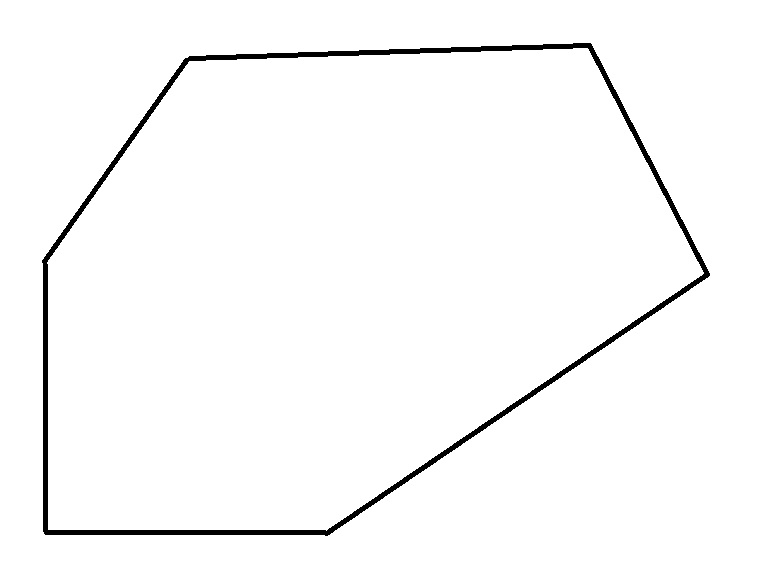
Identify the above polygon.
Identify the above polygon.
Tap to reveal answer
A polygon with six sides is called a hexagon.
A polygon with six sides is called a hexagon.
← Didn't Know|Knew It →
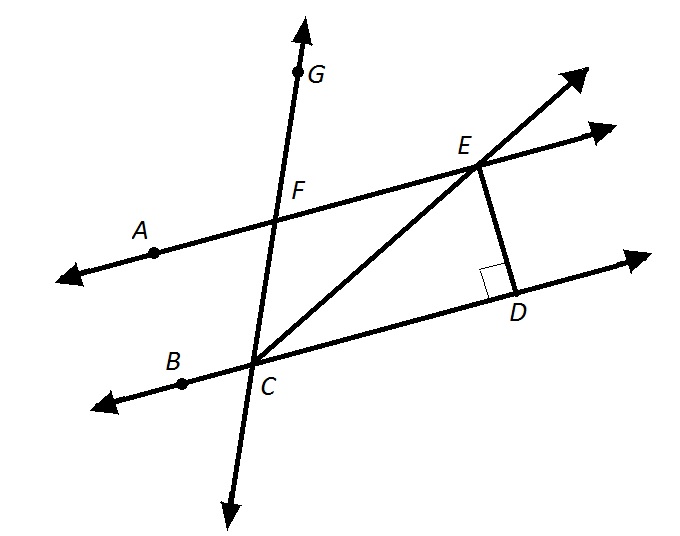
Refer to the above figure. You are given that  and that
  is acute.
Which of the following words accurately describes Polygon  ?
?
Refer to the above figure. You are given that
Which of the following words accurately describes Polygon
Tap to reveal answer
Polygon  has four sides and is therefore a quadrilateral.
  , so
, so  . Also, since
  is acute and
  is right,
  , so
, so  .
.
The quadrilateral has one pair of parallel sides, and the other two sides are not parallel. Therefore, it is a trapezoid.
Polygon
The quadrilateral has one pair of parallel sides, and the other two sides are not parallel. Therefore, it is a trapezoid.
← Didn't Know|Knew It →
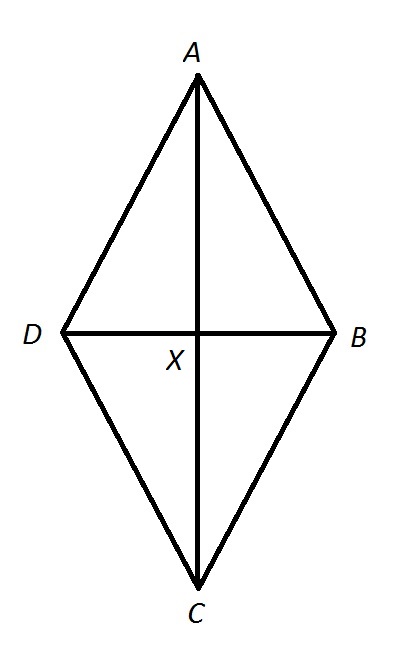
Note: Figure NOT drawn to scale.
Quadrilateral  is a rhombus. Calculate its perimeter if:


Note: Figure NOT drawn to scale.
Quadrilateral
Tap to reveal answer
The four sides of a rhombus are congruent. Also, the diagonals of a rhombus are perpendicular bisectors to each other, so the four triangles they form are right triangles. Therefore, the Pythagorean theorem can be used to determine the common sidelength of Quadrilateral  .
.
We focus on  . The diagonals of a rhombus, as is the case with any parallelogram, are each the other's bisector, so


By the Pythagorean Theorem,

13 is the common length of the four sides of Quadrilateral  , so its perimeter is
  .
.
The four sides of a rhombus are congruent. Also, the diagonals of a rhombus are perpendicular bisectors to each other, so the four triangles they form are right triangles. Therefore, the Pythagorean theorem can be used to determine the common sidelength of Quadrilateral
We focus on
By the Pythagorean Theorem,
13 is the common length of the four sides of Quadrilateral
← Didn't Know|Knew It →
The perimeter of a square is 24cm. Find the length of one side of the square.
The perimeter of a square is 24cm. Find the length of one side of the square.
Tap to reveal answer
The formula to find the perimeter of a square is

where a is the length of any side of the square. Because a square has 4 equal sides, we can use any side in the formula. To find the length of one side of the square, we will solve for a.
Now, we know the perimeter of the square is 24cm. So, we will substitute and solve for a. We get


Therefore, the length of one side of the square is 6cm.
The formula to find the perimeter of a square is
where a is the length of any side of the square. Because a square has 4 equal sides, we can use any side in the formula. To find the length of one side of the square, we will solve for a.
Now, we know the perimeter of the square is 24cm. So, we will substitute and solve for a. We get
Therefore, the length of one side of the square is 6cm.
← Didn't Know|Knew It →
Find the perimeter of a rectangle with a width of 8in and a length that is two times the width.
Find the perimeter of a rectangle with a width of 8in and a length that is two times the width.
Tap to reveal answer
To find the perimeter of a rectangle, we will use the following formula:

Where l is the length and w is the width of the rectangle.
Now, we know the width of the rectangle is 8in. We also know the length is two times the width. Therefore, the length is 16in. So, we can substitute. We get


To find the perimeter of a rectangle, we will use the following formula:
Where l is the length and w is the width of the rectangle.
Now, we know the width of the rectangle is 8in. We also know the length is two times the width. Therefore, the length is 16in. So, we can substitute. We get
← Didn't Know|Knew It →
Find the perimeter of a square with a length of 8cm.
Find the perimeter of a square with a length of 8cm.
Tap to reveal answer
To find the perimeter of a square, we will use the following formula:

where a is the length of one side of the square. Because a square has 4 equal sides, we can use any side in the formula.
Now, we know the length of the square is 8cm. So, we can substitute. We get


To find the perimeter of a square, we will use the following formula:
where a is the length of one side of the square. Because a square has 4 equal sides, we can use any side in the formula.
Now, we know the length of the square is 8cm. So, we can substitute. We get
← Didn't Know|Knew It →
The perimeter of a square is 72in. Find the length of one side.
The perimeter of a square is 72in. Find the length of one side.
Tap to reveal answer
To answer this, we will look at the formula for perimeter of a square. We get

where a is the length of one side of the square. Because a square has 4 equal sides, we can use any side in the formula. To find the length of one side, we will solve for a. Now, we know the perimeter of the square is 72\$\text{in}$. So, we will substitute and solve for a. We get


Therefore, the length of one side of the square is 18in.
To answer this, we will look at the formula for perimeter of a square. We get
where a is the length of one side of the square. Because a square has 4 equal sides, we can use any side in the formula. To find the length of one side, we will solve for a. Now, we know the perimeter of the square is 72\$\text{in}$. So, we will substitute and solve for a. We get
Therefore, the length of one side of the square is 18in.
← Didn't Know|Knew It →
The area of a square is  . Find the perimeter.
The area of a square is
Tap to reveal answer
A square has 4 equal sides. To find the perimeter of the square, we first have to find the length of one side of the square.
Now, we know the area of the square. The formula for area of a square is

where b is the length of one side of the square. To find the length of one side, we will solve for b. Now, we know the area is  . So, we will substitute and solve for b.


Therefore, the length of one side of the square is 5cm.
Now, to find the perimeter of a square, we will use the following formula:

where b is the length of one side of the square. Now, we know the length of one side of the square is 5cm. So, we can substitute. We get


Therefore, the perimeter of the square is 20cm.
A square has 4 equal sides. To find the perimeter of the square, we first have to find the length of one side of the square.
Now, we know the area of the square. The formula for area of a square is
where b is the length of one side of the square. To find the length of one side, we will solve for b. Now, we know the area is
Therefore, the length of one side of the square is 5cm.
Now, to find the perimeter of a square, we will use the following formula:
where b is the length of one side of the square. Now, we know the length of one side of the square is 5cm. So, we can substitute. We get
Therefore, the perimeter of the square is 20cm.
← Didn't Know|Knew It →