Analyzing the Content of 2D Visual Art - CLEP Humanities
Card 1 of 64
Markers of the artistic style of the Dutch painter Rembrandt van Rijn (1606-1669) include all of the following EXCEPT .
Markers of the artistic style of the Dutch painter Rembrandt van Rijn (1606-1669) include all of the following EXCEPT .
Tap to reveal answer
Rembrandt van Rijn was one of the great masters of the Dutch Golden Age of painting during the seventeenth century. His style was notable for featuring bold colors and dramatic lighting in "everyday scenes" of commonfolk, as well as portraits and scenes out of the Bible. Almost all of Rembrandt's paintings featured people, and he almost never drew landscapes.
Rembrandt van Rijn was one of the great masters of the Dutch Golden Age of painting during the seventeenth century. His style was notable for featuring bold colors and dramatic lighting in "everyday scenes" of commonfolk, as well as portraits and scenes out of the Bible. Almost all of Rembrandt's paintings featured people, and he almost never drew landscapes.
← Didn't Know|Knew It →
The painter Gilbert Stuart was most well-known for his .
The painter Gilbert Stuart was most well-known for his .
Tap to reveal answer
Gilbert Stuart (1755-1828) was one of the very first well known American painters. During the Revolutionary Era, Stuart became essentially the "court painter" of the early American government because of his portraits of leading figures. Stuart's work includes the most famous portraits of George Washington, Thomas Jefferson, James Madison, and many other of America's Founding Fathers.
Gilbert Stuart (1755-1828) was one of the very first well known American painters. During the Revolutionary Era, Stuart became essentially the "court painter" of the early American government because of his portraits of leading figures. Stuart's work includes the most famous portraits of George Washington, Thomas Jefferson, James Madison, and many other of America's Founding Fathers.
← Didn't Know|Knew It →
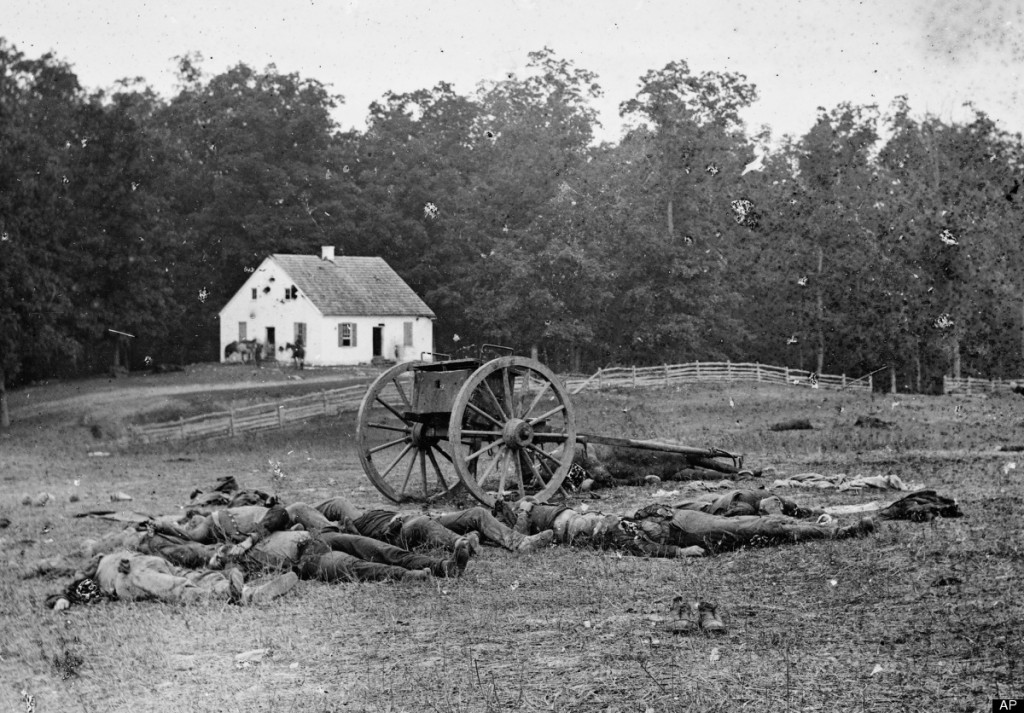
The above photo is taken from what conflict?
The above photo is taken from what conflict?
Tap to reveal answer
During the American Civil War, the medium of photography was still relatively new, having only been invented a few decades before the outbreak of war in 1861. The photographer Matthew Brady was the pioneering figure in developing photography throughout the war. By capturing war in the realistic medium of photography, Brady both helped people see war in a different manner and appreciate the possibilities of photography.
During the American Civil War, the medium of photography was still relatively new, having only been invented a few decades before the outbreak of war in 1861. The photographer Matthew Brady was the pioneering figure in developing photography throughout the war. By capturing war in the realistic medium of photography, Brady both helped people see war in a different manner and appreciate the possibilities of photography.
← Didn't Know|Knew It →
Who was the French artist who spent the last years of his life living in Polynesia and painting its inhabitants?
Who was the French artist who spent the last years of his life living in Polynesia and painting its inhabitants?
Tap to reveal answer
Paul Gauguin was an important Post-Impressionist whose early work experimented with color and symbolism, but Gauguin's work took on a new form after visiting Tahiti in the 1880s. Gauguin began capturing the culture of Polynesia and started using symbols of Polynesia and images of Polynesians themselves in his art. In the 1890s, he permanently moved to the island of Punaauia in French Polynesia, and painted more and more symbolic paintings that played with color and structure.
Paul Gauguin was an important Post-Impressionist whose early work experimented with color and symbolism, but Gauguin's work took on a new form after visiting Tahiti in the 1880s. Gauguin began capturing the culture of Polynesia and started using symbols of Polynesia and images of Polynesians themselves in his art. In the 1890s, he permanently moved to the island of Punaauia in French Polynesia, and painted more and more symbolic paintings that played with color and structure.
← Didn't Know|Knew It →
In Medieval art, a man dying with arrows in his sides depicts .
In Medieval art, a man dying with arrows in his sides depicts .
Tap to reveal answer
Saint Sebastian was a martyr of the early Christian church who died in the Diocletian persecutions of the third century CE. He became a popular figure in medieval art, usually shown as being tied to a tree with arrows in his sides. This image was to convey what an appropriate Christian martyr should look like.
Saint Sebastian was a martyr of the early Christian church who died in the Diocletian persecutions of the third century CE. He became a popular figure in medieval art, usually shown as being tied to a tree with arrows in his sides. This image was to convey what an appropriate Christian martyr should look like.
← Didn't Know|Knew It →

The above painting depicts what biblical scene that was a common feature of medieval art?
The above painting depicts what biblical scene that was a common feature of medieval art?
Tap to reveal answer
This painting is by the Medieval artist Fra Angelico and known as the Cortona Annunciation. Painted from 1433-1434, it depicts the archangel Gabriel telling the Virgin Mary that she is pregnant with the Christ child. The Annunciation, as a key moment in the Bible, was a very popular theme in Medieval European art. This particular painting was part of an altarpiece in a church in Cortona, Italy, and painted by a priest.
This painting is by the Medieval artist Fra Angelico and known as the Cortona Annunciation. Painted from 1433-1434, it depicts the archangel Gabriel telling the Virgin Mary that she is pregnant with the Christ child. The Annunciation, as a key moment in the Bible, was a very popular theme in Medieval European art. This particular painting was part of an altarpiece in a church in Cortona, Italy, and painted by a priest.
← Didn't Know|Knew It →
The Virgin Mary is usually depicted wearing what color garment in medieval art?
The Virgin Mary is usually depicted wearing what color garment in medieval art?
Tap to reveal answer
As one of the most revered figures in Christianity, the Virgin Mary was a constant theme of medieval religious art. In order to function as a highly visible symbol in a mostly illiterate culture, many different symbols were used to distinguish Mary. Most important was her robe, which was typically a bright blue color, which denoted expensive silks.
As one of the most revered figures in Christianity, the Virgin Mary was a constant theme of medieval religious art. In order to function as a highly visible symbol in a mostly illiterate culture, many different symbols were used to distinguish Mary. Most important was her robe, which was typically a bright blue color, which denoted expensive silks.
← Didn't Know|Knew It →
In Christian hagiography, which figure is depicted as having a stone in his head?
In Christian hagiography, which figure is depicted as having a stone in his head?
Tap to reveal answer
Saint Stephen is traditionally considered the first martyr of Christianity, and his death by stoning is told in the biblical book of Acts. Due to the circumstances of his death, he was usually depicted with a stone implanted in his skull. Thanks to his position as "the first martyr," Saint Stephen very commonly depicted in Medieval art.
Saint Stephen is traditionally considered the first martyr of Christianity, and his death by stoning is told in the biblical book of Acts. Due to the circumstances of his death, he was usually depicted with a stone implanted in his skull. Thanks to his position as "the first martyr," Saint Stephen very commonly depicted in Medieval art.
← Didn't Know|Knew It →
Which of the following artistic styles was most likely to feature Christian iconography?
Which of the following artistic styles was most likely to feature Christian iconography?
Tap to reveal answer
While Christian iconography and themes feature as the most common subjects in Western art, certain periods were more heavily indebted to Christian tradition. During the period of Gothic art, which was roughly synonymous with the twelfth, thirteenth, and fourteenth centuries in Europe, Christian themes were almost the only ones used. Even in royal portraits, such as the Wilton Diptych from England, featured saints and angels next to the King.
While Christian iconography and themes feature as the most common subjects in Western art, certain periods were more heavily indebted to Christian tradition. During the period of Gothic art, which was roughly synonymous with the twelfth, thirteenth, and fourteenth centuries in Europe, Christian themes were almost the only ones used. Even in royal portraits, such as the Wilton Diptych from England, featured saints and angels next to the King.
← Didn't Know|Knew It →
The above painting depicts what biblical scene that was a common feature of medieval art?
The above painting depicts what biblical scene that was a common feature of medieval art?
Tap to reveal answer
This painting is by the Medieval artist Fra Angelico and known as the Cortona Annunciation. Painted from 1433-1434, it depicts the archangel Gabriel telling the Virgin Mary that she is pregnant with the Christ child. The Annunciation, as a key moment in the Bible, was a very popular theme in Medieval European art. This particular painting was part of an altarpiece in a church in Cortona, Italy, and painted by a priest.
This painting is by the Medieval artist Fra Angelico and known as the Cortona Annunciation. Painted from 1433-1434, it depicts the archangel Gabriel telling the Virgin Mary that she is pregnant with the Christ child. The Annunciation, as a key moment in the Bible, was a very popular theme in Medieval European art. This particular painting was part of an altarpiece in a church in Cortona, Italy, and painted by a priest.
← Didn't Know|Knew It →
In Medieval art, a man dying with arrows in his sides depicts .
In Medieval art, a man dying with arrows in his sides depicts .
Tap to reveal answer
Saint Sebastian was a martyr of the early Christian church who died in the Diocletian persecutions of the third century CE. He became a popular figure in medieval art, usually shown as being tied to a tree with arrows in his sides. This image was to convey what an appropriate Christian martyr should look like.
Saint Sebastian was a martyr of the early Christian church who died in the Diocletian persecutions of the third century CE. He became a popular figure in medieval art, usually shown as being tied to a tree with arrows in his sides. This image was to convey what an appropriate Christian martyr should look like.
← Didn't Know|Knew It →
The Virgin Mary is usually depicted wearing what color garment in medieval art?
The Virgin Mary is usually depicted wearing what color garment in medieval art?
Tap to reveal answer
As one of the most revered figures in Christianity, the Virgin Mary was a constant theme of medieval religious art. In order to function as a highly visible symbol in a mostly illiterate culture, many different symbols were used to distinguish Mary. Most important was her robe, which was typically a bright blue color, which denoted expensive silks.
As one of the most revered figures in Christianity, the Virgin Mary was a constant theme of medieval religious art. In order to function as a highly visible symbol in a mostly illiterate culture, many different symbols were used to distinguish Mary. Most important was her robe, which was typically a bright blue color, which denoted expensive silks.
← Didn't Know|Knew It →
In Christian hagiography, which figure is depicted as having a stone in his head?
In Christian hagiography, which figure is depicted as having a stone in his head?
Tap to reveal answer
Saint Stephen is traditionally considered the first martyr of Christianity, and his death by stoning is told in the biblical book of Acts. Due to the circumstances of his death, he was usually depicted with a stone implanted in his skull. Thanks to his position as "the first martyr," Saint Stephen very commonly depicted in Medieval art.
Saint Stephen is traditionally considered the first martyr of Christianity, and his death by stoning is told in the biblical book of Acts. Due to the circumstances of his death, he was usually depicted with a stone implanted in his skull. Thanks to his position as "the first martyr," Saint Stephen very commonly depicted in Medieval art.
← Didn't Know|Knew It →
Which of the following artistic styles was most likely to feature Christian iconography?
Which of the following artistic styles was most likely to feature Christian iconography?
Tap to reveal answer
While Christian iconography and themes feature as the most common subjects in Western art, certain periods were more heavily indebted to Christian tradition. During the period of Gothic art, which was roughly synonymous with the twelfth, thirteenth, and fourteenth centuries in Europe, Christian themes were almost the only ones used. Even in royal portraits, such as the Wilton Diptych from England, featured saints and angels next to the King.
While Christian iconography and themes feature as the most common subjects in Western art, certain periods were more heavily indebted to Christian tradition. During the period of Gothic art, which was roughly synonymous with the twelfth, thirteenth, and fourteenth centuries in Europe, Christian themes were almost the only ones used. Even in royal portraits, such as the Wilton Diptych from England, featured saints and angels next to the King.
← Didn't Know|Knew It →
What figure from Greek mythology is prominently featured in Sandro Botticelli's most famous work?
What figure from Greek mythology is prominently featured in Sandro Botticelli's most famous work?
Tap to reveal answer
Sandro Botticelli's The Birth of Venus is one of the signature paintings of Early Renaissance art from Italy, and as such deals with many themes prominent in the era. Botticelli chose the ancient goddess of love, appearing nude and fully formed from the ocean on a clam shell, instead of a Christian theme. Additionally, the picture's symbolism and color focus more on Platonic ideals than the Christian symbolism that was so prevalent in late Medieval art.
Sandro Botticelli's The Birth of Venus is one of the signature paintings of Early Renaissance art from Italy, and as such deals with many themes prominent in the era. Botticelli chose the ancient goddess of love, appearing nude and fully formed from the ocean on a clam shell, instead of a Christian theme. Additionally, the picture's symbolism and color focus more on Platonic ideals than the Christian symbolism that was so prevalent in late Medieval art.
← Didn't Know|Knew It →
The above photo is taken from what conflict?
The above photo is taken from what conflict?
Tap to reveal answer
During the American Civil War, the medium of photography was still relatively new, having only been invented a few decades before the outbreak of war in 1861. The photographer Matthew Brady was the pioneering figure in developing photography throughout the war. By capturing war in the realistic medium of photography, Brady both helped people see war in a different manner and appreciate the possibilities of photography.
During the American Civil War, the medium of photography was still relatively new, having only been invented a few decades before the outbreak of war in 1861. The photographer Matthew Brady was the pioneering figure in developing photography throughout the war. By capturing war in the realistic medium of photography, Brady both helped people see war in a different manner and appreciate the possibilities of photography.
← Didn't Know|Knew It →
Who was the French artist who spent the last years of his life living in Polynesia and painting its inhabitants?
Who was the French artist who spent the last years of his life living in Polynesia and painting its inhabitants?
Tap to reveal answer
Paul Gauguin was an important Post-Impressionist whose early work experimented with color and symbolism, but Gauguin's work took on a new form after visiting Tahiti in the 1880s. Gauguin began capturing the culture of Polynesia and started using symbols of Polynesia and images of Polynesians themselves in his art. In the 1890s, he permanently moved to the island of Punaauia in French Polynesia, and painted more and more symbolic paintings that played with color and structure.
Paul Gauguin was an important Post-Impressionist whose early work experimented with color and symbolism, but Gauguin's work took on a new form after visiting Tahiti in the 1880s. Gauguin began capturing the culture of Polynesia and started using symbols of Polynesia and images of Polynesians themselves in his art. In the 1890s, he permanently moved to the island of Punaauia in French Polynesia, and painted more and more symbolic paintings that played with color and structure.
← Didn't Know|Knew It →
The photographer Ansel Adams is well known for his work focusing on .
The photographer Ansel Adams is well known for his work focusing on .
Tap to reveal answer
Ansel Adams (1902-1984) was a famous photographer and technical innovator who developed a process of developing film known as "the Zone System" and used the newest photographic technology of his time. The ability of Adams and his technology was seen through his many photographs of National Parks, particularly in the American West. Adams' photographs were most well known for their sharp focus and deep shading in black and white.
Ansel Adams (1902-1984) was a famous photographer and technical innovator who developed a process of developing film known as "the Zone System" and used the newest photographic technology of his time. The ability of Adams and his technology was seen through his many photographs of National Parks, particularly in the American West. Adams' photographs were most well known for their sharp focus and deep shading in black and white.
← Didn't Know|Knew It →
Which early twentieth-century artist was known for using bold black lines, rectangular shapes, and fields of primary color on a white canvas?
Which early twentieth-century artist was known for using bold black lines, rectangular shapes, and fields of primary color on a white canvas?
Tap to reveal answer
Piet Mondrian was a Dutch artist who belonged to the artistic movement known as De Stijl ("The Style" in Dutch.) The principles of De Stijl were to reduce artistic forms to their simplest, most functional forms. Mondrian's specific form, which he developed in Paris between the World Wars and called "Neo-plasticism," featured mostly white canvases, which were bisected at various parts by perpendicular black lines and had fields of color only in the three primary colors.
Piet Mondrian was a Dutch artist who belonged to the artistic movement known as De Stijl ("The Style" in Dutch.) The principles of De Stijl were to reduce artistic forms to their simplest, most functional forms. Mondrian's specific form, which he developed in Paris between the World Wars and called "Neo-plasticism," featured mostly white canvases, which were bisected at various parts by perpendicular black lines and had fields of color only in the three primary colors.
← Didn't Know|Knew It →
The Russian painter Wassily Kandinsky's style was marked by all of the following EXCEPT .
The Russian painter Wassily Kandinsky's style was marked by all of the following EXCEPT .
Tap to reveal answer
Wassily Kandinsky was the most influential expressionist of the early twentieth century. Kandinsky's style, which was dominated by abstract forms, expressive lines, and flowing brushstrokes, would prove to be immensely popular among fellow artists, while his theoretical writing, which connected art to music, also proved influential. Kandinsky had to flee both the Russian Revolution of 1917 and the Nazis in the 1930s because of his controversial artwork.
Wassily Kandinsky was the most influential expressionist of the early twentieth century. Kandinsky's style, which was dominated by abstract forms, expressive lines, and flowing brushstrokes, would prove to be immensely popular among fellow artists, while his theoretical writing, which connected art to music, also proved influential. Kandinsky had to flee both the Russian Revolution of 1917 and the Nazis in the 1930s because of his controversial artwork.
← Didn't Know|Knew It →