Question 1
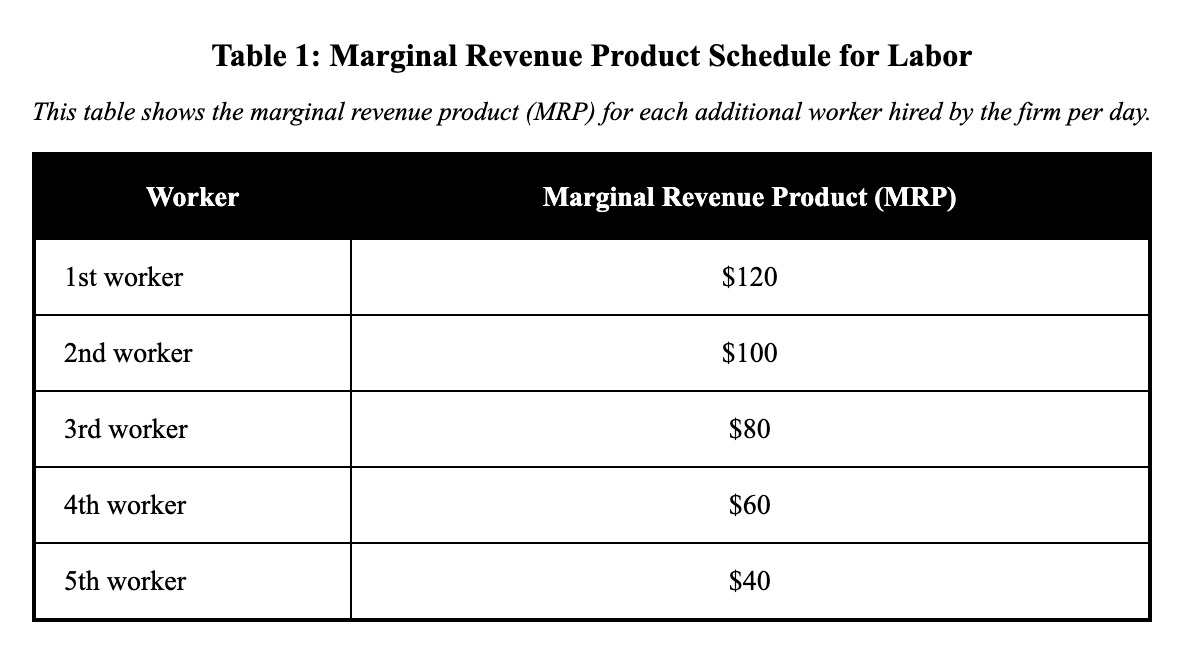
A perfectly competitive firm is a price taker in both the output and labor markets. The market wage is $W = $60 per worker per day. The firm's marginal revenue product (MRP) schedule for labor is shown in the table. Based on the firm's MRP and wage, how many workers should the firm hire to maximize profit?
MRP schedule (per day):
- 1st worker: $120
- 2nd worker: $100
- 3rd worker: $80
- 4th worker: $60
- 5th worker: $40
- Hire 2 workers
- Hire 3 workers
- Hire 4 workers (correct answer)
- Hire 5 workers
- Hire 1 worker
Explanation: This question tests profit-maximizing hiring decisions in factor markets. Marginal Revenue Product (MRP) represents the additional revenue generated by hiring one more worker. With a wage of 60,wecompareeachworker′sMRPtothewage:1stworker(120 > 60),2ndworker(100 > 60),3rdworker(80 > 60),and4thworker(60 = $60). The firm should hire the 4th worker since MRP equals the wage at this point. A common misconception is confusing marginal product (physical output) with MRP (revenue from output). The profit-maximizing strategy is to hire workers as long as MRP ≥ wage, stopping when they're equal—this ensures each worker adds more to revenue than to cost.
Question 2
A perfectly competitive firm is a price taker in both the output and labor markets. The market wage is $W = $95 per worker per hour. The firm's marginal revenue product (MRP) schedule for labor is shown in the table. Based on the firm's MRP and wage, at what employment level is profit maximized?
MRP schedule (per hour):
- 1st worker: $140
- 2nd worker: $120
- 3rd worker: $100
- 4th worker: $90
- 5th worker: $80
- Hire 2 workers
- Hire 3 workers (correct answer)
- Hire 4 workers
- Hire 1 worker
- Hire 5 workers
Explanation: This problem requires applying profit-maximizing hiring rules in competitive factor markets. MRP measures the additional revenue from hiring one more worker—it's the value of what that worker produces. Given a wage of 95,weevaluate:1stworker(140 > 95),2ndworker(120 > 95),3rdworker(100 > 95),but4thworker(90 < $95). The firm maximizes profit by hiring 3 workers, as the 4th would cost more than the revenue generated. Students often mistakenly hire until MRP falls below wage rather than stopping at the last profitable worker. The key strategy is to continue hiring while MRP exceeds or equals the wage rate, ensuring positive marginal profit from each worker.