Effects of Government Intervention in Markets - AP Microeconomics
Card 1 of 30
What effect does a tax have on supply?
Tap to reveal answer
It typically decreases supply. Tax increases production costs, shifting supply leftward.
← Didn't Know|Knew It →
How does a tax on producers affect market supply?
Tap to reveal answer
Supply curve shifts leftward. Tax adds to production costs, reducing supply.
← Didn't Know|Knew It →
Determine the effect on consumer surplus with a subsidy on production.
Tap to reveal answer
Consumer surplus typically increases. Lower prices from increased supply benefit consumers.
← Didn't Know|Knew It →
Find the effect of a price ceiling on a good with inelastic demand.
Tap to reveal answer
Smaller shortage compared to elastic demand. Limited demand response reduces shortage severity.
← Didn't Know|Knew It →
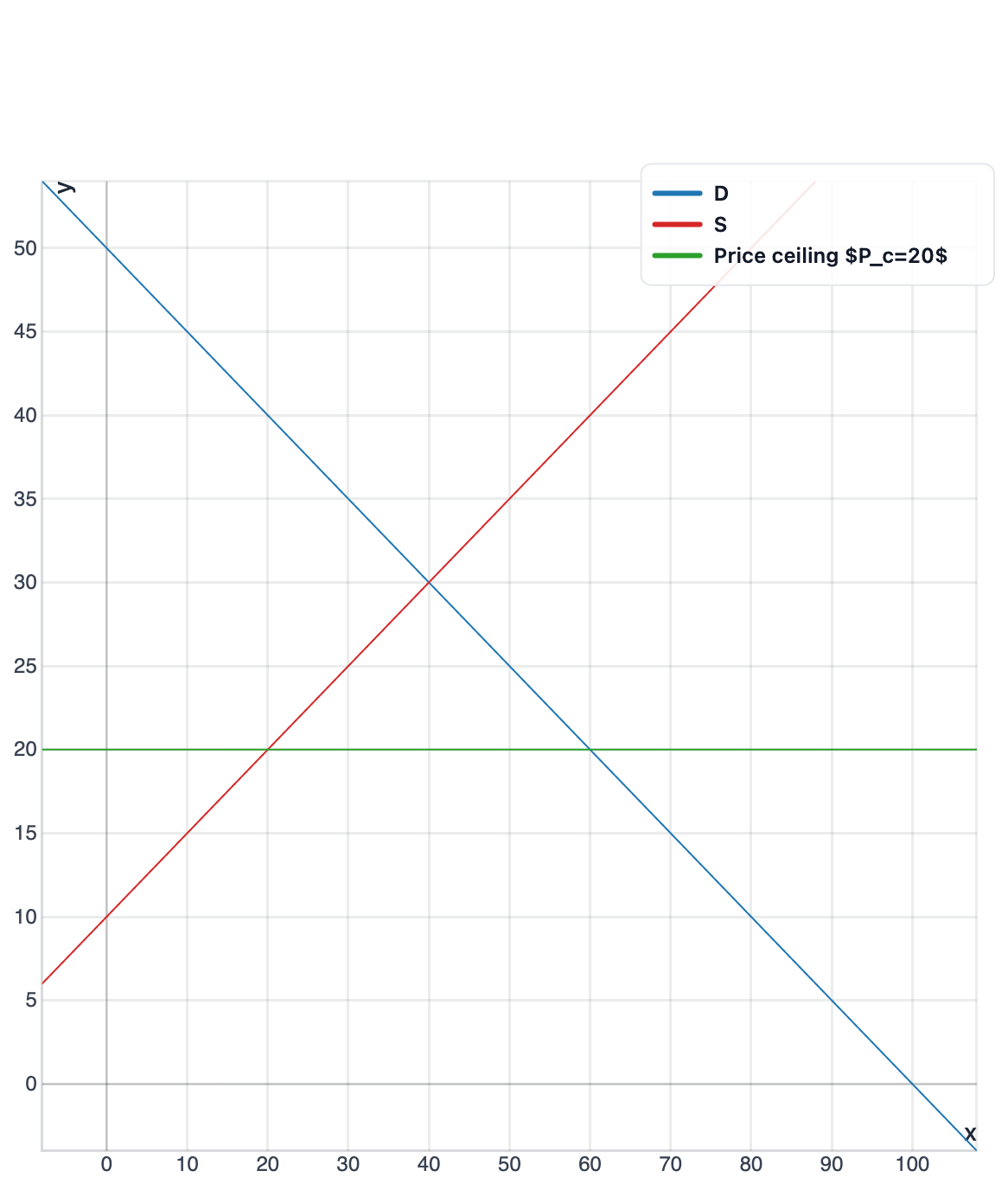
Identify one effect of a price ceiling on market equilibrium.
Tap to reveal answer
It can create a shortage if set below equilibrium price. Quantity demanded exceeds quantity supplied at ceiling price.
← Didn't Know|Knew It →
Identify one effect of a price floor on market equilibrium.
Tap to reveal answer
It can create a surplus if set above equilibrium price. Quantity supplied exceeds quantity demanded at floor price.
← Didn't Know|Knew It →
What is a subsidy?
What is a subsidy?
Tap to reveal answer
A payment from the government to producers to encourage production. Reduces producer costs, making production more profitable.
← Didn't Know|Knew It →
Identify one effect of a subsidy on market equilibrium.
Tap to reveal answer
It lowers the price and increases the quantity sold. Subsidy shifts supply right, creating new equilibrium.
← Didn't Know|Knew It →
What is a tax on goods?
Tap to reveal answer
A financial charge imposed by the government on a product. Increases production costs for suppliers.
← Didn't Know|Knew It →
Identify one effect of a tax on market equilibrium.
Tap to reveal answer
It raises the price and reduces the quantity sold. Tax shifts supply left, creating new equilibrium.
← Didn't Know|Knew It →
What causes deadweight loss in a market?
Tap to reveal answer
Price controls, taxes, and subsidies can cause deadweight loss. Government interventions prevent efficient market outcomes.
← Didn't Know|Knew It →
How does a tax affect consumer surplus?
Tap to reveal answer
It typically decreases consumer surplus. Higher prices reduce consumer benefit.
← Didn't Know|Knew It →
How does a subsidy affect producer surplus?
Tap to reveal answer
It typically increases producer surplus. Subsidies increase producer revenue and profit.
← Didn't Know|Knew It →
What is the incidence of a tax?
Tap to reveal answer
The division of the tax burden between buyers and sellers. Depends on price elasticities of buyers and sellers.
← Didn't Know|Knew It →
How is tax incidence determined?
Tap to reveal answer
By the relative elasticities of supply and demand. Less elastic side bears greater tax burden.
← Didn't Know|Knew It →
What is the purpose of a subsidy in a market?
Tap to reveal answer
To encourage production or consumption of a good. Government seeks to correct market failures or support industries.
← Didn't Know|Knew It →
What happens to equilibrium quantity when a subsidy is introduced?
Tap to reveal answer
Equilibrium quantity typically increases. Lower costs increase production at all price levels.
← Didn't Know|Knew It →
What role do taxes play in correcting negative externalities?
Tap to reveal answer
They internalize the external cost, reducing the quantity produced. Pigouvian taxes align private and social costs.
← Didn't Know|Knew It →
What role do subsidies play in correcting positive externalities?
Tap to reveal answer
They increase the production or consumption of a beneficial good. Aligns private and social benefits through price incentives.
← Didn't Know|Knew It →
What is the result of government setting a price lower than equilibrium?
Tap to reveal answer
A shortage occurs. Price below equilibrium creates excess demand.
← Didn't Know|Knew It →
Find the tax incidence given elasticity values: demand (0.5), supply (1.0).
Tap to reveal answer
Greater burden falls on consumers with less elastic demand. Less elastic side bears proportionally greater burden.
← Didn't Know|Knew It →
How does a price floor above equilibrium affect producer surplus?
Tap to reveal answer
It typically increases producer surplus. Higher guaranteed price benefits producers despite surplus.
← Didn't Know|Knew It →
Predict the market effect of a tax on inelastic demand goods.
Tap to reveal answer
Greater tax burden on consumers; smaller quantity change. Consumers absorb most tax with limited demand response.
← Didn't Know|Knew It →
What is the effect of removing a tax on a market?
Tap to reveal answer
Increases equilibrium quantity and decreases price. Returns market to original equilibrium point.
← Didn't Know|Knew It →
Analyze the effect of a subsidy on a perfectly inelastic supply.
Tap to reveal answer
Results in a price decrease; no quantity change. Subsidy benefit goes entirely to consumers via price.
← Didn't Know|Knew It →
Identify the outcome if a tax is imposed on a good with elastic supply.
Tap to reveal answer
Greater tax burden on consumers; price increases. Elastic supply shifts burden toward consumers.
← Didn't Know|Knew It →
What is a price floor?
Tap to reveal answer
A minimum price set by the government above equilibrium. Prevents market price from falling to equilibrium level.
← Didn't Know|Knew It →
What is producer surplus?
Tap to reveal answer
The difference between what producers receive and the minimum they would accept. Measures producer benefit from market participation.
← Didn't Know|Knew It →
Identify one effect of a tax on market equilibrium.
Tap to reveal answer
It raises the price and reduces the quantity sold. Tax shifts supply left, creating new equilibrium.
← Didn't Know|Knew It →
What causes deadweight loss in a market?
Tap to reveal answer
Price controls, taxes, and subsidies can cause deadweight loss. Government interventions prevent efficient market outcomes.
← Didn't Know|Knew It →