Mass - AP Chemistry
Card 1 of 98
What is the percent by mass of bismuth in the compound  ?
?
What is the percent by mass of bismuth in the compound
Tap to reveal answer
The mass percentage of bismuth in the compound will be equal to the mass of bismuth in one mole of compound divided by the total molar mass of the compound.
Bismuth has a molar mass of  . One mole of the compound would result in two moles of bismuth, a total of 417.96g.

Tellurium has a molar mass of  . One mole of the compound would result in three moles of tellurium, a total of 382.8g.

Add the mass of bismuth and the mass of tellurium per mole to find the total molar mass.

Divide the mass of bismuth by the total molecular mass to find the percent by mass of bismuth in the compound.
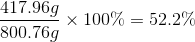
The mass percentage of bismuth in the compound will be equal to the mass of bismuth in one mole of compound divided by the total molar mass of the compound.
Bismuth has a molar mass of
Tellurium has a molar mass of
Add the mass of bismuth and the mass of tellurium per mole to find the total molar mass.
Divide the mass of bismuth by the total molecular mass to find the percent by mass of bismuth in the compound.
← Didn't Know|Knew It →
What is the percent by mass of carbon in acetic acid  ?
?
What is the percent by mass of carbon in acetic acid
Tap to reveal answer
The total molar mass of acetic acid is  .
.

Carbon contributes  total. Therefore, in a sample of 1 mole of acetic acid, there are
  of carbon. To find the percent by mass, we must divide the mass of carbon by the total molar mass of the compound.

The total molar mass of acetic acid is
Carbon contributes
← Didn't Know|Knew It →
Calculate the percent by mass of each element in  .
.
Calculate the percent by mass of each element in
Tap to reveal answer
The total molar mass of lead (II) sulfate is  . Lead contributes
  , sulfur contributes
  , and oxygen contributes
  .
.
The percent by mass of each element in the compound is found by dividing the mass contribution of that element by the total molar mass of the compound.



The total molar mass of lead (II) sulfate is
The percent by mass of each element in the compound is found by dividing the mass contribution of that element by the total molar mass of the compound.
← Didn't Know|Knew It →
What percent by mass of  is chlorine?
What percent by mass of
Tap to reveal answer
The molar mass of calcium chloride is  . Chlorine has two moles per one mole of . Therefore, chloride contributes 70.9g to the total molecular mass.

To find the percent by mass of chlorine in calcium chloride, divide the contribution of chlorine by the total molar mass.
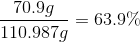
The molar mass of calcium chloride is
To find the percent by mass of chlorine in calcium chloride, divide the contribution of chlorine by the total molar mass.
← Didn't Know|Knew It →
Calculate the percent by mass of each element in  .
.
Calculate the percent by mass of each element in
Tap to reveal answer
The total mass of one mole of aluminum (II) chromate is calculated by:

Aluminum, chromate, and oxygen contribute  and
and  respectively. Therefore, we can divide each contribution by the total molecular mass to determine percentages by mass.

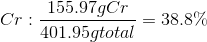

The total mass of one mole of aluminum (II) chromate is calculated by:
Aluminum, chromate, and oxygen contribute
← Didn't Know|Knew It →
What is the percent by mass of hydrogen in  ?
?
What is the percent by mass of hydrogen in
Tap to reveal answer
The total mass of  is
is  and calculated by:

You can then divide hydrogen's contribution by the total molecular mass in order to find the percent mass.
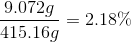
The total mass of
You can then divide hydrogen's contribution by the total molecular mass in order to find the percent mass.
← Didn't Know|Knew It →
What percent of the overall mass is represented by the cation(s) in  ?
?
What percent of the overall mass is represented by the cation(s) in
Tap to reveal answer
The total molar mass of  is
is  . Cesium has a +1 charge when the compound is dissolved in solution and is, thus, the cation.

Cesium contributes 265.8g to the total molecular mass.

We can find the percent by mass of cesium by dividing the mass of cesium by the total molecular mass.
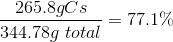
The total molar mass of
Cesium contributes 265.8g to the total molecular mass.
We can find the percent by mass of cesium by dividing the mass of cesium by the total molecular mass.
← Didn't Know|Knew It →
What is the percent by mass of bismuth in the compound ?
What is the percent by mass of bismuth in the compound
Tap to reveal answer
The mass percentage of bismuth in the compound will be equal to the mass of bismuth in one mole of compound divided by the total molar mass of the compound.
Bismuth has a molar mass of . One mole of the compound would result in two moles of bismuth, a total of 417.96g.
Tellurium has a molar mass of . One mole of the compound would result in three moles of tellurium, a total of 382.8g.
Add the mass of bismuth and the mass of tellurium per mole to find the total molar mass.
Divide the mass of bismuth by the total molecular mass to find the percent by mass of bismuth in the compound.
The mass percentage of bismuth in the compound will be equal to the mass of bismuth in one mole of compound divided by the total molar mass of the compound.
Bismuth has a molar mass of
Tellurium has a molar mass of
Add the mass of bismuth and the mass of tellurium per mole to find the total molar mass.
Divide the mass of bismuth by the total molecular mass to find the percent by mass of bismuth in the compound.
← Didn't Know|Knew It →
What is the percent by mass of carbon in acetic acid ?
What is the percent by mass of carbon in acetic acid
Tap to reveal answer
The total molar mass of acetic acid is .
Carbon contributes total. Therefore, in a sample of 1 mole of acetic acid, there are of carbon. To find the percent by mass, we must divide the mass of carbon by the total molar mass of the compound.
The total molar mass of acetic acid is
Carbon contributes
← Didn't Know|Knew It →
Calculate the percent by mass of each element in .
Calculate the percent by mass of each element in
Tap to reveal answer
The total molar mass of lead (II) sulfate is . Lead contributes , sulfur contributes , and oxygen contributes .
The percent by mass of each element in the compound is found by dividing the mass contribution of that element by the total molar mass of the compound.
The total molar mass of lead (II) sulfate is
The percent by mass of each element in the compound is found by dividing the mass contribution of that element by the total molar mass of the compound.
← Didn't Know|Knew It →
What percent by mass of is chlorine?
What percent by mass of
Tap to reveal answer
The molar mass of calcium chloride is . Chlorine has two moles per one mole of . Therefore, chloride contributes 70.9g to the total molecular mass.
To find the percent by mass of chlorine in calcium chloride, divide the contribution of chlorine by the total molar mass.
The molar mass of calcium chloride is
To find the percent by mass of chlorine in calcium chloride, divide the contribution of chlorine by the total molar mass.
← Didn't Know|Knew It →
Calculate the percent by mass of each element in .
Calculate the percent by mass of each element in
Tap to reveal answer
The total mass of one mole of aluminum (II) chromate is calculated by:
Aluminum, chromate, and oxygen contribute and respectively. Therefore, we can divide each contribution by the total molecular mass to determine percentages by mass.
The total mass of one mole of aluminum (II) chromate is calculated by:
Aluminum, chromate, and oxygen contribute
← Didn't Know|Knew It →
What is the percent by mass of hydrogen in ?
What is the percent by mass of hydrogen in
Tap to reveal answer
The total mass of is and calculated by:
You can then divide hydrogen's contribution by the total molecular mass in order to find the percent mass.
The total mass of
You can then divide hydrogen's contribution by the total molecular mass in order to find the percent mass.
← Didn't Know|Knew It →
What percent of the overall mass is represented by the cation(s) in ?
What percent of the overall mass is represented by the cation(s) in
Tap to reveal answer
The total molar mass of is . Cesium has a +1 charge when the compound is dissolved in solution and is, thus, the cation.
Cesium contributes 265.8g to the total molecular mass.
We can find the percent by mass of cesium by dividing the mass of cesium by the total molecular mass.
The total molar mass of
Cesium contributes 265.8g to the total molecular mass.
We can find the percent by mass of cesium by dividing the mass of cesium by the total molecular mass.
← Didn't Know|Knew It →
What is the percent by mass of bismuth in the compound ?
What is the percent by mass of bismuth in the compound
Tap to reveal answer
The mass percentage of bismuth in the compound will be equal to the mass of bismuth in one mole of compound divided by the total molar mass of the compound.
Bismuth has a molar mass of . One mole of the compound would result in two moles of bismuth, a total of 417.96g.
Tellurium has a molar mass of . One mole of the compound would result in three moles of tellurium, a total of 382.8g.
Add the mass of bismuth and the mass of tellurium per mole to find the total molar mass.
Divide the mass of bismuth by the total molecular mass to find the percent by mass of bismuth in the compound.
The mass percentage of bismuth in the compound will be equal to the mass of bismuth in one mole of compound divided by the total molar mass of the compound.
Bismuth has a molar mass of
Tellurium has a molar mass of
Add the mass of bismuth and the mass of tellurium per mole to find the total molar mass.
Divide the mass of bismuth by the total molecular mass to find the percent by mass of bismuth in the compound.
← Didn't Know|Knew It →
What is the percent by mass of carbon in acetic acid ?
What is the percent by mass of carbon in acetic acid
Tap to reveal answer
The total molar mass of acetic acid is .
Carbon contributes total. Therefore, in a sample of 1 mole of acetic acid, there are of carbon. To find the percent by mass, we must divide the mass of carbon by the total molar mass of the compound.
The total molar mass of acetic acid is
Carbon contributes
← Didn't Know|Knew It →
Calculate the percent by mass of each element in .
Calculate the percent by mass of each element in
Tap to reveal answer
The total molar mass of lead (II) sulfate is . Lead contributes , sulfur contributes , and oxygen contributes .
The percent by mass of each element in the compound is found by dividing the mass contribution of that element by the total molar mass of the compound.
The total molar mass of lead (II) sulfate is
The percent by mass of each element in the compound is found by dividing the mass contribution of that element by the total molar mass of the compound.
← Didn't Know|Knew It →
What percent by mass of is chlorine?
What percent by mass of
Tap to reveal answer
The molar mass of calcium chloride is . Chlorine has two moles per one mole of . Therefore, chloride contributes 70.9g to the total molecular mass.
To find the percent by mass of chlorine in calcium chloride, divide the contribution of chlorine by the total molar mass.
The molar mass of calcium chloride is
To find the percent by mass of chlorine in calcium chloride, divide the contribution of chlorine by the total molar mass.
← Didn't Know|Knew It →
Calculate the percent by mass of each element in .
Calculate the percent by mass of each element in
Tap to reveal answer
The total mass of one mole of aluminum (II) chromate is calculated by:
Aluminum, chromate, and oxygen contribute and respectively. Therefore, we can divide each contribution by the total molecular mass to determine percentages by mass.
The total mass of one mole of aluminum (II) chromate is calculated by:
Aluminum, chromate, and oxygen contribute
← Didn't Know|Knew It →
What is the percent by mass of hydrogen in ?
What is the percent by mass of hydrogen in
Tap to reveal answer
The total mass of is and calculated by:
You can then divide hydrogen's contribution by the total molecular mass in order to find the percent mass.
The total mass of
You can then divide hydrogen's contribution by the total molecular mass in order to find the percent mass.
← Didn't Know|Knew It →