Relationship between differentiability and continuity - AP Calculus AB
Card 1 of 44
The function  is differentiable at the point
  . List which of the following statements must be true about
  :
:
1) The limit 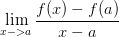 exists.
2)
exists.
2)  3)
3) 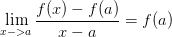 4)
4) 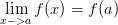 5)
5) 
The function
1) The limit
Tap to reveal answer
1) If a function is differentiable, then by definition of differentiability the limit defined by,

exists. Therefore (1) is required by definition of differentiability.
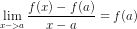
2) If a function is differentiable at a point then it must also be continuous at that point. (This is not conversely true).
For a function to be continuous at a point  we must have:

Therefore (2) and (4) are required.
-----------------------------------------------------------------------------------------
3)
This is not required, the left side of the equation is the definition of a derivative at a point  for a function
  . The derivative at a point does not have to equal to the function value
  at that point, it is equal to the slope
  at that point. Therefore 3 does not have to be true.
However, we can note that it is possible for a function and its' derivative to be equal for a given point. Sine and cosine, for instance will intersect periodically. Another example would be the exponential function  which has itself as its' derivative
  .
.
4) See 2
5)
Again, the function does not have to approach the same limit as its' derivative. It is possible for a function to behave in this manner, such as in the case of sine and its' derivative cosine, which will both have the same limit at points where they intersect.
1) If a function is differentiable, then by definition of differentiability the limit defined by,
exists. Therefore (1) is required by definition of differentiability. 2) If a function is differentiable at a point then it must also be continuous at that point. (This is not conversely true).
For a function to be continuous at a point
Therefore (2) and (4) are required.
-----------------------------------------------------------------------------------------
3)
This is not required, the left side of the equation is the definition of a derivative at a point
However, we can note that it is possible for a function and its' derivative to be equal for a given point. Sine and cosine, for instance will intersect periodically. Another example would be the exponential function
4) See 2
5)
Again, the function does not have to approach the same limit as its' derivative. It is possible for a function to behave in this manner, such as in the case of sine and its' derivative cosine, which will both have the same limit at points where they intersect.
← Didn't Know|Knew It →
When the limit 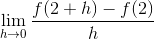 fails to exist,
When the limit
Tap to reveal answer
By definition of differentiability,  when the limit exists. When
  exists, we say the function is 'differentiable at
  '.
'.
By definition of differentiability,
← Didn't Know|Knew It →
Which of the following functions is differentiable at  , but not continuous there?
Which of the following functions is differentiable at
Tap to reveal answer
All of the functions are differentiable at  . If you examine the graph of each of the functions, they are all defined at
  , and do not have a corner, cusp, or a jump there; they are all smooth and connected (Not necessarily everywhere, just at
  ). Additionally it is not possible to have a function that is differentiable at a point, but not continuous at that same point; differentiablity implies continuity.
All of the functions are differentiable at
← Didn't Know|Knew It →
For which of the following functions does a limit exist at  , but not a y-value?
For which of the following functions does a limit exist at 
Tap to reveal answer
To answer the question, we must find an equation which satisfies two criteria:
(1) it must have limits on either side of  that approach the same value and (2) it must have a hole at
  .
.
Each of the possible answers provide situations which demonstrate each combination of (1) and (2). That is to say, some of the equations include both a limit and a y-value at  , neither, or,in the case of the piecewise function, a y-value and a limit that does not exist.
In the function, 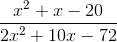 , the numerator factors to
while the denominator factors to  . As a result, the graph of this
function resembles that for  , but with a hole at
  . Therefore, the limit
at  exists, even though the y-value is undefined at
  .
.
To answer the question, we must find an equation which satisfies two criteria:
(1) it must have limits on either side of 

Each of the possible answers provide situations which demonstrate each combination of (1) and (2). That is to say, some of the equations include both a limit and a y-value at 
In the function,
while the denominator factors to
function resembles that for 
at 

← Didn't Know|Knew It →
The function is differentiable at the point . List which of the following statements must be true about :
1) The limit exists.
2)
3)
4)
5)
The function
1) The limit
Tap to reveal answer
1) If a function is differentiable, then by definition of differentiability the limit defined by,
exists. Therefore (1) is required by definition of differentiability.
2) If a function is differentiable at a point then it must also be continuous at that point. (This is not conversely true).
For a function to be continuous at a point we must have:
Therefore (2) and (4) are required.
-----------------------------------------------------------------------------------------
3)
This is not required, the left side of the equation is the definition of a derivative at a point for a function . The derivative at a point does not have to equal to the function value at that point, it is equal to the slope at that point. Therefore 3 does not have to be true.
However, we can note that it is possible for a function and its' derivative to be equal for a given point. Sine and cosine, for instance will intersect periodically. Another example would be the exponential function which has itself as its' derivative .
4) See 2
5)
Again, the function does not have to approach the same limit as its' derivative. It is possible for a function to behave in this manner, such as in the case of sine and its' derivative cosine, which will both have the same limit at points where they intersect.
1) If a function is differentiable, then by definition of differentiability the limit defined by,
exists. Therefore (1) is required by definition of differentiability. 2) If a function is differentiable at a point then it must also be continuous at that point. (This is not conversely true).
For a function to be continuous at a point
Therefore (2) and (4) are required.
-----------------------------------------------------------------------------------------
3)
This is not required, the left side of the equation is the definition of a derivative at a point
However, we can note that it is possible for a function and its' derivative to be equal for a given point. Sine and cosine, for instance will intersect periodically. Another example would be the exponential function
4) See 2
5)
Again, the function does not have to approach the same limit as its' derivative. It is possible for a function to behave in this manner, such as in the case of sine and its' derivative cosine, which will both have the same limit at points where they intersect.
← Didn't Know|Knew It →
When the limit fails to exist,
When the limit
Tap to reveal answer
By definition of differentiability, when the limit exists. When exists, we say the function is 'differentiable at '.
By definition of differentiability,
← Didn't Know|Knew It →
Which of the following functions is differentiable at , but not continuous there?
Which of the following functions is differentiable at
Tap to reveal answer
All of the functions are differentiable at . If you examine the graph of each of the functions, they are all defined at , and do not have a corner, cusp, or a jump there; they are all smooth and connected (Not necessarily everywhere, just at ). Additionally it is not possible to have a function that is differentiable at a point, but not continuous at that same point; differentiablity implies continuity.
All of the functions are differentiable at
← Didn't Know|Knew It →
For which of the following functions does a limit exist at , but not a y-value?
For which of the following functions does a limit exist at
Tap to reveal answer
To answer the question, we must find an equation which satisfies two criteria:
(1) it must have limits on either side of that approach the same value and (2) it must have a hole at .
Each of the possible answers provide situations which demonstrate each combination of (1) and (2). That is to say, some of the equations include both a limit and a y-value at , neither, or,in the case of the piecewise function, a y-value and a limit that does not exist.
In the function, , the numerator factors to
while the denominator factors to . As a result, the graph of this
function resembles that for , but with a hole at . Therefore, the limit
at exists, even though the y-value is undefined at .
To answer the question, we must find an equation which satisfies two criteria:
(1) it must have limits on either side of
Each of the possible answers provide situations which demonstrate each combination of (1) and (2). That is to say, some of the equations include both a limit and a y-value at
In the function,
while the denominator factors to
function resembles that for
at
← Didn't Know|Knew It →
The function is differentiable at the point . List which of the following statements must be true about :
1) The limit exists.
2)
3)
4)
5)
The function
1) The limit
Tap to reveal answer
1) If a function is differentiable, then by definition of differentiability the limit defined by,
exists. Therefore (1) is required by definition of differentiability.
2) If a function is differentiable at a point then it must also be continuous at that point. (This is not conversely true).
For a function to be continuous at a point we must have:
Therefore (2) and (4) are required.
-----------------------------------------------------------------------------------------
3)
This is not required, the left side of the equation is the definition of a derivative at a point for a function . The derivative at a point does not have to equal to the function value at that point, it is equal to the slope at that point. Therefore 3 does not have to be true.
However, we can note that it is possible for a function and its' derivative to be equal for a given point. Sine and cosine, for instance will intersect periodically. Another example would be the exponential function which has itself as its' derivative .
4) See 2
5)
Again, the function does not have to approach the same limit as its' derivative. It is possible for a function to behave in this manner, such as in the case of sine and its' derivative cosine, which will both have the same limit at points where they intersect.
1) If a function is differentiable, then by definition of differentiability the limit defined by,
exists. Therefore (1) is required by definition of differentiability. 2) If a function is differentiable at a point then it must also be continuous at that point. (This is not conversely true).
For a function to be continuous at a point
Therefore (2) and (4) are required.
-----------------------------------------------------------------------------------------
3)
This is not required, the left side of the equation is the definition of a derivative at a point
However, we can note that it is possible for a function and its' derivative to be equal for a given point. Sine and cosine, for instance will intersect periodically. Another example would be the exponential function
4) See 2
5)
Again, the function does not have to approach the same limit as its' derivative. It is possible for a function to behave in this manner, such as in the case of sine and its' derivative cosine, which will both have the same limit at points where they intersect.
← Didn't Know|Knew It →
When the limit fails to exist,
When the limit
Tap to reveal answer
By definition of differentiability, when the limit exists. When exists, we say the function is 'differentiable at '.
By definition of differentiability,
← Didn't Know|Knew It →
Which of the following functions is differentiable at , but not continuous there?
Which of the following functions is differentiable at
Tap to reveal answer
All of the functions are differentiable at . If you examine the graph of each of the functions, they are all defined at , and do not have a corner, cusp, or a jump there; they are all smooth and connected (Not necessarily everywhere, just at ). Additionally it is not possible to have a function that is differentiable at a point, but not continuous at that same point; differentiablity implies continuity.
All of the functions are differentiable at
← Didn't Know|Knew It →
For which of the following functions does a limit exist at , but not a y-value?
For which of the following functions does a limit exist at
Tap to reveal answer
To answer the question, we must find an equation which satisfies two criteria:
(1) it must have limits on either side of that approach the same value and (2) it must have a hole at .
Each of the possible answers provide situations which demonstrate each combination of (1) and (2). That is to say, some of the equations include both a limit and a y-value at , neither, or,in the case of the piecewise function, a y-value and a limit that does not exist.
In the function, , the numerator factors to
while the denominator factors to . As a result, the graph of this
function resembles that for , but with a hole at . Therefore, the limit
at exists, even though the y-value is undefined at .
To answer the question, we must find an equation which satisfies two criteria:
(1) it must have limits on either side of
Each of the possible answers provide situations which demonstrate each combination of (1) and (2). That is to say, some of the equations include both a limit and a y-value at
In the function,
while the denominator factors to
function resembles that for
at
← Didn't Know|Knew It →
The function is differentiable at the point . List which of the following statements must be true about :
1) The limit exists.
2)
3)
4)
5)
The function
1) The limit
Tap to reveal answer
1) If a function is differentiable, then by definition of differentiability the limit defined by,
exists. Therefore (1) is required by definition of differentiability.
2) If a function is differentiable at a point then it must also be continuous at that point. (This is not conversely true).
For a function to be continuous at a point we must have:
Therefore (2) and (4) are required.
-----------------------------------------------------------------------------------------
3)
This is not required, the left side of the equation is the definition of a derivative at a point for a function . The derivative at a point does not have to equal to the function value at that point, it is equal to the slope at that point. Therefore 3 does not have to be true.
However, we can note that it is possible for a function and its' derivative to be equal for a given point. Sine and cosine, for instance will intersect periodically. Another example would be the exponential function which has itself as its' derivative .
4) See 2
5)
Again, the function does not have to approach the same limit as its' derivative. It is possible for a function to behave in this manner, such as in the case of sine and its' derivative cosine, which will both have the same limit at points where they intersect.
1) If a function is differentiable, then by definition of differentiability the limit defined by,
exists. Therefore (1) is required by definition of differentiability. 2) If a function is differentiable at a point then it must also be continuous at that point. (This is not conversely true).
For a function to be continuous at a point
Therefore (2) and (4) are required.
-----------------------------------------------------------------------------------------
3)
This is not required, the left side of the equation is the definition of a derivative at a point
However, we can note that it is possible for a function and its' derivative to be equal for a given point. Sine and cosine, for instance will intersect periodically. Another example would be the exponential function
4) See 2
5)
Again, the function does not have to approach the same limit as its' derivative. It is possible for a function to behave in this manner, such as in the case of sine and its' derivative cosine, which will both have the same limit at points where they intersect.
← Didn't Know|Knew It →
When the limit fails to exist,
When the limit
Tap to reveal answer
By definition of differentiability, when the limit exists. When exists, we say the function is 'differentiable at '.
By definition of differentiability,
← Didn't Know|Knew It →
Which of the following functions is differentiable at , but not continuous there?
Which of the following functions is differentiable at
Tap to reveal answer
All of the functions are differentiable at . If you examine the graph of each of the functions, they are all defined at , and do not have a corner, cusp, or a jump there; they are all smooth and connected (Not necessarily everywhere, just at ). Additionally it is not possible to have a function that is differentiable at a point, but not continuous at that same point; differentiablity implies continuity.
All of the functions are differentiable at
← Didn't Know|Knew It →
For which of the following functions does a limit exist at , but not a y-value?
For which of the following functions does a limit exist at
Tap to reveal answer
To answer the question, we must find an equation which satisfies two criteria:
(1) it must have limits on either side of that approach the same value and (2) it must have a hole at .
Each of the possible answers provide situations which demonstrate each combination of (1) and (2). That is to say, some of the equations include both a limit and a y-value at , neither, or,in the case of the piecewise function, a y-value and a limit that does not exist.
In the function, , the numerator factors to
while the denominator factors to . As a result, the graph of this
function resembles that for , but with a hole at . Therefore, the limit
at exists, even though the y-value is undefined at .
To answer the question, we must find an equation which satisfies two criteria:
(1) it must have limits on either side of
Each of the possible answers provide situations which demonstrate each combination of (1) and (2). That is to say, some of the equations include both a limit and a y-value at
In the function,
while the denominator factors to
function resembles that for
at
← Didn't Know|Knew It →
The function is differentiable at the point . List which of the following statements must be true about :
1) The limit exists.
2)
3)
4)
5)
The function
1) The limit
Tap to reveal answer
1) If a function is differentiable, then by definition of differentiability the limit defined by,
exists. Therefore (1) is required by definition of differentiability.
2) If a function is differentiable at a point then it must also be continuous at that point. (This is not conversely true).
For a function to be continuous at a point we must have:
Therefore (2) and (4) are required.
-----------------------------------------------------------------------------------------
3)
This is not required, the left side of the equation is the definition of a derivative at a point for a function . The derivative at a point does not have to equal to the function value at that point, it is equal to the slope at that point. Therefore 3 does not have to be true.
However, we can note that it is possible for a function and its' derivative to be equal for a given point. Sine and cosine, for instance will intersect periodically. Another example would be the exponential function which has itself as its' derivative .
4) See 2
5)
Again, the function does not have to approach the same limit as its' derivative. It is possible for a function to behave in this manner, such as in the case of sine and its' derivative cosine, which will both have the same limit at points where they intersect.
1) If a function is differentiable, then by definition of differentiability the limit defined by,
exists. Therefore (1) is required by definition of differentiability. 2) If a function is differentiable at a point then it must also be continuous at that point. (This is not conversely true).
For a function to be continuous at a point
Therefore (2) and (4) are required.
-----------------------------------------------------------------------------------------
3)
This is not required, the left side of the equation is the definition of a derivative at a point
However, we can note that it is possible for a function and its' derivative to be equal for a given point. Sine and cosine, for instance will intersect periodically. Another example would be the exponential function
4) See 2
5)
Again, the function does not have to approach the same limit as its' derivative. It is possible for a function to behave in this manner, such as in the case of sine and its' derivative cosine, which will both have the same limit at points where they intersect.
← Didn't Know|Knew It →
When the limit fails to exist,
When the limit
Tap to reveal answer
By definition of differentiability, when the limit exists. When exists, we say the function is 'differentiable at '.
By definition of differentiability,
← Didn't Know|Knew It →
Which of the following functions is differentiable at , but not continuous there?
Which of the following functions is differentiable at
Tap to reveal answer
All of the functions are differentiable at . If you examine the graph of each of the functions, they are all defined at , and do not have a corner, cusp, or a jump there; they are all smooth and connected (Not necessarily everywhere, just at ). Additionally it is not possible to have a function that is differentiable at a point, but not continuous at that same point; differentiablity implies continuity.
All of the functions are differentiable at
← Didn't Know|Knew It →
For which of the following functions does a limit exist at , but not a y-value?
For which of the following functions does a limit exist at
Tap to reveal answer
To answer the question, we must find an equation which satisfies two criteria:
(1) it must have limits on either side of that approach the same value and (2) it must have a hole at .
Each of the possible answers provide situations which demonstrate each combination of (1) and (2). That is to say, some of the equations include both a limit and a y-value at , neither, or,in the case of the piecewise function, a y-value and a limit that does not exist.
In the function, , the numerator factors to
while the denominator factors to . As a result, the graph of this
function resembles that for , but with a hole at . Therefore, the limit
at exists, even though the y-value is undefined at .
To answer the question, we must find an equation which satisfies two criteria:
(1) it must have limits on either side of
Each of the possible answers provide situations which demonstrate each combination of (1) and (2). That is to say, some of the equations include both a limit and a y-value at
In the function,
while the denominator factors to
function resembles that for
at
← Didn't Know|Knew It →