Unplugged Coders Club (K-2)
Unplugged Coders Club is where K–2 learners discover that coding is all about thinking, not just typing — no screens required!
Starts Wed, Sep 16
9:30 PM UTC · 45m
4 sessions

Alexandria
4.6
Outcomes, not lecture notes.
Explain what an algorithm is and write step-by-step instructions to solve a problem
Apply "if/then" conditional logic to everyday decisions and coding scenarios
Navigate coding maps using directional language (arrows, numbers, up/down/left/right)
Identify and debug "bugs" in a coded path by finding and fixing errors
Design a personalized QR code and understand how it encodes information
Describe the basic principles of game design, including rules and objectives
Recognize what computer hardware is and how code interacts with physical components
Translate real-world tasks — like following a recipe — into coded sequences of instructions
Meet Alexandria.

Alexandria
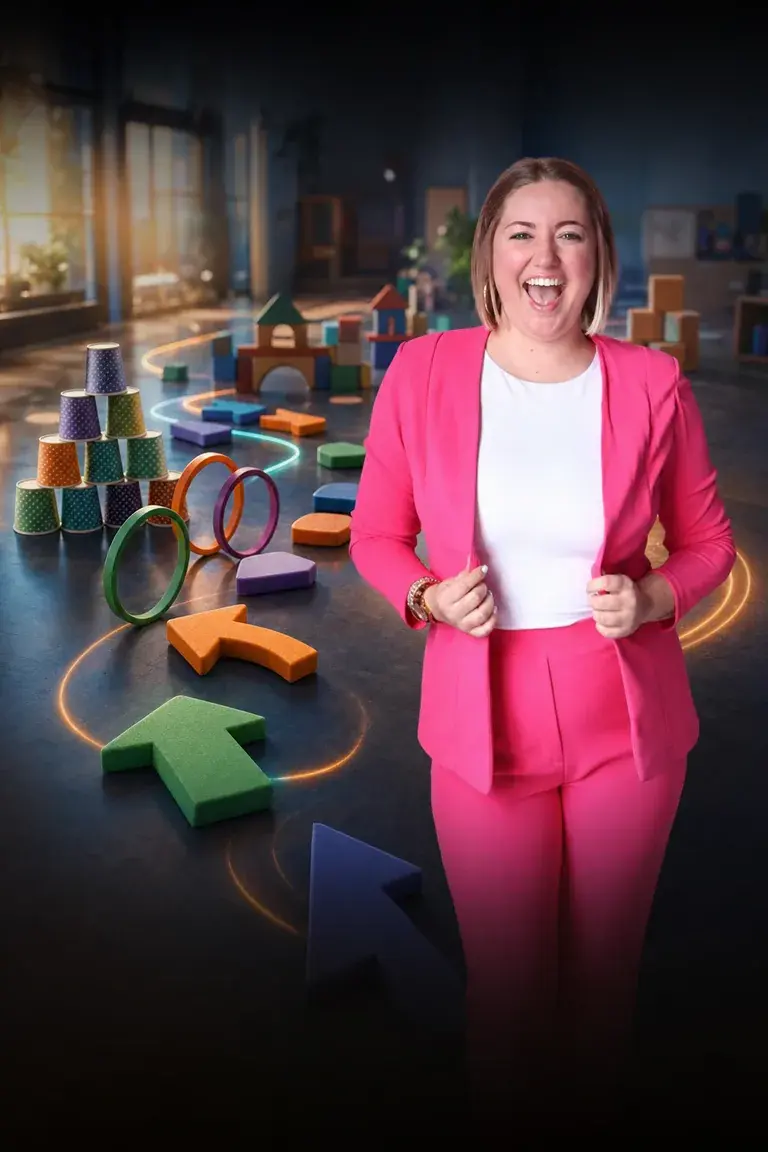
Alexandria Agresta is a dynamic Learning and Development specialist with a proven record in instructional design and leadership coaching. With over 10 years of experience crafting engaging training programs and curricula that enhance organizational performance, she blends innovative techniques with a learner‑first mindset to create scalable, inclusive educational experiences that drive measurable growth.
Unplugged Coders Club is where K–2 learners discover that coding is all about thinking, not just typing — no screens required! Through hands-on games, colorful maps, and creative challenges, young students tackle real computer science concepts like algorithms, conditional logic, and debugging in ways that feel like play. They'll write step-by-step instructions, navigate coding maps using arrows and numbers, design their own QR codes, and even peek behind the curtain of game design. This course builds the computational thinking skills that will give kids a head start in math, problem-solving, and technology for years to come.
Coding Without a Computer? Absolutely.
Unplugged Coders Club flips the script on tech education. Instead of staring at a screen, K–2 students jump into hands-on activities, physical games, and creative projects that teach the same foundational logic professional coders use every day. By removing the computer from the equation, kids focus on thinking like a coder — sequencing, decision-making, spatial reasoning, and problem-solving — before they ever touch a keyboard.
What Students Explore
The course covers a surprisingly rich set of computer science concepts, all made accessible and fun for young learners:
- Algorithms & Coding Basics: Students learn that code is essentially a recipe — a precise, ordered set of instructions. They practice breaking down everyday tasks (getting cupcakes to a party, for example) into step-by-step directions a computer could follow.
- If/Then Conditional Logic: One of the most powerful ideas in all of coding — "if this happens, then do that" — gets introduced through relatable, real-world scenarios. Kids discover they already use this kind of logic constantly in daily life.
- Coding Maps & Navigation: Using visual grid maps, students plan routes from point A to point B, using arrows and numbers as their coding language. They avoid obstacles ("bugs" represented by colorful blocks), develop spatial reasoning, and learn to write directional sequences.
- Debugging: When a coded path doesn't work, students learn to identify what went wrong and revise their solution — building the persistence and analytical thinking that defines great programmers.
- QR Code Creation: Students design their own functional QR codes, learning how patterns of squares encode real information — a tangible, satisfying project that connects abstract logic to something they've seen in the real world.
- Game Design Fundamentals: Kids get a behind-the-scenes look at how games are built — exploring rules, objectives, and how coding powers interactive experiences.
- Hardware Awareness: A brief but important introduction to the physical side of technology: what hardware is, what it does, and how the code students write connects to the machine that runs it.
How the Class Feels
This isn't a lecture — it's an adventure. Every session is built around activities that get kids moving, collaborating, and creating. The instructor connects big computer science ideas to things students already know and love, making abstract concepts feel obvious and exciting. The analogy between how our brains process decisions and how computers execute code is a particular favorite — it helps kids see themselves as natural-born coders.
Who This Class Is For & What They'll Walk Away With
Designed specifically for students in Kindergarten through 2nd grade, Unplugged Coders Club requires zero prior experience with technology or coding. By the end of the course, students will be able to think computationally — breaking problems into steps, applying logical conditions, and refining their work when something goes wrong. More importantly, they'll walk away with genuine confidence: the sense that technology isn't mysterious, it's something they can understand, create, and shape.
Live Q&A
Cameras / mics optional
Recordings
Available within 1 hour, kept 90 days
Materials
No special materials required
Similar classes
free with a Varsity Tutors membership
08
DAYS10
HRS49
MINWed, Sep 16 • 9:30pm UTC
4 classes, starts in 8 days
Wed, Oct 14 • 9:30pm UTC
4 classes, starts in 36 days
Unplugged Coders Club (K-2)