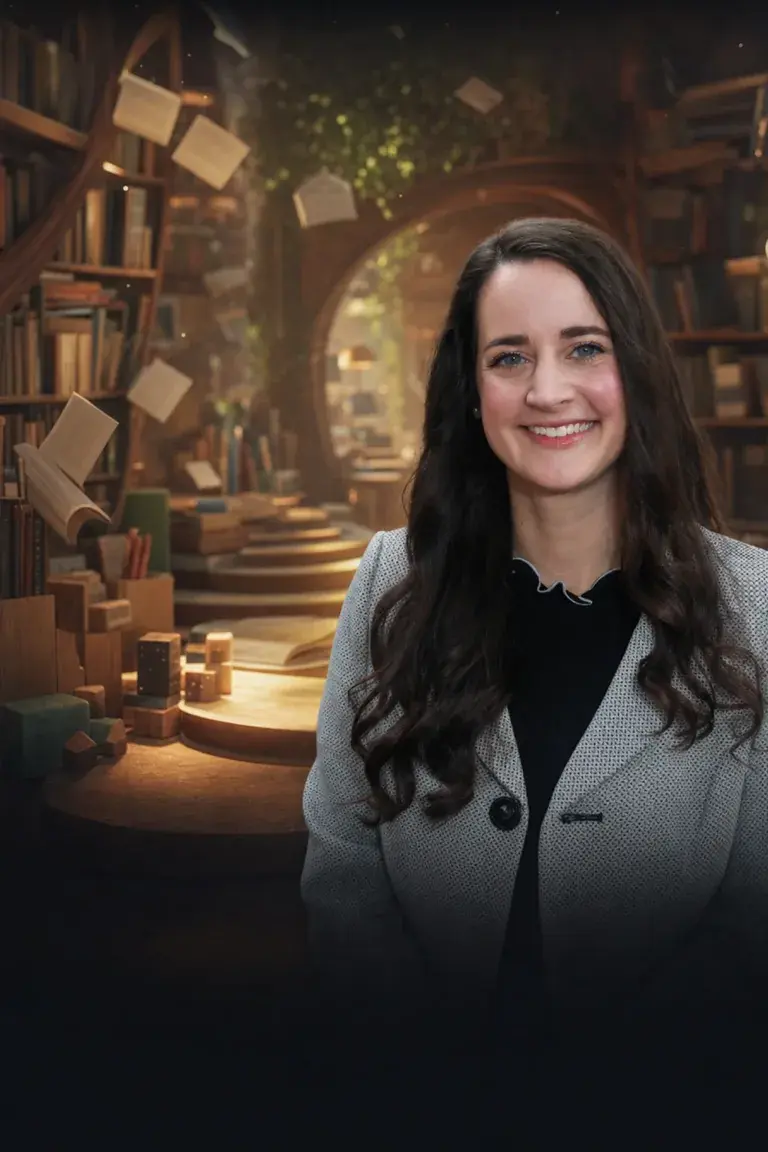
Building Blocks of 3rd Grade Reading
Third grade reading skills aren't just for third grade — they're the foundation everything else is built on.
Starts Sun, Nov 1
10:00 PM UTC · 45m
4 sessions

Alyssa
4.5
Outcomes, not lecture notes.
Identify the main idea of a passage and distinguish it from supporting details with precision
Analyze story structure by mapping exposition, rising action, climax, falling action, and resolution onto real texts
Recognize first-person and third-person point of view and explain how each shapes the reader's experience
Compare and contrast themes, characters, and ideas across different stories and genres
Use context clues — including definitions, synonyms, antonyms, and examples — to unlock the meaning of unfamiliar words
Apply knowledge of prefixes and suffixes to decode new vocabulary independently
Distinguish between facts and opinions in nonfiction texts and evaluate author purpose and credibility
Navigate nonfiction text features — headings, diagrams, glossaries, and tables of contents — to extract information efficiently
Meet Alyssa.
Alyssa
An experienced and versatile educator, Alyssa Elswick brings ten years of teaching expertise to both classroom and online settings. Specializing in elementary education, she designs engaging, standards‑aligned curricula that integrate technology and innovative teaching strategies. Alyssa's commitment to personalized learning and continuous professional development ensures that every student is supported and inspired to achieve their full potential. A Reading Olympics coach and Beginning Teacher of the Year award-winner, Alyssa teaches for Varsity Tutors and Virtual Virginia.
Third grade reading skills aren't just for third grade — they're the foundation everything else is built on. Main idea, story structure, point of view, context clues, fact vs. opinion: these are the skills that show up on every standardized test, in every future English class, and in every subject that requires reading to learn. Building Blocks of 3rd Grade Reading is a year-round supplemental class designed for students who want to do more than pass — they want to truly own these skills. Each session digs into the concepts students are already encountering in school, reinforcing them through interactive discussion, real text analysis, and targeted practice. The result? A student who doesn't just recognize a story's climax or a paragraph's main idea when prompted — but instinctively sees it, every time.
Make the Basics Automatic When a student is still working hard on decoding longer words or reading fluently, there's little attention left for understanding what they read. We practice those foundational skills until reading feels smooth and automatic.
Lock In This Year's Learning The school year moves fast, and students are often just on the cusp of getting a topic when the next unit begins. We circle back to key 3rd grade skills from earlier in the year, like finding the main idea and key details or describing characters, that later units depend on.
Tackle What's in Front of You Whatever your class is working on right now, from chapter books and poems to informational texts, students get guided practice and clear strategies for the reading they're doing in school this month.
Preview What's Next Wouldn't we all love a sneak peek at our next challenge before the clock starts ticking and the points start counting? We preview upcoming skills, like comparing two texts on the same topic or understanding point of view, so new skills feel familiar instead of intimidating.
Live Q&A
Cameras / mics optional
Recordings
Available within 1 hour, kept 90 days
Materials
No special materials required
Similar classes

free with a Varsity Tutors membership
12
DAYS02
HRS52
MINSun, Nov 1 • 10:00pm UTC
4 classes, starts in 12 days
Tue, Nov 24 • 11:00pm UTC
4 classes, starts in 35 days
Tue, Jan 5 • 10:00pm UTC
4 classes, starts in 77 days
Tue, Feb 2 • 10:00pm UTC
4 classes, starts in 105 days
Tue, Mar 2 • 10:00pm UTC
4 classes, starts in 133 days
Building Blocks of 3rd Grade Reading