Functions, Graphs, and Limits
Help Questions
AP Calculus AB › Functions, Graphs, and Limits
Evaluate the following indefinite integral.


Explanation
Use the inverse Power Rule to evaluate the integral. We know that 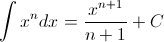


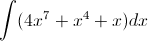
Evaluate the following indefinite integral.



Explanation
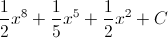
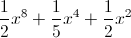
Use the inverse Power Rule to evaluate the integral. We know that 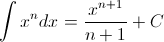


Evaluate the following indefinite integral.


Explanation
First, we know that we can pull the constant "4" out of the integral, and we then evaluate the integral according to this equation:


Explanation

Evaluate the following indefinite integral.


Explanation
Use the inverse Power Rule to evaluate the integral. Firstly, constants can be taken out of the integral, so we pull the 1/2 out front and then complete the integration according to the rule. We know that 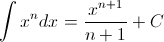


Find the indefinite ingtegral for 


Explanation
First, bring up the radical into the numerator and distribute to the (x+1) term.


Then integrate.

Since it's indefinite, don't forget to add the C:

Explanation


Explanation


Explanation

Evaluate the following indefinite integral.


Explanation
Use the inverse Power Rule to evaluate the integral. We know that 


