Award-Winning AP English Literature and Composition Prep in Charlotte
Award-Winning AP English Literature and Composition Prep in Charlotte
Everything you need to crush the AP English Literature and Composition in Charlotte, NC. Live prep classes, practice tests, 1-on-1 expert tutoring, and AI-powered diagnostics.
Who needs prep?
No obligation. Takes ~1 minute.
Instructors from
- YaleUniversity
- PrincetonUniversity
- StanfordUniversity
- CornellUniversity
Featured by


AP English Literature and Composition Prep Classes
 Short-term classLive
AP Physics 1: 4-Week Exam Review
The AP Physics 1 exam covers a year’s worth of content in a single morning. So it pays to spend 4 weeks brushing up on concepts and getting the most important skills, formulas, and strategies top of mind to be ready for test day. That’s why this 4-week exam review class provides expert-led review of critical concepts along with strategic guidance on how to handle the question formats and time limits you’ll face on the exam. From position, velocity, and acceleration through torque and rotational motion, including study and pacing strategies, you’ll cover everything you need to conquer the test.
 Semester classLive
Beginner ESL for Adults
Beginner ESL is a live course designed for students who have begun to speak and read English and want to continue on the path to fluency. Students will connect with an expert instructor and a group of peers to advance on a path of learning how to speak, read, and carry on sentence dialog. Interactive lessons will mainly focus on situations and places common to everyday life, while students also learn necessary foundations of grammar and sentence structure that they can build upon as their vocabulary becomes more diverse. At the end of this course, students will feel confident in the concepts listed in the section below.
 Short-term classLive
AP Calculus AB: 4-Week Exam Review
The AP Calculus AB exam covers a year’s worth of content in a single morning. So it pays to spend 4 weeks brushing up on concepts and getting the most important skills, formulas, and strategies top of mind to be ready for test day. That’s why this 4-week exam review class provides expert-led review of critical concepts along with strategic guidance on how to handle the test day question formats, time limits, and calculator restrictions. By the end of the course, you’ll have the most critical knowledge, skills, and strategies top of mind and ready to apply on the AP Calculus AB exam. From limits and integrals through differential equations and test-day pacing strategies, you’ll cover everything you need to conquer the test.
 Short-term classLive
AP Calculus BC: 4-Week Exam Review
The AP Calculus BC exam covers a year’s worth of content in a single morning. So it pays to spend 4 weeks brushing up on concepts and getting the most important skills, formulas, and strategies top of mind to be ready for test day. That’s why this 4-week exam review class provides expert-led review of critical concepts along with strategic guidance on how to handle the test day question formats, time limits, and calculator restrictions. By the end of the course, you’ll have the most critical knowledge, skills, and strategies top of mind and ready to apply on the AP Calculus BC exam. From limits and integrals through parametric equations and test-day pacing strategies, you’ll cover everything you need to conquer the test.
 Short-term classLive
Fun With Phonics
Everyone loves to read their favorite stories–especially beginning readers. In this weekly series, young readers will learn to read, write, and spell with the help of their favorite superheroes, fairy tales, and classic stories. Each week will combine phonics lessons with a favorite story, blending purely-fun discussion with mostly-fun phonics instruction so that new reading superheroes can live happily ever after.
 Short-term classLive
AP Physics 2: 4-Week Exam Review
The AP Physics 2 exam covers a year’s worth of content in a single afternoon. So it pays to spend 4 weeks brushing up on concepts and getting the most important skills, formulas, and strategies top of mind to be ready for test day. That’s why this 4-week exam review class provides expert-led review of critical concepts along with strategic guidance on how to handle the question formats and time limits you’ll face on the exam. From fluids and forces through principles of quantum and nuclear physics, including study and pacing strategies, you’ll cover everything you need to conquer the test.
Semester classLiveAP Physics 1: 8-Week Exam Review
The AP Physics 1 exam is coming up quickly, and this comprehensive, 8-session review course will make sure you’re fully prepared to succeed on test day. These expert-led sessions will provide comprehensive concept review along with strategic guidance on how to handle the test day question formats and time limits. By the end of the course, you’ll have the most critical knowledge, skills, and strategies top of mind and ready to apply on the AP Physics exam. From position, velocity, and acceleration through torque and rotational motion, including study and pacing strategies, you’ll cover everything you need to conquer the test.
 Short-term classLive
Building Blocks of 5th Grade Reading & Writing
The school year moves quickly, with so many skills to cover and even more opportunities for learning gaps to emerge. But reading and writing are building block subjects: not only are advanced skills built atop fundamentals, but a student’s ability to read and write is essential for their success in other classes, too. It is therefore critical for students to address and fill reading learning gaps quickly and to continually strengthen these foundations for future learning. That’s why Building Blocks of 5th Grade Reading & Writing meets weekly to give learners the instruction and repetition they need to master building block skills permanently. Each week, an expert instructor will lead students through engaging demonstrations and exercises designed to fill in learning gaps and solidify understanding of the 5th grade literacy skills–such as comparing and contrasting texts, using context clues to decode vocabulary, and conducting and using research in writing–most essential for success the rest of the school year and beyond.
 Short-term classLive
AP Language & Composition: 4-Week Exam Review
The AP English Language & Composition exam covers a year’s worth of content in a single morning. So it pays to spend 4 weeks brushing up on concepts and getting the most important skills, formulas, and strategies top of mind to be ready for test day. That’s why this 4-week exam review class provides expert-led review of critical concepts along with strategic guidance on how to handle the question formats and time limits you’ll face on the exam. By the end of the course, you’ll be ready for multiple choice and free response questions on everything from the argument structure through rhetorical analysis.
 Short-term classLive
Creative Writing Workshop
Few things have more power than the written word. In these weekly sessions, young authors will learn to harness that power in all its forms, from poetry to journalism, from memoirs to plays and songs, and much, much more. Each week, learners will examine a different element and use of creative writing and then put it into practice as they build their own writing portfolio.
 Short-term classLive
Creative Writing Workshop
Few things have more power than the written word. In these weekly sessions, young authors will learn to harness that power in all its forms, from poetry to journalism, from memoirs to plays and songs, and much, much more. Each week, learners will examine a different element and use of creative writing and then put it into practice as they build their own writing portfolio.
 Short-term classLive
Storyteller's Studio
Everyone loves a good story. So what turns a reader or talker into an author? Drop in to the storyteller’s studio to find out! Each week, learners will examine key elements of a story, explore the components of their favorite tales, and learn to use these elements to create their own characters and stories. Tell your young author to bring their imagination; these sessions will show them how to turn it into art.
Top-Rated AP English Literature and Composition Prep Instructors in Charlotte

Most AP English Lit students lose points not because they misread the passage, but because they can't translate their instincts into the structured argument the rubric demands. Molly, a journalism and...
Education & Certificates
University
Bachelor's
ACT Scores

I am a licensed physician from Florida who is currently changing careers. I graduated from the University of Pennsylvania in 2009 and have extensive tutoring and editing experience. While a student, I...
Education & Certificates
Nova Southeastern University
PHD, Medicine
University of Pennsylvania
Bachelors, History
SAT Scores

I'm a recent Stanford graduate (Electrical Engineering and Computer Science), and have been working at a major Management Consulting firm for a few years now. I personally scored a 2360 (out of 2400) ...
Education & Certificates
Stanford University
Bachelors in Electrical Engineering and Computer Science
ACT Scores

I'm available to tutor biology, chemistry, physics, math from Algebra up through AP Calculus, SAT test prep, and French. I've been tutoring students in science and math for 7 years. I also spent 8 mon...
Education & Certificates
Massachusetts Institute of Technology
Masters, Environmental Engineering
Massachusetts Institute of Technology
Bachelors
SAT Scores

I am available to tutor middle and high school math, history and test prep. I have tutored math and history in the past and I previously taught a test prep course at a school in Hanoi, Vietnam. I have...
Education & Certificates
Harvard University
Master of Public Policy, Public Policy
ACT Scores

I am a current student at the University of Chicago. I am working towards a Bachelor of Science in Biological Sciences, and I am on the pre-medical track. I am extremely passionate about tutoring, and...
Education & Certificates
University of Chicago
Bachelor of Science, Biology, General
ACT Scores

I am enrolled in the Mechanical Engineering PhD program at Rice University which will begin Fall 2020, and I am hoping to return to academia as a professor after earning my PhD. In the meantime, I am ...
Education & Certificates
University of Notre Dame
Bachelor of Science
Rice University
Doctor of Philosophy, Mechanical Engineering
ACT Scores

I am a published author who has enjoyed “coaching” our daughter, as she navigated through high school, college and graduate school. I mentor college juniors who are seeking careers in financial servic...
Education & Certificates
University of Pittsburgh
Bachelor of Science, English, Psychology
SAT Scores

I am a Duke University graduate in Economics and Computer Science. I am currently pursuing an MBA degree at the Yale School of Management. I have worked in the financial field, both at a management co...
Education & Certificates
Duke University
Bachelor of Science (Economics and Computer Science)
Yale School of Management
Current Undergrad Student, Business Administration and Management
ACT Scores
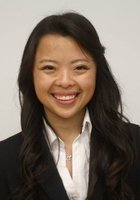
I am currently a second year medical student. I was a Physiological Sciences major at UCLA (class of 2015), and pursued research during my gap year between undergrad and medical school.
Education & Certificates
University of California Los Angeles
Bachelors, Physiological Sciences
Drexel University College of Medicine
Current Grad Student, MD
SAT Scores
Frequently Asked Questions
The three most common pain points are: (1) analyzing complex poetry and prose under time pressure—students often miss layers of meaning or struggle to connect textual evidence to broader themes; (2) managing the 3-hour exam pacing, especially the poetry analysis section where students have limited time to deeply engage with unfamiliar texts; and (3) distinguishing between identifying literary devices and actually explaining their rhetorical effect, which the exam requires. Many students can spot a metaphor but struggle to articulate why the author chose it and what it accomplishes in context.
The poetry analysis question rewards students who move beyond listing devices to explaining their cumulative effect on meaning. A strong approach is to identify 3-4 key literary elements (imagery, tone, syntax, sound devices) that work together, then build your thesis around how these elements create a specific emotional or thematic impact. Practice writing under timed conditions—you have about 40 minutes for this essay—and focus on embedding evidence seamlessly rather than quoting long passages. Many tutors recommend analyzing 2-3 poems per week, annotating for purpose rather than just identifying techniques, to build speed and analytical depth.
You have about 1 minute per question for 55 multiple-choice items across two prose passages and one poem—a tight pace that requires strategic reading. Rather than reading the entire passage first, many high-scorers skim for structure and tone, then read questions and return to specific lines for evidence. This approach prevents getting lost in dense prose while ensuring you ground answers in the text. Practice with official AP exams to build familiarity with question patterns (tone/attitude questions, inference questions, and function-in-context questions are most common) so you can quickly identify what each question is really asking.
The exam distinguishes between students who identify literary devices and those who explain their rhetorical purpose—why the author made that choice and what it communicates. When you encounter a technique, ask yourself: "What feeling or idea does this create? How does it support the author's larger message?" For example, don't just note that a passage uses short, fragmented sentences; explain that the fragmentation creates urgency or disorientation that mirrors the character's mental state. Tutors often recommend practicing with released AP essays to see how top-scoring responses connect micro-level textual choices to macro-level themes and author's purpose.
Unfamiliar texts are intentional—the exam tests your ability to analyze any text, not your prior knowledge. Build a reliable analytical framework: start by identifying the speaker, setting, and tone; then track how key images or ideas develop and shift; finally, consider what the patterns suggest about meaning. Practice with poems and prose passages outside your classroom reading list weekly, using the same annotation system each time so it becomes automatic under pressure. This consistent practice builds pattern recognition and reduces the anxiety that comes with seeing a new text—you'll trust your process rather than panic about not knowing the work.
Score improvement depends on your starting point and consistency. Students who work with tutors on targeted weaknesses—like moving from surface-level analysis to deeper interpretation, or improving Free Response organization—typically see 1-3 score point gains (on the 1-5 scale) over 8-12 weeks of regular practice. The biggest gains come from students who practice full timed exams weekly, get detailed feedback on essay structure and evidence integration, and actively revise their approach based on that feedback. If you're scoring a 2-3, reaching a 4 is very achievable with focused work; jumping from 4 to 5 requires mastery of nuance and consistency across all three essay types.
Your thesis should make a specific claim about how literary elements work together to create meaning—not just "the author uses imagery"—but "the author's shifting imagery of light and shadow traces the character's moral awakening." Structure-wise, the AP rewards essays that weave evidence directly into analysis rather than quoting first and explaining after. Each body paragraph should focus on one major literary element or thematic strand, with 2-3 pieces of textual evidence embedded within your explanation of their effect. Avoid plot summary; instead, use specific moments to support your interpretation. Tutors often have students outline their essays before writing to ensure the argument flows logically and each paragraph advances the thesis.
The comparative essay requires you to analyze how two texts treat a similar theme or concept, and many students struggle because they write two separate analyses instead of a true comparison. The strongest essays identify a specific interpretive lens—for example, how both texts use nature imagery to explore human vulnerability—then analyze each text through that lens, constantly comparing their approaches. Rather than "Text A does X, Text B does Y," aim for "Both texts use X, but Text A emphasizes Y while Text B emphasizes Z, revealing different perspectives on the theme." Practice identifying meaningful similarities and differences before writing, and use comparative language (similarly, conversely, in contrast) to signal your comparative thinking throughout the essay.
Other Charlotte test prep
Let's find your perfect prep plan
Answer a few quick questions. We'll recommend the right plan and match you with a top 5% instructor.