Award-Winning AP Spanish Literature and Culture Prep in Baltimore
Award-Winning AP Spanish Literature and Culture Prep in Baltimore
Everything you need to crush the AP Spanish Literature and Culture in Baltimore, MD. Live prep classes, practice tests, 1-on-1 expert tutoring, and AI-powered diagnostics.
Who needs prep?
No obligation. Takes ~1 minute.
Instructors from
- YaleUniversity
- PrincetonUniversity
- StanfordUniversity
- CornellUniversity
Featured by


AP Spanish Literature and Culture Prep Classes
 Short-term classLive
Beginner Spanish
Hola! ¿Hablas un poco de español? Interested in exploring Spanish some more? Our Beginner Spanish for Adults is a live course designed for students interested in learning who have previous experience with and are enthusiasts wanting to get to know the language more in-depth. Connect with an expert instructor and a group of peers to advance on a path of learning how to speak, read, and carry on sentence dialog. Interactive lessons will mainly focus on situations and places you might experience in our day-to-day lives. At the end of this course, you will feel confident in the concepts listed in the section below.
 Short-term classLive
Spanish for Work
Spanish for Work (Introduction: L1) is a six-week class designed for adults who want to improve their language skills for conducting business and interacting in the workplace and conducting business with Spanish speakers. The course is built for students who have begun to practice basic Spanish vocabulary and phrases, but limited experience speaking the language. The class is taught in a relaxed and supportive environment with a focus on practical communication skills. Throughout the course, students will learn vocabulary and phrases commonly used in the workplace and business settings. The class will cover topics such as introducing oneself, making small talk, scheduling appointments, giving and receiving directions, making and responding to requests, and discussing work-related topics. In addition, students will learn about cultural norms and etiquette in Spanish-speaking countries to better understand and navigate professional interactions. Each session of the class will include interactive activities, role-playing exercises, and group discussions to help students practice their new language skills. The class will also incorporate listening and reading comprehension activities to improve overall language proficiency. At the end of the course, students will have gained confidence in speaking Spanish and be better equipped to communicate with Spanish-speaking colleagues and clients in a professional setting.
 Short-term classLive
Hola! Beginner Spanish for Middle School
Introduce your learner to Spanish words and phrases with weekly Spanish classes for beginners. Learning a language is a great way to appreciate other cultures and regions, as well as to develop better grammar and communication skills in your primary language, too. In small groups led by expert instructors, students will learn and practice speaking, reading, writing, and listening in Spanish as they explore a new theme each month. That allows learners to join for a month at a time to pick up “un poco” or join several months in a row to learn más.
 Short-term classLive
Hola! Beginner Spanish for Elementary School
Introduce your learner to Spanish words and phrases with weekly Spanish classes for beginners. Learning a language is a great way to appreciate other cultures and regions, as well as to develop better grammar and communication skills in your primary language, too. In small groups led by expert instructors, students will learn and practice speaking, reading, writing, and listening in Spanish as they explore a new theme each month. That allows learners to join for a month at a time to pick up “un poco” or join several months in a row to learn más.
 Short-term classLive
Spanish Camp
Make your summer ¡más divertido! (more fun) with this exciting five-day Spanish camp for beginners. Each day will cover a different theme as students develop their Spanish vocabulary and skills for reading, speaking, and listening to the Spanish language. From beach adventures to outdoor games to refreshing summer treats, students will love learning from thematic lessons that embrace the season and set them on a course to love learning languages.
 Short-term classLive
Jump Start to AP & Honors Chemistry
Chemistry is the study of the properties, structures, and reactions of matter—and how substances transform through interactions at the atomic and molecular level. From the periodic table to chemical equations, each concept builds on the last—so the foundations you begin the school year with tend to shape the reactions, outcomes, and confidence you carry through every lab and lesson. In this live, interactive summer class you will learn and review the key building blocks for success in advanced high school chemistry classes, including AP, IB, and honors classes. From scientific principles to essential math concepts, you’ll cover everything you need to confidently conquer your most challenging fall class.
 Short-term classLive
Jump Start to AP & Honors Physics
Physics is the study of the fundamental forces and principles that govern how matter and energy interact in the universe. From motion and momentum to waves and electricity, each concept builds on the last—so the foundations you begin the school year with tend to govern your trajectory and velocity throughout the school year. In this live, interactive summer class you will learn and review the key building blocks for success in advanced high school physics classes, including AP, IB, and honors classes. From scientific principles to essential math concepts, you’ll cover everything you need to start your most challenging fall class with energy and momentum.
 Short-term classLive
Jump Start to AP Computer Science A
Computer Science is the study of how we use logic and code to solve problems and build the digital world around us. From variables and conditionals to classes and objects, each concept builds logically on the last—so the foundations you start with often determine how efficiently and confidently you can program throughout the year. In this live, interactive summer class, you’ll learn and review the key building blocks for success in advanced high school computer science courses, including AP Computer Science A. From core Java syntax to problem-solving strategies, you’ll cover everything you need to start this rigorous coding class with structure and logic.
 Short-term classLive
Jump Start to AP & Honors Biology
Biology is the study of the building blocks of life, how cells, systems, and processes interact to enable complex organisms to adapt and thrive. And just like living systems build from their foundations, your own biology knowledge builds concept by concept toward the complex skills you need for your labs and exams throughout the year. In this live, interactive summer class you will learn and review the key building blocks for success in advanced high school biology classes, including AP, IB, and honors classes. Armed with sound fundamentals you’ll be ready to hit the ground running in the new school year and thrive in your most challenging fall class.
Top-Rated AP Spanish Literature and Culture Prep Instructors in Baltimore

Biology and chemistry training at the University of Chicago built Rhea's instinct for close reading under pressure — parsing dense texts for structure and argument, exactly what AP Spanish Literature ...
Education & Certificates
University of Chicago
Bachelor of Science, Biology, General
ACT Scores
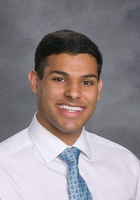
Sanjay's path to AP Spanish Literature and Culture prep is unusual: he learned the language entirely from the outside, starting in second grade and continuing through Rice University — where he comple...
Education & Certificates
Rice University
Bachelor in Arts

AP Spanish Literature and Culture's free-response section — particularly the literary analysis essay — rewards students who understand how to structure an argument under time pressure, regardless of l...
Education & Certificates
Yale University
Bachelor in Arts
ACT Scores
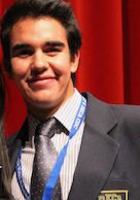
Emerson's double major in Biology and Psychology at the University of Chicago required exactly the kind of evidence-based argumentation that AP Spanish Literature and Culture's free-response rubric re...
Education & Certificates
University of Chicago
Bachelor of Science, Biology and Psychology
SAT Scores

A Princeton PhD in Spanish and Iberian Studies gives Renee an unusually deep command of the canonical texts on the AP Spanish Literature and Culture required reading list — she doesn't just know the w...
Education & Certificates
Colgate University
Bachelor in Arts, Spanish
Princeton University
Doctor of Philosophy, Spanish and Iberian Studies
SAT Scores

Six months living in Spain — not studying Spain, but living it — gave Rebecca a cultural immersion that sharpens the contextualization layer AP Spanish Literature and Culture's free-response rubric ex...
Education & Certificates
University of Notre Dame
Bachelors of Arts in English and Philosophy
SAT Scores

Georgetown's double major in Spanish and Government trained Sarah to read texts the way AP Spanish Literature and Culture's rubric demands: as arguments embedded in political and cultural context, not...
Education & Certificates
University of Pennsylvania
Masters, International Educational Development
Georgetown University
Bachelors, Spanish; Government (Double Major)
ACT Scores
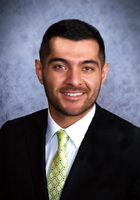
Princeton's Political Science program demanded something that maps directly onto AP Spanish Literature and Culture's hardest free-response tasks: reading texts as culturally situated arguments, then c...
Education & Certificates
Princeton University
Bachelor in Arts

Four years T.A.-ing Spanish at Dartmouth using the Rassias method gave Elise a precise understanding of how syntax and verb structure connect to meaning — exactly the analytical layer the AP Spanish L...
Education & Certificates
Dartmouth College
B.A. in Comparative Literature
SAT Scores
Caio brings something rare to AP Spanish Literature and Culture prep: native-level fluency in both Spanish and Portuguese, which means he reads the canonical texts the way the exam expects students to...
Education & Certificates
Rice University
Current Undergrad, Sociology with business minor
SAT Scores
Frequently Asked Questions
The exam's multiple-choice section tests close reading comprehension across poetry, prose, and drama—often with archaic or regional Spanish that trips up students who've only studied contemporary language. The free-response essays require students to analyze literary devices and cultural context simultaneously, which means understanding not just what a text says, but why an author made specific stylistic choices. Many students also struggle with the timed essay portion, where they need to synthesize multiple texts and write fluently in Spanish under pressure. A tutor can help you build strategies for tackling unfamiliar vocabulary in context, recognizing literary techniques quickly, and structuring arguments that connect textual evidence to broader cultural themes.
The key is moving beyond word-by-word translation and learning to identify literary patterns and author intent. Effective strategies include annotating for tone shifts, metaphorical language, and character development as you read—not just vocabulary. Many students benefit from reading shorter passages multiple times with different focuses: first for overall meaning, then for literary devices, then for cultural or historical context. Tutors experienced in AP Spanish Literature often teach you to recognize common poetic structures (like décimas or sonetos) and prose techniques (like stream of consciousness) so you can spot them quickly during the exam. Building a personal glossary of literary terms in Spanish also helps you recognize and discuss techniques more naturally in your essays.
The strongest essays move beyond plot summary and make a clear argument about how an author uses literary devices to develop theme or reflect cultural values. Common mistakes include: focusing too much on what happens in the text rather than how it's written, failing to connect individual examples to your larger thesis, or writing in English-influenced sentence structures that sound unnatural in Spanish. Effective essays use specific textual evidence (quotes or detailed references), explain why that evidence matters, and connect it back to your main argument in each paragraph. A tutor can help you practice the essay-planning process under timed conditions, teach you how to transition smoothly between analysis and evidence in Spanish, and give you feedback on whether your arguments are actually addressing the prompt's specific question about literature and culture.
Cultural context is essential—it's explicitly part of the exam's focus, and many texts are impossible to fully understand without knowing the historical moment they were written in or the author's background. For example, understanding García Lorca's work without knowing about early 20th-century Spain and his own identity creates huge gaps in interpretation. The exam expects you to recognize how literature reflects and responds to cultural values, social issues, and historical events. This means your preparation should include not just reading the assigned texts, but learning about the periods they come from, major Spanish and Latin American historical events, and how different authors respond to similar cultural moments. Tutors can help you build this contextual knowledge efficiently and show you how to weave it into your essays without letting it overshadow textual analysis.
The exam intentionally includes words you won't know, so your strategy matters more than memorizing vocabulary lists. First, learn to use context clues and word roots to make educated guesses about meaning—especially important for archaic or regional Spanish you won't find in everyday study. Second, distinguish between words you need to understand the overall meaning versus words that are just descriptive details; you don't need to know every single word to answer comprehension questions. Third, focus your vocabulary study on literary and cultural terms that appear across multiple texts (like 'desengaño,' 'soledad,' or 'mestizaje') rather than one-off words. Tutors often recommend keeping a reading journal where you note unfamiliar words in context, then review them in clusters by theme or text—this helps you remember them better than isolated flashcards and makes connections between texts clearer.
Practice tests are most effective when you use them strategically, not just to check your score. Start by taking a full practice exam under timed conditions to identify which sections drain your time (often the multiple-choice reading comprehension) and which literary genres or topics give you the most trouble. Then use individual sections to target weak areas: if poetry comprehension is your challenge, focus several study sessions on poetry passages with timed practice. For essays, write multiple practice responses and get feedback on whether your analysis is specific enough and your Spanish is clear and natural. Spacing out practice tests throughout your preparation—rather than cramming them all at the end—helps you apply what you've learned and build confidence. A tutor can review your practice essays, point out patterns in your mistakes, and help you refine your approach before test day.
Time management on this exam is tricky because the multiple-choice section (1 hour for 52 questions) requires careful pacing, and the free-response section (1.5 hours for 3 essays) demands that you balance planning time with writing time. Many students rush through reading passages and misread questions, losing points they could have earned. A smart strategy is to spend 45-50 seconds per multiple-choice question (including reading the passage), which leaves a few minutes to review flagged questions. For essays, spend 3-4 minutes planning each response (outlining your argument and key evidence) before writing—this prevents rambling and helps you stay focused. Practicing with a timer is essential; tutors often help students develop personalized pacing strategies based on whether they're slower readers, slower writers, or struggle more with analysis versus language production.
Score improvement depends on where you're starting and how much time you invest. Students who begin with solid foundational Spanish (able to understand most everyday conversation) typically see the biggest gains by focusing on literary analysis skills and cultural knowledge—areas where tutoring has the most impact. Realistic expectations: if you're scoring in the 2-3 range (below proficient), targeted tutoring can help you reach a 4 or 5 by teaching you how to write stronger essays and read more strategically. If you're already at a 4, reaching a 5 requires mastery of nuance and the ability to write sophisticated analysis under pressure, which takes consistent practice and feedback. The timeline matters too—students who start tutoring 3-4 months before the exam with weekly sessions typically see more improvement than those who start a few weeks out. Tutors can assess your current skills and give you a realistic roadmap based on your specific weaknesses.
Other Baltimore test prep
Let's find your perfect prep plan
Answer a few quick questions. We'll recommend the right plan and match you with a top 5% instructor.