Award-Winning AP Calculus Prep in Baltimore
Award-Winning AP Calculus Prep in Baltimore
Everything you need to crush the AP Calculus in Baltimore, MD. Live prep classes, practice tests, 1-on-1 expert tutoring, and AI-powered diagnostics.
Who needs prep?
No obligation. Takes ~1 minute.
Instructors from
- YaleUniversity
- PrincetonUniversity
- StanfordUniversity
- CornellUniversity
Featured by


AP Calculus Prep Classes
 Short-term classLive
Jump Start to Precalculus
Beat the summer slide and give your student a running start into the school year with Jump Start math classes over the summer. In live, expert-led sessions, students will review key building block skills from Algebra 2 and get a sneak preview of the new skills they’ll encounter toward the beginning of Pre-Calculus this fall. Jump Start to Pre-Calculus will emphasize working with polynomials, manipulating trigonometric functions, and graphing functions, preparing students to deepen and apply these skills to understanding continuity, finding limits, and taking derivatives in the coming school year.
 Short-term classLive
Jump Start to AP & Honors Chemistry
Chemistry is the study of the properties, structures, and reactions of matter—and how substances transform through interactions at the atomic and molecular level. From the periodic table to chemical equations, each concept builds on the last—so the foundations you begin the school year with tend to shape the reactions, outcomes, and confidence you carry through every lab and lesson. In this live, interactive summer class you will learn and review the key building blocks for success in advanced high school chemistry classes, including AP, IB, and honors classes. From scientific principles to essential math concepts, you’ll cover everything you need to confidently conquer your most challenging fall class.
 Short-term classLive
Jump Start to AP Calculus
Start your AP Calculus journey with clarity and confidence. This live, interactive course is designed to give students entering AP Calculus AB a solid head start on core topics like limits, derivatives, and continuity. With expert instruction and real AP-style practice, you’ll feel prepared, not panicked—before the school year even begins.
 Short-term classLive
Jump Start to AP & Honors Physics
Physics is the study of the fundamental forces and principles that govern how matter and energy interact in the universe. From motion and momentum to waves and electricity, each concept builds on the last—so the foundations you begin the school year with tend to govern your trajectory and velocity throughout the school year. In this live, interactive summer class you will learn and review the key building blocks for success in advanced high school physics classes, including AP, IB, and honors classes. From scientific principles to essential math concepts, you’ll cover everything you need to start your most challenging fall class with energy and momentum.
 Short-term classLive
Jump Start to AP Computer Science A
Computer Science is the study of how we use logic and code to solve problems and build the digital world around us. From variables and conditionals to classes and objects, each concept builds logically on the last—so the foundations you start with often determine how efficiently and confidently you can program throughout the year. In this live, interactive summer class, you’ll learn and review the key building blocks for success in advanced high school computer science courses, including AP Computer Science A. From core Java syntax to problem-solving strategies, you’ll cover everything you need to start this rigorous coding class with structure and logic.
 Short-term classLive
Jump Start to AP & Honors Biology
Biology is the study of the building blocks of life, how cells, systems, and processes interact to enable complex organisms to adapt and thrive. And just like living systems build from their foundations, your own biology knowledge builds concept by concept toward the complex skills you need for your labs and exams throughout the year. In this live, interactive summer class you will learn and review the key building blocks for success in advanced high school biology classes, including AP, IB, and honors classes. Armed with sound fundamentals you’ll be ready to hit the ground running in the new school year and thrive in your most challenging fall class.
 Short-term classLive
Precalculus Fundamentals
Math is a building block subject. Just like you needed Algebra 1 to be ready for Algebra 2, so now you’re taking Precalculus because you will need these skills for Calculus. And within each subject the same is true, too: the skills you learn next month will require you to be comfortable with the skills you learned last month; for every lesson you encounter in school, you’ll need to bring some foundational knowledge to build on. That’s why Precalculus Fundamentals can play such a key role in your math performance. Each week an expert instructor will guide you through the key concepts that your current and upcoming lessons depend on, helping you solidify things that didn’t quite click, get practice and repetition with the most important skills for what’s next, and building your skill set for the rest of the school year and the math subjects that lie beyond it–like calculus!
Top-Rated AP Calculus Prep Instructors in Baltimore

The AP Calculus AB free-response section rewards students who can show their reasoning clearly, not just arrive at the right answer — and that distinction is where most partial-credit points are eithe...
Education & Certificates
Johns Hopkins University
Bachelor of Science, Cellular and Molecular Biology
ACT Scores
I am an interdisciplinary educator with an Ed.M. from the Harvard Graduate School of Education and a B.A. from Dartmouth College. My background is primarily in integrated arts learning and museum educ...
Education & Certificates
Harvard University
Masters in Education, Education
Dartmouth College
B.A.
SAT Scores
I'm not tutoring or buried in my textbooks, you will either find me rock climbing at the Triangle Rock Club, playing Ultimate Frisbee, working on my car, or enjoying the great outdoors (beaches, mount...
Education & Certificates
The University of Texas at Dallas
Bachelors, Mechanical Engineering
Duke University
Current Grad Student, Mechanical Engineering
SAT Scores
I am a recent graduate from a masters program in biostatistics at Columbia University. I received my Bachelor of Arts in biological sciences, with a focus in neurobiology at Northwestern University. I...
Education & Certificates
Columbia University
Masters in biostatistics
Northwestern University
Bachelor of Arts in biological sciences (focus in neurobiology)
SAT Scores

I am a graduate of Wesleyan University, where I received my Bachelor of Arts in Sociology with High Honors. With eight years of experience working in education, I've tutored students in math, science,...
Education & Certificates
Harvard University
PHD, Education
Wesleyan University
Bachelor in Arts, Sociology
ACT Scores
I am a graduate of Washington University in St Louis, where I received my Bachelor of Arts in History with minors in Humanities and Anthropology. Since graduation, I have worked as a tutor, teacher, a...
Education & Certificates
Simmons College
Masters, Special Education: Mild to Moderate Disabilities 5-12
Washington University in St. Louis
Bachelor of Arts in History (minors in Humanities and Anthropology)
ACT Scores

Mechanical engineering at Harvard demands the same skill AP Calculus AB rewards most: translating a real-world scenario into a precise mathematical structure before any calculation begins. Christopher...
Education & Certificates
Harvard College
Bachelor of Science, Mechanical Engineering
ACT Scores
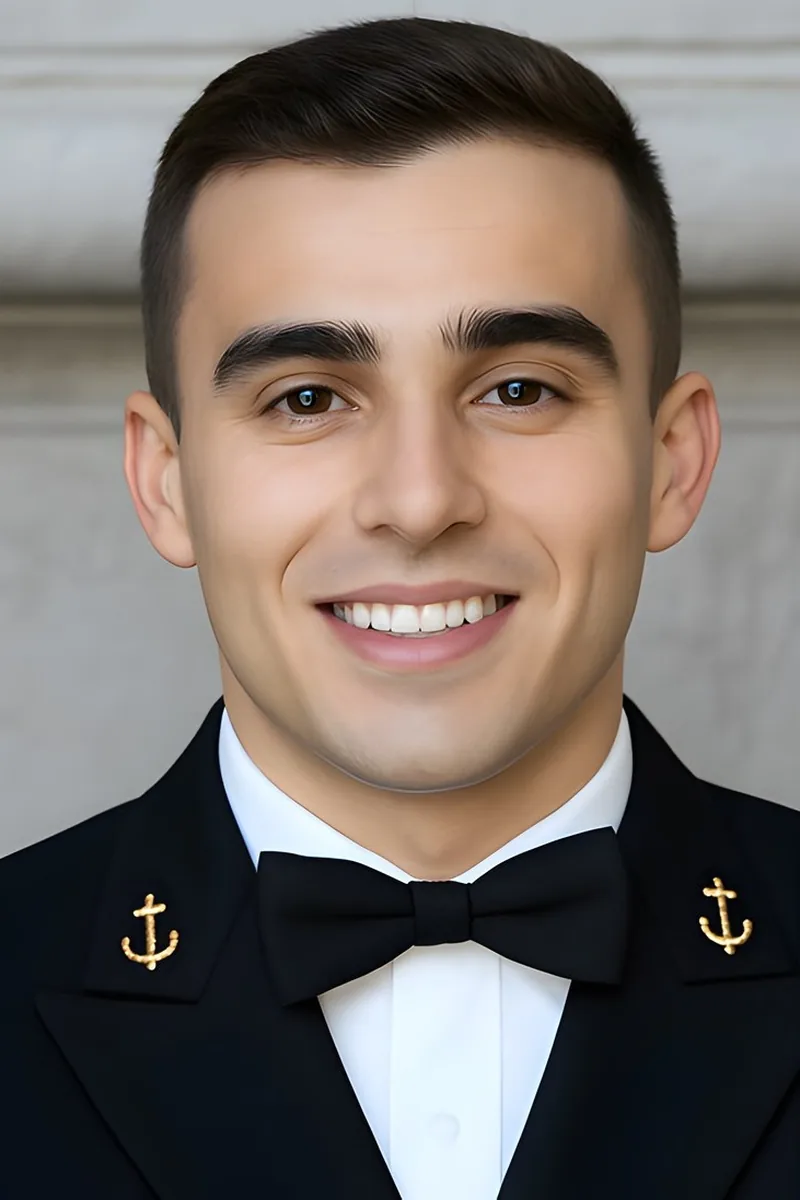
Mechanical engineering at Yale runs on the same core skill AP Calculus AB tests hardest: translating a physical situation into precise mathematical language before any calculation begins. Charles (34 ...
Education & Certificates
Yale University
Bachelor of Science, Mechanical Engineering
ACT Scores
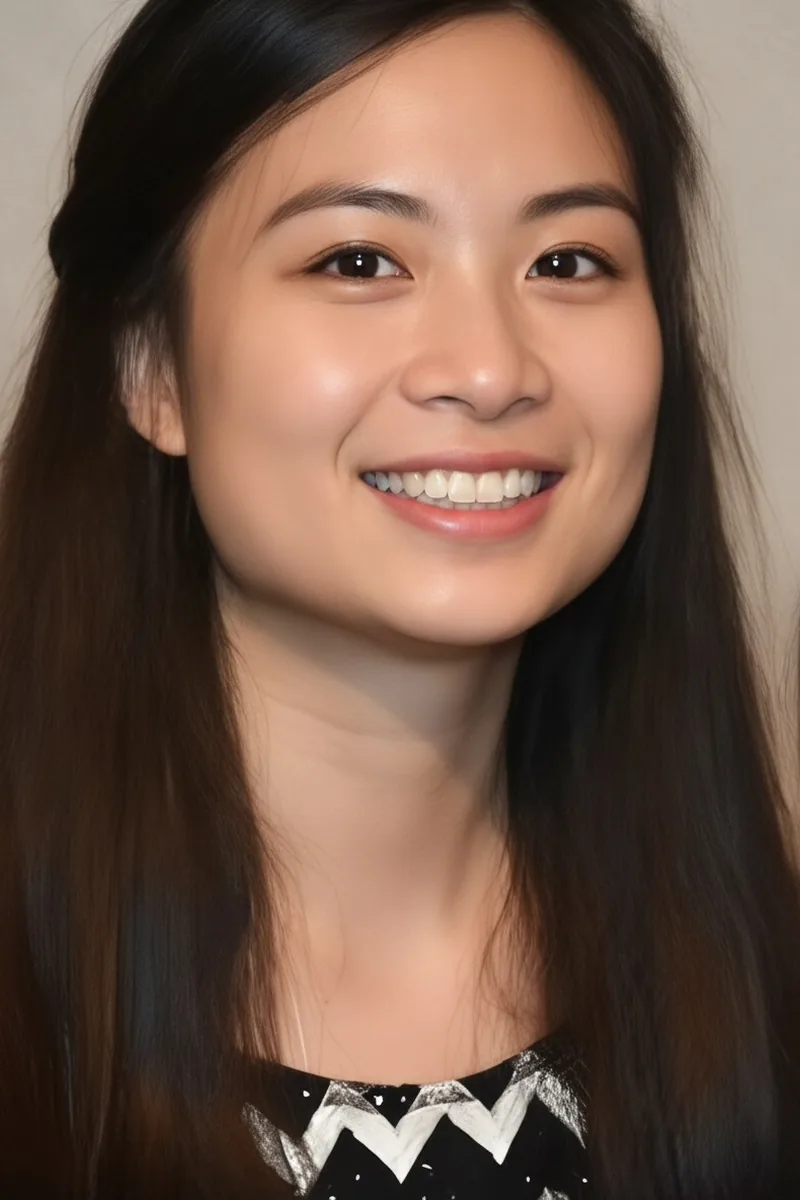
I am proud to be a part of Varsity Tutors! I am originally from San Antonio, TX; I completed my undergraduate education at Rice University in Houston where I received a bachelor's degree in Biochemist...
Education & Certificates
Baylor College of Medicine
Current Grad Student, M.D.
Rice University
Bachelor's in Biochemistry and Cell Biology
SAT Scores
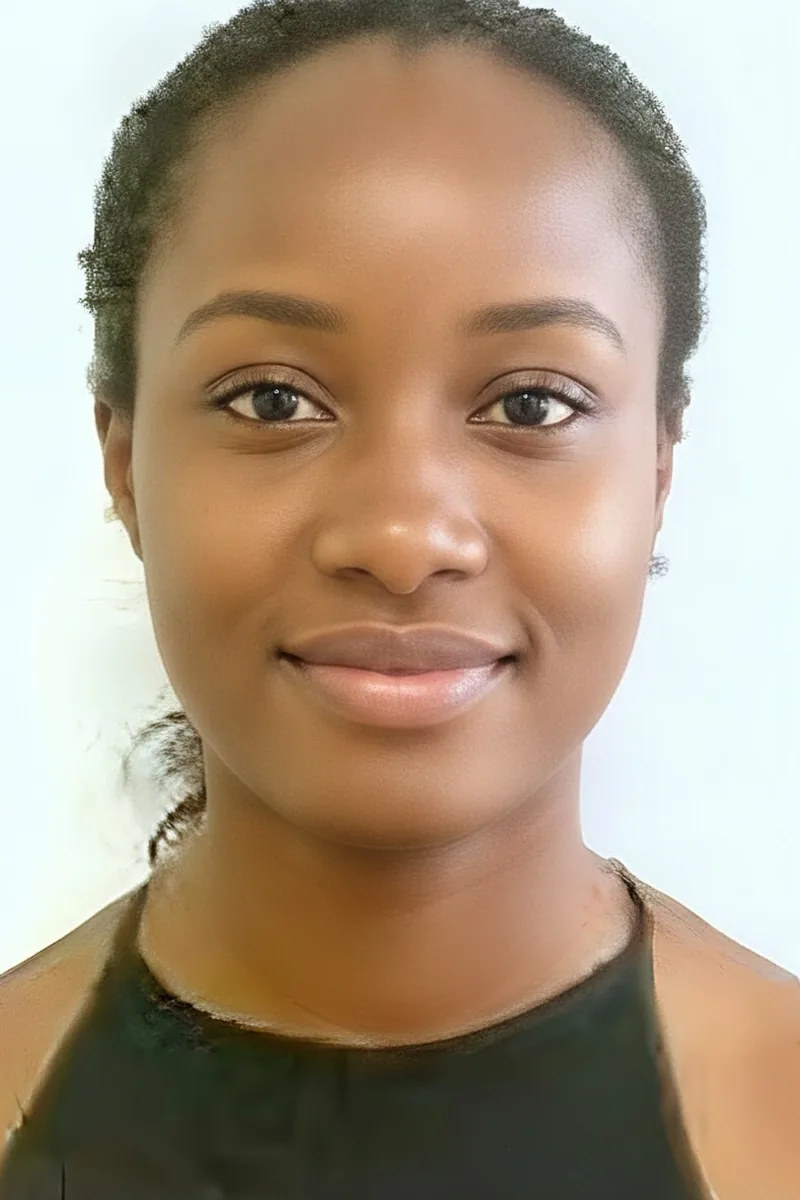
I'm Solange - a recent graduate from Harvard where I studied Sociology & Women's Studies. I've been tutoring for eight years now, and have worked with a wide range of ages and in a wide range of subje...
Education & Certificates
Harvard University
Bachelor in Arts (Sociology & Women's Studies)
ACT Scores
Frequently Asked Questions
Students typically find limits and continuity conceptually difficult at the start, especially understanding why a function can approach a value without reaching it. Later, the chain rule and related rates problems trip up many students because they require visualizing how multiple variables change together. Integration techniques—particularly u-substitution and integration by parts—demand significant practice, and many students struggle with recognizing which method applies to which integral. Finally, applications like optimization and differential equations require students to translate real-world scenarios into mathematical models, which is a skill that takes deliberate practice to develop.
This is a common gap—knowing the power rule is different from recognizing when to use it in a related rates or optimization problem. Tutors work by having you practice translating English into equations, identifying which variable is changing and which you're solving for, and then selecting the right differentiation technique. They'll often have you work through several similar problems with decreasing guidance, so you start recognizing patterns independently. Building this translation skill requires targeted practice with feedback, which is exactly what personalized instruction provides.
The AP Calculus exam has two sections: multiple choice (60 minutes for 45 questions) and free response (90 minutes for 6 questions). On multiple choice, aim to spend about 1.3 minutes per question, flagging harder ones to return to if time allows. On free response, read all six questions first and tackle the ones you feel most confident about—this builds momentum and ensures you earn partial credit where you can. Leave 10-15 minutes at the end to review your work and catch arithmetic errors. A tutor can help you practice this pacing with full-length practice tests under timed conditions, so it becomes automatic on test day.
AP Calculus AB covers limits, derivatives, and basic integration. BC covers everything in AB plus additional integration techniques (by parts, partial fractions), series and sequences, and parametric/polar curves. BC is roughly 1.5x the content of AB. If you're taking AB, tutoring focuses on mastering core concepts deeply; if you're taking BC, tutors help you manage the additional topics while reinforcing AB foundations. Many students take AB first, then BC the following year—tutors can help you decide which path fits your goals and pace you accordingly.
Free response questions reward showing your work—you can earn partial credit even if your final answer is wrong, as long as your method is sound. Start by clearly stating what you're finding (e.g., 'I'm using the chain rule to find dy/dx'). Show each algebraic step, especially when simplifying. If you get stuck on one part, move on and use a placeholder for that value in later parts—graders will often give you credit for correct reasoning downstream. Tutors help you practice this by reviewing your solutions with a grader's eye, pointing out where you lose points for skipped steps or unclear notation, so you build the habit of communicating your thinking clearly.
This requires pattern recognition built through practice. U-substitution works when you spot a function and its derivative (or close to it) in the integrand. Integration by parts applies when you have a product of functions where one differentiates to something simpler. Partial fractions handle rational functions. Trigonometric substitution appears with expressions like √(a²-x²). The key is practicing enough problems that you start seeing these patterns automatically—most students need 30-50 varied integration problems to develop real fluency. Tutors accelerate this by showing you how to classify problems quickly and by having you explain your reasoning out loud, which deepens pattern recognition.
Limits are abstract—you're learning that a function can behave a certain way 'near' a point without actually reaching it, which contradicts intuition. Many students memorize limit rules without understanding why they work. Tutors help by using graphs and numerical tables to show you what limits actually mean before diving into algebra. They'll have you evaluate a function at values approaching a point (like 1.9, 1.99, 1.999) to see the pattern, then connect that to the algebraic definition. Once you see limits as 'what value does the function approach' rather than 'what value does it reach,' the rules and applications click into place much faster.
Test anxiety in calculus often stems from feeling unprepared for the variety of problem types or worrying you'll forget a formula. Combat this by taking full-length practice tests under timed conditions weeks before the exam—this builds confidence and reveals which topics still need work. During the test itself, if you feel panicked on a hard question, skip it immediately and move to one you can solve; momentum and early points calm your nervous system. Tutors help by creating a structured study schedule so you know exactly what you're prepared for, and by reviewing your practice test errors so you see patterns rather than feeling overwhelmed by isolated mistakes.
Other Baltimore test prep
Let's find your perfect prep plan
Answer a few quick questions. We'll recommend the right plan and match you with a top 5% instructor.