Award-Winning AP Pre-Calculus Prep in Washington
Award-Winning AP Pre-Calculus Prep in Washington
Everything you need to crush the AP Pre-Calculus in Washington, DC. Live prep classes, practice tests, 1-on-1 expert tutoring, and AI-powered diagnostics.
Who needs prep?
No obligation. Takes ~1 minute.
Instructors from
- YaleUniversity
- PrincetonUniversity
- StanfordUniversity
- CornellUniversity
Featured by


AP Pre-Calculus Prep Classes
 Short-term classLive
Calculus 1 Fundamentals
A semester of college-level Calculus moves quickly: each new concept builds upon the skills before it, making it essential that you catch up quickly–or that you don’t fall behind in the first place. That’s why students love Fundamentals of Calculus 1, a six-week course designed to review and reinforce the most important building block concepts of calculus so that you’re ready to conquer every new concept that comes up in class, and that your skills stay sharp for cumulative midterm and final exams. Join an expert instructor for weekly, in-depth reviews of critical calculus concepts and watch your confidence and your grade soar.
 One-time classLive
AP Chemistry Monthly Review
Ace your AP Chemistry class _and_ the AP exam — without cramming or falling behind. Our AP Chemistry Monthly Review sessions are designed to help you stay one step ahead. Each month, an expert instructor will guide you through a focused review of the unit you’ve just covered in class, helping you reinforce key concepts, connect ideas across the curriculum, and build your personal study toolkit for May.
 One-time classLive
AP Physics 1 Monthly Review
Ace your AP Physics 1 class _and_ the AP exam — without cramming or falling behind. Our AP Physics 1 Monthly Review sessions are designed to help you stay one step ahead. Each month, an expert instructor will guide you through a focused review of the unit you’ve just covered in class, helping you reinforce key concepts, connect ideas across the curriculum, and build your personal study toolkit for May.
 Short-term classLive
Precalculus Fundamentals
Math is a building block subject. Just like you needed Algebra 1 to be ready for Algebra 2, so now you’re taking Precalculus because you will need these skills for Calculus. And within each subject the same is true, too: the skills you learn next month will require you to be comfortable with the skills you learned last month; for every lesson you encounter in school, you’ll need to bring some foundational knowledge to build on. That’s why Precalculus Fundamentals can play such a key role in your math performance. Each week an expert instructor will guide you through the key concepts that your current and upcoming lessons depend on, helping you solidify things that didn’t quite click, get practice and repetition with the most important skills for what’s next, and building your skill set for the rest of the school year and the math subjects that lie beyond it–like calculus!
One-time classLiveAP Calculus AB Monthly Review
Ace your AP Calculus AB class _and_ the AP exam — without cramming or falling behind. Our AP Calculus AB Monthly Review sessions are designed to help you stay one step ahead. Each month, an expert instructor will guide you through a focused review of the unit you’ve just covered in class, helping you reinforce key concepts, connect ideas across the curriculum, and build your personal study toolkit for May.
 Short-term classLive
High School Calculus Fundamentals
Just like integration in calculus is a summation operation, your ability to pick up new calculus skills requires the sum of the skill that came before it. Every new skill builds atop a piece of math knowledge you’ve learned before, which is why Precalculus came before Calculus, and why High School Calculus Fundamentals can play such a key role in your math performance this year. Each week an expert instructor will guide you through the key concepts that your current and upcoming lessons depend on, helping you solidify things that didn’t quite click, get practice and repetition with the most important skills for what’s next, and building your skill set for the rest of the school year and the math subjects that lie beyond it!
 One-time classLive
AP Psychology Monthly Review
AP Psychology Monthly Review is the high-impact prep course for students who want to walk into the AP exam with real confidence. Each month, students review and sharpen the skills that matter most for building on the rest of the school year and executing expertly on the AP exam in May. You'll dissect real texts, practice both multiple-choice and free-response question types, and shore up the fundamentals that can be so fleeting when your class moves on to new units quickly.
 One-time classLive
AP Biology Monthly Review
Ace your AP Biology class _and_ the AP exam — without cramming or falling behind. Our AP Biology Monthly Review sessions are designed to help you stay one step ahead. Each month, an expert instructor will guide you through a focused review of the unit you’ve just covered in class, helping you reinforce key concepts, connect ideas across the curriculum, and build your personal study toolkit for May. These sessions are ideal for students who want to maintain top grades, reduce stress, and walk into the AP exam with total confidence.
 One-time classLive
AP Precalculus Monthly Review
AP Precalculus Monthly Review is the high-impact prep course for students who want to walk into the AP exam with real confidence. Each month, students review and sharpen the skills that matter most for building on the rest of the school year and executing expertly on the AP exam in May. You'll dissect real texts, practice both multiple-choice and free-response question types, and shore up the fundamentals that can be so fleeting when your class moves on to new units quickly.
 One-time classLive
AP Computer Science A Monthly Review
Ace your AP Computer Science A class _and_ the AP exam — without cramming or falling behind. Our AP Computer Science A Monthly Review sessions are designed to help you stay one step ahead. Each month, an expert instructor will guide you through a focused review of the unit you’ve just covered in class, helping you reinforce key programming skills, strengthen your problem-solving strategies, and build your personal study toolkit for May.
 One-time classLive
AP Statistics Monthly Review
Ace your AP Statistics class and the AP exam — without cramming or falling behind. Our AP Statistics Monthly Review sessions are designed to help you stay one step ahead. Each month, an expert instructor will guide you through a focused review of the unit you’ve just covered in class, helping you reinforce key concepts, connect ideas across the curriculum, and build your personal study toolkit for May.
 One-time classLive
AP English Language & Composition Monthly Review
Ace your AP Lang essays _and_ the AP exam — without cramming or falling behind. Our AP English & Composition Language Monthly Review sessions are designed to help you stay one step ahead. Each month, an expert instructor will guide you through a focused review of the skills and texts you’ve been developing in class, helping you sharpen your rhetorical analysis, build a personal study toolkit, and feel confident in timed writing and multiple-choice questions alike.
Top-Rated AP Pre-Calculus Prep Instructors in Washington
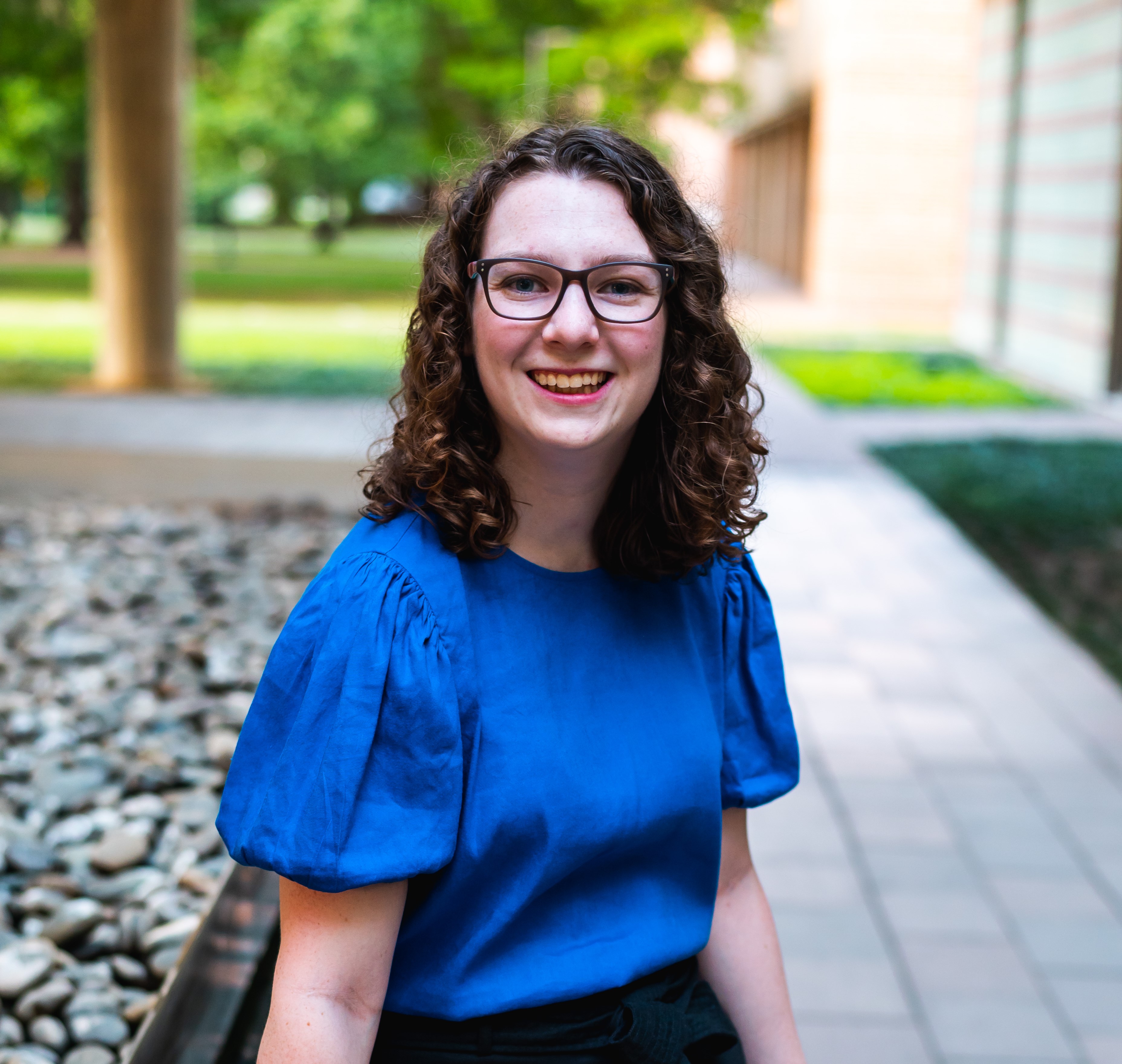
I am a graduate of Rice University with a Bachelor of Science in Physics, a Bachelors of Arts in Philosophy, and a minor in Neuroscience. My previous tutoring experiences have primarily focused on col...
Education & Certificates
Rice University
BS
ACT Scores

Hi I'm Alliyah! I'm a recent Harvard Graduate ('26) with a Bachelors in computer science and neuroscience and a Spanish Language Citation. I have over 10 years of experience tutoring and have also wor...
Education & Certificates
Harvard University
BS

Brendan's doctoral work in mathematics at the University of Florida — where he has taught and led sections of Calculus I and II — gives him an unusually clear view of exactly which conceptual gaps in ...
Education & Certificates
University
Bachelor's
SAT Scores
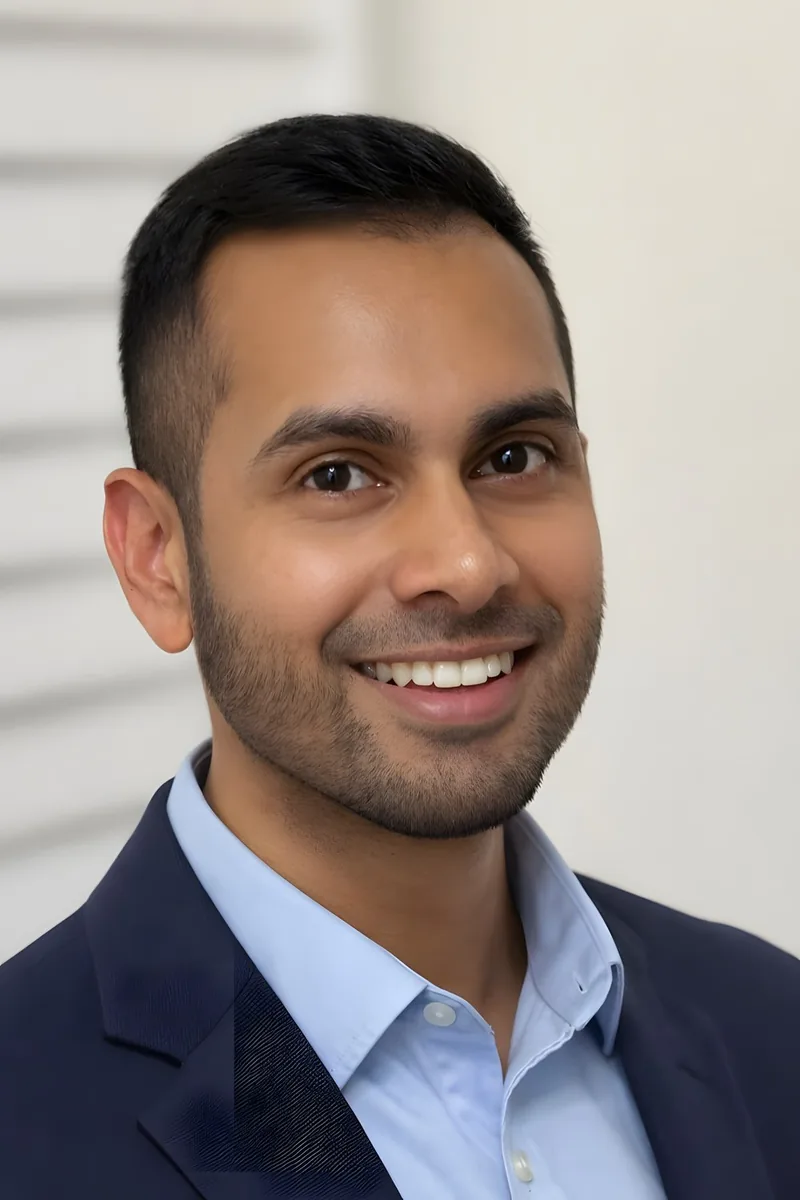
Carnegie Mellon's mathematics program is built around precise reasoning and structured problem-solving — exactly the skills the AP Pre-Calculus exam rewards on its function analysis and modeling quest...
Education & Certificates
Carnegie Mellon University
BS
SAT Scores
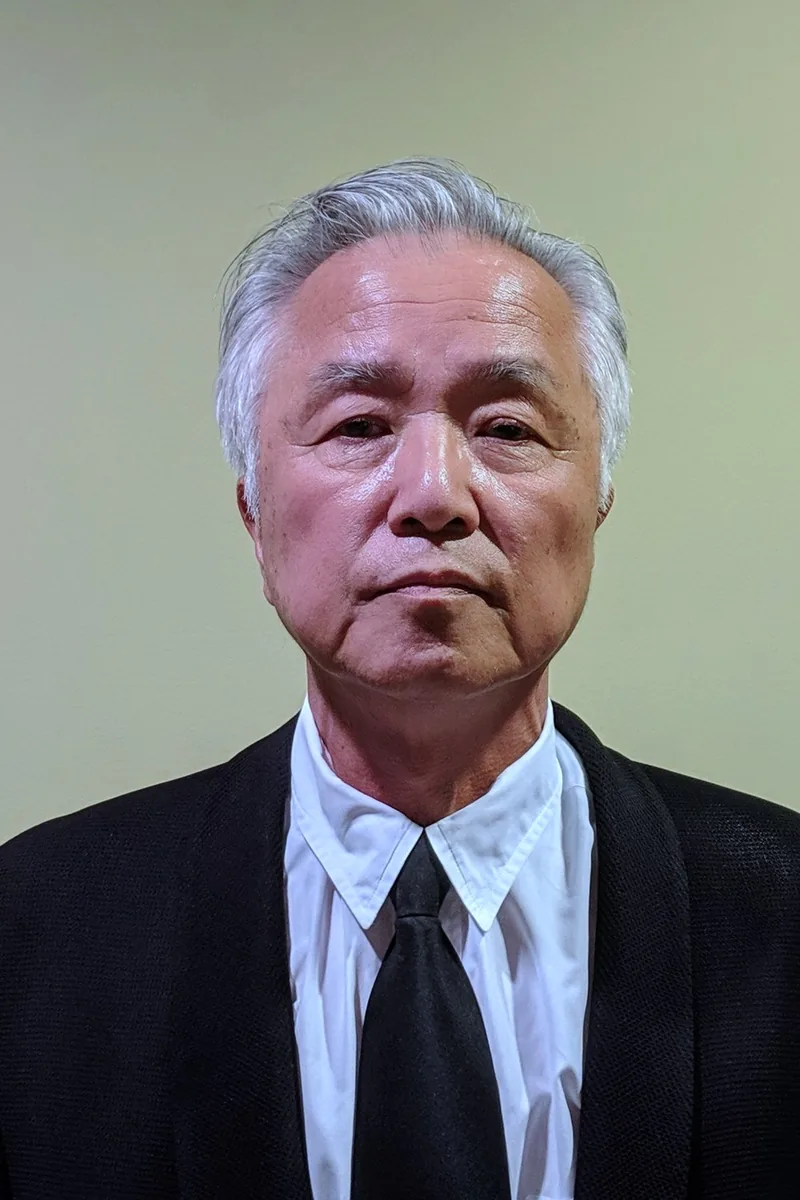
A Penn PhD in physics might seem like an unusual credential for AP Pre-Calculus prep — until you realize that Yoonsik's entire graduate training depended on mastering the exact function behavior and m...
Education & Certificates
University of Pennsylvania
PhD

Hi! My name is Oscar, and I grew up in Washington, DC. I attended St. Olaf College and graduated Magna Cum Laude with a degree in mathematics in 2023. That year I started tutoring students online and ...
Education & Certificates
Saint Olaf College
Bachelor
SAT Scores

Hello! I'm a passionate educator with a Ph.D. in Electrical Engineering and a love for making learning both effective and enjoyable. Over the years, I've taught a wide range of subjects, always with t...
Education & Certificates
University of South Florida-Main Campus
Doctorate (PhD)
National Taiwan University
Master's/Graduate

Engineering programs at Glasgow and Penn train students to model real systems with functions — and that's precisely the reasoning the AP Pre-Calculus exam tests, just stripped down to its essentials. ...
Education & Certificates
University of Pennsylvania
Master's/Graduate
University of Glasgow
Bachelor

AP Pre-Calculus free-response questions consistently reward students who can explain their reasoning, not just produce a correct answer — and that shift from computation to justification trips up most...
Education & Certificates
Arizona State University
Bachelor
ACT Scores
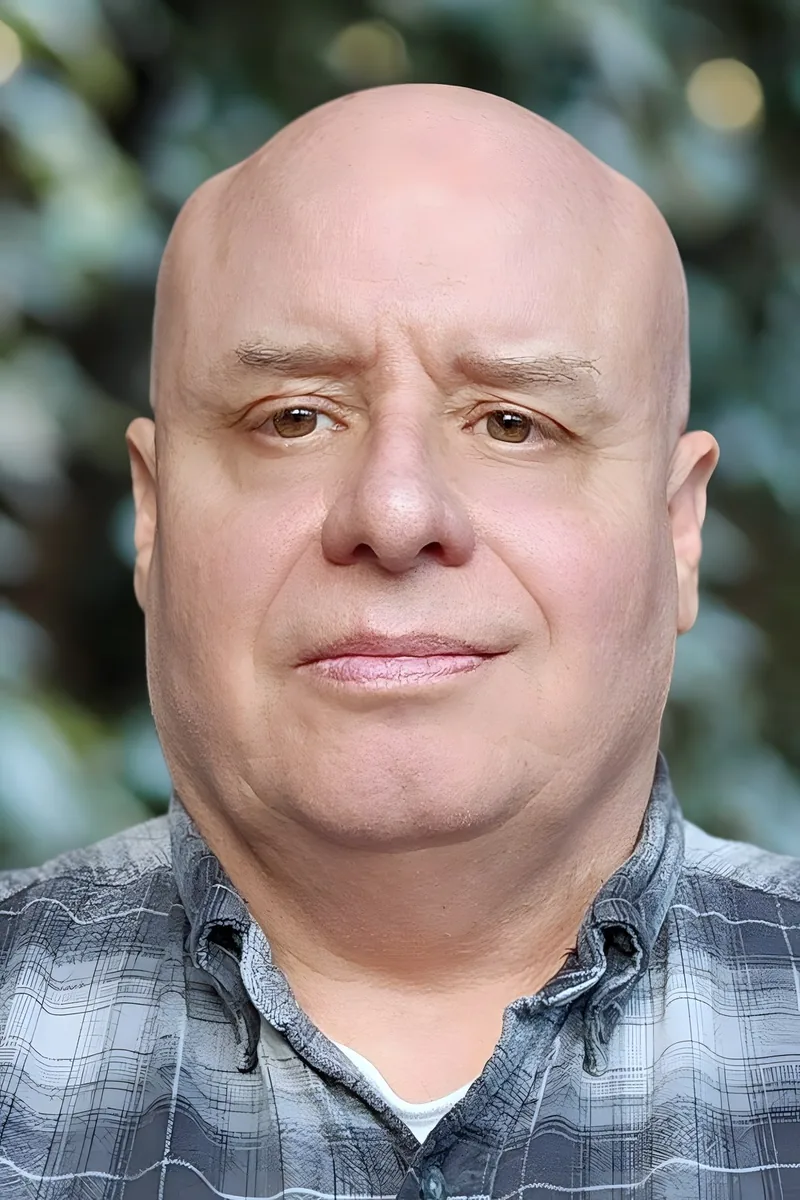
Alan's Stanford MBA and deep background in engineering and quantitative finance trained one specific discipline that maps directly onto the AP Pre-Calculus exam: reading whether a mathematical model i...
Education & Certificates
Stanford University
MBA
Frequently Asked Questions
Students often find trigonometric identities and their applications particularly challenging, especially when asked to prove complex identities or solve trigonometric equations. Rational functions—particularly analyzing asymptotes, discontinuities, and end behavior—trip up many learners who haven't solidified their understanding of polynomial division and limits. Additionally, the transition from function notation to parametric and polar equations confuses students who haven't internalized how different coordinate systems represent the same relationships. A tutor can identify which of these conceptual gaps is holding you back and rebuild that foundation before moving forward.
The exam is 3 hours long with two sections: a multiple-choice section (40 questions, 1 hour 15 minutes) and a free-response section (4 questions, 1 hour 30 minutes). The multiple-choice tests quick recall and conceptual understanding, while free-response questions require you to show work, justify reasoning, and explain your process—often across multiple parts. Effective preparation means practicing both formats separately: timed multiple-choice drills to build speed and accuracy, and full free-response problems where you write out complete solutions. Tutors can help you develop a practice schedule that balances both, ensuring you're not just getting right answers but mastering the reasoning behind them.
Function fluency—understanding how to read, transform, and manipulate functions—is the backbone of nearly every AP Pre-Calculus topic. Whether you're working with polynomial functions, rational functions, exponential/logarithmic functions, or trigonometric functions, you need to instantly recognize how shifts, stretches, and reflections affect a graph or equation. Many students memorize transformation rules without truly understanding why they work, which breaks down when exam questions ask you to combine multiple transformations or explain your reasoning. A tutor focuses on building this deep fluency so you can confidently handle unfamiliar function problems and variations you haven't explicitly practiced.
Identity proofs require strategic thinking—you need to recognize which identities to apply and in what order, which is more art than memorization. The key is learning to work backwards from the target expression and forwards from what you're given, spotting where they might meet. Most students benefit from understanding the core identities (Pythagorean, quotient, reciprocal, sum/difference, double angle) deeply enough to derive them, not just recall them. A tutor can teach you a systematic approach: simplify the more complex side, look for opportunities to factor or combine fractions, and know when to convert everything to sine and cosine. With guided practice on increasingly difficult proofs, you'll develop the pattern recognition that makes these problems feel manageable on test day.
In the multiple-choice section (40 questions in 75 minutes), you have roughly 1.5-2 minutes per question—flag anything tricky and come back to it rather than getting stuck. The free-response section (4 questions in 90 minutes) is more flexible; spend time on the first part of each question where you can earn points, even if you can't complete all parts. A smart strategy is to read all four free-response prompts first, starting with whichever looks most approachable to build confidence and momentum. Tutors can help you practice pacing through full-length practice exams, teaching you to recognize when to move on, which questions typically take longer, and how to allocate your time based on point value and difficulty.
The exam allows graphing calculators for both sections, and knowing your calculator well is a genuine advantage. You should be comfortable graphing functions quickly, finding intersections and zeros, evaluating function values at specific points, and using solver features for equations. However, a common pitfall is over-relying on your calculator—many students graph a function but don't understand what they're seeing, or use the calculator to avoid thinking through the algebra. The most successful students use calculators strategically: to verify algebraic work, explore behavior, or speed up computation, but they can also solve problems by hand if needed. A tutor can help you build both skills: efficient calculator use and the algebraic reasoning to know when and why you're using it.
Yes, but you'll need to address algebra gaps intentionally rather than hoping they'll resolve themselves. AP Pre-Calculus requires solid algebra: solving equations, manipulating expressions, factoring, and working with exponents and radicals. If these feel shaky, you'll struggle not because Pre-Calculus concepts are too hard, but because the algebra required to express or solve them will slow you down and create careless errors. A tutor can diagnose exactly which algebra skills need reinforcement—whether it's rational expressions, quadratic equations, or exponent rules—and build those foundations while you're learning new Pre-Calculus material. This targeted approach prevents you from falling behind and builds the confidence you need for the exam.
Score improvement depends on your starting point and effort. Students who are weak in foundational algebra typically see larger gains (3-5 points on a 5-point scale) once those gaps are filled, because they suddenly understand the "why" behind Pre-Calculus concepts. Students scoring in the 3-4 range often improve 1-2 points by mastering exam strategy, practicing time management, and eliminating careless errors. Reaching a 5 requires not just understanding concepts but fluency and confidence under pressure—this typically requires consistent practice over several months. The most important factor is your willingness to engage deeply with problems you find hard, not just review what you already know. A tutor can guide this process and help you track progress through practice exams to see real improvement over time.
Other Washington test prep
Let's find your perfect prep plan
Answer a few quick questions. We'll recommend the right plan and match you with a top 5% instructor.