Award-Winning AP Biology Prep in Washington
Award-Winning AP Biology Prep in Washington
Everything you need to crush the AP Biology in Washington, DC. Live prep classes, practice tests, 1-on-1 expert tutoring, and AI-powered diagnostics.
Who needs prep?
No obligation. Takes ~1 minute.
Instructors from
- YaleUniversity
- PrincetonUniversity
- StanfordUniversity
- CornellUniversity
Featured by


AP Biology Prep Classes
 One-time classLive
AP Chemistry Monthly Review
Ace your AP Chemistry class _and_ the AP exam — without cramming or falling behind. Our AP Chemistry Monthly Review sessions are designed to help you stay one step ahead. Each month, an expert instructor will guide you through a focused review of the unit you’ve just covered in class, helping you reinforce key concepts, connect ideas across the curriculum, and build your personal study toolkit for May.
 One-time classLive
AP Physics 1 Monthly Review
Ace your AP Physics 1 class _and_ the AP exam — without cramming or falling behind. Our AP Physics 1 Monthly Review sessions are designed to help you stay one step ahead. Each month, an expert instructor will guide you through a focused review of the unit you’ve just covered in class, helping you reinforce key concepts, connect ideas across the curriculum, and build your personal study toolkit for May.
 One-time classLive
AP Calculus AB Monthly Review
Ace your AP Calculus AB class _and_ the AP exam — without cramming or falling behind. Our AP Calculus AB Monthly Review sessions are designed to help you stay one step ahead. Each month, an expert instructor will guide you through a focused review of the unit you’ve just covered in class, helping you reinforce key concepts, connect ideas across the curriculum, and build your personal study toolkit for May.
 Short-term classLive
High School Biology Fundamentals
High School Biology is the study of the building blocks of life, how cells, systems, and processes interact to enable complex organisms to adapt and thrive. And just like living systems build from their foundations, your own biology knowledge builds concept by concept toward the complex skills you need for your labs and exams throughout the year. That’s why High School Biology Fundamentals is an integral component of your biology studies. Each week, an expert instructor will break down the key concepts that your current and upcoming biology lessons depend on, helping ensure that you’re ready for the challenges you encounter in your coursework and your foundations remain strong for midterm and final exams, cumulative assignments, and even future science classes.
 One-time classLive
AP Psychology Monthly Review
AP Psychology Monthly Review is the high-impact prep course for students who want to walk into the AP exam with real confidence. Each month, students review and sharpen the skills that matter most for building on the rest of the school year and executing expertly on the AP exam in May. You'll dissect real texts, practice both multiple-choice and free-response question types, and shore up the fundamentals that can be so fleeting when your class moves on to new units quickly.
One-time classLiveAP Biology Monthly Review
Ace your AP Biology class _and_ the AP exam — without cramming or falling behind. Our AP Biology Monthly Review sessions are designed to help you stay one step ahead. Each month, an expert instructor will guide you through a focused review of the unit you’ve just covered in class, helping you reinforce key concepts, connect ideas across the curriculum, and build your personal study toolkit for May. These sessions are ideal for students who want to maintain top grades, reduce stress, and walk into the AP exam with total confidence.
 One-time classLive
AP Precalculus Monthly Review
AP Precalculus Monthly Review is the high-impact prep course for students who want to walk into the AP exam with real confidence. Each month, students review and sharpen the skills that matter most for building on the rest of the school year and executing expertly on the AP exam in May. You'll dissect real texts, practice both multiple-choice and free-response question types, and shore up the fundamentals that can be so fleeting when your class moves on to new units quickly.
 One-time classLive
AP Computer Science A Monthly Review
Ace your AP Computer Science A class _and_ the AP exam — without cramming or falling behind. Our AP Computer Science A Monthly Review sessions are designed to help you stay one step ahead. Each month, an expert instructor will guide you through a focused review of the unit you’ve just covered in class, helping you reinforce key programming skills, strengthen your problem-solving strategies, and build your personal study toolkit for May.
 One-time classLive
AP Statistics Monthly Review
Ace your AP Statistics class and the AP exam — without cramming or falling behind. Our AP Statistics Monthly Review sessions are designed to help you stay one step ahead. Each month, an expert instructor will guide you through a focused review of the unit you’ve just covered in class, helping you reinforce key concepts, connect ideas across the curriculum, and build your personal study toolkit for May.
 One-time classLive
AP English Language & Composition Monthly Review
Ace your AP Lang essays _and_ the AP exam — without cramming or falling behind. Our AP English & Composition Language Monthly Review sessions are designed to help you stay one step ahead. Each month, an expert instructor will guide you through a focused review of the skills and texts you’ve been developing in class, helping you sharpen your rhetorical analysis, build a personal study toolkit, and feel confident in timed writing and multiple-choice questions alike.
 Semester classLive
AP Calculus AB: 8-Week Exam Review
The AP Calculus AB exam is coming up quickly, and this comprehensive, 8-session review course will make sure you’re fully prepared to succeed on test day. These expert-led sessions will provide comprehensive concept review along with strategic guidance on how to handle the test day question formats, time limits, and calculator restrictions. By the end of the course, you’ll have the most critical knowledge, skills, and strategies top of mind and ready to apply on the AP Calculus AB exam. From limits and integrals through differential equations and test-day pacing strategies, you’ll cover everything you need to conquer the test.
 Short-term classLive
AP Biology: 4-Week Exam Review
The AP Biology exam covers a year’s worth of content in a single afternoon. So it pays to spend 4 weeks brushing up on concepts and getting the most important skills, formulas, and strategies top of mind to be ready for test day. That’s why this 4-week exam review class provides expert-led review of critical concepts along with strategic guidance on how to handle the question formats and time limits you’ll face on the exam. By the end of the course, you’ll be ready for multiple choice and free response questions, analyzing experiments and graphics, about everything from cell structure to ecology.
Top-Rated AP Biology Prep Instructors in Washington

I am a current sophomore at the University of Minnesota Twin Cities pursuing a Bachelor of Science in Microbiology. I plan on following up my undergraduate degree with graduate studies in Virology or ...
Education & Certificates
University of Minnesota-Twin Cities
Current Undergrad, Microbiology
ACT Scores

Medical school at Baylor College of Medicine demands exactly the kind of systems-level thinking that earns 5s on the AP Biology exam — and Michelle coaches students to approach free-response questions...
Education & Certificates
Baylor College of Medicine
Current Grad Student, M.D.
Rice University
Bachelor's in Biochemistry and Cell Biology
SAT Scores

Kate's MIT environmental engineering background gives her an unusual entry point into AP Biology prep: she teaches students to trace biological systems the same way engineers trace energy flows — inpu...
Education & Certificates
Massachusetts Institute of Technology
Masters, Environmental Engineering
Massachusetts Institute of Technology
Bachelors
SAT Scores

Free-response questions separate 4s from 5s on the AP Biology exam, and most students lose points not because they lack knowledge but because they don't structure answers the way College Board rubrics...
Education & Certificates
Brown University
Bachelor of Science, Biomedical Engineering
SAT Scores

Biomedical engineering at Yale — combined with active autism research in Yale's School of Medicine — gives Ellie a distinct edge when coaching AP Bio students through the exam's experimental-design fr...
Education & Certificates
Yale University
Master of Arts, Biomedical Engineering
Yale University
Bachelor in Arts
ACT Scores

Ten years of teaching biology — including three years running a Cell Biology lab at Notre Dame — gave Connor a precise read on how AP Bio free-response questions are scored: graders reward mechanistic...
Education & Certificates
Loyola University-Chicago
Master of Arts, Biomedical Sciences
University of Notre Dame
Bachelor of Science
ACT Scores

Molecular biophysics, biochemistry research at the NIH, and current graduate work in medical microbiology — Matthew's scientific background runs deep, and he channels all of it into teaching AP Bio st...
Education & Certificates
Yale University
B.S. in Molecular Biophysics & Biochemistry
Perelman School of Medicine
Current Grad Student, Medical Microbiology and Bacteriology
SAT Scores

JF's Stanford mathematics and computer science background gives him an unexpected edge on AP Biology prep: he coaches students to treat the exam's data interpretation and experimental design questions...
Education & Certificates
Stanford University
Bachelor of Science, Mathematics and Computer Science
SAT Scores

Cosmic ray research at Princeton's Department of Astrophysics trained Dennis to build mathematical models of complex systems — and that same analytical precision transfers directly to the AP Biology q...
Education & Certificates
Princeton University
Bachelor of Science
ACT Scores
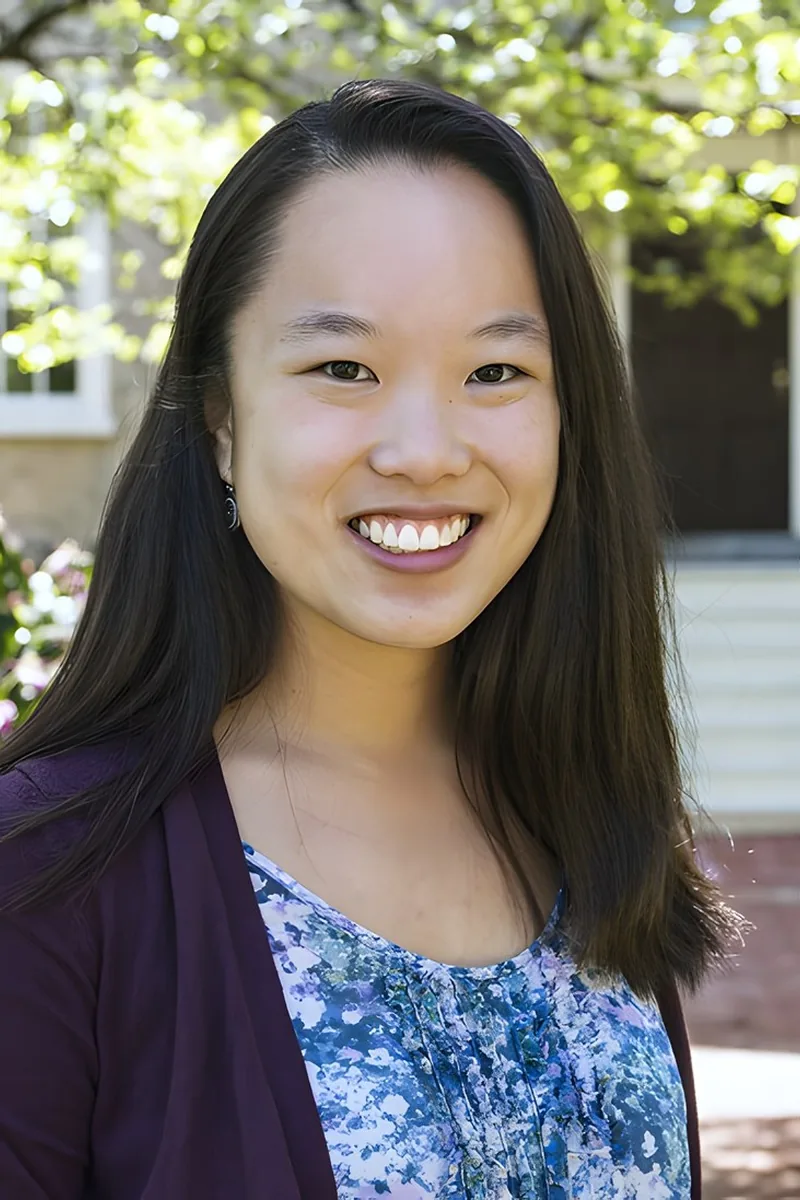
Teaching 10th grade Biochemistry at a Philadelphia magnet school gives Kathleen a sharp read on exactly where AP Biology students lose points — and it's almost never content gaps. She coaches students...
Education & Certificates
University of Pennsylvania
M.S.Ed in Secondary Science Education
Haverford College
Bachelor of Science, Chemistry
ACT Scores
Frequently Asked Questions
Students typically find photosynthesis and cellular respiration challenging because the interconnected pathways and electron transport chains require strong conceptual understanding rather than memorization. Genetics and heredity—particularly pedigree analysis, chi-square calculations, and understanding epistasis—also trip up many students. Additionally, ecology questions that require systems thinking and the ability to connect population dynamics, energy flow, and nutrient cycling often expose gaps in understanding how organisms interact with their environment. A tutor can break these complex topics into smaller, more digestible components and use visual models to clarify the mechanisms.
The free-response section requires you to explain biological concepts in detail, often with diagrams or calculations—simply knowing facts isn't enough. Tutors help you practice writing complete, well-organized responses that address all parts of the question, use appropriate scientific vocabulary, and include relevant examples. Working through past FRQs under timed conditions is essential; a tutor can identify whether you're losing points due to incomplete explanations, missing diagrams, or misunderstanding what the question is asking. They can also teach you how to allocate your time effectively across the eight questions.
AP Biology multiple-choice questions often include plausible distractors that test whether you truly understand concepts or just recognize keywords. The most effective approach is to predict your answer before reading the choices, eliminate obviously wrong options, and be cautious of answers that use correct biology terms but in the wrong context. Tutors help you practice identifying question types—such as those testing cause-and-effect relationships, experimental design, or data interpretation—and develop strategies specific to each. Timing is critical too; spending too long on difficult questions can leave you rushed at the end, so tutors coach you on when to move forward and return later.
Data interpretation questions require you to extract information from graphs, tables, and experimental results, then apply biological principles to explain what you observe. Many students struggle because they read the graph literally without connecting it to the underlying biology—for example, recognizing that a plateau in population growth reflects carrying capacity. Tutors teach you to systematically analyze visuals by identifying axes, units, trends, and anomalies, then practice linking those observations to concepts like enzyme kinetics, photosynthetic rates, or population ecology. Regular practice with real AP exam data sets helps you build confidence and speed.
Lab skills are crucial—the exam includes questions about experimental design, controls, data collection methods, and interpreting lab results from the official AP Biology labs. You need to understand not just what happened in an experiment, but why the experimental design was set up that way and what conclusions can be drawn from the data. Tutors help you master the reasoning behind key labs like enzyme kinetics, photosynthesis, cellular respiration, and gel electrophoresis, and teach you how to explain experimental procedures and limitations clearly. This knowledge often appears in both multiple-choice and free-response questions.
Score improvement depends on your starting point and how consistently you engage with tutoring and practice. Students who work with a tutor for 4-6 weeks before the exam and complete regular practice tests typically see improvements of 2-4 points on the AP scale (out of 5), though this varies widely. The biggest gains come from identifying your specific weak areas—whether that's photosynthesis, genetics, or free-response writing—and targeting those gaps with focused practice. Consistent effort matters more than the number of sessions; students who review materials between tutoring sessions and complete practice problems see better results than those who rely solely on tutoring time.
An effective AP Biology tutor should have strong knowledge of the AP Biology curriculum and exam format, ideally with experience teaching or tutoring the course. They should understand common student misconceptions—like thinking that photosynthesis and respiration are simply opposite processes—and know how to address them. Equally important is the ability to explain complex topics like gene regulation or evolution in multiple ways, adapt explanations based on your learning style, and provide constructive feedback on your free-response writing. Look for tutors who stay current with any AP exam updates and use practice materials from the College Board.
Test anxiety in AP Biology often stems from feeling unprepared for the breadth of content or uncertain about how to approach unfamiliar questions. Tutoring builds confidence through repeated, successful practice with real exam questions and timed conditions, so the format becomes familiar rather than intimidating. Tutors also help you develop a strategic approach—knowing which questions to tackle first, when to guess and move on, and how to manage your time—so you feel more in control during the actual exam. Additionally, understanding the biology deeply reduces anxiety because you're not relying on guessing; you can reason through questions even if you haven't seen that exact scenario before.
Other Washington test prep
Let's find your perfect prep plan
Answer a few quick questions. We'll recommend the right plan and match you with a top 5% instructor.