Award-Winning ACT Math Prep in San Francisco
Award-Winning ACT Math Prep in San Francisco
Everything you need to crush the ACT Math in San Francisco, CA. Live prep classes, practice tests, 1-on-1 expert tutoring, and AI-powered diagnostics.
Who needs prep?
No obligation. Takes ~1 minute.
Instructors from
- YaleUniversity
- PrincetonUniversity
- StanfordUniversity
- CornellUniversity
Featured by


ACT Math Prep Classes
 Short-term classLive
ACT 4-Week Prep Class
The ACT 4-Week Prep Class is designed to prepare students to take the ACT by equipping them with skills and test-taking strategies to improve their score. The course will cover content and strategies for English, Math, Reading, Science, and the optional essay. Upon completion of the course, students should have an understanding of the ACT exam structure, general and section-specific test-taking strategies, and the ability to identify and handle difficult or tricky questions.
 Short-term classLive
Building Blocks of 1st Grade Math
The school year moves quickly, with so many skills to cover and even more opportunities for learning gaps to emerge. But math is a building block subject: certain skills form the foundation necessary to master concepts in the future, so students can’t afford to miss, misunderstand, or forget them. That’s why Building Blocks of 1st Grade Math meets weekly to give learners the instruction and repetition they need to master building block skills permanently. Each week, an expert instructor will lead students through engaging demonstrations and exercises designed to fill in learning gaps and solidify understanding of the 1st grade math skills–such as geometry, measurement, and number operations–most essential for success the rest of the school year and beyond.
 Short-term classLive
Building Blocks of 2nd Grade Math
The school year moves quickly, with so many skills to cover and even more opportunities for learning gaps to emerge. But math is a building block subject: certain skills form the foundation necessary to master concepts in the future, so students can’t afford to miss, misunderstand, or forget them. That’s why Building Blocks of 2nd Grade Math meets weekly to give learners the instruction and repetition they need to master building block skills permanently. Each week, an expert instructor will lead students through engaging demonstrations and exercises designed to fill in learning gaps and solidify understanding of the 2nd grade math skills–such as addition and subtraction, shapes, counting and the number line, and measurement–most essential for success the rest of the school year and beyond.
 Short-term classLive
Building Blocks of 5th Grade Math
The school year moves quickly, with so many skills to cover and even more opportunities for learning gaps to emerge. But math is a building block subject: certain skills form the foundation necessary to master concepts in the future, so students can’t afford to miss, misunderstand, or forget them. That’s why Building Blocks of 5th Grade Math meets weekly to give learners the instruction and repetition they need to master building block skills permanently. Each week, an expert instructor will lead students through engaging demonstrations and exercises designed to fill in learning gaps and solidify understanding of the 5th grade math skills–such as geometry, fractions, and number operations–most essential for success the rest of the school year and beyond.
 Short-term classLive
Building Blocks of 3rd Grade Math
The school year moves quickly, with so many skills to cover and even more opportunities for learning gaps to emerge. But math is a building block subject: certain skills form the foundation necessary to master concepts in the future, so students can’t afford to miss, misunderstand, or forget them. That’s why Building Blocks of 3rd Grade Math meets weekly to give learners the instruction and repetition they need to master building block skills permanently. Each week, an expert instructor will lead students through engaging demonstrations and exercises designed to fill in learning gaps and solidify understanding of the 3rd grade math skills–such as multiplication and division, perimeter and area, and fraction values–most essential for success the rest of the school year and beyond.
 Short-term classLive
Building Blocks of 4th Grade Math
The school year moves quickly, with so many skills to cover and even more opportunities for learning gaps to emerge. But math is a building block subject: certain skills form the foundation necessary to master concepts in the future, so students can’t afford to miss, misunderstand, or forget them. That’s why Building Blocks of 4th Grade Math meets weekly to give learners the instruction and repetition they need to master building block skills permanently. Each week, an expert instructor will lead students through engaging demonstrations and exercises designed to fill in learning gaps and solidify understanding of the 4th grade math skills–such as geometry, fractions, and number operations–most essential for success the rest of the school year and beyond.
 Short-term classLive
Building Blocks of 8th Grade Math
The school year moves quickly, with so many skills to cover and even more opportunities for learning gaps to emerge. But math is a building block subject: certain skills form the foundation necessary to master concepts in the future, so students can’t afford to miss, misunderstand, or forget them. That’s why Building Blocks of 8th Grade Math meets weekly to give learners the instruction and repetition they need to master building block skills permanently. Each week, an expert instructor will lead students through engaging demonstrations and exercises designed to fill in learning gaps and solidify understanding of the 8th grade math skills–such as functions, transformations, and scatter plots–most essential for success the rest of the school year and beyond.
 Short-term classLive
High School Geometry Fundamentals
As your geometric proofs will demonstrate, high school geometry concepts build upon one another as you progress from basic rules and postulates to complex geometric knowledge and ability. That’s why High School Geometry Fundamentals is so acutely helpful, keeping your core skills sharp and ensuring that your foundation is sound for the new concepts that will inevitably build atop them. Each week an expert instructor will guide you through the key concepts that your current and upcoming geometry lessons depend on, helping you solidify things that didn’t quite click, get practice and repetition with the most important skills for what’s next, and building your skill set for the rest of the school year and the math subjects that lie beyond it.
 Short-term classLive
Building Blocks of 7th Grade Math
The school year moves quickly, with so many skills to cover and even more opportunities for learning gaps to emerge. But math is a building block subject: certain skills form the foundation necessary to master concepts in the future, so students can’t afford to miss, misunderstand, or forget them. That’s why Building Blocks of 7th Grade Math meets weekly to give learners the instruction and repetition they need to master building block skills permanently. Each week, an expert instructor will lead students through engaging demonstrations and exercises designed to fill in learning gaps and solidify understanding of the 7th grade math skills–such as expressions and equations, area and perimeter of circles, and ratios of fractions–most essential for success the rest of the school year and beyond.
 Short-term classLive
Precalculus Fundamentals
Math is a building block subject. Just like you needed Algebra 1 to be ready for Algebra 2, so now you’re taking Precalculus because you will need these skills for Calculus. And within each subject the same is true, too: the skills you learn next month will require you to be comfortable with the skills you learned last month; for every lesson you encounter in school, you’ll need to bring some foundational knowledge to build on. That’s why Precalculus Fundamentals can play such a key role in your math performance. Each week an expert instructor will guide you through the key concepts that your current and upcoming lessons depend on, helping you solidify things that didn’t quite click, get practice and repetition with the most important skills for what’s next, and building your skill set for the rest of the school year and the math subjects that lie beyond it–like calculus!
 Short-term classLive
Building Blocks of 6th Grade Math
The school year moves quickly, with so many skills to cover and even more opportunities for learning gaps to emerge. But math is a building block subject: certain skills form the foundation necessary to master concepts in the future, so students can’t afford to miss, misunderstand, or forget them. That’s why Building Blocks of 6th Grade Math meets weekly to give learners the instruction and repetition they need to master building block skills permanently. Each week, an expert instructor will lead students through engaging demonstrations and exercises designed to fill in learning gaps and solidify understanding of the 6th grade math skills–such as geometry, fractions, measurement, and number operations–most essential for success the rest of the school year and beyond.
 Short-term classLive
Algebra 1 Fundamentals
In algebra, every new skill you learn builds on top of existing knowledge you’ve learned before: to understand roots, you need to understand exponents. To factor quadratics you need sound skills with factors and multiples. So for every lesson you encounter in school, you’ll need to bring some foundational knowledge to build on. That’s why Algebra 1 Fundamentals can play a key role in your math performance. Each week an expert instructor will guide you through the key concepts that your current and upcoming lessons depend on, helping you solidify things that didn’t quite click, get practice and repetition with the most important skills for what’s next, and building your skill set for the rest of the school year and the math subjects that lie beyond it. (Spoiler alert: Algebra 2 will depend on your ability with Algebra 1!)
Top-Rated ACT Math Prep Instructors in San Francisco

Timing is the biggest obstacle on ACT Math — 60 questions in 60 minutes leaves no room for getting stuck, and most students lose points not from wrong answers but from poor pacing decisions. Nina, who...
Education & Certificates
Columbia University
Masters in biostatistics
Northwestern University
Bachelor of Arts in biological sciences (focus in neurobiology)
SAT Scores

Students who dread ACT Math often struggle not because the content is too hard, but because they haven't mapped which algebra and pre-algebra concepts appear in the first 30 questions versus the final...
Education & Certificates
Harvard University
PHD, Education
Wesleyan University
Bachelor in Arts, Sociology
ACT Scores

A Yale mechanical engineering curriculum built Charles's instinct for translating messy real-world problems into clean mathematical structures — exactly the skill ACT Math tests when it embeds familia...
Education & Certificates
Yale University
Bachelor of Science, Mechanical Engineering
ACT Scores

Harvard Mechanical Engineering builds a particular instinct — breaking any system down to its governing equations — and Christopher brings that same structural thinking to ACT Math prep, where student...
Education & Certificates
Harvard College
Bachelor of Science, Mechanical Engineering
ACT Scores

Liz's Master's in Special Education from Simmons College trained her to diagnose exactly how a student is processing information — a skill that translates directly into identifying why a student keeps...
Education & Certificates
Simmons College
Masters, Special Education: Mild to Moderate Disabilities 5-12
Washington University in St. Louis
Bachelor of Arts in History (minors in Humanities and Anthropology)
ACT Scores

A PhD in Computational Mathematics from the University of Chicago means Justin thinks about problem structure the way most students never get the chance to — and on ACT Math, that translates into teac...
Education & Certificates
Washington University in St. Louis
Bachelor's in Physics and Mathematics
University of Chicago
Doctor of Philosophy, Computational Mathematics
ACT Scores

Philosophy training at the University of Chicago is, at its core, argument dissection — and that same skill for breaking a complex claim into its logical components maps directly onto the multi-step a...
Education & Certificates
University of Chicago
Bachelor of Arts in Philosophy
University of New Mexico-Main Campus
Current Grad Student, Philosophy
ACT Scores

Harvard chemistry and a Columbia Medical School acceptance signal something specific about James's quantitative preparation: he has navigated the exact standardized testing gauntlet — including a 1570...
Education & Certificates
Harvard University
Bachelor in Arts, Chemistry
SAT Scores
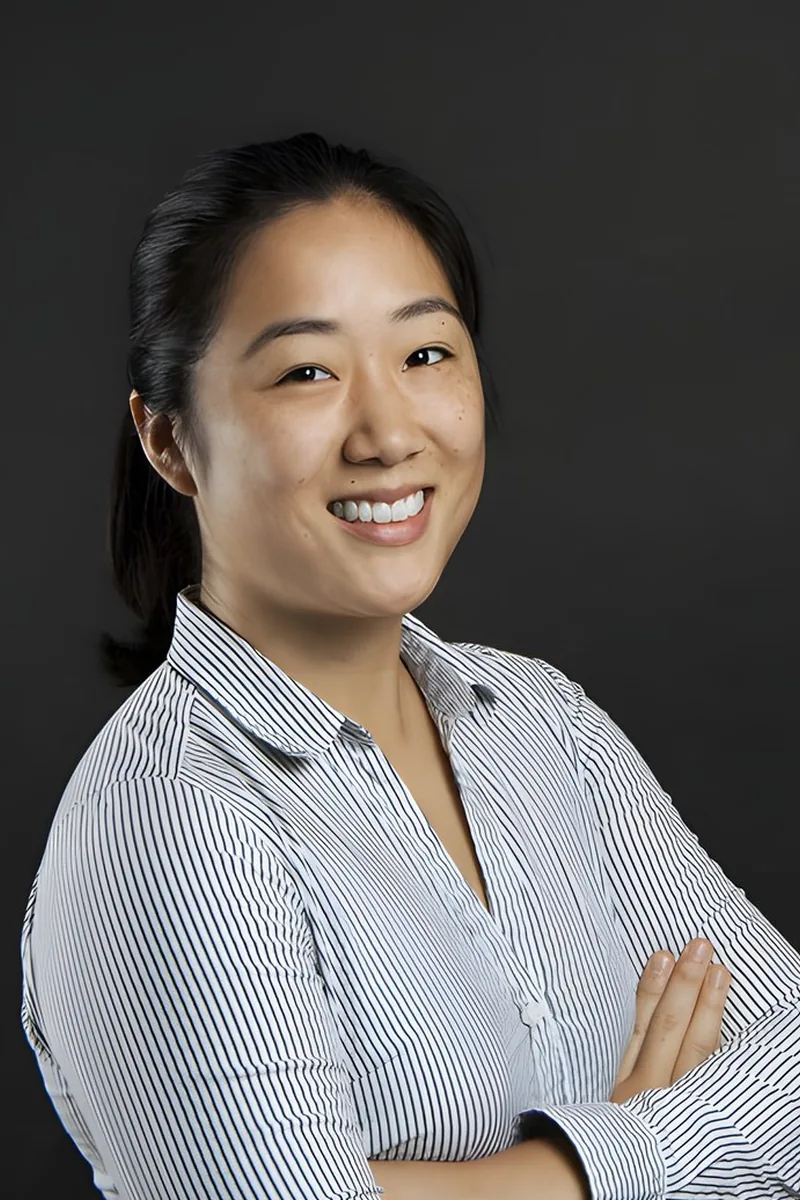
Political science at the University of Chicago trains students to dissect arguments and isolate the core logic buried inside complex language — a skill that transfers directly to ACT Math word problem...
Education & Certificates
University of Chicago
Bachelor in Arts in Political Science
ACT Scores

History training at Harvard sharpens something ACT Math quietly demands: the ability to read a dense, unfamiliar setup and extract exactly what matters — a skill Henry now applies to coaching students...
Education & Certificates
Harvard College
Bachelor in Arts, History
SAT Scores
Frequently Asked Questions
Pacing is one of the biggest challenges on ACT Math—you have 60 minutes to solve 60 questions, which leaves only one minute per problem on average. A tutor can help you develop a strategic approach: identifying which question types you can solve quickly (usually early geometry and algebra problems) versus which ones require more time (coordinate geometry, trigonometry, sequences). The key is learning to recognize when to skip a difficult problem and come back to it, rather than getting stuck and running out of time. Practice with full-length timed sections helps you internalize this rhythm.
Students typically find trigonometry, sequences/series, and coordinate geometry most challenging—these topics appear later in the test and require both conceptual understanding and quick execution. Logarithms and function notation also trip up many test-takers because they're less commonly emphasized in standard high school curricula. Interestingly, some students also struggle with the "easier" algebra and arithmetic questions simply because they rush through them; a tutor can help you slow down on foundational problems to avoid careless errors that cost more points than missing hard questions.
ACT Math questions often have subtle wording that changes the problem entirely—for example, asking for the value of 2x instead of x, or the slope of a perpendicular line rather than the given line. Many students miss points by solving the right problem incorrectly or the wrong problem correctly. A tutor can teach you to annotate questions systematically: underline what you're solving for, circle given information, and note any constraints. Working through practice problems with this deliberate approach helps you catch these traps before test day, especially on the trickier questions in the 40-60 range.
Score improvement depends heavily on your starting point and effort level. Students who are scoring in the 18-24 range often see 3-5 point jumps within 4-6 weeks of focused tutoring, since they typically have gaps in foundational algebra and geometry that are fixable. Students already scoring 28+ may see 1-2 point improvements, as they're working on eliminating careless errors and mastering the hardest 10% of content. Consistent practice between sessions—ideally 30-45 minutes daily—is essential; tutoring alone without homework won't move the needle significantly.
An effective ACT Math tutor doesn't just teach math concepts—they teach the test itself. This means working through actual ACT problems (not just textbook problems), teaching you to recognize question patterns, and showing you which strategies save time on specific problem types. For example, a tutor might teach you to use the answer choices to work backward on some problems, or to plug in numbers on others, rather than always solving algebraically. They should also help you build a personalized "cheat sheet" of formulas and shortcuts you tend to forget, and review your practice test mistakes to identify patterns in your errors.
Yes—much of test anxiety on ACT Math comes from encountering unfamiliar question types or running out of time, both of which tutoring directly addresses. When you work through dozens of real ACT problems with a tutor, the question formats become familiar and less intimidating. You also build confidence by solving problems you previously thought were impossible, and by having a concrete strategy for managing your time and knowing when to skip. Many students report that simply knowing they've practiced thoroughly and have a plan reduces anxiety significantly on test day.
Practice tests serve two purposes: diagnostic and reinforcement. Early on, a full practice test helps identify your weak topics and pacing issues. Then, as you work with a tutor on specific skills, you take full-length sections under timed conditions to track improvement and refine your strategy. The most valuable part is the review: a tutor can help you analyze *why* you missed each question—was it a conceptual gap, a careless error, a pacing problem, or a misread question?—so you don't repeat the same mistakes. Aim for 2-3 full practice tests spread across your tutoring timeline, with targeted practice on specific topics in between.
Most students benefit from 2-3 tutoring sessions per week (60-90 minutes each) combined with 30-45 minutes of independent practice on non-tutoring days. A typical 6-8 week timeline allows time to cover weak topics, practice full sections, and take at least one full-length practice test. If you're starting 12+ weeks before test day, you can afford a lighter schedule (1-2 sessions weekly) and more gradual progress. The key is consistency: sporadic cramming doesn't work for ACT Math because you need time to internalize strategies and build problem-solving fluency.
Other San Francisco test prep
Let's find your perfect prep plan
Answer a few quick questions. We'll recommend the right plan and match you with a top 5% instructor.