Question 1 of 25
What is 

Basic Math
Practice Test 5 for Basic Math: real questions and explanations from the Varsity Tutors practice-test pool.
0%
0 / 25 answered
Question 1 of 25
What is
Question Navigator
What is
 (correct answer)


Explanation: Before multiplying, it's necessary to convert 0.25% to a decimal, which is 0.0025. Multiply this 0.0025, with 100. The correct answer is 0.25.
In 2012, a university received 150,249 applicants. In 2013, the same university received 190,201 applicants. By what percent did the total number of applicants increase from 2012 to 2013?
 (correct answer)


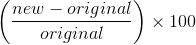
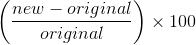
Explanation: To find the percent change, use the following formula:
Solve for 
 (correct answer)


Explanation: Add both sides by 9 to isolate the x on one side.


Baseballs can only be bought in packages of 

 (correct answer)


Explanation: 1. Round 145 to the nearest 10: Since there is a 5 in the ones place, 145 rounds up to 150. 2. Divide the rounded number of baseballs by 10 since they come in packages of 10: 150/10=15 packages
Jimmy started taking his math test at 11:03AM, and he finished at 12:29PM. How many minutes did it take Jimmy to finish the test?
 (correct answer)


Explanation: First, we need to find how long it took Jimmy to finish the test.
Subtract the hours, then subtract the minutes.


What is
 (correct answer)


Explanation: You can simplify this problem:


What is 
 (correct answer)


Explanation: To change a demical to a percent, multiply the decimal by 100 and then add the percent sign.

What is the result of the above equation?
 (correct answer)


Explanation: So we first multiply the numerators:


Convert 
 (correct answer)


Explanation: The correct answer is 20%. This can be obtained by first converting the fraction 
In her last 


 (correct answer)


Explanation: To find the average, add up all the values you are given and divide by the number of values there are. 18 + 12 + 22 + 24 + 14 = 90, the sum of her total points. And 90/5 = 18, which is her average.
What is 
 (correct answer)


Explanation: Percents are numbers expressing parts of 


In 2012, a university received 150,249 applicants. In 2013, the same university received 190,201 applicants. By what percent did the total number of applicants increase from 2012 to 2013?
(correct answer)Explanation: To find the percent change, use the following formula:
Find the sum.
 (correct answer)


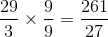
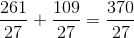
Explanation: To add mixed numbers, you need to first change both of them into improper fractions.


Solve:
 (correct answer)


Explanation: Use order of operations, PEMDAS (Parentheses, Exponents, Multiplication, Division, Addition, Subtraction) to solve.
Since there are no parentheses or exponents we can go straight to multiplication and division.


Please read the following question thoroughly, and then choose the answer which is most correct.
If Billy has 

 of a gallon of water. (correct answer)
 of a gallon of water.
 of a gallon of water.
 of a gallon of water.
 of a gallon of water.
Explanation: To complete this question, you need to find the least common denominator in order to add the fractions. Cross multiply the fractions so that they are in the same terms, and then add. To do this, simply multiply each fraction by the denominator of the other, over itself (so that the fraction equals 1). Follow the steps below:


Factor the following expression completely:
 (correct answer)


Explanation: To factor an expression in the form 


What is the result (with the remainder) in the above equation?
 (correct answer)


Explanation: We divide the top by the bottom.


Jane bought a pencil for 


 (correct answer)


Explanation: Add up all the individual items.

Solve the following:
 (correct answer)


Explanation: The correct answer is 

 |  |
|---|---|
 |  |
 |  |
 |  |
Find the value of 
 (correct answer)


Explanation: To find 


If I want 
 inches (correct answer)
 inches
 inches
 inches
Explanation: 1. Find out how many feet you have: Knowing that there are 3 feet in a yard, you have 3 x 4 yards = 12 feet of fabric. 2. Find out how many inches you have: Knowing that there are 12 inches in a foot, you have 12 x 12 inches=144 inches of fabric.
Change 
 (correct answer)


Explanation: To change a percent to a decimal, drop the "%" sign then divide by 100.

If 


 (correct answer)


Explanation: We can set up the following proportions using the given information:


Change 
 (correct answer)


Explanation: To convert a fraction into a percent, we need to first change the fraction into a decimal.


In March, an athlete weighed 

 (correct answer)


Explanation: The formula to find percentage change is