What this deck covers
This deck focuses on Economic Growth, giving you a quick way to review the definitions, rules, and examples that matter most for AP Macroeconomics.
Study Economic Growth in AP Macroeconomics with focused flashcards that help you recognize the idea, recall the key rule, and apply it in practice-style prompts.
0% Complete
What role does government policy play in economic growth?
Tap card or press Space to flip
Can create conducive environment for investment and innovation. Fiscal and regulatory policies shape growth conditions.
How well did you know it?
Card 1 / 77
Space to flip · ← / → to move · once flipped, → Got it · ← Still learning
This deck focuses on Economic Growth, giving you a quick way to review the definitions, rules, and examples that matter most for AP Macroeconomics.
Work through these flashcards in short sessions. Try to answer each prompt before flipping the card, then revisit any cards you miss until the explanation feels automatic.
Answer: Can create conducive environment for investment and innovation. Fiscal and regulatory policies shape growth conditions.
Answer: Increases output per worker. More capital per worker boosts productivity.
Answer: To estimate the number of years for a variable to double. Dividing 70 by growth rate gives doubling time.
Answer: Development of new products or processes. Creates new methods and improves efficiency.
Answer: Inflation reduces the real value of GDP. Real GDP accounts for price level changes.
Answer: Improves human capital, boosts productivity. Skilled workers are more productive and innovative.
Answer: Improving productivity and economic efficiency. Policies targeting long-term production capacity.
Answer: Solow Growth Model. Describes long-run equilibrium growth path.
Answer: Development of new products or processes. Creates new methods and improves efficiency.
Answer: Increases efficiency and output. New technologies improve production methods.
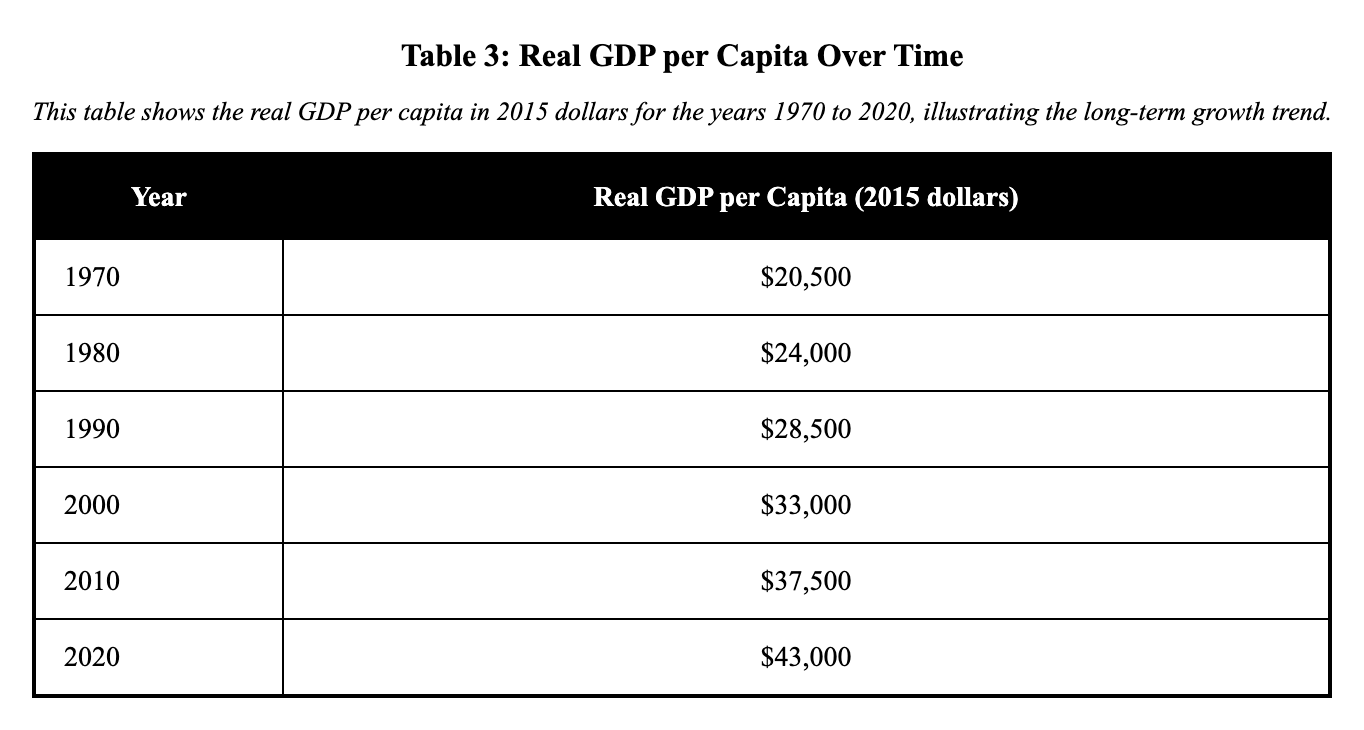
Answer: Average economic output per person. GDP divided by population size.
Answer: Skills, knowledge, and experience possessed by an individual. Enhances worker productivity and economic growth potential.
Answer: Stimulates investment and consumption. Lower borrowing costs encourage spending and investment.
Answer: Increase in capital per worker. Key component of economic growth strategy.
Answer: Technological innovation. Improves productivity and efficiency permanently.
Answer: Stimulates investment and consumption. Lower borrowing costs encourage spending and investment.
Answer: Machinery and equipment. Tangible assets that enhance production capacity.
Answer: Years to double = annual growth rate70. Quick approximation for exponential growth calculations.
Answer: Enhances productive capacity. More capital tools boost worker productivity.
Answer: GDP adjusted for inflation. Removes price level effects to show actual output changes.
Answer: An increase in the production of goods and services over time. Measured by increasing real GDP over time.
Answer: Technological innovation. Improves productivity and efficiency permanently.
Answer: Job displacement. Automation can eliminate traditional jobs.
Answer: GDP will double. Rule of 70: 570=14 years to double.
Answer: Full employment without accelerating inflation. Sustainable growth without inflationary pressure.
Answer: To estimate the number of years for a variable to double. Dividing 70 by growth rate gives doubling time.
Answer: Potential environmental degradation. Unsustainable resource use harms long-term growth.
Answer: Growth that meets present needs without compromising future generations. Balances current prosperity with environmental protection.
Answer: Increases labor force, potential for higher output. More workers can increase total production.
Answer: Long-term economic growth driven by capital accumulation, labor, and technology. Explains how economies reach steady-state equilibrium.
Answer: Growth rate of real GDP. Standard metric for comparing economic performance.
Answer: Relationship between inputs and output in an economy. Shows how resources transform into output.
Answer: Encourage investment and innovation. Legal protection promotes business confidence.
Answer: Trade can enhance growth through increased markets and efficiency. Specialization and market access boost productivity.
Answer: Income inequality. Benefits may not be distributed equally.
Answer: Retraining and education programs. Helps workers adapt to technological changes.
Answer: Trade can enhance growth through increased markets and efficiency. Specialization and market access boost productivity.
Answer: Technological advancements. Expands economy's production possibilities over time.
Answer: Investment in infrastructure. Public capital improves overall productivity.
Answer: Long-term economic growth driven by capital accumulation, labor, and technology. Explains how economies reach steady-state equilibrium.
Answer: Higher investment in capital, boosting growth. Savings fund investment in productive capital.
Answer: Increase in capital per worker. Key component of economic growth strategy.
Answer: Inflation reduces the real value of GDP. Real GDP accounts for price level changes.
Answer: GDP adjusted for inflation. Removes price level effects to show actual output changes.
Answer: Enhances productive capacity. More capital tools boost worker productivity.
Answer: Provides stability and incentives for investment. Rule of law reduces business risks.
Answer: Growth rate of real GDP. Standard metric for comparing economic performance.
Answer: Investment in human capital. Education and skills increase output per worker.
Answer: Years to double = annual growth rate70. Quick approximation for exponential growth calculations.
Answer: Relationship between inputs and output in an economy. Shows how resources transform into output.
Answer: Gross Domestic Product (GDP). Total value of goods and services produced.
Answer: GDP will double. Rule of 70: 570=14 years to double.
Answer: Income inequality. Benefits may not be distributed equally.
Answer: Retraining and education programs. Helps workers adapt to technological changes.
Answer: Improving productivity and economic efficiency. Policies targeting long-term production capacity.
Answer: An increase in the production of goods and services over time. Measured by increasing real GDP over time.
Answer: Job displacement. Automation can eliminate traditional jobs.
Answer: GDP Growth Rate = GDPoldGDPnew−GDPold×100. Calculates percentage change in GDP between periods.
Answer: Encourage investment and innovation. Legal protection promotes business confidence.
Answer: Machinery and equipment. Tangible assets that enhance production capacity.
Answer: Full employment without accelerating inflation. Sustainable growth without inflationary pressure.
Answer: Increases output per worker. More capital per worker boosts productivity.
Answer: Skills, knowledge, and experience possessed by an individual. Enhances worker productivity and economic growth potential.
Answer: Can create conducive environment for investment and innovation. Fiscal and regulatory policies shape growth conditions.
Answer: Gross Domestic Product (GDP). Total value of goods and services produced.
Answer: Technological advancements. Expands economy's production possibilities over time.
Answer: Increases labor force, potential for higher output. More workers can increase total production.
Answer: Growth that meets present needs without compromising future generations. Balances current prosperity with environmental protection.
Answer: Improves human capital, boosts productivity. Skilled workers are more productive and innovative.
Answer: Provides stability and incentives for investment. Rule of law reduces business risks.
Answer: Solow Growth Model. Describes long-run equilibrium growth path.
Answer: Average economic output per person. GDP divided by population size.
Answer: Investment in human capital. Education and skills increase output per worker.
Answer: Potential environmental degradation. Unsustainable resource use harms long-term growth.
Answer: Higher investment in capital, boosting growth. Savings fund investment in productive capital.
Answer: Investment in infrastructure. Public capital improves overall productivity.