Award-Winning AP Pre-Calculus Prep in Dallas
Award-Winning AP Pre-Calculus Prep in Dallas
Everything you need to crush the AP Pre-Calculus in Dallas, TX. Live prep classes, practice tests, 1-on-1 expert tutoring, and AI-powered diagnostics.
Who needs prep?
No obligation. Takes ~1 minute.
Instructors from
- YaleUniversity
- PrincetonUniversity
- StanfordUniversity
- CornellUniversity
Featured by


AP Pre-Calculus Prep Classes
 Short-term classLive
Jump Start to Precalculus
Beat the summer slide and give your student a running start into the school year with Jump Start math classes over the summer. In live, expert-led sessions, students will review key building block skills from Algebra 2 and get a sneak preview of the new skills they’ll encounter toward the beginning of Pre-Calculus this fall. Jump Start to Pre-Calculus will emphasize working with polynomials, manipulating trigonometric functions, and graphing functions, preparing students to deepen and apply these skills to understanding continuity, finding limits, and taking derivatives in the coming school year.
 Short-term classLive
Jump Start to AP Calculus
Start your AP Calculus journey with clarity and confidence. This live, interactive course is designed to give students entering AP Calculus AB a solid head start on core topics like limits, derivatives, and continuity. With expert instruction and real AP-style practice, you’ll feel prepared, not panicked—before the school year even begins.
 Short-term classLive
Jump Start to AP & Honors Chemistry
Chemistry is the study of the properties, structures, and reactions of matter—and how substances transform through interactions at the atomic and molecular level. From the periodic table to chemical equations, each concept builds on the last—so the foundations you begin the school year with tend to shape the reactions, outcomes, and confidence you carry through every lab and lesson. In this live, interactive summer class you will learn and review the key building blocks for success in advanced high school chemistry classes, including AP, IB, and honors classes. From scientific principles to essential math concepts, you’ll cover everything you need to confidently conquer your most challenging fall class.
 Short-term classLive
Jump Start to AP & Honors Physics
Physics is the study of the fundamental forces and principles that govern how matter and energy interact in the universe. From motion and momentum to waves and electricity, each concept builds on the last—so the foundations you begin the school year with tend to govern your trajectory and velocity throughout the school year. In this live, interactive summer class you will learn and review the key building blocks for success in advanced high school physics classes, including AP, IB, and honors classes. From scientific principles to essential math concepts, you’ll cover everything you need to start your most challenging fall class with energy and momentum.
 Short-term classLive
Jump Start to AP Computer Science A
Computer Science is the study of how we use logic and code to solve problems and build the digital world around us. From variables and conditionals to classes and objects, each concept builds logically on the last—so the foundations you start with often determine how efficiently and confidently you can program throughout the year. In this live, interactive summer class, you’ll learn and review the key building blocks for success in advanced high school computer science courses, including AP Computer Science A. From core Java syntax to problem-solving strategies, you’ll cover everything you need to start this rigorous coding class with structure and logic.
 Short-term classLive
Jump Start to AP & Honors Biology
Biology is the study of the building blocks of life, how cells, systems, and processes interact to enable complex organisms to adapt and thrive. And just like living systems build from their foundations, your own biology knowledge builds concept by concept toward the complex skills you need for your labs and exams throughout the year. In this live, interactive summer class you will learn and review the key building blocks for success in advanced high school biology classes, including AP, IB, and honors classes. Armed with sound fundamentals you’ll be ready to hit the ground running in the new school year and thrive in your most challenging fall class.
 Short-term classLive
Precalculus Fundamentals
Math is a building block subject. Just like you needed Algebra 1 to be ready for Algebra 2, so now you’re taking Precalculus because you will need these skills for Calculus. And within each subject the same is true, too: the skills you learn next month will require you to be comfortable with the skills you learned last month; for every lesson you encounter in school, you’ll need to bring some foundational knowledge to build on. That’s why Precalculus Fundamentals can play such a key role in your math performance. Each week an expert instructor will guide you through the key concepts that your current and upcoming lessons depend on, helping you solidify things that didn’t quite click, get practice and repetition with the most important skills for what’s next, and building your skill set for the rest of the school year and the math subjects that lie beyond it–like calculus!
Top-Rated AP Pre-Calculus Prep Instructors in Dallas
Engineering training at Northwestern sharpens a particular instinct that transfers directly to AP Pre-Calculus: before any calculation begins, identifying the structure of a problem and selecting the ...
Education & Certificates
Northwestern University
Bachelor's
I am an interdisciplinary educator with an Ed.M. from the Harvard Graduate School of Education and a B.A. from Dartmouth College. My background is primarily in integrated arts learning and museum educ...
Education & Certificates
Harvard University
Masters in Education, Education
Dartmouth College
B.A.
SAT Scores
I'm not tutoring or buried in my textbooks, you will either find me rock climbing at the Triangle Rock Club, playing Ultimate Frisbee, working on my car, or enjoying the great outdoors (beaches, mount...
Education & Certificates
The University of Texas at Dallas
Bachelors, Mechanical Engineering
Duke University
Current Grad Student, Mechanical Engineering
SAT Scores

I am a recent graduate from a masters program in biostatistics at Columbia University. I received my Bachelor of Arts in biological sciences, with a focus in neurobiology at Northwestern University. I...
Education & Certificates
Columbia University
Masters in biostatistics
Northwestern University
Bachelor of Arts in biological sciences (focus in neurobiology)
SAT Scores
I am a graduate of Wesleyan University, where I received my Bachelor of Arts in Sociology with High Honors. With eight years of experience working in education, I've tutored students in math, science,...
Education & Certificates
Harvard University
PHD, Education
Wesleyan University
Bachelor in Arts, Sociology
ACT Scores
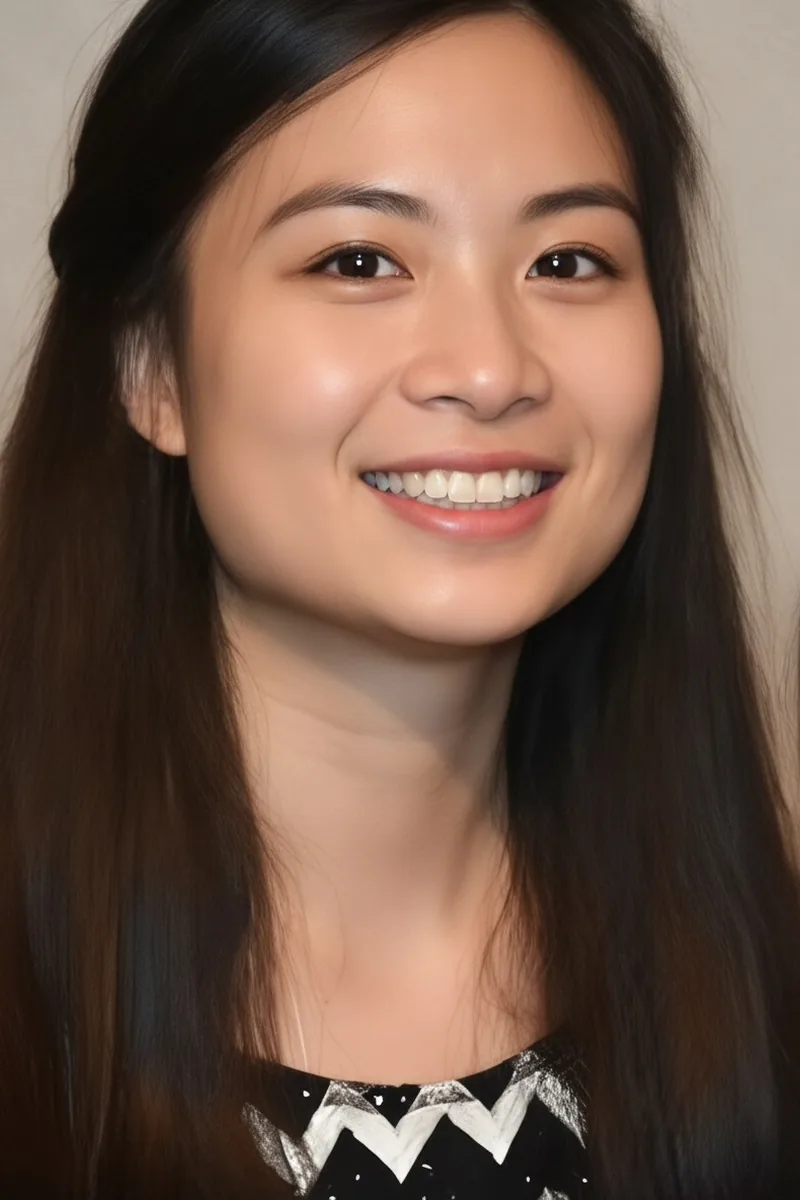
I am proud to be a part of Varsity Tutors! I am originally from San Antonio, TX; I completed my undergraduate education at Rice University in Houston where I received a bachelor's degree in Biochemist...
Education & Certificates
Baylor College of Medicine
Current Grad Student, M.D.
Rice University
Bachelor's in Biochemistry and Cell Biology
SAT Scores

I am a rising sophomore at Harvard College and am about to declare as a Mechanical Engineering concentrator, working towards a Bachelor of Science degree. I've always enjoyed sharing my knowledge with...
Education & Certificates
Harvard College
Bachelor of Science, Mechanical Engineering
ACT Scores
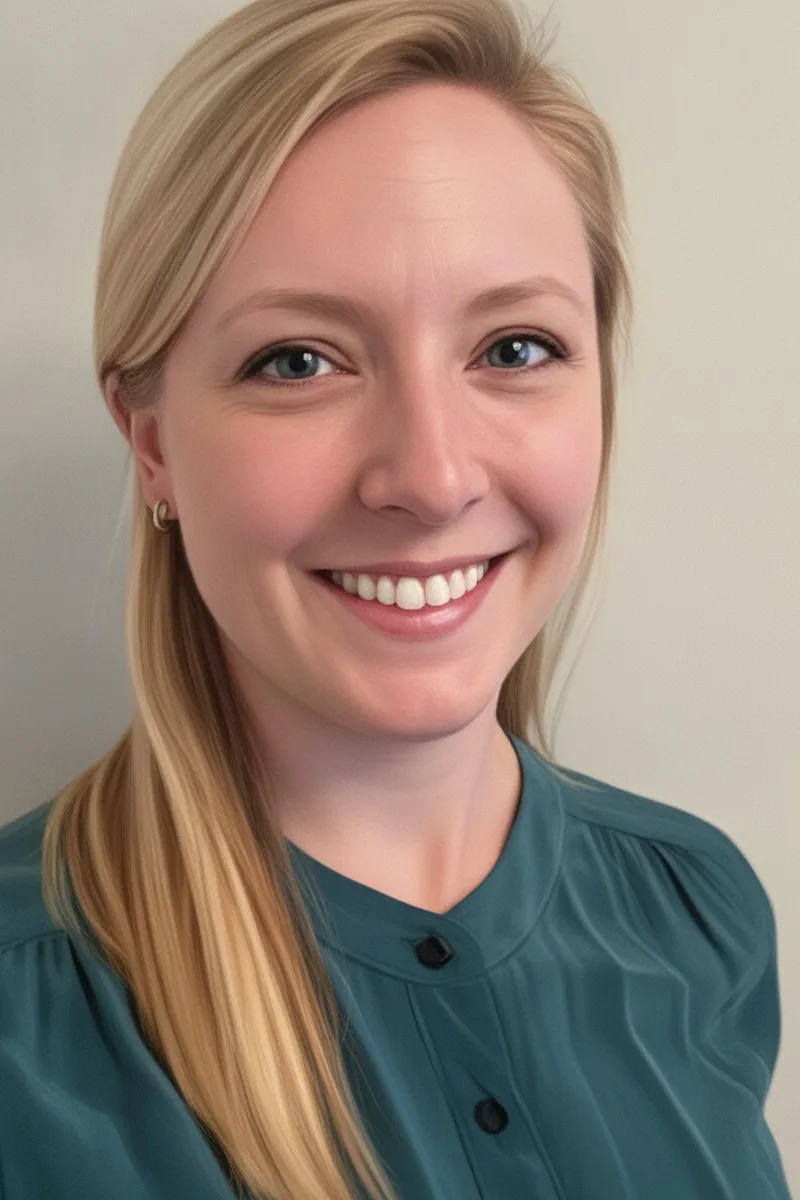
I am a graduate of Washington University in St Louis, where I received my Bachelor of Arts in History with minors in Humanities and Anthropology. Since graduation, I have worked as a tutor, teacher, a...
Education & Certificates
Simmons College
Masters, Special Education: Mild to Moderate Disabilities 5-12
Washington University in St. Louis
Bachelor of Arts in History (minors in Humanities and Anthropology)
ACT Scores
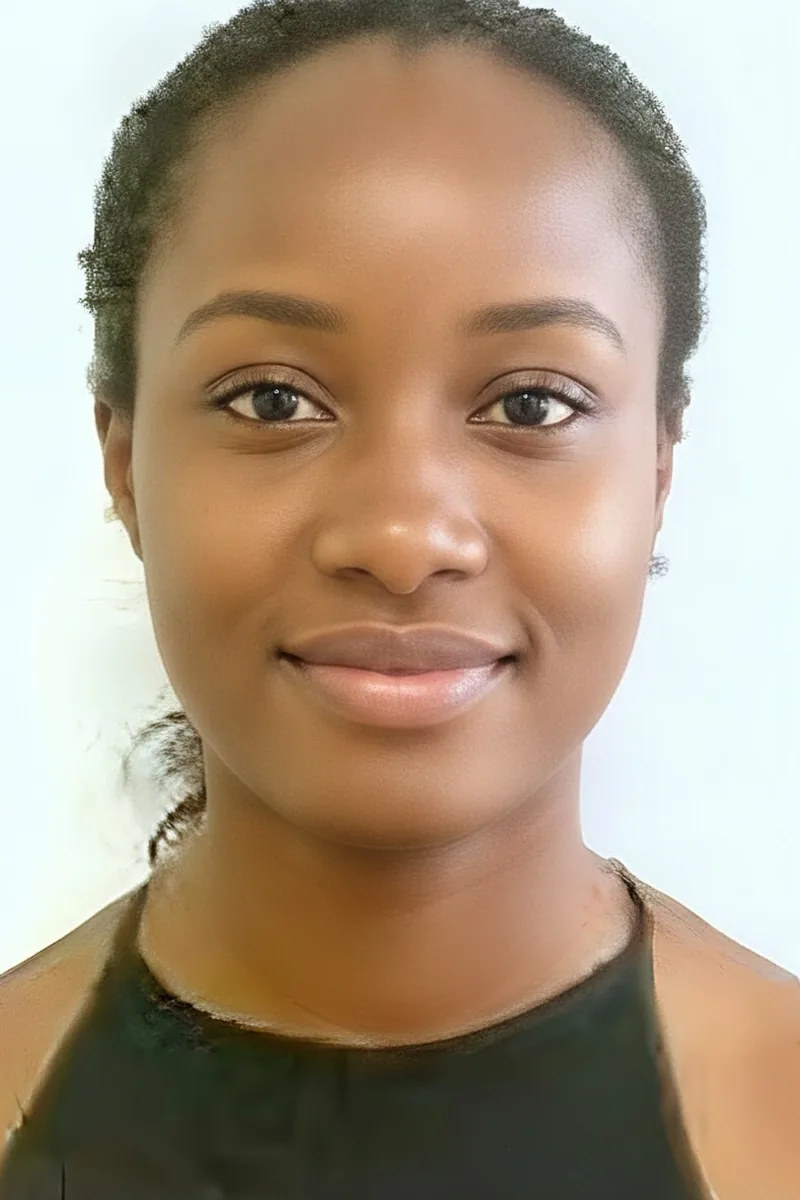
I'm Solange - a recent graduate from Harvard where I studied Sociology & Women's Studies. I've been tutoring for eight years now, and have worked with a wide range of ages and in a wide range of subje...
Education & Certificates
Harvard University
Bachelor in Arts (Sociology & Women's Studies)
ACT Scores
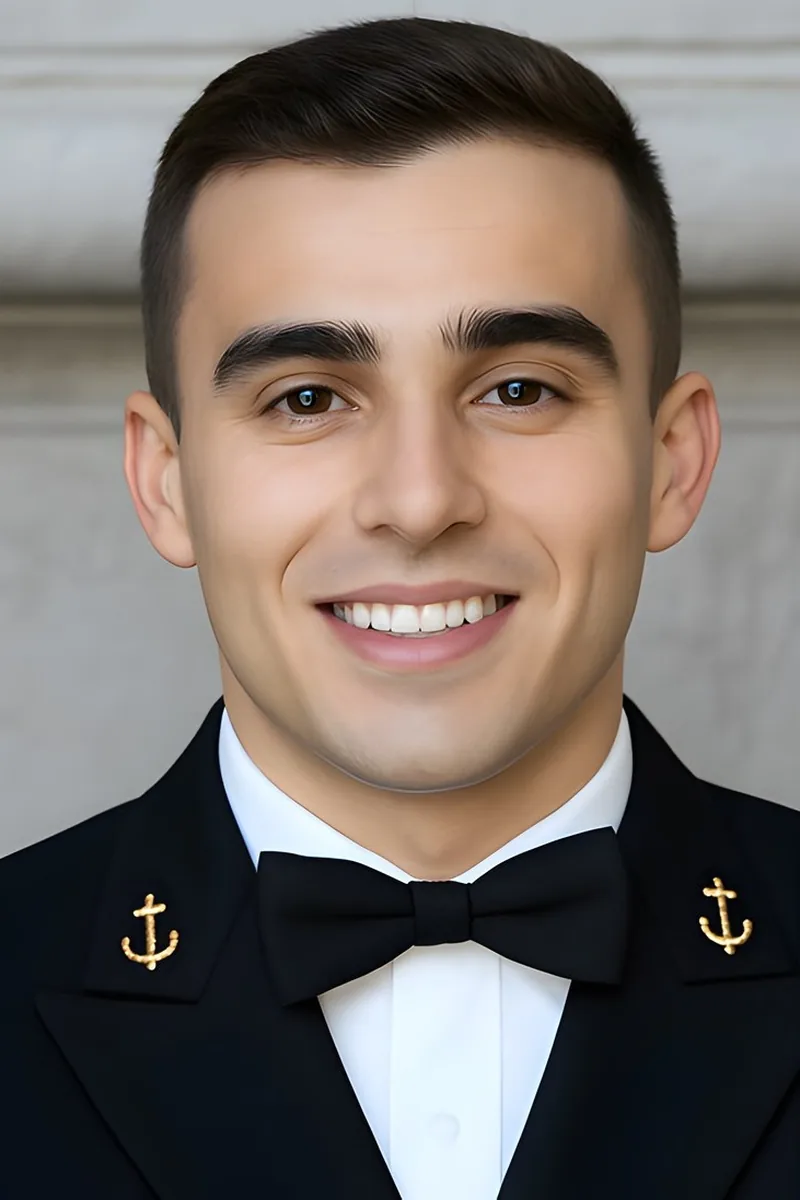
I am a junior Mechanical Engineering major at Yale, and I hope to become a Naval Aviator after college. I am also a varsity sailor, and enjoy playing music with friends when I can get some free time. ...
Education & Certificates
Yale University
Bachelor of Science, Mechanical Engineering
ACT Scores
Frequently Asked Questions
Students often find trigonometric identities and their applications particularly challenging, especially when asked to prove complex identities or solve trigonometric equations. Rational functions—particularly analyzing asymptotes, discontinuities, and end behavior—trip up many learners who haven't solidified their understanding of polynomial division and limits. Additionally, the transition from function notation to parametric and polar equations confuses students who haven't internalized how different coordinate systems represent the same relationships. A tutor can identify which of these conceptual gaps is holding you back and rebuild that foundation before moving forward.
The exam is 3 hours long with two sections: a multiple-choice section (40 questions, 1 hour 15 minutes) and a free-response section (4 questions, 1 hour 30 minutes). The multiple-choice tests quick recall and conceptual understanding, while free-response questions require you to show work, justify reasoning, and explain your process—often across multiple parts. Effective preparation means practicing both formats separately: timed multiple-choice drills to build speed and accuracy, and full free-response problems where you write out complete solutions. Tutors can help you develop a practice schedule that balances both, ensuring you're not just getting right answers but mastering the reasoning behind them.
Function fluency—understanding how to read, transform, and manipulate functions—is the backbone of nearly every AP Pre-Calculus topic. Whether you're working with polynomial functions, rational functions, exponential/logarithmic functions, or trigonometric functions, you need to instantly recognize how shifts, stretches, and reflections affect a graph or equation. Many students memorize transformation rules without truly understanding why they work, which breaks down when exam questions ask you to combine multiple transformations or explain your reasoning. A tutor focuses on building this deep fluency so you can confidently handle unfamiliar function problems and variations you haven't explicitly practiced.
Identity proofs require strategic thinking—you need to recognize which identities to apply and in what order, which is more art than memorization. The key is learning to work backwards from the target expression and forwards from what you're given, spotting where they might meet. Most students benefit from understanding the core identities (Pythagorean, quotient, reciprocal, sum/difference, double angle) deeply enough to derive them, not just recall them. A tutor can teach you a systematic approach: simplify the more complex side, look for opportunities to factor or combine fractions, and know when to convert everything to sine and cosine. With guided practice on increasingly difficult proofs, you'll develop the pattern recognition that makes these problems feel manageable on test day.
In the multiple-choice section (40 questions in 75 minutes), you have roughly 1.5-2 minutes per question—flag anything tricky and come back to it rather than getting stuck. The free-response section (4 questions in 90 minutes) is more flexible; spend time on the first part of each question where you can earn points, even if you can't complete all parts. A smart strategy is to read all four free-response prompts first, starting with whichever looks most approachable to build confidence and momentum. Tutors can help you practice pacing through full-length practice exams, teaching you to recognize when to move on, which questions typically take longer, and how to allocate your time based on point value and difficulty.
The exam allows graphing calculators for both sections, and knowing your calculator well is a genuine advantage. You should be comfortable graphing functions quickly, finding intersections and zeros, evaluating function values at specific points, and using solver features for equations. However, a common pitfall is over-relying on your calculator—many students graph a function but don't understand what they're seeing, or use the calculator to avoid thinking through the algebra. The most successful students use calculators strategically: to verify algebraic work, explore behavior, or speed up computation, but they can also solve problems by hand if needed. A tutor can help you build both skills: efficient calculator use and the algebraic reasoning to know when and why you're using it.
Yes, but you'll need to address algebra gaps intentionally rather than hoping they'll resolve themselves. AP Pre-Calculus requires solid algebra: solving equations, manipulating expressions, factoring, and working with exponents and radicals. If these feel shaky, you'll struggle not because Pre-Calculus concepts are too hard, but because the algebra required to express or solve them will slow you down and create careless errors. A tutor can diagnose exactly which algebra skills need reinforcement—whether it's rational expressions, quadratic equations, or exponent rules—and build those foundations while you're learning new Pre-Calculus material. This targeted approach prevents you from falling behind and builds the confidence you need for the exam.
Score improvement depends on your starting point and effort. Students who are weak in foundational algebra typically see larger gains (3-5 points on a 5-point scale) once those gaps are filled, because they suddenly understand the "why" behind Pre-Calculus concepts. Students scoring in the 3-4 range often improve 1-2 points by mastering exam strategy, practicing time management, and eliminating careless errors. Reaching a 5 requires not just understanding concepts but fluency and confidence under pressure—this typically requires consistent practice over several months. The most important factor is your willingness to engage deeply with problems you find hard, not just review what you already know. A tutor can guide this process and help you track progress through practice exams to see real improvement over time.
Other Dallas test prep
Let's find your perfect prep plan
Answer a few quick questions. We'll recommend the right plan and match you with a top 5% instructor.