Award-Winning AP Seminar Prep in Chicago
Award-Winning AP Seminar Prep in Chicago
Everything you need to crush the AP Seminar in Chicago, IL. Live prep classes, practice tests, 1-on-1 expert tutoring, and AI-powered diagnostics.
Who needs prep?
No obligation. Takes ~1 minute.
Instructors from
- YaleUniversity
- PrincetonUniversity
- StanfordUniversity
- CornellUniversity
Featured by


AP Seminar Prep Classes
 Short-term classLive
Jump Start to AP & Honors Chemistry
Chemistry is the study of the properties, structures, and reactions of matter—and how substances transform through interactions at the atomic and molecular level. From the periodic table to chemical equations, each concept builds on the last—so the foundations you begin the school year with tend to shape the reactions, outcomes, and confidence you carry through every lab and lesson. In this live, interactive summer class you will learn and review the key building blocks for success in advanced high school chemistry classes, including AP, IB, and honors classes. From scientific principles to essential math concepts, you’ll cover everything you need to confidently conquer your most challenging fall class.
 Short-term classLive
Jump Start to AP & Honors Physics
Physics is the study of the fundamental forces and principles that govern how matter and energy interact in the universe. From motion and momentum to waves and electricity, each concept builds on the last—so the foundations you begin the school year with tend to govern your trajectory and velocity throughout the school year. In this live, interactive summer class you will learn and review the key building blocks for success in advanced high school physics classes, including AP, IB, and honors classes. From scientific principles to essential math concepts, you’ll cover everything you need to start your most challenging fall class with energy and momentum.
 Short-term classLive
Jump Start to AP Computer Science A
Computer Science is the study of how we use logic and code to solve problems and build the digital world around us. From variables and conditionals to classes and objects, each concept builds logically on the last—so the foundations you start with often determine how efficiently and confidently you can program throughout the year. In this live, interactive summer class, you’ll learn and review the key building blocks for success in advanced high school computer science courses, including AP Computer Science A. From core Java syntax to problem-solving strategies, you’ll cover everything you need to start this rigorous coding class with structure and logic.
 Short-term classLive
Jump Start to AP & Honors Biology
Biology is the study of the building blocks of life, how cells, systems, and processes interact to enable complex organisms to adapt and thrive. And just like living systems build from their foundations, your own biology knowledge builds concept by concept toward the complex skills you need for your labs and exams throughout the year. In this live, interactive summer class you will learn and review the key building blocks for success in advanced high school biology classes, including AP, IB, and honors classes. Armed with sound fundamentals you’ll be ready to hit the ground running in the new school year and thrive in your most challenging fall class.
Top-Rated AP Seminar Prep Instructors in Chicago
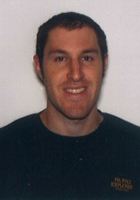
Philosophy training at UCSB gave Alex a precise lens for AP Seminar prep: he coaches students to treat every performance task as a philosophical argument — claim, evidence, counterargument, rebuttal —...
Education & Certificates
University of California-Santa Barbara
Master of Arts, Philosophy
Reed College
Bachelor in Arts, Classics
ACT Scores

Laurel's mathematics degree from DePaul gives her an analytical edge in AP Seminar prep that most writing-focused coaches don't bring — she teaches students to treat argument construction as a logic p...
Education & Certificates
DePaul University
Bachelor in Arts, Mathematics
SAT Scores

I'm available to tutor biology, chemistry, physics, math from Algebra up through AP Calculus, SAT test prep, and French. I've been tutoring students in science and math for 7 years. I also spent 8 mon...
Education & Certificates
Massachusetts Institute of Technology
Masters, Environmental Engineering
Massachusetts Institute of Technology
Bachelors
SAT Scores

I am a licensed physician from Florida who is currently changing careers. I graduated from the University of Pennsylvania in 2009 and have extensive tutoring and editing experience. While a student, I...
Education & Certificates
Nova Southeastern University
PHD, Medicine
University of Pennsylvania
Bachelors, History
SAT Scores

I'm a recent Stanford graduate (Electrical Engineering and Computer Science), and have been working at a major Management Consulting firm for a few years now. I personally scored a 2360 (out of 2400) ...
Education & Certificates
Stanford University
Bachelors in Electrical Engineering and Computer Science
ACT Scores

I am available to tutor middle and high school math, history and test prep. I have tutored math and history in the past and I previously taught a test prep course at a school in Hanoi, Vietnam. I have...
Education & Certificates
Harvard University
Master of Public Policy, Public Policy
ACT Scores

I am a current student at the University of Chicago. I am working towards a Bachelor of Science in Biological Sciences, and I am on the pre-medical track. I am extremely passionate about tutoring, and...
Education & Certificates
University of Chicago
Bachelor of Science, Biology, General
ACT Scores

I am enrolled in the Mechanical Engineering PhD program at Rice University which will begin Fall 2020, and I am hoping to return to academia as a professor after earning my PhD. In the meantime, I am ...
Education & Certificates
University of Notre Dame
Bachelor of Science
Rice University
Doctor of Philosophy, Mechanical Engineering
ACT Scores
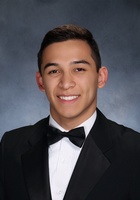
I am a freshman at Caltech majoring in Applied and Computational Mathematics. My favorite subject to tutor is math because I find it very rewarding to simplify complex topics to aid in understanding. ...
Education & Certificates
California Institute of Technology
Bachelor of Science, Applied Mathematics
SAT Scores

I am a recent graduate of Yale University and incoming first year medical student at Columbia University. Originally from the DC area, I have always had a passion for science and medicine and pursued ...
Education & Certificates
Yale University
Bachelor of Science in Biology
SAT Scores
Frequently Asked Questions
AP Seminar's multiple-choice section tests reading comprehension and argument analysis across diverse sources, which many students find difficult because the questions require evaluating reasoning quality rather than just finding facts. The free-response section—particularly the Team Multimedia Presentation and Individual Research Report—challenges students because they demand synthesis of multiple sources, clear argumentation, and the ability to anticipate counterarguments. Tutors help students practice identifying logical fallacies, distinguishing between claims and evidence, and structuring arguments that address complexity and nuance rather than oversimplifying issues.
Source evaluation is central to AP Seminar, and many students struggle to move beyond surface-level assessments. A tutor can teach you a systematic approach: examine the author's expertise and potential bias, consider the publication context and audience, identify what evidence the source uses to support claims, and notice what perspectives or counterarguments it omits. Practice analyzing sources from different genres—academic papers, opinion pieces, infographics, videos—since the exam mixes formats. The key is developing a habit of asking "Why might this source present information this way?" rather than accepting arguments at face value.
Strong AP Seminar arguments clearly state a position, support it with specific evidence from credible sources, acknowledge limitations or counterarguments, and explain the reasoning that connects evidence to claims. Weak arguments rely on unsupported assertions, cherry-pick sources that confirm bias, ignore complexity, or fail to explain why evidence matters. Tutors focus on teaching you to construct arguments that demonstrate understanding of the issue's nuance—showing you can hold multiple perspectives in mind while still taking a defensible position. This is what separates a 4 or 5 from lower scores on the free-response sections.
AP Seminar's exam structure requires different pacing strategies: the multiple-choice section (90 minutes for ~40 questions) allows roughly 2 minutes per question, but argument analysis questions often need careful re-reading, so many students benefit from skimming all questions first, then tackling them in order of confidence. The free-response section (100 minutes for 3 questions) demands strategic time allocation—the Team Multimedia Presentation and Individual Research Report each need substantial planning and drafting time, while the Argument Evaluation question is shorter. A tutor can help you develop a personalized timing strategy based on your strengths, practice it repeatedly with full-length tests, and build confidence that you won't run out of time.
The Team Multimedia Presentation requires you to synthesize sources, identify a claim of fact or policy, and explain how multimedia elements strengthen your team's argument—but many students struggle to move beyond describing what their visuals show. Strong responses clearly articulate how each multimedia choice (images, graphs, videos, infographics) provides evidence or emotional resonance that reinforces your argument, and they acknowledge how different audience members might interpret the presentation differently. Tutors help you practice explaining the strategic purpose of multimedia rather than just using it decoratively, and they guide you in anticipating how the presentation would actually land with your intended audience.
A high-scoring Individual Research Report moves beyond summarizing sources to building a clear, evidence-based argument about a real-world issue. Students often struggle with the balance between depth and breadth—you need enough sources to show thorough research, but not so many that you're just listing summaries. Strong reports identify a specific question or claim, use sources strategically to build your case, address counterarguments, and explain why your argument matters. A tutor can help you develop a research strategy that finds credible, diverse sources early, teach you how to synthesize rather than just cite, and guide you in revising drafts to strengthen weak sections before you submit.
AP Seminar expects you to recognize common reasoning errors like ad hominem attacks (attacking the person rather than the argument), straw man arguments (misrepresenting an opponent's position), false dilemmas (presenting only two options when more exist), hasty generalizations, and appeals to emotion or authority without evidence. The exam tests this skill in multiple-choice questions and asks you to evaluate arguments' reasoning quality in free-response sections. Rather than memorizing a long list, a tutor helps you understand the underlying logical structure of each fallacy, practice spotting them in real articles and speeches, and develop the habit of asking "Does this reasoning actually hold up?" when you encounter arguments.
Score improvement depends on your starting point and how consistently you practice. Students who work with a tutor on argument analysis, source evaluation, and free-response structure often see meaningful gains—moving from a 2 to a 3, or a 3 to a 4—within 8-12 weeks of regular practice. The biggest improvements come from understanding what AP Seminar actually rewards: nuanced thinking, evidence-based reasoning, and the ability to handle complexity rather than oversimplifying. A tutor accelerates this by providing targeted feedback on your specific weak areas (perhaps your arguments lack acknowledgment of counterarguments, or your source analysis is surface-level) and helping you practice the skills that matter most before test day.
Other Chicago test prep
Let's find your perfect prep plan
Answer a few quick questions. We'll recommend the right plan and match you with a top 5% instructor.