Award-Winning AP Environmental Science Prep in Los Angeles
Award-Winning AP Environmental Science Prep in Los Angeles
Everything you need to crush the AP Environmental Science in Los Angeles, CA. Live prep classes, practice tests, 1-on-1 expert tutoring, and AI-powered diagnostics.
Who needs prep?
No obligation. Takes ~1 minute.
Instructors from
- YaleUniversity
- PrincetonUniversity
- StanfordUniversity
- CornellUniversity
Featured by


AP Environmental Science Prep Classes
 Short-term classLive
It's Not Magic, It's Science
Learning can be magical! In this class, students will learn magic tricks and solutions to seemingly-impossible challenges, plus learn the scientific explanations that make them work. In each class, learners will participate in several tricks and challenges that use the principles of science to do something amazing, break down the scientific principles that made each trick possible, and learn how those principles apply to practical purposes in our daily lives. By the end of each session, students will have new magic tricks to wow their friends and family, and new scientific knowledge to impress their teachers, too. Most tricks will simply use household items and school supplies, making it easy for students to learn, practice, and perform their new tricks.
 Short-term classLive
It's Not Magic, It's Science
Learning can be magical! In this class, students will learn magic tricks and solutions to seemingly-impossible challenges, plus learn the scientific explanations that make them work. In each class, learners will participate in several tricks and challenges that use the principles of science to do something amazing, break down the scientific principles that made each trick possible, and learn how those principles apply to practical purposes in our daily lives. By the end of each session, students will have new magic tricks to wow their friends and family, and new scientific knowledge to impress their teachers, too. Most tricks will simply use household items and school supplies, making it easy for students to learn, practice, and perform their new tricks.
 Short-term classLive
High School Physics Fundamentals
Is your Physics grade a little too low? Want to improve your understanding of the most challenging concepts? Fundamentals of High School Physics is a live, interactive class designed for students wanting to improve their knowledge of formulas, definitions, and equations. In weekly sessions, guided by an expert instructor, you’ll gain a better understanding of the laws and applications of motion, forces, gravity, work, and energy, as well as light and sound waves.
 One-time classLive
AP English Language & Composition Monthly Review
Ace your AP Lang essays _and_ the AP exam — without cramming or falling behind. Our AP English & Composition Language Monthly Review sessions are designed to help you stay one step ahead. Each month, an expert instructor will guide you through a focused review of the skills and texts you’ve been developing in class, helping you sharpen your rhetorical analysis, build a personal study toolkit, and feel confident in timed writing and multiple-choice questions alike.
 One-time classLive
AP Chemistry Monthly Review
Ace your AP Chemistry class _and_ the AP exam — without cramming or falling behind. Our AP Chemistry Monthly Review sessions are designed to help you stay one step ahead. Each month, an expert instructor will guide you through a focused review of the unit you’ve just covered in class, helping you reinforce key concepts, connect ideas across the curriculum, and build your personal study toolkit for May.
 Short-term classLive
Organic Chemistry Fundamentals
Few college classes are so universally intimidating as to be known nationwide by a single nickname. That's why Orgo students love having weekly, expert-led livestream sessions to make sure they stay ahead of the curve. Expert instructors are here to break down the most difficult concepts in organic chemistry in a way that is easy to understand and even enjoyable. From understanding reaction mechanisms to mastering stereochemistry, we've got you covered. Whether you're a regular attendee looking to stay ahead of the curve or a last-minute cram sessioner before exams, our flexible attendance options make it easy to fit our livestream sessions into your schedule. So why stress over organic chemistry when you can have fun learning it instead? Join us for our livestream course and let's make organic chemistry a breeze!
 One-time classLive
AP Physics 1 Monthly Review
Ace your AP Physics 1 class _and_ the AP exam — without cramming or falling behind. Our AP Physics 1 Monthly Review sessions are designed to help you stay one step ahead. Each month, an expert instructor will guide you through a focused review of the unit you’ve just covered in class, helping you reinforce key concepts, connect ideas across the curriculum, and build your personal study toolkit for May.
 Short-term classLive
Earth Rocks!
From giant mountains to shiny gems, from volcanoes to earthquakes and Stonehenge to the Grand Canyon, everything about Earth totally rocks. And in this class, students will learn all about the rocks all around us. Each session will cover a different theme from plate tectonics to fossils and everything in between. Drop in for one session to pick up a few gems of knowledge or make it a weekly “rock cycle” appointment.
 Short-term classLive
General Chemistry Fundamentals
The path to many of the most sought-after majors, from pre-med to engineering, generally leads right through General Chemistry--and for many students, this challenging "weeder" class can be where that path stops, too. Turn Gen Chem from a gatekeeper to a gateway with weekly, expert-led classes as you review and preview concepts pertinent to your place in the semester. Each week, an expert instructor will guide you through key concepts and problem-solving strategies, giving you the tools you need to excel in your chemistry courses. From balancing equations to understanding reaction mechanisms, we've got you covered.
 One-time classLive
AP Calculus AB Monthly Review
Ace your AP Calculus AB class _and_ the AP exam — without cramming or falling behind. Our AP Calculus AB Monthly Review sessions are designed to help you stay one step ahead. Each month, an expert instructor will guide you through a focused review of the unit you’ve just covered in class, helping you reinforce key concepts, connect ideas across the curriculum, and build your personal study toolkit for May.
 One-time classLive
AP Psychology Monthly Review
AP Psychology Monthly Review is the high-impact prep course for students who want to walk into the AP exam with real confidence. Each month, students review and sharpen the skills that matter most for building on the rest of the school year and executing expertly on the AP exam in May. You'll dissect real texts, practice both multiple-choice and free-response question types, and shore up the fundamentals that can be so fleeting when your class moves on to new units quickly.
 One-time classLive
AP Biology Monthly Review
Ace your AP Biology class _and_ the AP exam — without cramming or falling behind. Our AP Biology Monthly Review sessions are designed to help you stay one step ahead. Each month, an expert instructor will guide you through a focused review of the unit you’ve just covered in class, helping you reinforce key concepts, connect ideas across the curriculum, and build your personal study toolkit for May. These sessions are ideal for students who want to maintain top grades, reduce stress, and walk into the AP exam with total confidence.
Top-Rated AP Environmental Science Prep Instructors in Los Angeles

The multiple-choice section of AP Environmental Science is where unprepared students bleed points — not because the content is too hard, but because the exam's distractors are engineered to punish sur...
Education & Certificates
Harvard College
Bachelor in Arts, History
SAT Scores
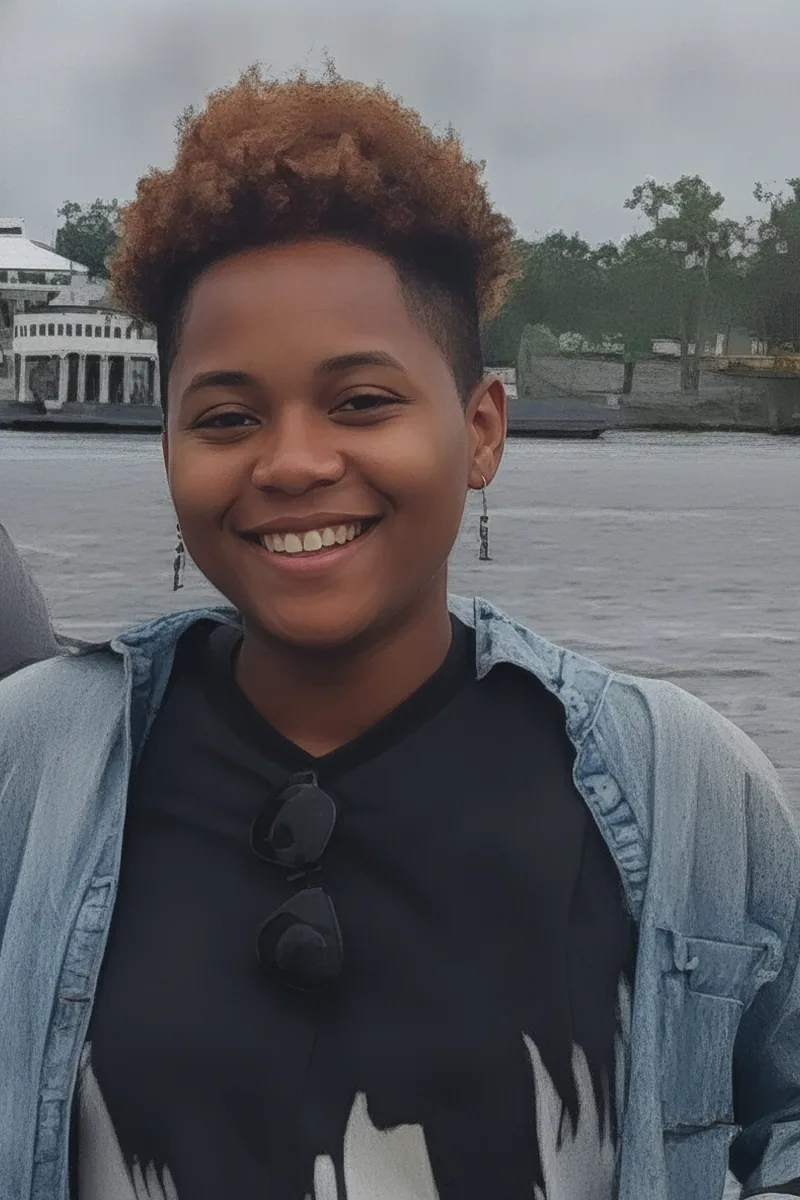
Real-world conservation work — including supervising an AmeriCorps environmental program and teaching at state and national parks — gives Rachel a prep edge on the AP Environmental Science exam's tric...
Education & Certificates
Johns Hopkins University
Masters
Johns Hopkins Bloomberg School of Public Health
Masters, Environmental Health Sciences
SAT Scores
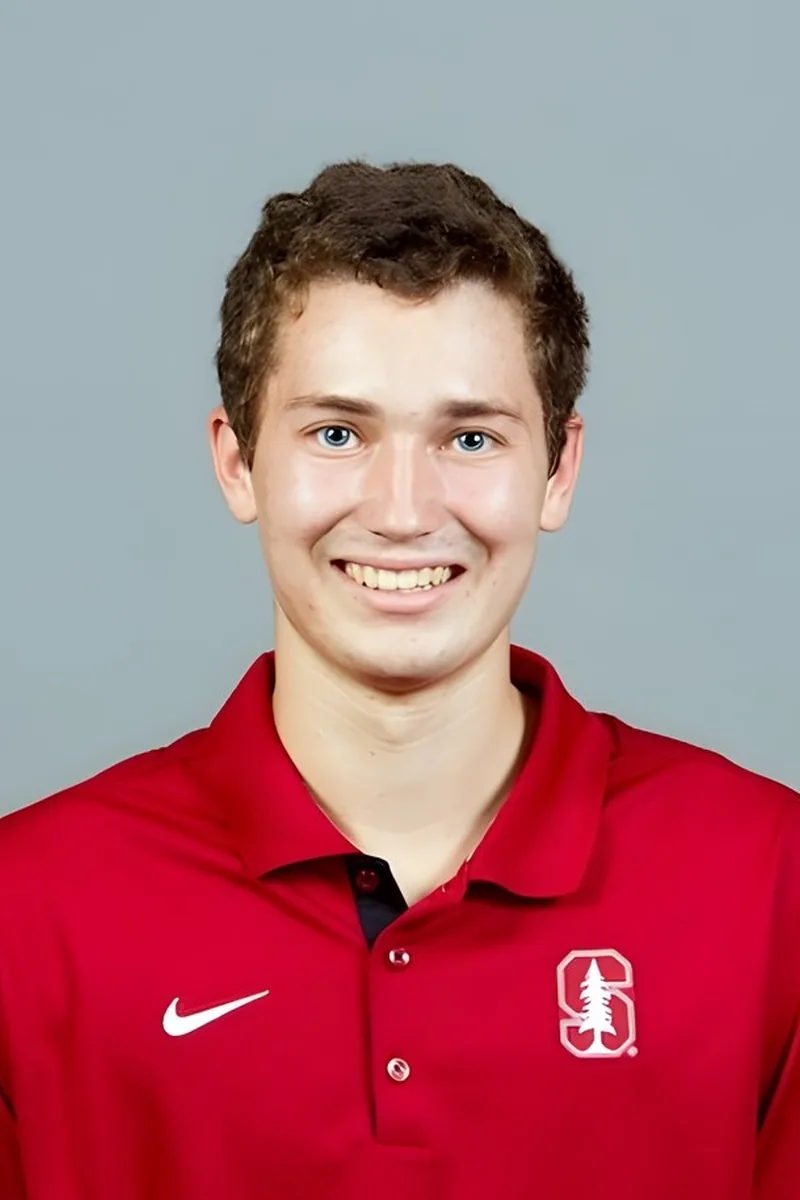
Jake's Human Biology coursework at Stanford runs directly through the same ecological and health-policy intersections that APES tests hardest — the connections between human activity, environmental sy...
Education & Certificates
Stanford University
Current Undergrad, Human Biology
ACT Scores

Todd's Biology degree from the University of Illinois and graduate training at the University of Chicago built the cross-disciplinary thinking that APES consistently rewards — the ability to trace how...
Education & Certificates
University of Chicago
Master of Social Work, Social Work
University of Illinois at Urbana-Champaign
Bachelor of Science, Biology, General
ACT Scores

APES free-response questions require students to apply concepts to unfamiliar scenarios quickly — the exam rewards students who understand systems thinking, not just memorized facts. Sharan teaches a ...
Education & Certificates
Cornell University
Bachelor of Science, Human Biology
ACT Scores

Neuroscience training at Vanderbilt builds exactly the systems-level thinking that separates a 3 from a 5 on AP Environmental Science — the ability to trace how a change in one variable cascades throu...
Education & Certificates
Vanderbilt University
Bachelor of Science, Neuroscience
ACT Scores

Patricia's dual degree in Environmental Science from Washington University in St. Louis means she can diagnose exactly which content gaps — nutrient cycles, energy flow, environmental policy — are cos...
Education & Certificates
Washington University in St. Louis
Bachelor in Arts
SAT Scores
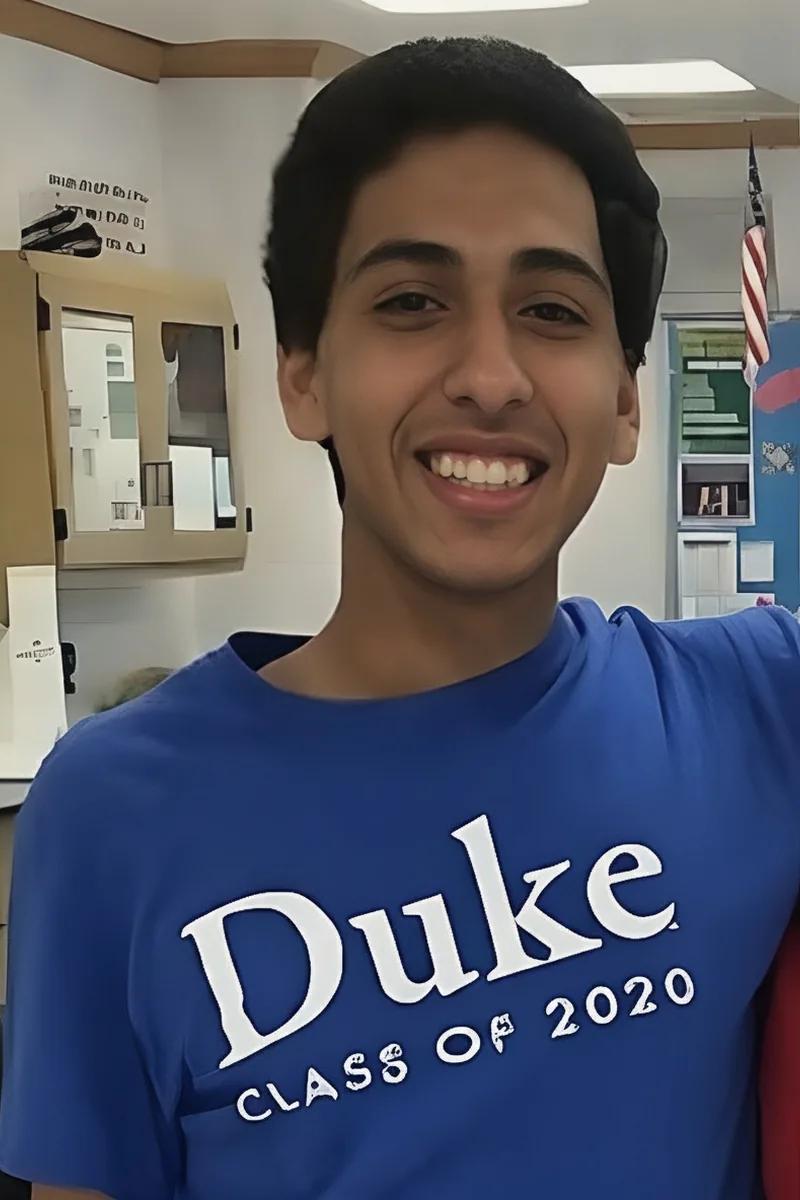
Physics training at Duke builds a particular instinct — tracing how energy moves through systems, transforms, and produces measurable consequences — that maps directly onto APES questions about energy...
Education & Certificates
Duke University
Bachelors, Physics
SAT Scores

Eric's undergraduate research in Ecology and Evolutionary Biology at Princeton trained him to read environmental systems the way APES multiple-choice distractors are designed to exploit — where a plau...
Education & Certificates
Princeton University
Bachelor in Arts
ACT Scores
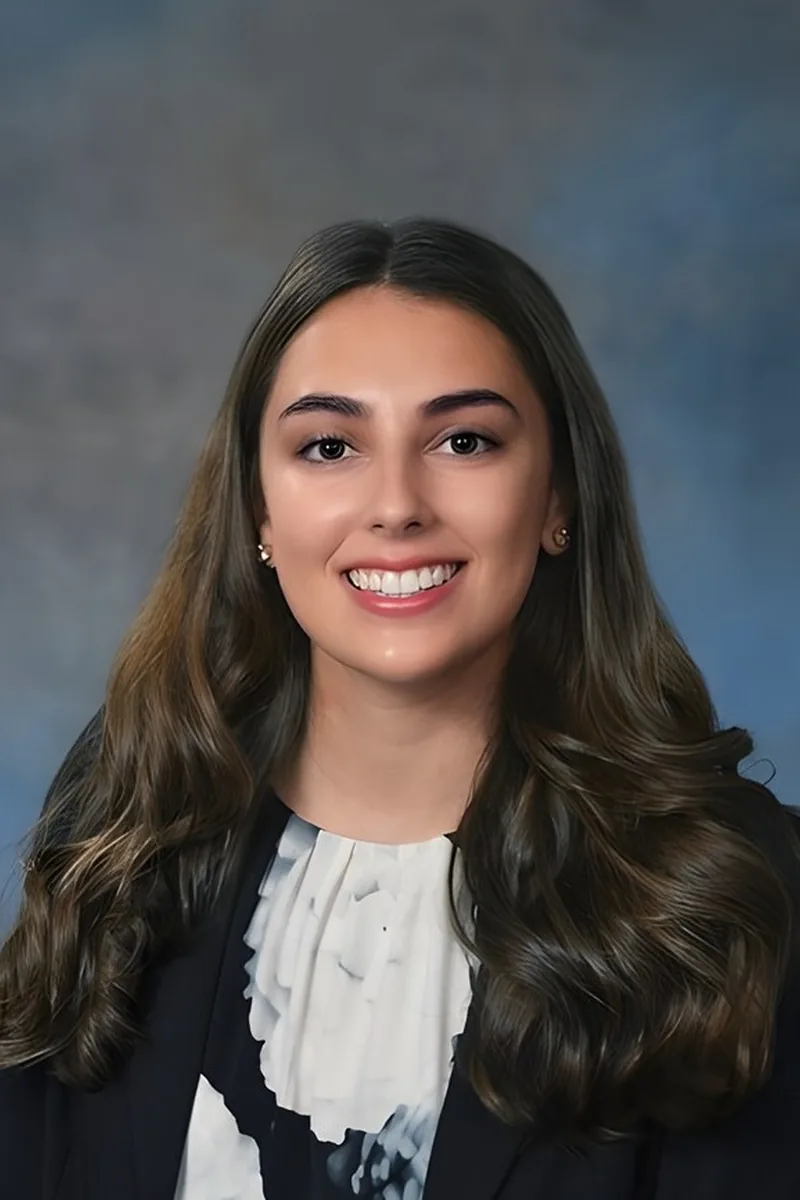
Medical training at Baylor College of Medicine sharpens a specific skill that transfers directly to AP Environmental Science: diagnosing how biological, chemical, and human systems interact — the exac...
Education & Certificates
The University of Alabama
Bachelor of Science, Biology, General
Baylor College of Medicine
Doctor of Medicine, Public Health
ACT Scores
Frequently Asked Questions
Students often struggle most with the quantitative sections—particularly energy flow calculations, population growth models, and water/nutrient cycle stoichiometry. The FRQ section also trips up many students because it requires synthesizing concepts across multiple units (like connecting atmospheric chemistry to acid rain impacts). Additionally, the distinction between biotic and abiotic factors in ecosystem dynamics, and understanding feedback loops in Earth systems, tends to be conceptually difficult without targeted explanation.
The exam has two sections: 80 multiple-choice questions (90 minutes) and 3 free-response questions (90 minutes). For the MC section, pace yourself at roughly 1 minute per question and flag questions involving calculations or complex diagrams to revisit. For FRQs, allocate 30 minutes per question and structure your answer clearly—define terms, show your work for calculations, and explicitly connect your answer to environmental principles. Many students lose points by not explaining the "why" behind their answers, especially in questions about human impacts or policy solutions.
Focus on understanding the underlying concepts before memorizing formulas—for example, knowing that NPP (Net Primary Productivity) = GPP minus respiration helps you interpret what the numbers mean, not just plug them in. Practice working through calculation-heavy topics like doubling time, carrying capacity, and bioaccumulation repeatedly with different scenarios. Many students benefit from creating a reference sheet of common formulas and their real-world applications, then practicing problems without looking at it to build fluency and confidence under test conditions.
The key is practicing under timed conditions with actual past FRQs and learning to structure your responses clearly. Strong FRQ answers identify the environmental concept being tested, define relevant terms, provide specific examples (like naming actual pollutants or ecosystems), and explain the cause-and-effect relationship. Many students rush through the writing portion; instead, spend the first few minutes outlining your answer, then write in complete sentences that directly address the prompt. Reviewing scoring rubrics alongside sample responses helps you understand exactly what exam readers are looking for.
You'll encounter graphs showing population trends, temperature anomalies, pollution levels, and resource consumption—and you need to extract meaning quickly. Practice identifying axes labels, units, and trends (linear vs. exponential growth, correlation vs. causation). Many students misread axes or confuse correlation with causation, especially in questions about climate data or toxicology studies. Spend time analyzing real datasets from sources like NOAA or EPA reports to build comfort with environmental data, and always ask yourself: "What does this pattern tell me about the environmental system, and what are the limitations of this data?"
The exam rewards students who see how units relate—for instance, understanding how energy flow in ecosystems (Unit 1) connects to human agriculture and food production (Unit 5), or how atmospheric chemistry (Unit 7) drives both climate change and ozone depletion. Create concept maps linking topics like nutrient cycles, human impacts, and policy responses. When studying, ask yourself questions like: "How would increased CO₂ affect photosynthesis rates and ecosystem productivity?" or "How do population dynamics influence resource consumption?" This synthesis thinking is what separates students scoring 4s and 5s from those scoring 2s and 3s.
Practice full-length exams under realistic conditions (2.5 hours, no breaks) to build stamina and familiarity with the pace—this reduces anxiety on test day. For the MC section, if you're stuck on a question after 1.5 minutes, mark it and move on; you can return if time allows. During FRQs, read all three prompts first and start with the one you feel most confident about to build momentum. Deep breathing and positive self-talk matter too—remind yourself that you've practiced these concepts and that it's okay not to know every detail; partial credit is available for showing your reasoning.
Score improvement depends on your starting point and effort level. Students who are struggling with foundational concepts (scoring 1-2) typically see the biggest gains—often 1-2 full points—when they get targeted help identifying knowledge gaps and building systematic study habits. Students scoring 3s can often reach 4s by strengthening FRQ writing and quantitative problem-solving through practice. The national average is around a 2.5, so reaching a 3 or 4 puts you ahead of most test-takers. Realistic improvement requires consistent practice with past exams, honest assessment of weak areas, and applying feedback to future attempts.
Other Los Angeles test prep
Let's find your perfect prep plan
Answer a few quick questions. We'll recommend the right plan and match you with a top 5% instructor.