Award-Winning AP Prep in Phoenix
Award-Winning AP Prep in Phoenix
Everything you need to crush the AP in Phoenix, AZ. Live prep classes, practice tests, 1-on-1 expert tutoring, and AI-powered diagnostics.
Who needs prep?
No obligation. Takes ~1 minute.
Instructors from
- YaleUniversity
- PrincetonUniversity
- StanfordUniversity
- CornellUniversity
Featured by


AP Prep Classes
 Short-term classLive
Jump Start to AP & Honors Physics
Physics is the study of the fundamental forces and principles that govern how matter and energy interact in the universe. From motion and momentum to waves and electricity, each concept builds on the last—so the foundations you begin the school year with tend to govern your trajectory and velocity throughout the school year. In this live, interactive summer class you will learn and review the key building blocks for success in advanced high school physics classes, including AP, IB, and honors classes. From scientific principles to essential math concepts, you’ll cover everything you need to start your most challenging fall class with energy and momentum.
 Short-term classLive
Jump Start to AP Computer Science A
Computer Science is the study of how we use logic and code to solve problems and build the digital world around us. From variables and conditionals to classes and objects, each concept builds logically on the last—so the foundations you start with often determine how efficiently and confidently you can program throughout the year. In this live, interactive summer class, you’ll learn and review the key building blocks for success in advanced high school computer science courses, including AP Computer Science A. From core Java syntax to problem-solving strategies, you’ll cover everything you need to start this rigorous coding class with structure and logic.
 Short-term classLive
Jump Start to AP & Honors Biology
Biology is the study of the building blocks of life, how cells, systems, and processes interact to enable complex organisms to adapt and thrive. And just like living systems build from their foundations, your own biology knowledge builds concept by concept toward the complex skills you need for your labs and exams throughout the year. In this live, interactive summer class you will learn and review the key building blocks for success in advanced high school biology classes, including AP, IB, and honors classes. Armed with sound fundamentals you’ll be ready to hit the ground running in the new school year and thrive in your most challenging fall class.
Top-Rated AP Prep Instructors in Phoenix
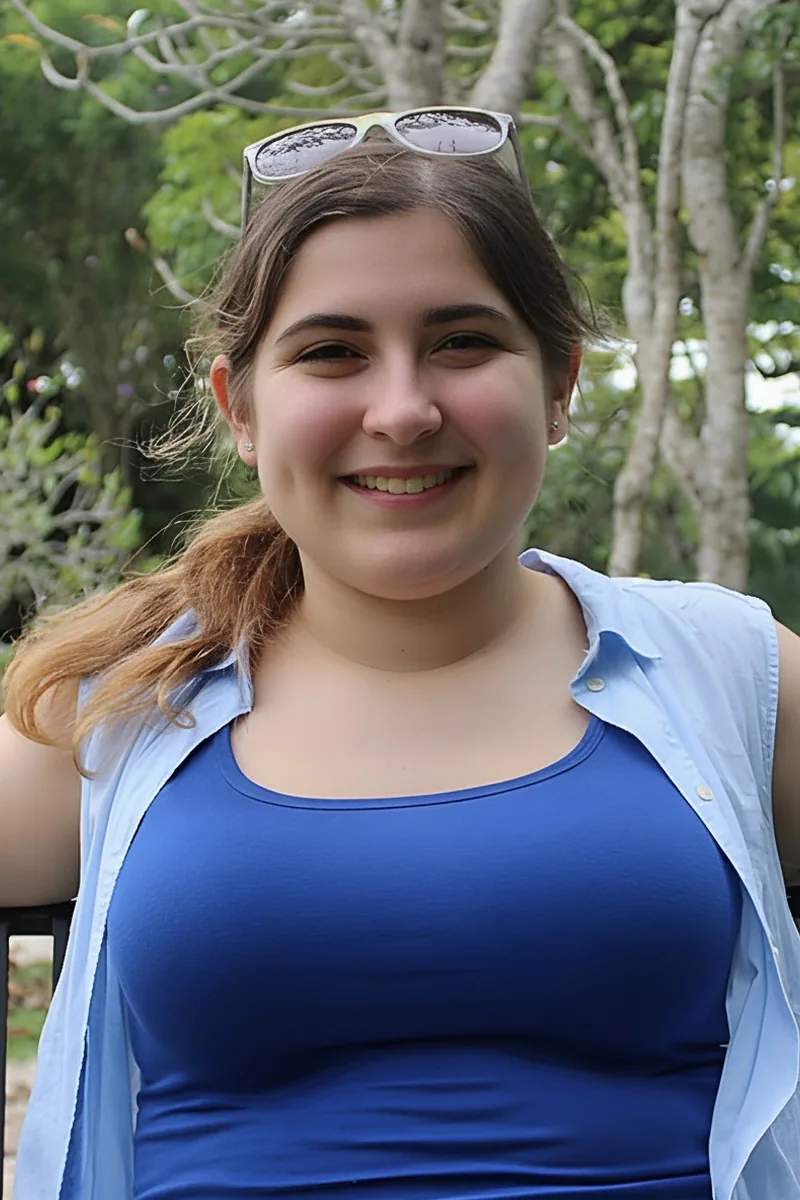
Elizabeth's graduate research in Chinese politics at East China Normal University trained her to do something most AP U.S. Government & Politics students never practice: read political systems compara...
Education & Certificates
East China Normal University
Master of Arts, Political Science and Government
St. Lawrence University
Bachelor in Arts, Political Science and Government
SAT Scores

I am especially committed to supporting first-generation college students, those for whom English is a second language, and working adults as they navigate the challenges of higher ed. Nevertheless, I...
Education & Certificates
Harvard University
Master of Philosophy
Saint Catherine University
Bachelor in Arts, English Composition
Teaching multivariable calculus for the Harvard Mathematics Department gave Kristi a precise map of where students' conceptual foundations crack under pressure — and the AP Calculus BC exam exposes th...
Education & Certificates
Arizona State University
PHD, Exploration Systems Design
Harvard University
Bachelor of Arts in Astrophysics and Earth & Planetary Science

I have over two years of tutoring and teaching experience at Case Western Reserve University. I served as a Supplemental Instructor for ENGR 145 (Chemistry of Materials), where I created worksheets, l...
Education & Certificates
Case Western Reserve University
BS
SAT Scores
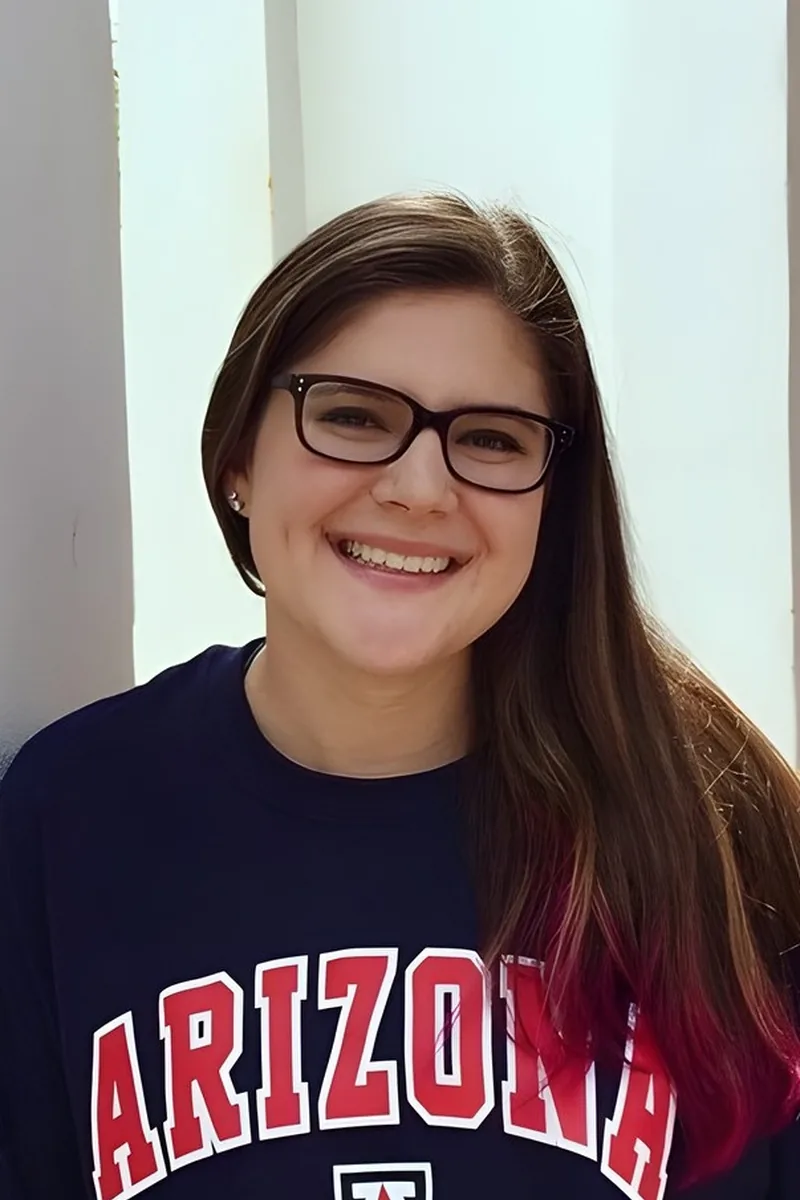
Chemical engineering at Washington and Lee trains students to read systems — identifying which variables drive outcomes and which are noise — and Alex applies that same diagnostic precision to APUSH's...
Education & Certificates
Washington and Lee University
Bachelor of Science, Chemical Engineering
ACT Scores
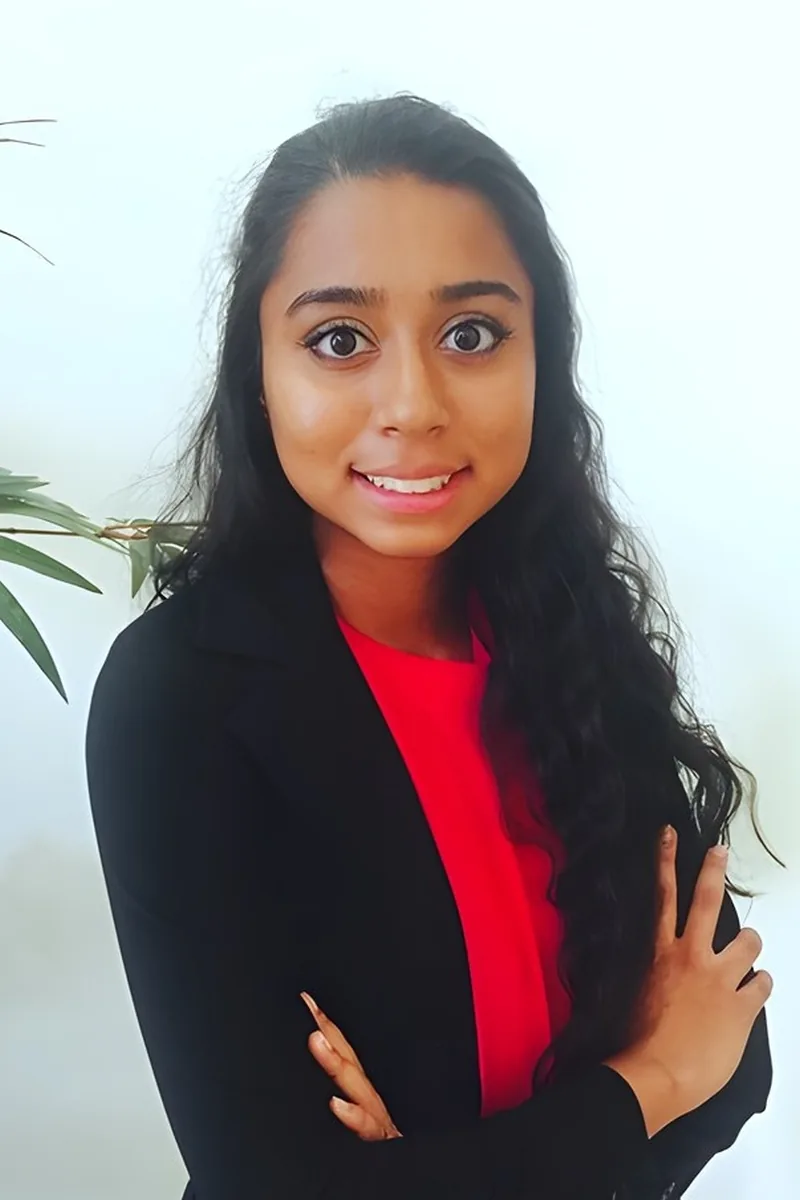
I am a rising sophomore at Duke University. My dream is to become a doctor someday, so I am currently on the pre-med track and taking several chemistry and biology courses. Although my current focus i...
Education & Certificates
Duke University
Current Undergrad, Undecided Biological Sciences

Shannon's background spanning Latin American history, U.S. history, and college-level essay instruction gives her a sharp eye for the comparative and contextualization arguments APUSH rewards — partic...
Education & Certificates
University
Bachelor's
SAT Scores

Chemical engineering at Arizona State means Adrian lives inside the math the AP Calculus BC exam tests — differential equations, accumulation models, series approximations aren't abstract to him, they...
Education & Certificates
Arizona State University
Current Undergrad, Chemical Engineering
ACT Scores

Psychology training at NYU sharpens a skill AP Statistics quietly tests on nearly every free-response prompt: recognizing how study design determines what conclusions are actually defensible. Chris co...
Education & Certificates
New York University
Masters, Psychology
Stevenson University
Bachelor of Science, Psychology (Minor in Applied Mathematics)

A Master's in Special Education from Johns Hopkins trained Maurice to diagnose exactly how a student's reasoning breaks down — a skill that translates directly into identifying why a student is droppi...
Education & Certificates
Johns Hopkins University
Master of Arts, Special Education
Ner Israel Rabbinical College
Bachelor in Arts, Talmudic Studies
Frequently Asked Questions
AP exam scores range from 1-5, with a 3 considered passing for college credit at most institutions. Students working with tutors typically see 1-2 score point improvements, though the gains depend on starting level and subject difficulty. A student scoring a 2 in AP Biology might reach a 4 with focused tutoring on free-response strategies and conceptual gaps, while a student at a 3 in AP US History could push to a 5 by mastering document analysis and argument construction. The key is identifying which of the exam's components—multiple choice, free response, or synthesis essays—need the most work.
AP courses demand both content mastery and exam-specific skills that high school courses don't always teach. Students commonly struggle with free-response questions, which require synthesizing multiple concepts and explaining reasoning clearly—not just knowing facts. Time management is another major challenge; AP exams compress hours of material into 2-3 hours of testing. Additionally, many students underestimate the shift from memorization to application: AP Biology requires understanding *why* processes work, not just what happens; AP US History demands analyzing primary sources rather than recalling dates; AP Calculus requires conceptual understanding alongside computational fluency. Personalized tutoring targets these specific weak points rather than reviewing the entire curriculum.
The strongest AP tutors combine deep subject expertise with exam-specific knowledge. They should have scored a 4 or 5 on the AP exam they teach, or hold a college degree in that subject area—this ensures they understand not just content, but which concepts are tested most heavily and how the College Board frames questions. Beyond subject knowledge, effective AP tutors understand the exam's rubrics intimately; they can teach students exactly what graders look for in free-response answers and how to structure arguments for maximum points. Experience teaching or tutoring AP specifically matters too, since strategies for AP Calculus differ fundamentally from strategies for AP Literature. Look for tutors who can explain *why* an answer is correct according to AP standards, not just that it is.
Each AP exam has a distinct format and scoring structure, and students who understand these details gain a strategic advantage. For example, AP exams with multiple choice typically weight it 50% of the score, so mastering test-taking strategies—eliminating wrong answers, managing time, recognizing College Board's common wrong-answer patterns—directly impacts the final score. Free-response sections have published rubrics that show exactly what earns points; a tutor can teach students to write answers that hit every rubric requirement rather than writing what seems right. Some AP exams like AP Seminar and AP Research require specific portfolio components with their own scoring criteria. Personalized instruction breaks down these format-specific strategies so students aren't just studying content—they're optimizing their approach to the exact test they'll take.
Prerequisites vary by subject. AP Calculus requires strong algebra and precalculus foundations—students struggling with function composition or trigonometric identities will hit a wall in calculus without addressing those gaps first. AP Chemistry demands solid understanding of stoichiometry and atomic structure from regular chemistry. AP US History benefits from strong reading comprehension and essay-writing skills, since the exam emphasizes document analysis and thesis-driven arguments. AP Biology requires comfort with scientific reasoning and data interpretation. A tutor's first role is often diagnosing these foundational gaps and deciding whether to build them up or work around them. Students who enter AP courses underprepared in prerequisites benefit significantly from tutoring that addresses both the gap and the AP content simultaneously.
Free-response questions are where many AP students lose points because they require more than knowing the answer—they demand clear explanation and evidence of reasoning. Tutors teach students to decode what each question is actually asking (analyze vs. explain vs. evaluate have different meanings to the College Board), then structure responses to match the published rubric exactly. For example, an AP Biology free response might require identifying a concept, explaining how it applies to a scenario, and predicting an outcome; a tutor ensures students hit all three components rather than just answering partially. Practice with real past exam questions is essential, and tutors provide immediate feedback on what works and what doesn't according to actual AP grading standards. This targeted practice typically shows results quickly—students often see 5-10 point improvements on free-response sections within weeks of focused tutoring.
AP multiple-choice questions test deeper understanding than typical high school tests; they often include plausible wrong answers designed to catch common misconceptions. Effective tutoring teaches students to recognize these traps and use strategic elimination. For instance, in AP Biology, an answer might be factually true but not address what the question asks; students learn to identify this distinction. Time management matters too—AP exams give limited time per question, so tutors teach students which questions to tackle first and when to make an educated guess rather than spend three minutes on one problem. Additionally, tutors help students understand *why* the correct answer is right and why each wrong answer is wrong, which builds conceptual understanding rather than just test-taking tricks. Regular practice with released AP exams, analyzed with a tutor, reveals patterns in how the College Board tests each topic.
Ideally, tutoring begins early in the AP course so students build strong foundations and develop exam-specific skills throughout the year rather than cramming in the final weeks. Students who start tutoring in September or October have time to address conceptual gaps, practice free-response questions repeatedly, and refine their approach before May. However, students who begin tutoring in March or April can still see meaningful improvement by focusing intensively on the highest-yield topics and exam strategies. The timing also depends on the student's starting point: a student earning A's in the course might only need 4-6 weeks of targeted exam prep, while a student struggling with the course content needs longer to build understanding. Tutors assess where each student stands and create a timeline that addresses both content mastery and exam strategy, whether that's a full-year partnership or a focused sprint before test day.
Other Phoenix test prep
Let's find your perfect prep plan
Answer a few quick questions. We'll recommend the right plan and match you with a top 5% instructor.