Award-Winning SSAT Prep in Phoenix
Award-Winning SSAT Prep in Phoenix
Everything you need to crush the SSAT in Phoenix, AZ. Live prep classes, practice tests, 1-on-1 expert tutoring, and AI-powered diagnostics.
Who needs prep?
No obligation. Takes ~1 minute.
Instructors from
- YaleUniversity
- PrincetonUniversity
- StanfordUniversity
- CornellUniversity
Featured by


Top-Rated SSAT Prep Instructors in Phoenix
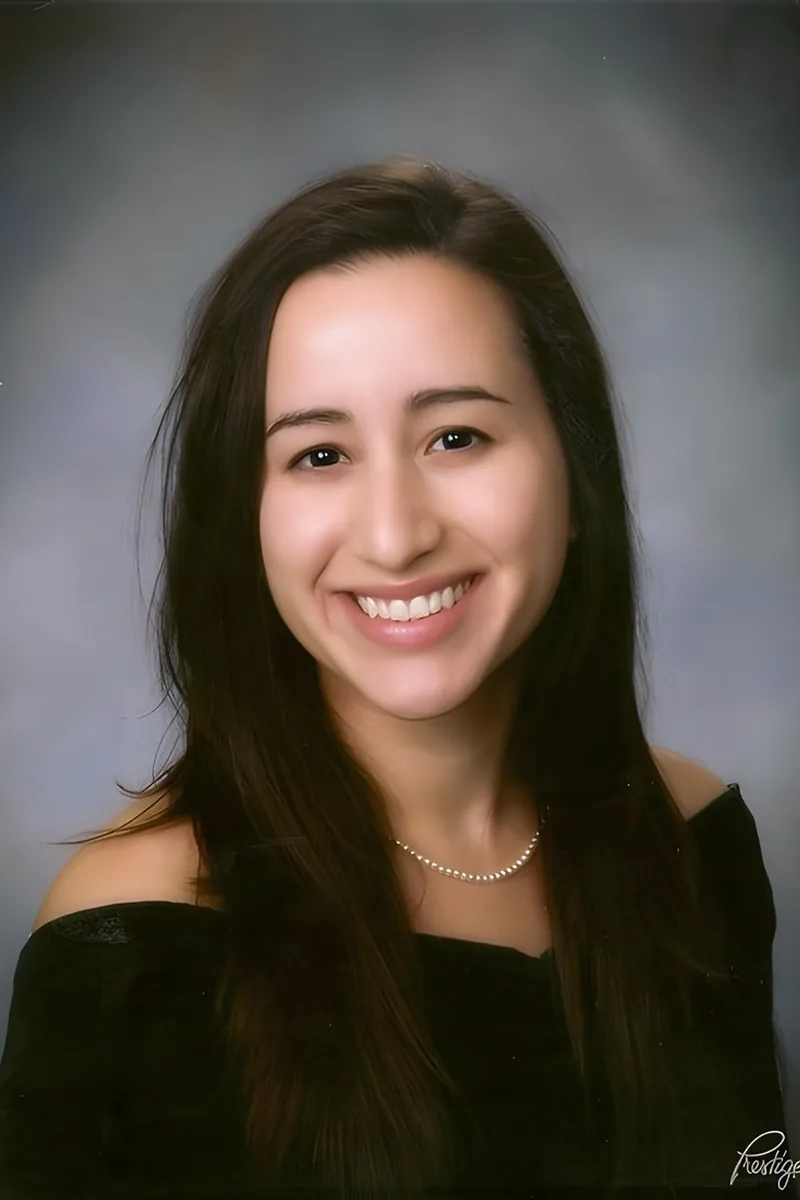
I am currently in the process of applying to Law School. I have tutored middle school and high school students in subjects ranging from 5th grade reading to geometry to the SAT. While I am happy and a...
Education & Certificates
Princeton University
Bachelor in Arts
ACT Scores

The best part of tutoring is promoting students' long-term success through mastery of reading, writing, math, study skills, organization, and critical thinking. In particular, I enjoy helping students...
Education & Certificates
University
Bachelor's
ACT Scores

I am passionate about running, traveling, and being outdoors. I believe that learning should be fun and that the process needs to be personal and innovative. I am always prepared, patient, and observa...
Education & Certificates
Snow College
Associates, Elementary Education
Utah Valley University
Current Grad Student, Elementary Education

I am a senior at Smith College, where I study mathematics. My past mathematical research has included work with Markov chains, random walks, and combinatorial optimization.
Education & Certificates
Smith College
Current Undergrad, Mathematics
SAT Scores

I am a student at Arizona State University in the biomedical engineering department. I will be earning my Bachelor's degree in May of 2015 and beginning my master's degree in biomedical engineering in...
Education & Certificates
Arizona State University
Master of Science, Biomedical Engineering

I'm quite the geek: I attend Phoenix Comicon every year.
Education & Certificates
University
Bachelor's

I have years of experience teaching writing and literary analysis in the classroom setting, and years of teaching students one on one.
Education & Certificates
University of Chicago
AM
SAT Scores

Performance anxiety during high-stakes admissions testing is one of the biggest score killers on the SSAT — and Brooke specifically coaches students through that crunch-time pressure. She diagnoses wh...
Education & Certificates
Georgia State University
AM
New York University
AM

Middle-level SSAT prep demands a different strategy than most standardized tests because the penalty for wrong answers makes guessing calculus as important as content knowledge. Jahnvi coaches student...
Education & Certificates
University of Georgia
BS
SAT Scores

Sheila's path through Columbia Law and Dartmouth's English and Creative Writing programs gave her an unusual lens on the SSAT: she understands exactly how the exam's reading and verbal sections are co...
Education & Certificates
Dartmouth College
Bachelor
Columbia University
Professional (JD, MD, DMD, etc)
Frequently Asked Questions
Score improvement depends on your starting point and study timeline, but most students see meaningful gains with focused preparation. Students who work with tutors for 8-12 weeks typically improve by 50-150 points, with some seeing larger jumps if they're addressing specific skill gaps. The key is identifying exactly where you're losing points—whether that's pacing on the quantitative section, inference questions in reading, or sentence completion problems—and targeting those areas strategically.
Reading comprehension and the upper-level verbal section challenge most students because they require both fast reading and deep understanding of nuanced questions. The quantitative section often trips up students on pacing—they get bogged down on hard problems and run out of time for easier ones later. A tutor can help you develop a strategy for each section: learning to predict answer choices in verbal, spotting trap answers in math, and managing your time so you're not rushing through questions you could get right.
Timing strategy is crucial—the SSAT isn't just about knowing the material, it's about getting the most points in the time you have. Many students waste valuable minutes on difficult problems early on and then rush through easier questions at the end. Tutors help you learn when to move on from a hard problem, how to allocate time across sections, and specific techniques like skimming vs. close reading for different passage types. With the right pacing plan, most students gain 10-30 points just from better time management.
Test anxiety often comes from feeling unprepared or not trusting your skills under pressure. Working with a tutor builds confidence through repetition and success—you'll take dozens of practice questions and full-length tests, so the real test feels familiar rather than scary. Tutors also teach you concrete strategies for the test day itself: breathing techniques, how to manage time so you're not panicking, and how to recover if you hit a hard section. When you've practiced the timing, know your weak spots are addressed, and have tested yourself many times, anxiety naturally decreases.
Taking 4-6 full-length practice tests under timed conditions is ideal, with spacing between them so you have time to learn from each one. The first practice test helps you establish a baseline and identify weak areas. Middle tests let you practice new strategies and see if they're working. Your final tests should feel like dress rehearsals—same timing, same setting, same pressure. A tutor will help you review each practice test strategically, focusing on the patterns in your mistakes rather than just going over the answers.
The writing sample is your chance to show schools how you think and express yourself—it's less about perfection and more about clarity and organization. You'll have 25 minutes to write one essay on a prompt, so practice is essential. Tutors help you develop a quick planning process, learn how to write a clear thesis with supporting examples, and practice writing under time pressure. The goal isn't to write like a novelist; it's to write a coherent, well-organized essay with specific examples. Most students improve significantly by practicing 8-10 timed essays with feedback.
A typical preparation timeline is 8-12 weeks, with 5-8 hours per week of focused study. This gives you time to learn the question formats, build skills, and practice under timed conditions. If you're starting from a lower baseline or aiming for a very high score, 12-16 weeks may be better. Starting earlier also reduces stress and prevents last-minute cramming. A tutor can create a personalized study plan based on your goal score, current skills, and test date, then adjust it as you progress.
Other Phoenix test prep
Let's find your perfect prep plan
Answer a few quick questions. We'll recommend the right plan and match you with a top 5% instructor.