Achieve a top score with Award-Winning AP European History Prep
Achieve a top score with Award-Winning AP European History Prep
Everything you need to crush the AP European History. Live prep classes, practice tests, 1-on-1 expert tutoring, and AI-powered diagnostics to help you reach your target score.
Universities
Delivered
Proficiency
Who needs prep?
No obligation. Takes ~1 minute.
Instructors from
- YaleUniversity
- PrincetonUniversity
- StanfordUniversity
- CornellUniversity
Featured by


Award-Winning AP European History Prep Classes
 One-time classLive
AP English Language & Composition Monthly Review
Ace your AP Lang essays _and_ the AP exam — without cramming or falling behind. Our AP English & Composition Language Monthly Review sessions are designed to help you stay one step ahead. Each month, an expert instructor will guide you through a focused review of the skills and texts you’ve been developing in class, helping you sharpen your rhetorical analysis, build a personal study toolkit, and feel confident in timed writing and multiple-choice questions alike.
 One-time classLive
AP Chemistry Monthly Review
Ace your AP Chemistry class _and_ the AP exam — without cramming or falling behind. Our AP Chemistry Monthly Review sessions are designed to help you stay one step ahead. Each month, an expert instructor will guide you through a focused review of the unit you’ve just covered in class, helping you reinforce key concepts, connect ideas across the curriculum, and build your personal study toolkit for May.
 One-time classLive
AP Physics 1 Monthly Review
Ace your AP Physics 1 class _and_ the AP exam — without cramming or falling behind. Our AP Physics 1 Monthly Review sessions are designed to help you stay one step ahead. Each month, an expert instructor will guide you through a focused review of the unit you’ve just covered in class, helping you reinforce key concepts, connect ideas across the curriculum, and build your personal study toolkit for May.
 One-time classLive
AP Calculus AB Monthly Review
Ace your AP Calculus AB class _and_ the AP exam — without cramming or falling behind. Our AP Calculus AB Monthly Review sessions are designed to help you stay one step ahead. Each month, an expert instructor will guide you through a focused review of the unit you’ve just covered in class, helping you reinforce key concepts, connect ideas across the curriculum, and build your personal study toolkit for May.
 One-time classLive
AP Psychology Monthly Review
AP Psychology Monthly Review is the high-impact prep course for students who want to walk into the AP exam with real confidence. Each month, students review and sharpen the skills that matter most for building on the rest of the school year and executing expertly on the AP exam in May. You'll dissect real texts, practice both multiple-choice and free-response question types, and shore up the fundamentals that can be so fleeting when your class moves on to new units quickly.
 One-time classLive
AP Biology Monthly Review
Ace your AP Biology class _and_ the AP exam — without cramming or falling behind. Our AP Biology Monthly Review sessions are designed to help you stay one step ahead. Each month, an expert instructor will guide you through a focused review of the unit you’ve just covered in class, helping you reinforce key concepts, connect ideas across the curriculum, and build your personal study toolkit for May. These sessions are ideal for students who want to maintain top grades, reduce stress, and walk into the AP exam with total confidence.
 One-time classLive
AP Precalculus Monthly Review
AP Precalculus Monthly Review is the high-impact prep course for students who want to walk into the AP exam with real confidence. Each month, students review and sharpen the skills that matter most for building on the rest of the school year and executing expertly on the AP exam in May. You'll dissect real texts, practice both multiple-choice and free-response question types, and shore up the fundamentals that can be so fleeting when your class moves on to new units quickly.
 One-time classLive
AP Computer Science A Monthly Review
Ace your AP Computer Science A class _and_ the AP exam — without cramming or falling behind. Our AP Computer Science A Monthly Review sessions are designed to help you stay one step ahead. Each month, an expert instructor will guide you through a focused review of the unit you’ve just covered in class, helping you reinforce key programming skills, strengthen your problem-solving strategies, and build your personal study toolkit for May.
 One-time classLive
AP Statistics Monthly Review
Ace your AP Statistics class and the AP exam — without cramming or falling behind. Our AP Statistics Monthly Review sessions are designed to help you stay one step ahead. Each month, an expert instructor will guide you through a focused review of the unit you’ve just covered in class, helping you reinforce key concepts, connect ideas across the curriculum, and build your personal study toolkit for May.
 Semester classLive
AP Calculus AB: 8-Week Exam Review
The AP Calculus AB exam is coming up quickly, and this comprehensive, 8-session review course will make sure you’re fully prepared to succeed on test day. These expert-led sessions will provide comprehensive concept review along with strategic guidance on how to handle the test day question formats, time limits, and calculator restrictions. By the end of the course, you’ll have the most critical knowledge, skills, and strategies top of mind and ready to apply on the AP Calculus AB exam. From limits and integrals through differential equations and test-day pacing strategies, you’ll cover everything you need to conquer the test.
 Short-term classLive
AP Biology: 4-Week Exam Review
The AP Biology exam covers a year’s worth of content in a single afternoon. So it pays to spend 4 weeks brushing up on concepts and getting the most important skills, formulas, and strategies top of mind to be ready for test day. That’s why this 4-week exam review class provides expert-led review of critical concepts along with strategic guidance on how to handle the question formats and time limits you’ll face on the exam. By the end of the course, you’ll be ready for multiple choice and free response questions, analyzing experiments and graphics, about everything from cell structure to ecology.
 Short-term classLive
AP Calculus BC: 4-Week Exam Review
The AP Calculus BC exam covers a year’s worth of content in a single morning. So it pays to spend 4 weeks brushing up on concepts and getting the most important skills, formulas, and strategies top of mind to be ready for test day. That’s why this 4-week exam review class provides expert-led review of critical concepts along with strategic guidance on how to handle the test day question formats, time limits, and calculator restrictions. By the end of the course, you’ll have the most critical knowledge, skills, and strategies top of mind and ready to apply on the AP Calculus BC exam. From limits and integrals through parametric equations and test-day pacing strategies, you’ll cover everything you need to conquer the test.
Top-Rated AP European History Prep Instructors

Jeff's Princeton philosophy degree trained him to do something the AP European History rubric explicitly rewards but rarely names: identify the precise logical structure of an argument before writing ...
Education & Certificates
University of California-Berkeley
Masters, History
Princeton University
B.A. in philosophy
SAT Scores

Jessica's history degree from Penn gave her a deep familiarity with the four-century sweep of European content the AP exam tests — but her medical training at Nova Southeastern sharpened something mor...
Education & Certificates
Nova Southeastern University
PHD, Medicine
University of Pennsylvania
Bachelors, History
SAT Scores

Brian's Caltech economics and computer science training built something directly applicable to AP European History prep: the ability to strip a complex problem down to its underlying logic, which is e...
Education & Certificates
University of California-Santa Cruz
PHD, Technology & Information Mgmt (Indef. deferred)
California Institute of Technology
Bachelors in Economics and Computer Science
SAT Scores

Yale history training gave Vivian something directly transferable to AP European History prep: the ability to read a prompt, identify the precise analytical claim it demands, and build an argument tha...
Education & Certificates
Yale University
Bachelor in Arts
ACT Scores

Most students approaching AP European History treat content coverage as the primary goal — but the rubric doesn't reward what students know, it rewards how they deploy it as argument. JF, who earned a...
Education & Certificates
Stanford University
Bachelor of Science, Mathematics and Computer Science
SAT Scores

Richard's Harvard Government degree trained him to read political and ideological conflict as structured argument — exactly the analytical lens that earns full marks on AP European History's free-resp...
Education & Certificates
Harvard University
Bachelor in Arts, Government
ACT Scores
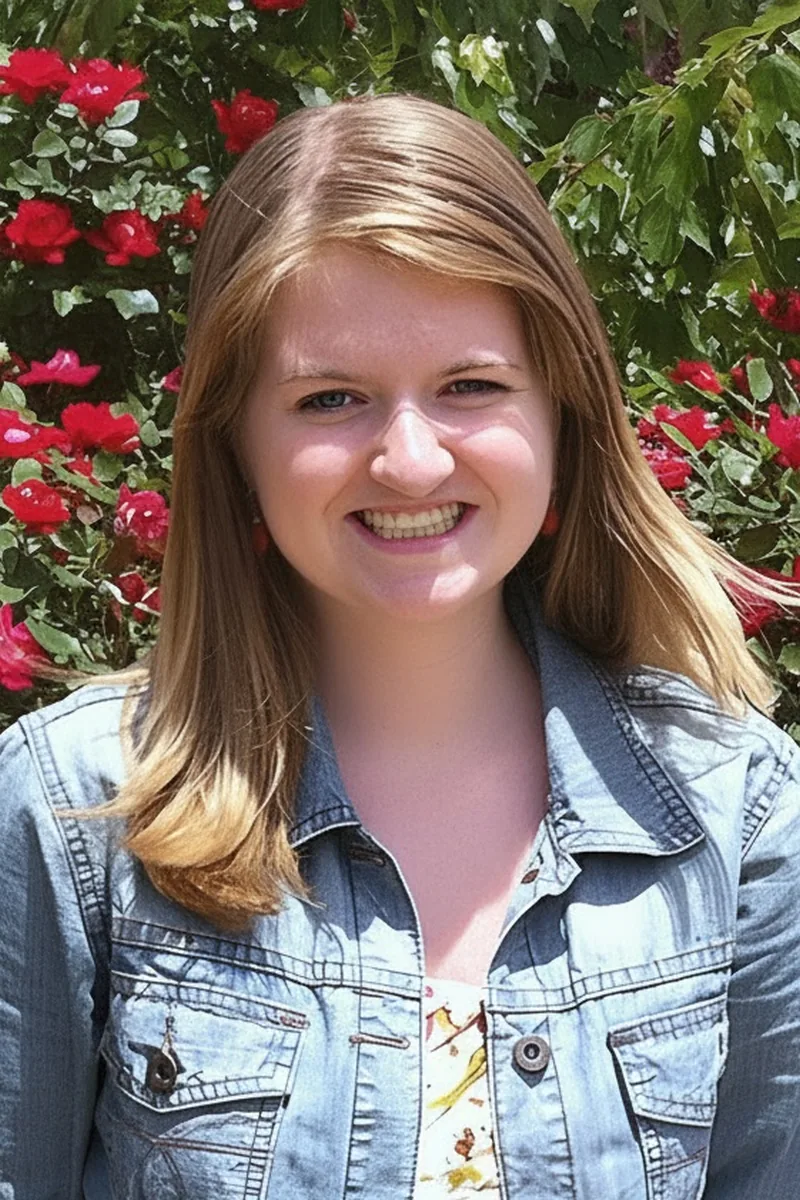
Hannah's MFA in Creative Writing from Temple University trained her to do something most history students never practice: read for argument structure at the sentence level, which is exactly the skill ...
Education & Certificates
Temple University
Master of Fine Arts, Creative Writing
University of Pennsylvania
Bachelor in Arts
SAT Scores

AP European History rewards students who can situate events within broader historical arguments, not just recall what happened — and that distinction is what Elena coaches from the first practice essa...
Education & Certificates
Southern Methodist University
Master of Arts, Art History
Washington University in St. Louis
Bachelor of Arts in Art History & Archaeology (secondary major in History)
ACT Scores

Todd's biology training at Illinois and graduate work at the University of Chicago built a habit that transfers directly into AP European History prep: reading complex systems for underlying structure...
Education & Certificates
University of Chicago
Master of Social Work, Social Work
University of Illinois at Urbana-Champaign
Bachelor of Science, Biology, General
ACT Scores

European History is Alexander's home discipline — he studied it at Vanderbilt, and he understands the thematic frameworks the AP exam uses to organize four centuries of content into manageable, testab...
Education & Certificates
Vanderbilt University
Bachelor in Arts, European History
ACT Scores
Frequently Asked Questions
Students typically find the period from 1450-1648 (Renaissance through early modern state formation) and the French Revolution era most difficult, as they require understanding complex causation across multiple regions simultaneously. The Industrial Revolution and its social consequences also challenge students because they need to connect economic, social, and political changes while comparing different national experiences. Additionally, the 20th century material—particularly World War I causes, interwar instability, and the rise of totalitarianism—demands that students synthesize competing historical interpretations rather than memorize facts. A tutor can help you build frameworks for organizing these interconnected topics and practice identifying which themes appear across different time periods.
FRQs require you to construct arguments with specific evidence, not just recognize correct answers—you'll need to develop a clear thesis and support it with at least 4-5 specific historical examples rather than general statements. The Document-Based Question (DBQ) adds the challenge of analyzing 7 documents for bias, purpose, and context before building your argument, which many students rush through. Long Essay Questions (LEQs) demand that you compare, contrast, or explain causation across a broad time span, which means you need to identify the most relevant examples rather than covering everything. A tutor experienced with AP European History can teach you how to quickly identify which evidence matters most for each question type and structure responses that earn maximum points on the rubric.
The exam gives you 55 minutes for the DBQ (including 15 minutes of reading time) and 40 minutes per LEQ, which means you need to write a strong paragraph every 8-10 minutes—a pace many students don't practice. The multiple-choice section requires you to answer 55 questions in 55 minutes, leaving only about one minute per question, so you need strategies for quickly eliminating distractors and recognizing key historical terms. Many students lose points by spending too long on one section and rushing through others, or by over-explaining ideas that only need a sentence or two. Tutoring can help you practice under timed conditions, identify which sections you naturally rush through, and develop shortcuts for analyzing documents and constructing arguments efficiently.
Comparative questions ask you to analyze similarities and differences across regions or time periods (like comparing absolutism in France versus Prussia, or revolutions of 1848 across Europe), which requires holding multiple examples in mind simultaneously while finding meaningful patterns. Many students list similarities and differences without explaining their significance—the exam rewards you for analyzing WHY these comparisons matter to understanding European history. You also need to avoid the trap of assuming all European nations followed the same path; recognizing regional variations (Mediterranean versus Northern Europe, Eastern versus Western Europe) is crucial for strong analysis. A tutor can teach you frameworks for organizing comparative information, help you practice identifying the most relevant examples for each comparison prompt, and show you how to write comparative analysis that goes beyond surface-level similarities.
The AP European History framework divides content into six periods, each marked by significant transitions: the Renaissance and Exploration (1450-1648) fundamentally shifts from medieval to early modern thinking; the Age of Absolutism and the Scientific Revolution (1648-1815) establishes new forms of state power and knowledge; Industrialization and its consequences (1815-1914) transforms society economically and socially; and the 20th century (1914-present) is defined by total war, ideological conflict, and European decline as a global center. Understanding these transitions—why 1648 marks a shift, what made 1815 a turning point, how 1914 changed everything—helps you see the exam's big picture rather than memorizing isolated facts. Many students improve significantly when they study how each period's major developments (religious conflict, scientific method, factory systems, fascism) shaped the next era, which is exactly what the exam tests.
You need to quickly identify a document's author, date, intended audience, and purpose—then explain how these factors shape its perspective and reliability as evidence. For example, a 16th-century papal bull about religious authority carries different weight than a Protestant reformer's pamphlet from the same period; recognizing this bias is essential for using documents strategically. Many students treat documents as simple fact-sources when they should be analyzing them as arguments made by people with specific interests and limitations. You also need to synthesize documents—finding patterns across multiple sources and identifying which ones best support your thesis—rather than discussing each one separately. Tutoring focused on document analysis teaches you to annotate efficiently, spot bias and purpose quickly, and build arguments that weave documents together as evidence rather than listing them one by one.
Students who work with a tutor typically improve by 1-2 score points (on the 1-5 scale) over 8-12 weeks of consistent preparation, though the timeline depends on your starting point and how much you practice between sessions. If you're scoring 2s and 3s on practice exams, improvement focuses on building foundational knowledge and learning the exam format; if you're already at 3s and 4s, tutoring targets the specific rubric requirements that separate good responses from excellent ones. The biggest gains come when you combine tutoring with regular practice tests—ideally taking full-length exams every 1-2 weeks and reviewing your mistakes with a tutor who can identify patterns in where you lose points. Realistic expectations: tutoring can help you master content and strategy, but your actual score depends heavily on how much you practice applying that knowledge under timed conditions.
The best tutors have deep knowledge of European history across the full time period (1450-present) and understand how different topics connect—they can explain not just what happened, but why it matters and how it influenced later developments. They should be familiar with the AP exam rubric and have experience teaching students how to write FRQs and DBQs that earn maximum points, not just general essay-writing skills. Look for someone who uses practice tests strategically, helps you identify your specific weak areas (whether that's Reformation history, analyzing documents, or managing pacing), and teaches you frameworks for organizing information rather than just reviewing content. A strong AP European History tutor also stays current with how the College Board frames questions and can explain why certain answer choices are traps—this requires active engagement with the exam itself, not just general history knowledge.
Let's find your perfect prep plan
Answer a few quick questions. We'll recommend the right plan and match you with a top 5% instructor.