Achieve a top score with Award-Winning ISEE Prep
Achieve a top score with Award-Winning ISEE Prep
Everything you need to crush the ISEE. Live prep classes, practice tests, 1-on-1 expert tutoring, and AI-powered diagnostics to help you reach your target score.
Universities
Delivered
Proficiency
Who needs prep?
No obligation. Takes ~1 minute.
Instructors from
- YaleUniversity
- PrincetonUniversity
- StanfordUniversity
- CornellUniversity
Featured by


Top-Rated ISEE Prep Instructors
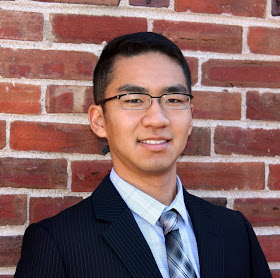
Most ISEE prep ignores the science-adjacent reasoning that shows up in Reading Comprehension passages — dense academic texts on biology, chemistry, and natural phenomena that trip up students who have...
Education & Certificates
Thomas Jefferson University
MD
University of Notre Dame
MD

The ISEE's essay section doesn't receive a score, but it goes directly to admissions committees — a detail many prep programs ignore entirely, and one that Patrick takes seriously. He prepares student...
Education & Certificates
Yale University
AM

Patrick approaches ISEE prep from an angle most programs miss entirely: the unscored essay that lands directly on admissions committee desks carries real weight, and seven years as a military intellig...
Education & Certificates
Princeton University
PhD

Most ISEE prep treats the quantitative and verbal sections as separate problems — but Danielle's background spanning advanced mathematics and business analytics lets her show students how the same log...
Education & Certificates
Tulane University of Louisiana
MS
Northwestern University
MS

I am a graduate of Duke University( undergrad) where I majored in Philosophy and minored in Theater Studies. During my summers in college, I worked with EducationUSA Nairobi, an advising center for Ke...
Education & Certificates
Duke University
AB

Byron's actuarial background gives him an unusual angle on ISEE Mathematics Achievement prep — he recognizes exactly which number relationships and estimation patterns the exam rewards, and drills stu...
Education & Certificates
University of Miami
MS
Michigan State University
MS

Twelve years of classroom teaching and instructional design give Adam an unusually precise map of where students lose points on the ISEE — not from lack of ability, but from unfamiliarity with how the...
Education & Certificates
George Mason University
MRE
University of Mary Washington
MRE
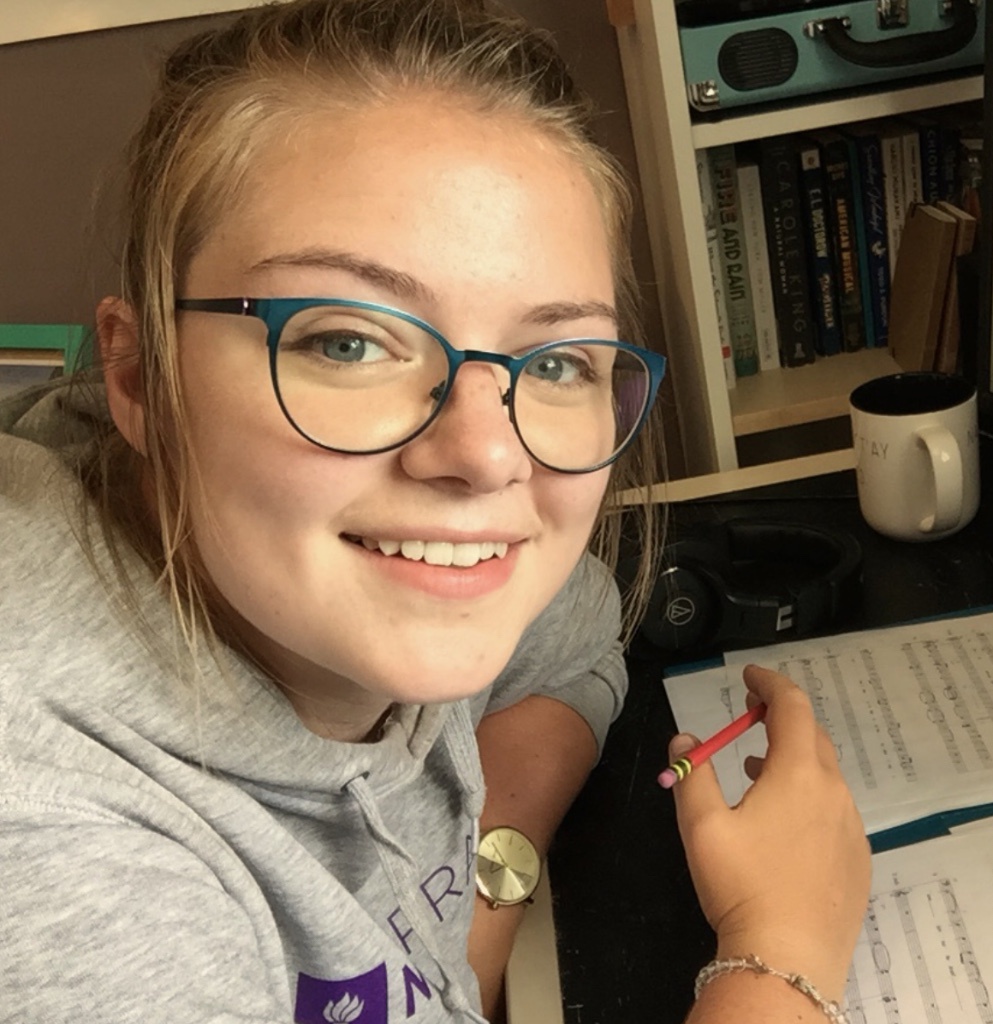
Maddy's dual master's degrees in education from NYU, combined with deep coaching experience in SAT/PSAT reading and writing, give her a sharp sense of exactly how the ISEE's Reading Comprehension and ...
Education & Certificates
New York University
MED

Competition math experience gives Chhavi an unusual angle on ISEE Quantitative Reasoning prep — she recognizes exactly which problems are designed to reward students who spot patterns over students wh...
Education & Certificates
University
Bachelor's

Education has always been at the center of my life. I earned my Bachelor's degree in Industrial Engineering from Georgia Tech, then went on to study Mathematics at the graduate level at the University...
Education & Certificates
University of South Florida-Main Campus
MED
Georgia Institute of Technology-Main Campus
MED
Frequently Asked Questions
The Reading Comprehension section consistently challenges students because it requires both speed and accuracy—you have limited time to read dense passages and answer questions that test inference, vocabulary in context, and main idea comprehension. The Quantitative Reasoning section trips up many students who haven't practiced the specific question formats, particularly those involving data interpretation and word problems that require multiple steps. The Writing sample, while unscored, often causes anxiety because students struggle to organize their thoughts quickly under time pressure. A tutor can identify which section is your specific weakness and develop targeted strategies to address it.
Pacing is one of the biggest obstacles on the ISEE because you have roughly 1.5-2 minutes per question depending on the section. The key is practicing with timed sections repeatedly so you develop an internal clock and learn which question types to tackle first versus which to return to. Many students benefit from a "triage" strategy: quickly identify easier questions and build confidence with those, then tackle harder questions with remaining time. A tutor can teach you how to recognize when you're spending too long on a single question and help you practice the discipline of moving forward strategically.
Vocabulary appears throughout the ISEE—in dedicated Verbal Reasoning questions and embedded in Reading Comprehension passages—making it a significant component of your score. However, memorizing random word lists is inefficient; instead, focus on words in context by reading challenging material and noting unfamiliar words, then learning how they're used. The ISEE also tests your ability to infer meaning from context, so practicing that skill matters as much as knowing definitions. A tutor can help you build a personalized vocabulary strategy that targets the word difficulty level you'll actually see on test day, rather than wasting time on obscure words that won't appear.
Most students benefit from taking 3-4 full-length practice tests spaced throughout their prep timeline—enough to identify patterns in your mistakes without burning out on test fatigue. Early in prep, focus on untimed or section-by-section practice to build skills; then move to timed full-length tests every 2-3 weeks as you get closer to test day. The real value comes from reviewing every single question you missed or found difficult, understanding why you got it wrong, and adjusting your strategy. A tutor can help you interpret your practice test results to pinpoint whether your errors stem from knowledge gaps, careless mistakes, or timing issues—each requires a different fix.
Test anxiety on the ISEE often stems from unfamiliarity with the format and question types, which tutoring directly addresses by building genuine competence and confidence through repeated exposure. When you've practiced the exact types of questions you'll see and developed strategies that work, anxiety naturally decreases because you know what to expect. A tutor can also teach you specific techniques like how to manage your breathing during the test, when to skip a question without panic, and how to use the scratch paper effectively to stay organized. Many students find that working 1-on-1 with a tutor who can normalize the difficulty and celebrate progress builds the mental resilience needed to perform well under pressure.
Score improvement depends heavily on your starting point and how much you practice—a student starting at the 40th percentile might improve 10-15 percentile points with consistent tutoring and practice over 8-12 weeks, while a student already at the 75th percentile may see smaller gains because there's less room to improve. The most significant gains typically come from fixing fundamental skill gaps and learning test-specific strategies rather than last-minute cramming. Realistic expectations matter: if you're aiming for a specific school's typical ISEE range, your tutor can help you understand what score you need and create a focused plan to reach it. Consistency matters more than intensity—regular sessions with homework practice between them produce better results than sporadic intensive sessions.
ISEE word problems test reading comprehension and mathematical reasoning simultaneously—you have to extract the relevant information from wordy scenarios, set up the problem correctly, and solve it under time pressure. Many students rush through reading the problem and misidentify what's being asked, or they set up the equation correctly but make a calculation error. The ISEE also includes multi-step problems where you need to find an intermediate answer before solving the final question, and students often stop after the first calculation. A tutor can teach you a systematic approach: read carefully, identify what you know and what you're solving for, write out your setup before calculating, and double-check that your answer makes sense in context.
Main idea questions ask you to identify the overall purpose or central point of a passage—the answer is usually explicitly stated or clearly supported by the passage's structure. Inference questions require you to read between the lines and draw conclusions based on evidence that isn't directly stated, which demands deeper analytical thinking and trips up many students. For example, a passage might describe a character's actions without saying they're nervous, but you'd need to infer nervousness from the evidence provided. A tutor can teach you the difference by having you practice identifying what the passage explicitly says versus what you can reasonably conclude, and showing you how to avoid over-inferencing (reading too much into the text) while still making valid logical connections.
Let's find your perfect prep plan
Answer a few quick questions. We'll recommend the right plan and match you with a top 5% instructor.