Acceptance Rate
13%
Avg. SAT
1550
75th percentile
“Georgetown catapults politically savvy, globally minded overachievers into DC's power corridors from its Jesuit hilltop overlooking the Potomac.”
Washington, DC
Location
Large City
Campus Setting
You'll step into America's oldest Catholic university, founded in 1789 by John Carroll just months before George Washington became president, when the school was little more than a muddy farm on a bluff. Georgetown's legacy fuses Jesuit intellectual rigor with a pre-professional edge, drawing students who crave influence—think debate champions eyeing State Department internships over beach weeks. You thrive here if you're ambitious, articulate, and unfazed by cutthroat networking; the type who quotes foreign policy white papers at brunch. But if you seek a quirky liberal arts haven or laid-back vibes, the relentless careerism and D.C. hustle might grind you down. Nestled in Foggy Bottom amid embassies and the Kennedy Center, with the posh Georgetown neighborhood a stroll away for upscale shopping and nightlife, you gain unparalleled access to power—but trade leafy quads for urban grit, pricey rent, and Metro commutes.
Photo Gallery
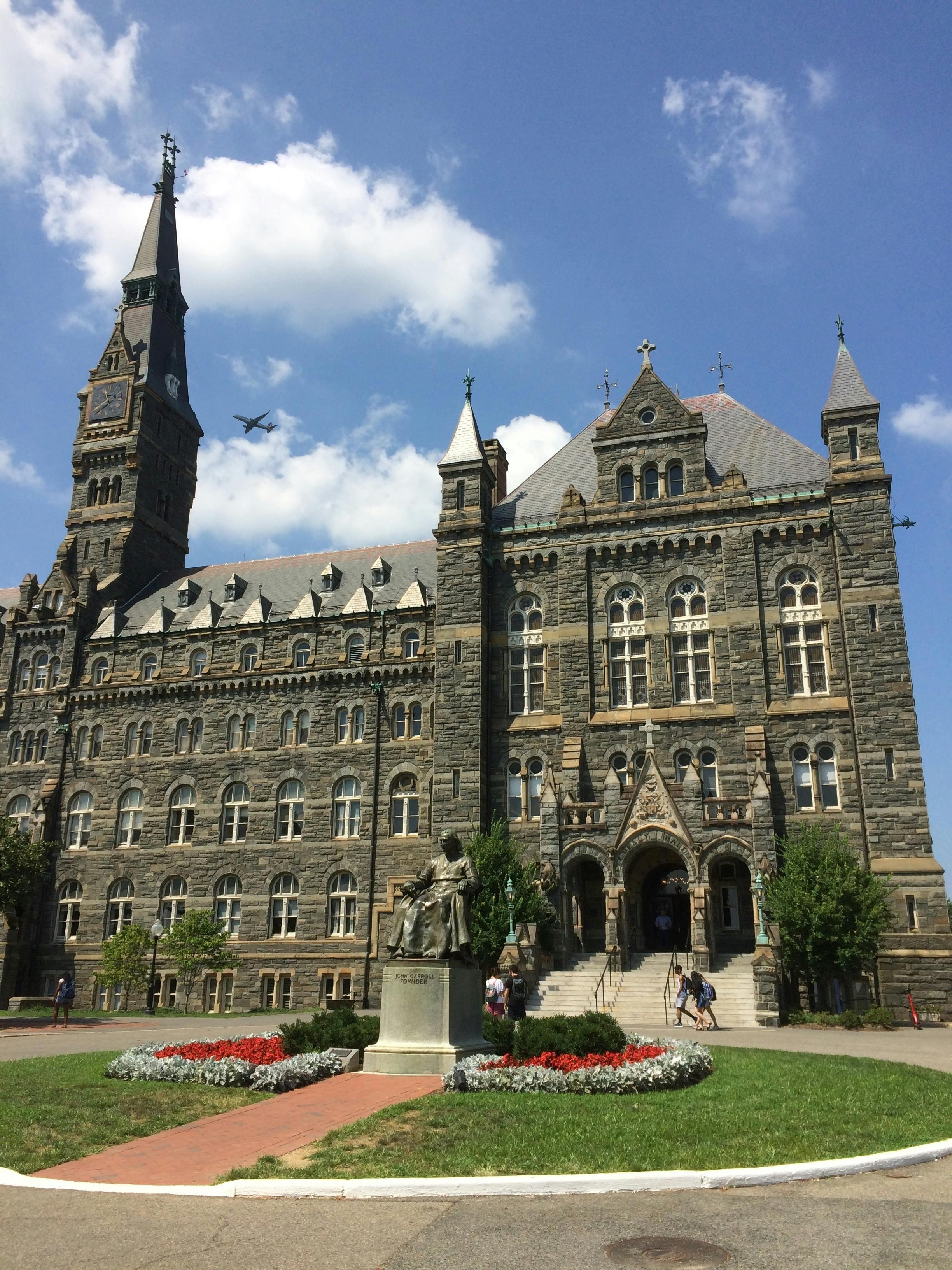


+32


+24
Admissions
Acceptance Rate
Test Policy
Test-optional schools still weigh strong scores. Submitting can help.
Average GPA
Application Fee
Academics
Student-Faculty Ratio
Programs Offered
Full-Time Faculty
Women Faculty
Research Spending
Degree Levels Offered
In Georgetown's seminar-style classrooms, where your 11:1 student-faculty ratio means professors who hobnob with senators actually learn your name, you'll dissect global crises in the elite School of Foreign Service (SFS), the only undergraduate program of its kind that churns out more diplomats than any peer. Walsh School of Foreign Service grads dominate think tanks; McDonough Business feeds Wall Street pipelines; and across disciplines, D.C.'s think tanks and agencies offer freshmen research gigs that Ivy peers envy. Intellectual life buzzes with guest lectures from ambassadors, but expect grade deflation in SFS—more selective than 98% of schools at 12%, it demands straight-A discipline. Tradeoff: heavy pre-prof focus sidelines pure humanities explorers, with some lamenting less collaborative teaching than smaller liberals arts colleges.
Student Body
Total Enrollment
7,833 undergrad • 12,198 grad
Undergraduate
Graduate
International
White
42%
Black / African American
6%
Hispanic / Latino
8%
Asian
12%
Other / Multi-racial
32%
Campus Life
Campus Setting
Washington, DC
Varsity Athletics
NCAA Athletics
A typical week kicks off with 8 a.m. international relations lectures, segues to Capitol Hill internships by Metro, then club meetings amid 200+ organizations—from Model UN to the powerhouse rugby team that claims more national titles than football dynasties. Campus pulses with Hoya pride: chant 'Hoya Saxa!' at Big East hoops amid alumni-packed arenas, or join the massive Blue & Gray semiformals where seersucker meets service projects. Residential life clusters freshmen in modern dorms before scattering to rowhouses off-campus, fostering tight-knit floors but testing impulse control in a dry-on-campus scene that pushes partying to neighborhood bars. Vibe skews preppy-professional with a service streak—Jesuit roots mean volunteer trips to Appalachia—but social dynamics favor connected extroverts; introverts or partiers without filters face cliquey isolation, and D.C.'s humid summers plus occasional protest disruptions add edge.
Housing
On-Campus Housing
Housing Capacity
Meal Plan Available
Average Room & Board
Athletics
Athletic Association
BIG EAST Conference
ROTC & Veteran Support
Army
Yes
Navy
Yes
Air Force
Yes
Veteran’s Programs Available
Yellow Ribbon Program (Post-9/11 GI Bill)
Yes
Credit for military training
Yes
Dedicated point of contact for veteran support services
Yes
Recognized student veteran organization
Yes
Member of DoD Voluntary Educational Partnership MOU
Yes
Cost & Aid
In-State Tuition
Out-of-State Tuition
Room & Board
Estimated Cost
Financial Aid
Students Receiving Aid
Receiving Pell Grants
Average Grant
Average Federal Loan
Net Annual Cost by Household Income
Household Income
Avg. Net Cost
$0 – $30K
$596
$30K – $48K
$3,182
$48K – $75K
$10,579
$75K – $110K
$20,072
$110K+
$42,751
Apply for Financial Aid
Complete the FAFSA to unlock grants, scholarships, and federal loans.
Costs shown are before financial aid. Most students receive some form of aid. Complete the FAFSA to see what you qualify for.
Outcomes & Earnings
Retention Rate
97%
4 Years Graduation Rate
90%
6 Years Graduation Rate
95%
Median 10-Year Earnings
$103,494
97% of first-time, full-time students complete their freshman year at Georgetown University and return in the fall. 90% of first-time, full-time students graduate in 4 years, and 95% graduate within 6 years.
Graduation Rate
4-year grads
90%
4-6 years
5%
Non-grad
5%
Let’s find your perfect tutor
Answer a few quick questions. We’ll recommend the right plan and match you with a top 5% tutor.
Georgetown University
College Application Planner
Turn your research into step-by-step next moves for your college goals.
Keep 1 school in your plan
Key Statistics
Type
Private
Tuition
$61,872
Acceptance
13%
Undergrads
7,833
4-Year Grad Rate
90%
Endowment
$2.5B
Washington, DC 20057-0001