Award-Winning AP Computer Science Prep in Las Vegas
Award-Winning AP Computer Science Prep in Las Vegas
Everything you need to crush the AP Computer Science in Las Vegas, NV. Live prep classes, practice tests, 1-on-1 expert tutoring, and AI-powered diagnostics.
Who needs prep?
No obligation. Takes ~1 minute.
Instructors from
- YaleUniversity
- PrincetonUniversity
- StanfordUniversity
- CornellUniversity
Featured by


AP Computer Science Prep Classes
 Short-term classLive
The Science of Growing
One of the most noticeable parts of growing up is, well, growing up. Your shoe size changes seemingly overnight, your shortest classmate can become your tallest over the summer, and your teeth are literally falling out of your head to make room for bigger ones. If you stop to think about it, being a kid is crazy: how does your body know it's time to spurt up a few inches? Where does the "stuff" come from to make more of you? And how does so much of it happen without you feeling it every minute of every day? Join pediatrician Dr. Tabitha Michaud to investigate the science of growing: how your cells communicate with one another to know when (and where) to grow; how your body turns food into new teeth, longer bones, and stronger muscles; and how your body tells you what's happening inside so that you can give it the nutrients and rest it needs.
 Short-term classLive
Food, Fuel, and the Body
We all know that our bodies need food, and that feeling hungry is the body's way of making sure we never forget it. But past that, what really happens when we give our bodies food and which foods are best for which purposes? And how much of what we think we know is just clever marketing more than actual science: is breakfast really the most important meal of the day? Do carrots give you superhuman eyesight? Join pediatrician Dr. Tabitha Michaud to learn all about how our bodies turn food into fuel for energy, for growing, for bone and muscle development, for your immune system, and more. You'll see how food gets converted into nutrients from your mouth to your stomach to your bloodstream, discover which nutrients serve which purposes, and come away much more in tune with what your body is telling you it needs based on how you feel. Note: This course focuses on how the body works, not rules about eating. There is no “good vs bad food” language — just science, empowerment, and body literacy.
 Short-term classLive
AP Language & Composition: 4-Week Exam Review
The AP English Language & Composition exam covers a year’s worth of content in a single morning. So it pays to spend 4 weeks brushing up on concepts and getting the most important skills, formulas, and strategies top of mind to be ready for test day. That’s why this 4-week exam review class provides expert-led review of critical concepts along with strategic guidance on how to handle the question formats and time limits you’ll face on the exam. By the end of the course, you’ll be ready for multiple choice and free response questions on everything from the argument structure through rhetorical analysis.
Short-term classLiveMedical Mysteries & Rare Conditions
Being a doctor involves a lot of detective work: symptoms make for good clues, but people often don't do a great job of describing them and even when they are, the clues don't always point to one clear suspect or diagnosis. That's why students love Medical Mysteries & Rare Conditions, a chance to learn a bit of biology through the lens of a doctor detective. Over four weekly sessions, you'll join Dr. Tabitha Michaud to learn to think like a doctor as you learn about types of symptoms, causes, and cures, and put your symptom sleuthing skills to the test to diagose, treat, and understand rare illnesses.
 Short-term classLive
High School Chemistry Fundamentals
Much like chemistry itself is the study of how the building blocks of matter–particles, atoms, molecules–combine, your chemistry knowledge builds from basic elements toward complex concepts, lab reports, and exams. That’s why High School Chemistry Fundamentals can be an integral force in your chemistry studies. Each week, an expert instructor will break down the key concepts that your current and upcoming chemistry lessons depend on, helping ensure that you’re ready for the challenges you encounter in your coursework and your foundations remain strong for midterm and final exams, cumulative assignments, and even future science classes.
 Short-term classLive
High School Biology Fundamentals
High School Biology is the study of the building blocks of life, how cells, systems, and processes interact to enable complex organisms to adapt and thrive. And just like living systems build from their foundations, your own biology knowledge builds concept by concept toward the complex skills you need for your labs and exams throughout the year. That’s why High School Biology Fundamentals is an integral component of your biology studies. Each week, an expert instructor will break down the key concepts that your current and upcoming biology lessons depend on, helping ensure that you’re ready for the challenges you encounter in your coursework and your foundations remain strong for midterm and final exams, cumulative assignments, and even future science classes.
 Short-term classLive
High School Physics Fundamentals
Is your Physics grade a little too low? Want to improve your understanding of the most challenging concepts? Fundamentals of High School Physics is a live, interactive class designed for students wanting to improve their knowledge of formulas, definitions, and equations. In weekly sessions, guided by an expert instructor, you’ll gain a better understanding of the laws and applications of motion, forces, gravity, work, and energy, as well as light and sound waves.
 Short-term classLive
Ocean Adventures
Over 70 percent of the earth’s surface is covered in oceans, so there’s always plenty to explore in Ocean Adventures class. Here students will learn about the waves and tides, amazing aquatic animals, shipwrecks, and more as each session covers a different oceanic theme. Students can join a single session to get their feet wet or come weekly to really exercise their sea legs.
 One-time classLive
Crustacean Exploration
What do crabs, lobsters, shrimp, and even tiny “sea monkeys” all have in common? They’re part of the fascinating world of crustaceans! Join the South Carolina Aquarium as we explore the unique features that make these animals stand out, from hard exoskeletons to impressive claws and surprising survival skills. Take a closer look at where crustaceans live, whether it’s the deep ocean, sandy shores, or a tank at your local aquarium, and how they’ve adapted to thrive in so many environments. We’ll also uncover the life cycle of brine shrimp and why these miniature creatures have captured the curiosity of generations. Along the way, discover the important roles crustaceans play in ecosystems and how they interact with other marine life. Let's dive in and discover just how amazing these shelled sea creatures can be!
 One-time classLive
Celebrating World Bird Migratory Day
What drives birds to travel thousands of miles across the globe each year? Join Wonders of Wildlife as we explore the amazing world of migratory birds and the incredible journeys they make. We’ll learn about different types of birds that migrate, where they travel, and the seasonal changes that guide their movements. Discover how these birds navigate vast distances using instincts, environmental cues, and remarkable adaptations. We’ll also take a look at the challenges migratory birds face along the way and the important conservation efforts working to protect them. Get ready to spread your wings and uncover the science behind one of nature’s most impressive phenomena!
 Short-term classLive
Introduction to Genetics
Dive into the fascinating world of genetics! In this four-week course, middle school students will explore the basics of DNA, how traits are inherited, and the science behind genetic variation. Through fun examples and engaging discussions, students will uncover how genetics shapes all living things.
 Short-term classLive
Jump Start to AP & Honors Chemistry
Chemistry is the study of the properties, structures, and reactions of matter—and how substances transform through interactions at the atomic and molecular level. From the periodic table to chemical equations, each concept builds on the last—so the foundations you begin the school year with tend to shape the reactions, outcomes, and confidence you carry through every lab and lesson. In this live, interactive summer class you will learn and review the key building blocks for success in advanced high school chemistry classes, including AP, IB, and honors classes. From scientific principles to essential math concepts, you’ll cover everything you need to confidently conquer your most challenging fall class.
Top-Rated AP Computer Science Prep Instructors in Las Vegas

Switching from biology to computer science gave Samuel a rare analytical lens for AP Computer Science A prep: he coaches students to treat Java programs the way a scientist reads an experiment — trace...
Education & Certificates
University
Bachelor's

I'm a recent Stanford graduate (Electrical Engineering and Computer Science), and have been working at a major Management Consulting firm for a few years now. I personally scored a 2360 (out of 2400) ...
Education & Certificates
Stanford University
Bachelors in Electrical Engineering and Computer Science
ACT Scores

I'm available to tutor biology, chemistry, physics, math from Algebra up through AP Calculus, SAT test prep, and French. I've been tutoring students in science and math for 7 years. I also spent 8 mon...
Education & Certificates
Massachusetts Institute of Technology
Masters, Environmental Engineering
Massachusetts Institute of Technology
Bachelors
SAT Scores
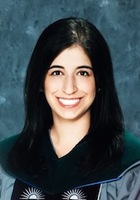
I am a licensed physician from Florida who is currently changing careers. I graduated from the University of Pennsylvania in 2009 and have extensive tutoring and editing experience. While a student, I...
Education & Certificates
Nova Southeastern University
PHD, Medicine
University of Pennsylvania
Bachelors, History
SAT Scores

I am available to tutor middle and high school math, history and test prep. I have tutored math and history in the past and I previously taught a test prep course at a school in Hanoi, Vietnam. I have...
Education & Certificates
Harvard University
Master of Public Policy, Public Policy
ACT Scores

I am a current student at the University of Chicago. I am working towards a Bachelor of Science in Biological Sciences, and I am on the pre-medical track. I am extremely passionate about tutoring, and...
Education & Certificates
University of Chicago
Bachelor of Science, Biology, General
ACT Scores

I am enrolled in the Mechanical Engineering PhD program at Rice University which will begin Fall 2020, and I am hoping to return to academia as a professor after earning my PhD. In the meantime, I am ...
Education & Certificates
University of Notre Dame
Bachelor of Science
Rice University
Doctor of Philosophy, Mechanical Engineering
ACT Scores

I'm a first-year medical student and recent graduate from Duke University, where I studied Global Health Determinants, Behaviors, and Interventions. From running a piano program at a nonprofit childre...
Education & Certificates
Duke University
Bachelors in Global Health Determinants, Behaviors, and Interventions
Harvard Medical School
Current Grad Student, MD
ACT Scores
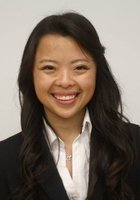
I am currently a second year medical student. I was a Physiological Sciences major at UCLA (class of 2015), and pursued research during my gap year between undergrad and medical school.
Education & Certificates
University of California Los Angeles
Bachelors, Physiological Sciences
Drexel University College of Medicine
Current Grad Student, MD
SAT Scores

I am a Duke University graduate in Economics and Computer Science. I am currently pursuing an MBA degree at the Yale School of Management. I have worked in the financial field, both at a management co...
Education & Certificates
Duke University
Bachelor of Science (Economics and Computer Science)
Yale School of Management
Current Undergrad Student, Business Administration and Management
ACT Scores
Frequently Asked Questions
Students typically find object-oriented programming concepts—especially inheritance, polymorphism, and encapsulation—challenging to grasp initially. The 2D array manipulation and ArrayList operations also trip up many students, particularly when combined with nested loops and algorithmic thinking. Additionally, the transition from procedural thinking to designing classes with proper method decomposition often requires targeted practice, and students frequently underestimate the importance of understanding how the AP exam's GridWorld or other case study frameworks apply these core concepts.
The exam splits into two sections: a 90-minute multiple-choice section (40 questions) testing conceptual understanding and code reading, and a 90-minute free-response section (4 questions) requiring students to write and debug code. Many students underestimate the multiple-choice section's difficulty—it requires not just knowing syntax but understanding what code does without running it. Effective tutoring addresses both skills: building speed and accuracy in reading unfamiliar code, and developing the ability to design solutions and explain your reasoning clearly in free-response questions.
Recursion requires students to think about problems in a fundamentally different way than the iterative loops they've mastered, and many struggle to visualize the call stack or trust that the recursive case will eventually terminate. The challenge intensifies when recursion is combined with arrays or strings, or when students need to trace through multiple recursive calls mentally. A tutor can break down recursion using visual tools like call stack diagrams and simplified examples, then gradually build complexity so students develop intuition rather than just memorizing patterns.
Free-response questions reward clear design and partial credit heavily—writing pseudocode or outlining your approach first prevents costly mistakes and earns points even if your code isn't perfect. Students should spend 2-3 minutes planning before coding, identifying what variables and loops they'll need. Tutoring focuses on teaching students to read prompts carefully for edge cases, write modular helper methods rather than one giant solution, and practice writing clean, readable code quickly so they can verify logic under pressure.
The multiple-choice section frequently presents buggy code or asks students to predict output without running it—skills that require deliberate practice. Tutors work through code-tracing exercises systematically, teaching students to track variable values through loops and method calls, spot off-by-one errors, and recognize common mistakes like null pointer issues or incorrect loop bounds. Regular practice with released AP exam questions builds pattern recognition so students can quickly identify problems and understand why code behaves unexpectedly.
With 90 minutes for 40 multiple-choice questions, students should aim for roughly 2 minutes per question, but skipping difficult questions and returning to them saves time and confidence. For free-response, allocating 20-25 minutes per question allows time for planning, coding, and review. Tutoring includes timed practice tests to help students find their rhythm, identify which question types slow them down, and develop strategies like solving the easiest free-response question first to build momentum.
Students who struggle with foundational concepts (loops, arrays, methods) typically see the biggest gains—often 2-3 score levels—when they close those gaps through focused tutoring. Students already scoring 3s or 4s can reach 5s by sharpening free-response writing clarity and eliminating careless mistakes on multiple-choice through deliberate practice. The timeline depends on starting point and consistency, but 8-12 weeks of regular tutoring combined with independent practice typically produces meaningful improvement.
Beyond strong Java proficiency and understanding of AP exam content, an effective tutor should have experience teaching object-oriented design, recognizing common student misconceptions, and explaining abstract concepts like recursion and polymorphism clearly. Familiarity with the specific AP case study (GridWorld or others) and access to released exam questions is important. Ideally, tutors have either taught AP Computer Science or scored well on the exam themselves and understand the exact skills the exam tests.
Other Las Vegas test prep
Let's find your perfect prep plan
Answer a few quick questions. We'll recommend the right plan and match you with a top 5% instructor.