Achieve a top score with Award-Winning AP Latin Prep
Achieve a top score with Award-Winning AP Latin Prep
Everything you need to crush the AP Latin. Live prep classes, practice tests, 1-on-1 expert tutoring, and AI-powered diagnostics to help you reach your target score.
Universities
Delivered
Proficiency
Who needs prep?
No obligation. Takes ~1 minute.
Instructors from
- YaleUniversity
- PrincetonUniversity
- StanfordUniversity
- CornellUniversity
Featured by


Award-Winning AP Latin Prep Classes
 One-time classLive
AP Precalculus Monthly Review
AP Precalculus Monthly Review is the high-impact prep course for students who want to walk into the AP exam with real confidence. Each month, students review and sharpen the skills that matter most for building on the rest of the school year and executing expertly on the AP exam in May. You'll dissect real texts, practice both multiple-choice and free-response question types, and shore up the fundamentals that can be so fleeting when your class moves on to new units quickly.
 One-time classLive
AP Statistics Monthly Review
Ace your AP Statistics class and the AP exam — without cramming or falling behind. Our AP Statistics Monthly Review sessions are designed to help you stay one step ahead. Each month, an expert instructor will guide you through a focused review of the unit you’ve just covered in class, helping you reinforce key concepts, connect ideas across the curriculum, and build your personal study toolkit for May.
 One-time classLive
AP English Language & Composition Monthly Review
Ace your AP Lang essays _and_ the AP exam — without cramming or falling behind. Our AP English & Composition Language Monthly Review sessions are designed to help you stay one step ahead. Each month, an expert instructor will guide you through a focused review of the skills and texts you’ve been developing in class, helping you sharpen your rhetorical analysis, build a personal study toolkit, and feel confident in timed writing and multiple-choice questions alike.
 One-time classLive
AP Chemistry Monthly Review
Ace your AP Chemistry class _and_ the AP exam — without cramming or falling behind. Our AP Chemistry Monthly Review sessions are designed to help you stay one step ahead. Each month, an expert instructor will guide you through a focused review of the unit you’ve just covered in class, helping you reinforce key concepts, connect ideas across the curriculum, and build your personal study toolkit for May.
 One-time classLive
AP Physics 1 Monthly Review
Ace your AP Physics 1 class _and_ the AP exam — without cramming or falling behind. Our AP Physics 1 Monthly Review sessions are designed to help you stay one step ahead. Each month, an expert instructor will guide you through a focused review of the unit you’ve just covered in class, helping you reinforce key concepts, connect ideas across the curriculum, and build your personal study toolkit for May.
 One-time classLive
AP Calculus AB Monthly Review
Ace your AP Calculus AB class _and_ the AP exam — without cramming or falling behind. Our AP Calculus AB Monthly Review sessions are designed to help you stay one step ahead. Each month, an expert instructor will guide you through a focused review of the unit you’ve just covered in class, helping you reinforce key concepts, connect ideas across the curriculum, and build your personal study toolkit for May.
 One-time classLive
AP Biology Monthly Review
Ace your AP Biology class _and_ the AP exam — without cramming or falling behind. Our AP Biology Monthly Review sessions are designed to help you stay one step ahead. Each month, an expert instructor will guide you through a focused review of the unit you’ve just covered in class, helping you reinforce key concepts, connect ideas across the curriculum, and build your personal study toolkit for May. These sessions are ideal for students who want to maintain top grades, reduce stress, and walk into the AP exam with total confidence.
 One-time classLive
AP Computer Science A Monthly Review
Ace your AP Computer Science A class _and_ the AP exam — without cramming or falling behind. Our AP Computer Science A Monthly Review sessions are designed to help you stay one step ahead. Each month, an expert instructor will guide you through a focused review of the unit you’ve just covered in class, helping you reinforce key programming skills, strengthen your problem-solving strategies, and build your personal study toolkit for May.
 Semester classLive
AP Calculus AB: 8-Week Exam Review
The AP Calculus AB exam is coming up quickly, and this comprehensive, 8-session review course will make sure you’re fully prepared to succeed on test day. These expert-led sessions will provide comprehensive concept review along with strategic guidance on how to handle the test day question formats, time limits, and calculator restrictions. By the end of the course, you’ll have the most critical knowledge, skills, and strategies top of mind and ready to apply on the AP Calculus AB exam. From limits and integrals through differential equations and test-day pacing strategies, you’ll cover everything you need to conquer the test.
 Short-term classLive
AP Biology: 4-Week Exam Review
The AP Biology exam covers a year’s worth of content in a single afternoon. So it pays to spend 4 weeks brushing up on concepts and getting the most important skills, formulas, and strategies top of mind to be ready for test day. That’s why this 4-week exam review class provides expert-led review of critical concepts along with strategic guidance on how to handle the question formats and time limits you’ll face on the exam. By the end of the course, you’ll be ready for multiple choice and free response questions, analyzing experiments and graphics, about everything from cell structure to ecology.
 Short-term classLive
AP Calculus BC: 4-Week Exam Review
The AP Calculus BC exam covers a year’s worth of content in a single morning. So it pays to spend 4 weeks brushing up on concepts and getting the most important skills, formulas, and strategies top of mind to be ready for test day. That’s why this 4-week exam review class provides expert-led review of critical concepts along with strategic guidance on how to handle the test day question formats, time limits, and calculator restrictions. By the end of the course, you’ll have the most critical knowledge, skills, and strategies top of mind and ready to apply on the AP Calculus BC exam. From limits and integrals through parametric equations and test-day pacing strategies, you’ll cover everything you need to conquer the test.
Top-Rated AP Latin Prep Instructors

Dennis's Latin training at Princeton — paired with a physicist's instinct for structural pattern recognition — gives him an unusual angle on AP Latin prep: he coaches students to decode Vergil and Cae...
Education & Certificates
Princeton University
Bachelor of Science
ACT Scores

Three years of peer Latin instruction during high school — spanning Latin 1 through advanced levels — gave Brooke a precise map of where students accumulate grammatical debt that surfaces as mistransl...
Education & Certificates
Duke University
Current Undergrad Student, Electrical Engineering
SAT Scores

June's electrical engineering degree from Brown demands exactly the kind of systematic structural analysis that AP Latin's timed translation component rewards — identifying load-bearing elements in a ...
Education & Certificates
Brown University
Bachelors, Electrical Engineering
SAT Scores
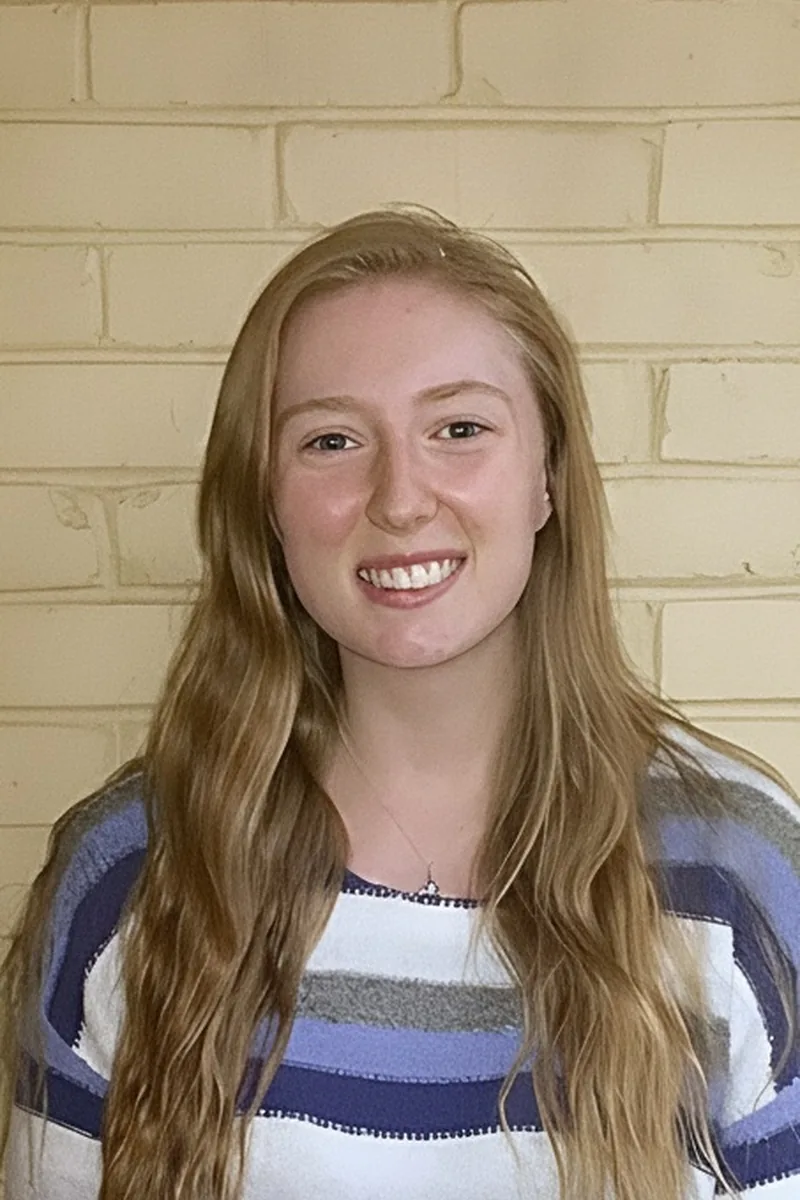
Emma's Classics degree at Carleton College — built on Latin, Ancient Greek, and the historical contexts that make both languages legible — gives her a direct line into the interpretive demands of AP L...
Education & Certificates
Carleton College
Bachelor in Arts, Classical, Ancient Mediterranean, and Near Eastern Studies
ACT Scores

Rebecca's Classics degree at Brown — built around Latin at every level through AP Latin — gives her a precise read on where students actually lose points on the AP exam: not from lack of vocabulary, b...
Education & Certificates
Brown University
Current Undergrad Student, Classics
SAT Scores

Grace's 1570 on the SAT reflects the kind of precise analytical reading that transfers directly to AP Latin prep — specifically the skill of extracting meaning from dense, unfamiliar text under timed ...
Education & Certificates
Vanderbilt University
Bachelor in Arts, Political Science and Government
SAT Scores

AP Latin's sight-reading passages demand that students translate under time pressure while simultaneously identifying literary devices and making interpretive arguments — a combination that requires v...
Education & Certificates
University of St Thomas
Bachelor of Fine Arts, English/Drama
American Academy of Dramatic Arts
Associates, Acting
ACT Scores

AP Latin's free-response section rewards students who can move efficiently between translation and literary analysis — two skills that require separate preparation strategies. Daniel coaches students ...
Education & Certificates
Cornell University
Master of Science, Computer Science
DeVry University's Keller Graduate School of Management-Florida
Bachelor of Science, Applied Mathematics

Sight translation passages are where AP Latin scores are won or lost, and most students freeze because they're parsing word-by-word instead of reading for clause structure. Jamie, who has coached Lati...
Education & Certificates
CUNY Hunter College
Masters in Education, Special Education
Harvard University
Bachelor in Arts

A Master's in Latin from Oxford gives Catherine a deep familiarity with exactly the kind of grammatical complexity Vergil and Caesar deploy — and she coaches students to recognize those constructions ...
Education & Certificates
Oxford Graduate School
Master of Arts, Latin
SAT Scores
Frequently Asked Questions
The AP Latin exam has two main sections: multiple-choice reading comprehension (which makes up 50% of your score) and free-response translation and analysis (50%). Most students struggle more with the translation section because it requires not just understanding Latin grammar and vocabulary, but also producing accurate, natural-sounding English that captures the nuance of the original text. The reading comprehension section challenges students who haven't built strong speed and pattern recognition with Latin syntax, particularly when dealing with complex sentence structures and less common grammatical constructions.
Effective translation strategy involves identifying the main verb first, then working backward to find the subject and key modifiers—this prevents getting lost in complex nested clauses. Many students benefit from practicing "chunking" sentences into logical units rather than translating word-by-word, which helps maintain meaning and flow. Tutors who specialize in AP Latin often focus on teaching you to recognize common syntactic patterns (ablative absolutes, indirect statements, purpose clauses) so you can translate them as units rather than parsing each element individually, which saves critical time on the exam.
The AP Latin exam typically tests vocabulary from the AP Latin word list of approximately 1,000 words, though you'll encounter some additional words with context clues provided. Rather than traditional flashcard drilling, effective preparation involves encountering vocabulary repeatedly in authentic Latin texts—this builds both recognition and contextual understanding. Tutors often recommend a spaced repetition approach combined with reading passages that use the same words in different contexts, which helps you retain vocabulary long-term and recognize how word meanings shift based on usage.
Students most commonly struggle with indirect statements (infinitive constructions), ablative absolutes, and subjunctive clauses—all of which appear frequently on the exam and require understanding both form and function. Indirect statements are particularly tricky because they use an accusative-infinitive structure that doesn't exist in English, so students must recognize the pattern and translate it correctly. A strong tutor will help you move beyond memorizing rules to actually recognizing these structures in context and understanding how they function within longer passages, which is what the exam tests.
Building reading speed requires consistent practice with unseen passages at increasing difficulty levels, combined with developing pattern recognition for common syntactic structures. Rather than trying to read faster, focus first on eliminating inefficient habits like backtracking or mentally translating every word into English—instead, learn to identify the sentence structure quickly and extract meaning from key words and verb forms. Tutors often use timed reading exercises with passages of increasing complexity, gradually building your ability to recognize patterns and understand meaning without translating every element, which naturally increases your speed over time.
The free-response section requires both accurate translation and analytical writing about themes, style, and historical context, so preparation needs to address both skills separately. Practice translating unseen passages under timed conditions to build accuracy and speed, then separately practice writing analytical responses about Latin literature—discussing things like how Virgil uses word order for emphasis, or how Cicero's rhetorical strategies persuade his audience. A tutor can help you understand what graders are looking for: translations that balance accuracy with natural English, and analysis that demonstrates genuine comprehension of the text's meaning and literary techniques rather than generic observations.
Score improvement depends heavily on your starting point and how consistently you engage with material between sessions. Students who begin tutoring 3-4 months before the exam and work regularly on practice passages typically see 1-2 point improvements (on the 1-5 scale), while students starting earlier or with more intensive preparation may see larger gains. The most significant improvements come from addressing specific weaknesses—whether that's translation accuracy, reading speed, or analytical writing—so a tutor's role is identifying exactly where you're losing points and building targeted skills rather than generic test prep.
An effective AP Latin tutor should have strong Latin language skills (ideally demonstrated through advanced coursework or teaching experience), understanding of AP exam format and scoring rubrics, and experience teaching test-taking strategies specific to timed translation and reading comprehension. Beyond language knowledge, look for someone who can diagnose exactly where you're struggling—whether it's vocabulary recognition, syntax parsing, or translation accuracy—and design focused practice around those specific gaps. Experience working with multiple students at different proficiency levels is valuable, as it means they've developed strategies for different learning styles and can adapt their approach to what works for you.
Let's find your perfect prep plan
Answer a few quick questions. We'll recommend the right plan and match you with a top 5% instructor.