Achieve a top score with Award-Winning AP Japanese Language and Culture Prep
Achieve a top score with Award-Winning AP Japanese Language and Culture Prep
Everything you need to crush the AP Japanese Language and Culture. Live prep classes, practice tests, 1-on-1 expert tutoring, and AI-powered diagnostics to help you reach your target score.
Universities
Delivered
Proficiency
Who needs prep?
No obligation. Takes ~1 minute.
Instructors from
- YaleUniversity
- PrincetonUniversity
- StanfordUniversity
- CornellUniversity
Featured by


Award-Winning AP Japanese Language and Culture Prep Classes
 One-time classLive
AP Chemistry Monthly Review
Ace your AP Chemistry class _and_ the AP exam — without cramming or falling behind. Our AP Chemistry Monthly Review sessions are designed to help you stay one step ahead. Each month, an expert instructor will guide you through a focused review of the unit you’ve just covered in class, helping you reinforce key concepts, connect ideas across the curriculum, and build your personal study toolkit for May.
 One-time classLive
AP Physics 1 Monthly Review
Ace your AP Physics 1 class _and_ the AP exam — without cramming or falling behind. Our AP Physics 1 Monthly Review sessions are designed to help you stay one step ahead. Each month, an expert instructor will guide you through a focused review of the unit you’ve just covered in class, helping you reinforce key concepts, connect ideas across the curriculum, and build your personal study toolkit for May.
 One-time classLive
AP Calculus AB Monthly Review
Ace your AP Calculus AB class _and_ the AP exam — without cramming or falling behind. Our AP Calculus AB Monthly Review sessions are designed to help you stay one step ahead. Each month, an expert instructor will guide you through a focused review of the unit you’ve just covered in class, helping you reinforce key concepts, connect ideas across the curriculum, and build your personal study toolkit for May.
 One-time classLive
AP Biology Monthly Review
Ace your AP Biology class _and_ the AP exam — without cramming or falling behind. Our AP Biology Monthly Review sessions are designed to help you stay one step ahead. Each month, an expert instructor will guide you through a focused review of the unit you’ve just covered in class, helping you reinforce key concepts, connect ideas across the curriculum, and build your personal study toolkit for May. These sessions are ideal for students who want to maintain top grades, reduce stress, and walk into the AP exam with total confidence.
 Short-term classLive
AP English Language & Composition Monthly Review
Ace your AP Lang essays _and_ the AP exam — without cramming or falling behind. Our AP English & Composition Language Monthly Review sessions are designed to help you stay one step ahead. Each month, an expert instructor will guide you through a focused review of the skills and texts you’ve been developing in class, helping you sharpen your rhetorical analysis, build a personal study toolkit, and feel confident in timed writing and multiple-choice questions alike.
 Short-term classLive
Introduction to Japanese
Our Introduction to Japanese course is a live online course designed for students interested in learning Japanese who have little to no knowledge of the language. Students will learn the basic skills in listening and speaking and be equipped with the tools needed to formulate simple sentences and questions on their own.
 One-time classLive
AP Psychology Monthly Review
AP Psychology Monthly Review is the high-impact prep course for students who want to walk into the AP exam with real confidence. Each month, students review and sharpen the skills that matter most for building on the rest of the school year and executing expertly on the AP exam in May. You'll dissect real texts, practice both multiple-choice and free-response question types, and shore up the fundamentals that can be so fleeting when your class moves on to new units quickly.
 One-time classLive
AP Computer Science A Monthly Review
Ace your AP Computer Science A class _and_ the AP exam — without cramming or falling behind. Our AP Computer Science A Monthly Review sessions are designed to help you stay one step ahead. Each month, an expert instructor will guide you through a focused review of the unit you’ve just covered in class, helping you reinforce key programming skills, strengthen your problem-solving strategies, and build your personal study toolkit for May.
 One-time classLive
AP Precalculus Monthly Review
AP Precalculus Monthly Review is the high-impact prep course for students who want to walk into the AP exam with real confidence. Each month, students review and sharpen the skills that matter most for building on the rest of the school year and executing expertly on the AP exam in May. You'll dissect real texts, practice both multiple-choice and free-response question types, and shore up the fundamentals that can be so fleeting when your class moves on to new units quickly.
 One-time classLive
AP Statistics Monthly Review
Ace your AP Statistics class and the AP exam — without cramming or falling behind. Our AP Statistics Monthly Review sessions are designed to help you stay one step ahead. Each month, an expert instructor will guide you through a focused review of the unit you’ve just covered in class, helping you reinforce key concepts, connect ideas across the curriculum, and build your personal study toolkit for May.
 Short-term classLive
AP Biology: 4-Week Exam Review
The AP Biology exam covers a year’s worth of content in a single afternoon. So it pays to spend 4 weeks brushing up on concepts and getting the most important skills, formulas, and strategies top of mind to be ready for test day. That’s why this 4-week exam review class provides expert-led review of critical concepts along with strategic guidance on how to handle the question formats and time limits you’ll face on the exam. By the end of the course, you’ll be ready for multiple choice and free response questions, analyzing experiments and graphics, about everything from cell structure to ecology.
Top-Rated AP Japanese Language and Culture Prep Instructors

Medical training sharpens a particular diagnostic skill — identifying exactly where a system breaks down — and Abrahim brings that same precision to AP Japanese Language and Culture prep, where studen...
Education & Certificates
University of California Los Angeles
Bachelor of Science, Biology, General
Medical College of Wisconsin
Doctor of Medicine, Premedicine
ACT Scores

Andrew's MIT training in molecular biology and literature may seem an unlikely foundation for AP Japanese Language and Culture prep — but both disciplines demand the same core skill the exam tests: ex...
Education & Certificates
Boston University
PHD, Law, Management
Massachusetts Institute of Technology
Bachelors, Molecular Biology, Literature

Dylan's verified score on the SAT Subject Test in Japanese with Listening gives him direct familiarity with how College Board evaluates Japanese comprehension under timed, standardized conditions — a ...
Education & Certificates
Northwestern University
Bachelor of Science, Computer Science
ACT Scores
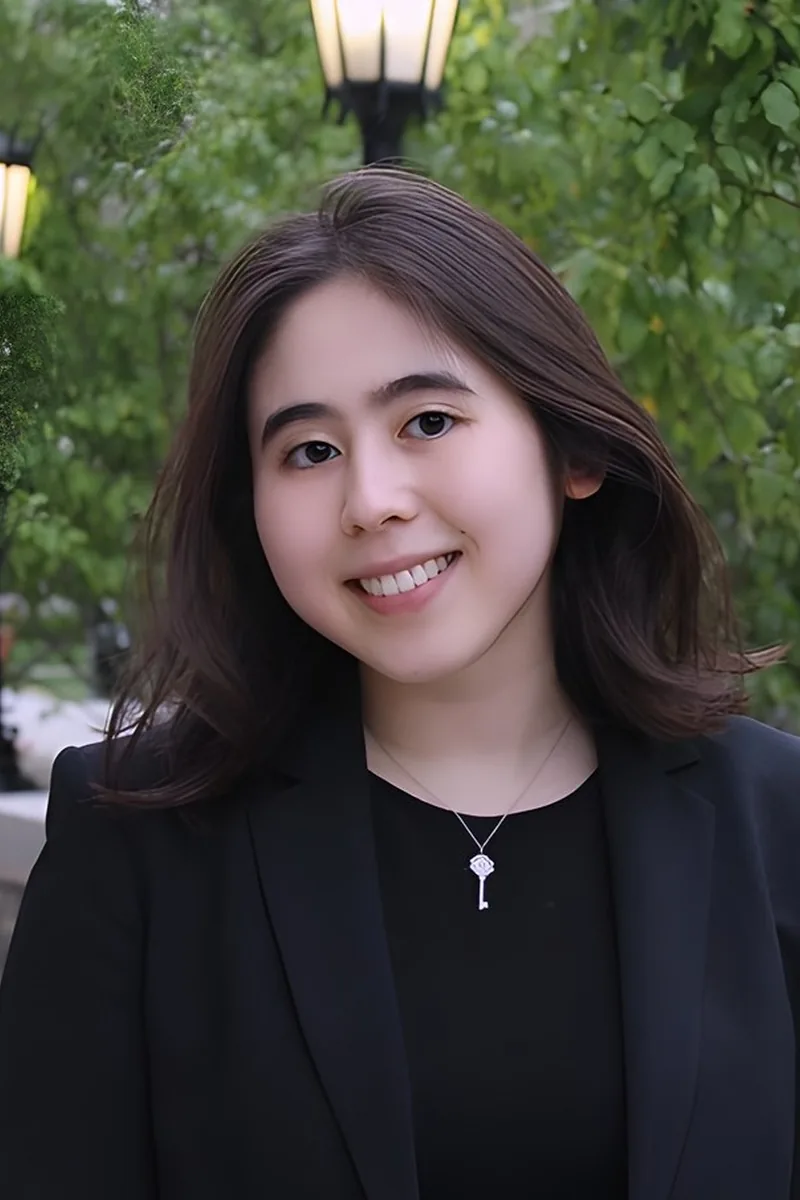
Trilingual fluency isn't just a credential — it's a roadmap for understanding exactly how language breaks down under timed exam pressure, and Reeno uses that perspective to coach students through the ...
Education & Certificates
Brown University
Bachelor in Arts, International Relations
ACT Scores

AP Japanese Language and Culture is one of the few AP exams where authentic language experience matters as much as test strategy — and James holds a Bachelor of Science with a major in Japanese, givin...
Education & Certificates
SUNY University at Albany
Bachelor of Science, Economics and Japanese
Washington University in St. Louis
Current Grad, Physical Therapy
ACT Scores

Few AP exam candidates arrive with Felix's linguistic range — a Brown University student on track to study Ancient Greek, Sanskrit, Latin, and Japanese simultaneously, with a verified SAT Subject Test...
Education & Certificates
Brown University
Bachelor in Arts, Classical, Ancient Mediterranean, and Near Eastern Studies
SAT Scores

Psychology training at Yale sharpened Serge's ability to read exactly how a student processes information under pressure — a skill that translates directly into diagnosing where AP Japanese Language a...
Education & Certificates
Yale University
Bachelors

Anna's background in data processing at UC Berkeley trained her to recognize patterns in complex systems — a skill she applies directly to the AP Japanese Language and Culture exam, where the interpre...
Education & Certificates
University of California-Berkeley
Bachelor in Arts, Data Processing Technology
ACT Scores

Most AP Japanese Language and Culture prep underestimates the speaking and writing components — the sections where pacing and register choices determine whether a response earns a 3 or a 5. Shin, who ...
Education & Certificates
Columbia University in the City of New York
Bachelor of Science, Earth and Environmental Engineering
ACT Scores

A semester studying in Seville gave Shona firsthand experience with what it takes to perform in a language under real pressure — the same skill the AP Japanese Language and Culture exam tests across i...
Education & Certificates
Johns Hopkins University
Bachelor of Science in Applied Mathematics
ACT Scores
Frequently Asked Questions
The interpersonal and presentational speaking sections require fluency and cultural awareness that many students find intimidating. Tutors work with you on natural pacing, pronunciation accuracy, and recovering from mistakes without breaking conversation flow. Regular practice with a tutor simulates the actual exam format, helping you build confidence in real-time responses and reducing the anxiety that often impacts performance on test day.
AP Japanese requires recognition of roughly 300-400 kanji and the ability to understand context in passages you haven't seen before. Rather than rote memorization, effective tutoring focuses on kanji patterns, radicals, and how meaning shifts in different contexts—skills that directly transfer to the reading section. Tutors help you develop strategies for tackling unfamiliar characters during timed passages, which is where many students lose points.
The writing sections test your ability to compose coherent responses in different registers—from casual emails to formal essays—with proper grammar and cultural appropriateness. Tutors provide targeted feedback on common errors like verb conjugation mistakes, particles, and tone inconsistency that graders specifically look for. They also help you develop templates and strategies for organizing thoughts quickly under timed conditions, which is essential for the longer composition tasks.
The listening comprehension section features authentic Japanese at natural conversational speed, which trips up many students who've primarily studied textbook material. Tutors expose you to varied speakers, dialects, and real-world contexts (news, interviews, casual conversations) so your ear adjusts to actual Japanese. They also teach active listening strategies—like identifying key words and main ideas rather than trying to understand every word—which dramatically improves your accuracy and reduces the panic that comes from feeling lost.
Cultural understanding is woven throughout the exam—from recognizing social hierarchies that affect language choice to understanding historical or contemporary references in reading passages. Tutors integrate cultural context into language instruction, helping you understand why certain phrases are appropriate in specific situations and what cultural assumptions underlie the test materials. This deeper knowledge often makes the difference between a 4 and a 5, especially on the free-response sections where cultural awareness influences how you express ideas.
Practice tests are most valuable when used strategically to identify specific weak areas—whether that's listening comprehension, kanji recognition, or speaking fluency—rather than just taking them for a score. Tutors help you analyze your mistakes to spot patterns (like consistently missing certain grammar structures or cultural references) and then target instruction accordingly. They also help you develop realistic pacing strategies for each section, since timing is a major challenge on the AP Japanese exam.
Absolutely. A student at the intermediate level might focus on solidifying grammar foundations and expanding vocabulary, while an advanced student needs refinement in nuance, register-switching, and cultural subtleties that distinguish a 4 from a 5. Tutors assess your current level and tailor instruction accordingly—whether that's building confidence in speaking or polishing your written expression to sound more natural and culturally appropriate. This personalized approach ensures you're always working at the edge of your abilities, not reviewing material you've already mastered.
Test anxiety in language exams often stems from fear of making mistakes or not understanding something in real-time. Tutors help build confidence through repeated, low-stakes practice with immediate feedback, so you experience success regularly before test day. They also teach you specific coping strategies—like how to gracefully handle a word you don't know in the speaking section, or how to move forward when you miss part of a listening passage—so you feel prepared for imperfect situations rather than expecting perfection.
Let's find your perfect prep plan
Answer a few quick questions. We'll recommend the right plan and match you with a top 5% instructor.