Achieve a top score with Award-Winning AP Calculus AB Prep
Achieve a top score with Award-Winning AP Calculus AB Prep
Everything you need to crush the AP Calculus AB. Live prep classes, practice tests, 1-on-1 expert tutoring, and AI-powered diagnostics to help you reach your target score.
Universities
Delivered
Proficiency
Who needs prep?
No obligation. Takes ~1 minute.
Instructors from
- YaleUniversity
- PrincetonUniversity
- StanfordUniversity
- CornellUniversity
Featured by


Award-Winning AP Calculus AB Prep Classes
 Short-term classLive
Jump Start to AP & Honors Biology
Biology is the study of the building blocks of life, how cells, systems, and processes interact to enable complex organisms to adapt and thrive. And just like living systems build from their foundations, your own biology knowledge builds concept by concept toward the complex skills you need for your labs and exams throughout the year. In this live, interactive summer class you will learn and review the key building blocks for success in advanced high school biology classes, including AP, IB, and honors classes. Armed with sound fundamentals you’ll be ready to hit the ground running in the new school year and thrive in your most challenging fall class.
 Short-term classLive
Jump Start to AP & Honors Chemistry
Chemistry is the study of the properties, structures, and reactions of matter—and how substances transform through interactions at the atomic and molecular level. From the periodic table to chemical equations, each concept builds on the last—so the foundations you begin the school year with tend to shape the reactions, outcomes, and confidence you carry through every lab and lesson. In this live, interactive summer class you will learn and review the key building blocks for success in advanced high school chemistry classes, including AP, IB, and honors classes. From scientific principles to essential math concepts, you’ll cover everything you need to confidently conquer your most challenging fall class.
 Short-term classLive
Jump Start to Precalculus
Beat the summer slide and give your student a running start into the school year with Jump Start math classes over the summer. In live, expert-led sessions, students will review key building block skills from Algebra 2 and get a sneak preview of the new skills they’ll encounter toward the beginning of Pre-Calculus this fall. Jump Start to Pre-Calculus will emphasize working with polynomials, manipulating trigonometric functions, and graphing functions, preparing students to deepen and apply these skills to understanding continuity, finding limits, and taking derivatives in the coming school year.
 Short-term classLive
Jump Start to AP & Honors Physics
Physics is the study of the fundamental forces and principles that govern how matter and energy interact in the universe. From motion and momentum to waves and electricity, each concept builds on the last—so the foundations you begin the school year with tend to govern your trajectory and velocity throughout the school year. In this live, interactive summer class you will learn and review the key building blocks for success in advanced high school physics classes, including AP, IB, and honors classes. From scientific principles to essential math concepts, you’ll cover everything you need to start your most challenging fall class with energy and momentum.
 Short-term classLive
Jump Start to AP Calculus
Start your AP Calculus journey with clarity and confidence. This live, interactive course is designed to give students entering AP Calculus AB a solid head start on core topics like limits, derivatives, and continuity. With expert instruction and real AP-style practice, you’ll feel prepared, not panicked—before the school year even begins.
 Short-term classLive
Jump Start to AP Computer Science A
Computer Science is the study of how we use logic and code to solve problems and build the digital world around us. From variables and conditionals to classes and objects, each concept builds logically on the last—so the foundations you start with often determine how efficiently and confidently you can program throughout the year. In this live, interactive summer class, you’ll learn and review the key building blocks for success in advanced high school computer science courses, including AP Computer Science A. From core Java syntax to problem-solving strategies, you’ll cover everything you need to start this rigorous coding class with structure and logic.
 Short-term classLive
Precalculus Fundamentals
Math is a building block subject. Just like you needed Algebra 1 to be ready for Algebra 2, so now you’re taking Precalculus because you will need these skills for Calculus. And within each subject the same is true, too: the skills you learn next month will require you to be comfortable with the skills you learned last month; for every lesson you encounter in school, you’ll need to bring some foundational knowledge to build on. That’s why Precalculus Fundamentals can play such a key role in your math performance. Each week an expert instructor will guide you through the key concepts that your current and upcoming lessons depend on, helping you solidify things that didn’t quite click, get practice and repetition with the most important skills for what’s next, and building your skill set for the rest of the school year and the math subjects that lie beyond it–like calculus!
Top-Rated AP Calculus AB Prep Instructors

Mechanical engineering at Yale runs on the same core skill AP Calculus AB tests hardest: translating a physical situation into precise mathematical language before any calculation begins. Charles (34 ...
Education & Certificates
Yale University
Bachelor of Science, Mechanical Engineering
ACT Scores

Mechanical engineering at Harvard demands the same skill AP Calculus AB rewards most: translating a real-world scenario into a precise mathematical structure before any calculation begins. Christopher...
Education & Certificates
Harvard College
Bachelor of Science, Mechanical Engineering
ACT Scores

A PhD in Computational Mathematics from the University of Chicago gives Justin an unusually precise lens on where AP Calculus AB students lose points — not in mechanical differentiation, but in the co...
Education & Certificates
Washington University in St. Louis
Bachelor's in Physics and Mathematics
University of Chicago
Doctor of Philosophy, Computational Mathematics
ACT Scores

James spent his undergraduate years at Harvard studying chemistry — a discipline where calculus isn't abstract but the actual language of reaction rates, thermodynamic curves, and molecular change — a...
Education & Certificates
Harvard University
Bachelor in Arts, Chemistry
SAT Scores

A Mathematics degree from Penn gives Ben a precise diagnostic eye for where AP Calculus AB students bleed points — most often in the written justification steps that the College Board rubric scores in...
Education & Certificates
University of Pennsylvania
Bachelors, Mathematics
SAT Scores

Sam's PhD in Statistics from the University of Iowa sharpens something AP Calculus AB rewards but few prep courses emphasize: knowing when an answer is reasonable — a check that catches setup errors o...
Education & Certificates
University of Iowa
PHD, Statistics
Northwestern University
Bachelors, Biomedical Engineering
SAT Scores

Seven years of math and science instruction gave Kate a sharp eye for the specific justification steps AP Calculus AB rubrics reward — the written reasoning behind a derivative interpretation or an in...
Education & Certificates
Massachusetts Institute of Technology
Masters, Environmental Engineering
Massachusetts Institute of Technology
Bachelors
SAT Scores

Philosophy training at Princeton sharpens exactly what AP Calculus AB's free-response section demands: building a precise, step-by-step argument where every claim is justified — and Julie coaches stud...
Education & Certificates
Princeton University
Bachelor in Arts, Philosophy
SAT Scores
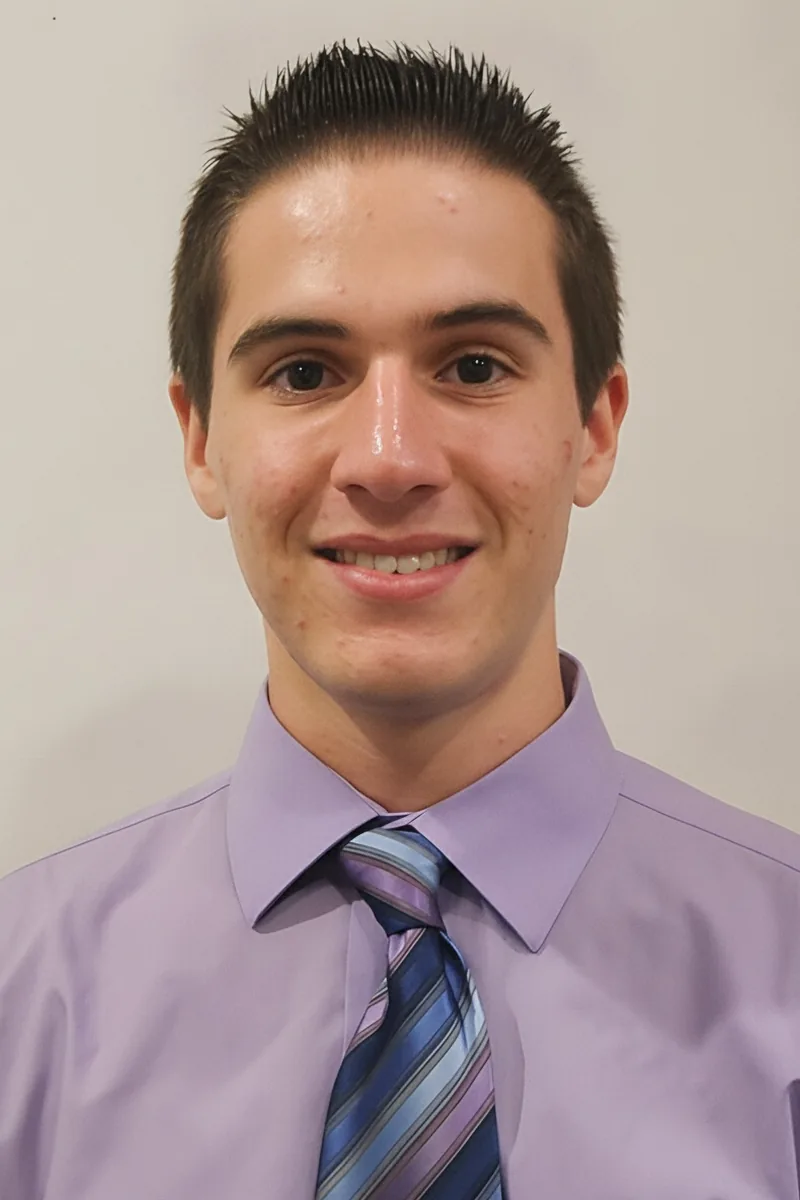
Princeton engineering coursework demands the same layered problem-solving that AP Calculus AB free-response questions test — and Matthew coaches students to attack those multi-part FRQs the same way: ...
Education & Certificates
University
Bachelor's
ACT Scores

Richard's year as a course assistant in Harvard's math department — teaching introductory calculus to undergraduates — gave him a precise map of exactly where students lose the thread between procedur...
Education & Certificates
Harvard University
Bachelor in Arts, Government
ACT Scores
Frequently Asked Questions
Students typically find limits and continuity conceptually difficult early on, especially understanding why a limit can exist even when a function isn't defined at a point. Later, the relationship between derivatives and integrals—and applying the Fundamental Theorem of Calculus—trips up many students who memorized procedures without building intuition. Related rates and optimization problems are also challenging because they require translating real-world scenarios into equations before applying calculus. A tutor can break these down by building conceptual understanding first, then connecting it to problem-solving techniques.
The exam gives you 105 minutes for 45 multiple-choice questions (about 2.3 minutes each) and 90 minutes for 6 free-response questions. Many students spend too long on one tricky multiple-choice question and run out of time. A tutor can help you develop a strategy: skip difficult multiple-choice questions initially, come back to them, and prioritize free-response questions where partial credit is available. Practice full-length timed exams is essential—it's not just about knowing content, but training yourself to recognize when to move on and allocate time strategically.
Free-response questions reward clear communication of your reasoning, not just final answers. You should show the calculus steps (like taking a derivative or setting up an integral) even if you use a calculator for computation. A common mistake is jumping to answers without justifying why a method applies—for example, explaining why you're using the chain rule or why a critical point is a maximum. Tutors can teach you to annotate your work, label your axes on graphs, and explain your logic in words, which often earns you points even if your final answer is slightly off.
Derivatives and integrals are taught as separate skills, so students often don't see them as inverse operations until the Fundamental Theorem of Calculus. Many students can compute a derivative or integral mechanically but can't explain what they mean or when to use each one. For example, they might not realize that if you're given a rate of change (derivative) and need to find total accumulation, you integrate. A tutor can use graphs and real-world contexts—like velocity and distance—to show how these concepts reverse each other, making the abstract theorem concrete.
Section I Part B (graphing calculator allowed) and Section II Part B (calculator allowed) let you use technology, but Section I Part A and Section II Part A don't. Students often waste time using calculators for simple arithmetic or don't know what calculator functions are allowed (like numerical integration). A tutor can teach you which problems benefit from calculator use—like finding zeros of a complicated function or computing a definite integral numerically—versus which ones require showing algebraic steps. You should also practice using your specific calculator model so you're not fumbling during the exam.
Algebra gaps are one of the biggest hidden obstacles in AP Calculus AB. You might understand the calculus concept perfectly but make errors simplifying derivatives, solving equations for critical points, or manipulating expressions in integrals. For instance, students often struggle with chain rule because they can't factor or recognize composite functions, or they fail optimization problems because they can't solve the resulting equations. A tutor can identify and patch these gaps quickly—sometimes just reviewing factoring, exponent rules, or equation solving makes calculus click. This is why many students see dramatic score improvements once foundational skills are solid.
Ideally, take at least 3-4 full-length, timed practice tests in the weeks leading up to the exam. The first one establishes your baseline and weak areas; the second and third let you practice targeted strategies and build stamina. Each test should be followed by a detailed review—not just checking answers, but understanding why you missed questions and whether it was a conceptual gap, careless error, or timing issue. A tutor can help you analyze patterns in your mistakes (e.g., always struggling with related rates, or making sign errors on integrals) so you focus review time efficiently rather than re-studying everything.
Score improvement depends on your starting point and effort. Students with solid fundamentals but conceptual gaps often see 2-4 point improvements (on the 1-5 scale) within 4-6 weeks of focused tutoring on weak topics. Students with algebra gaps might need more time to build foundational skills before calculus concepts click. The biggest gains come from identifying your specific weak areas (through practice tests) and targeting them with a tutor, rather than generic review. Consistent practice between sessions—working through problem sets and timed practice—is what drives real improvement, not tutoring alone.
Let's find your perfect prep plan
Answer a few quick questions. We'll recommend the right plan and match you with a top 5% instructor.