All questions
Question 1
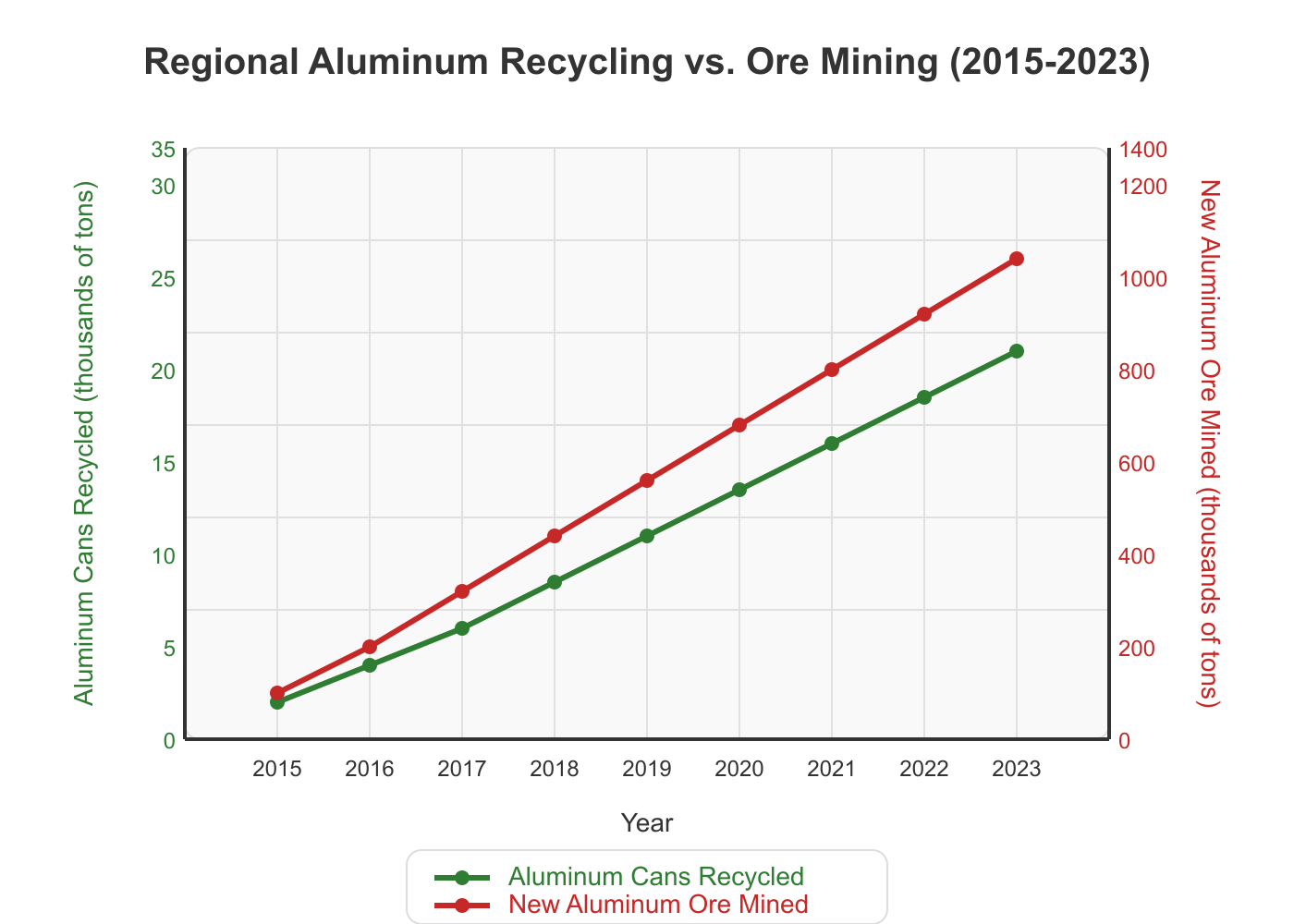
A recycling center reports aluminum can recycling and the amount of new aluminum ore mined in the same region. The graph shows recycling increased, but mining also increased.
Which explanation is best supported by the graph for why ore mining did not decrease even as recycling increased?
- Total demand for aluminum likely increased enough that recycling did not fully replace the need for new ore, so mining still rose. (correct answer)
- Recycling automatically eliminates all mining, so the graph must be wrong.
- Mining increased because recycling destroys aluminum and forces companies to mine more to replace it.
- Mining increased because ore forms quickly whenever people recycle more, increasing the available ore supply.
Explanation: The core skill in understanding human resource use is connecting how people extract or consume resources to changes in their availability over time. Human extraction modifies resource levels, but practices like recycling metals can offset some need for new mining, though not always completely. The rate and scale of use matter because if overall demand grows faster than recycling supplies, primary extraction must increase to meet needs. Check by examining trends where recycling rises but mining does not fall, indicating unmet demand. A misconception is that recycling eliminates all extraction or that resources deplete instantly, but changes depend on balancing reuse with consumption growth. Human choices, such as promoting recycling programs, affect long-term availability. Ultimately, strategic decisions can reduce pressure on finite resources.
Question 2
A coastal community measures sand volume on a public beach each year and also estimates how much sand is removed for construction (truckloads). The table shows sand removal increased while beach sand volume decreased.
If sand removal continues to increase at about the same rate for the next 5 years, what is the most likely effect on beach sand availability?
- Beach sand volume will likely continue to decrease because people are removing sand faster than it is naturally replaced. (correct answer)
- Beach sand volume will likely increase because removing sand makes waves deposit extra sand immediately.
- Beach sand volume will stay the same because human removal cannot change the amount of sand on a beach.
- Beach sand volume will drop for one year but then return to the original amount automatically, even if removal keeps increasing.
Explanation: The core skill in understanding human resource use is connecting how people extract or consume resources to changes in their availability over time. Human removal of materials like sand changes beach levels by eroding volumes faster than waves or currents replenish them. The rate and scale of use matter because large-scale harvesting for construction accelerates loss beyond natural recovery. A checking strategy involves looking for trends of increasing removal with decreasing volumes in coastal measurements. A misconception is that such actions have no impact or cause immediate disappearance, but availability reduces over years. Human choices, including limits on removal, affect future stability. Broadly, sustainable practices ensure resources endure over time.
Question 3
Two farms are studied for 6 years. Both grow similar crops, but they use different soil practices. The table shows the amount of topsoil lost each year and the measured thickness of topsoil left after 6 years.
Which statement is supported by the evidence about how human land use affects soil availability?
- Farm A kept more topsoil because using cover crops reduced erosion, helping maintain soil availability over time. (correct answer)
- Farm A lost more topsoil because cover crops always loosen soil and increase erosion.
- Both farms kept the same amount of topsoil because soil thickness is controlled only by natural processes, not farming practices.
- Farm B kept more topsoil because plowing more often creates new topsoil faster than it can be lost.
Explanation: The core skill in understanding human resource use is connecting how people extract or consume resources to changes in their availability over time. Human practices, like farming without protection, change soil levels by accelerating erosion and loss of fertile topsoil. The rate and scale of use matter because intensive agriculture on large areas can strip soil faster than natural processes rebuild it. Provide a checking strategy by looking for trends where certain practices correlate with less soil loss over years in comparative data. Address the misconception that human actions have no effect on soil or cause instant depletion, whereas erosion accumulates based on methods used. Human choices, such as implementing cover crops, can preserve soil availability. In general, sustainable decisions help maintain resources like soil for ongoing productivity.
Question 4
A town tracks groundwater use from a well field and the average depth to water (how far down the water table is). The table shows that as pumping increased over time, the water table got deeper.
Using the data, which statement best explains how human water use leads to the change in water availability?
- The water table got deeper mainly because groundwater is being pumped out faster than it is naturally replaced, so less water is available in the ground. (correct answer)
- The water table got deeper because groundwater levels always change randomly and are not affected by human pumping.
- The water table got deeper because pumping creates new groundwater, which pushes the water farther down.
- The water table got deeper, but this does not affect availability because wells can always reach any depth without limits.
Explanation: The core skill in understanding human resource use is connecting how people extract or consume resources to changes in their availability over time. Human extraction of resources, such as pumping groundwater, directly alters the levels available in natural reservoirs by removing more than what is replenished. The rate and scale of use matter because excessive pumping can deplete aquifers faster than rainfall or other sources can refill them, leading to long-term shortages. To verify this, examine trends in data showing increased extraction paired with declining resource levels, like deeper water tables. A common misconception is that human actions have no impact on groundwater or that it depletes instantly, but changes occur gradually based on usage versus recharge rates. Human choices, including conservation measures or regulated pumping, can help maintain resource availability. By adopting sustainable practices, communities can ensure resources like water remain viable for the future.
Question 5
A region measures the amount of topsoil on farms after many years of different land use. Use the data to compare outcomes.
Table: Average Topsoil Thickness
- Farm A (plowed every year, little plant cover in winter): 2005 = 24 cm; 2015 = 18 cm; 2025 = 12 cm
- Farm B (keeps plant cover most of the year): 2005 = 24 cm; 2015 = 23 cm; 2025 = 22 cm
Which comparison is supported by the evidence about how human use affects soil availability/condition?
- Both farms lose topsoil at the same rate because soil loss is controlled only by natural weathering, not by farming practices.
- Farm A's practice is linked to faster topsoil loss, while Farm B keeps more topsoil over time, showing land use can change soil condition. (correct answer)
- Farm B must be losing more topsoil because it has plants, and plants always destroy soil by using it up.
- Topsoil thickness cannot change over 20 years because soil takes millions of years to form, so the measurements must be wrong.
Explanation: The core skill involves linking human activities, such as farming practices, to the availability and condition of soil resources. Human extraction or disturbance, like plowing fields, can erode topsoil and alter its levels in the environment. The rate and scale of land use matter, as intensive practices accelerate loss compared to protective methods like maintaining plant cover. A useful checking strategy is to look for trends in data showing how different use intensities lead to varying rates of resource change. One misconception is that soil depletion happens instantly from any use, but gradual overuse without recovery can lead to significant reduction. Human choices in sustainable agriculture influence long-term soil health and availability. By prioritizing conservation, we can preserve this vital resource for future generations.
Question 6
A city tracks groundwater use from an underground aquifer and the aquifer's average water level. Use the table to choose the statement best supported by the data about how human use affects resource availability.
Table: Groundwater Pumped vs. Aquifer Water Level
- 2016: Pumped 40 million m³; Water level 52 m below ground
- 2018: Pumped 55 million m³; Water level 60 m below ground
- 2020: Pumped 70 million m³; Water level 71 m below ground
- 2022: Pumped 85 million m³; Water level 85 m below ground
Which statement is best supported by the data?
- The aquifer water level drops as pumping increases, showing that higher human use can reduce available groundwater. (correct answer)
- The aquifer water level drops only because aquifers naturally empty over time, so pumping does not affect availability.
- Because the water level changes each year, the changes are random and cannot be linked to pumping.
- Pumping more water should raise the aquifer level because wells pull water upward from deeper layers.
Explanation: The core skill in earth science is connecting human use of resources like groundwater to changes in their availability over time. Human extraction, such as pumping water from aquifers, directly reduces the amount of resource left in the natural storage system. The rate and scale of this use are crucial because rapid or large-scale pumping can outpace natural recharge from rainfall or rivers. To verify this connection, examine data trends where increased extraction rates align with declining resource levels. A misconception is that human actions have no impact on underground water, but excessive use can deplete aquifers without instant exhaustion. Human choices, like implementing conservation measures, can help sustain resource availability. Overall, thoughtful management influences how long resources remain viable for communities.
Question 7
A mining company records how much copper ore it removes each year and the average copper concentration in the ore it mines (higher concentration means richer ore). The table shows ore removal increased, while average copper concentration decreased.
Which explanation best links human extraction to the change in resource condition?
- As mining continues and more ore is removed, the richest ore is used up first, so the average concentration in remaining ore can decrease over time. (correct answer)
- Copper concentration decreases because mining adds extra rock that creates copper, lowering the percent of copper in a helpful way.
- Copper concentration decreases only because of random natural changes, so the amount mined each year cannot be related.
- Copper concentration decreases because any mining completely destroys all copper in the ground immediately.
Explanation: The core skill in understanding human resource use is connecting how people extract or consume resources to changes in their availability over time. Human mining changes resource levels by depleting high-quality deposits first, lowering the average quality of what's left. The rate and scale of use matter because intensive extraction targets richest ores, reducing overall concentration over time. Check trends where higher removal rates link to declining quality metrics in company records. Address the misconception that extraction has no effect on quality or depletes resources instantly, but changes occur progressively. Human choices, like efficient processing, can mitigate declines. In summary, strategic approaches help sustain resource value long-term.
Question 8
A school district tracks electricity generated from coal and the amount of coal left in a nearby coal field that supplies the power plant.
Table: Coal Use vs. Coal Remaining
- 2014: Coal burned 0.6 million tons; Coal remaining 18 million tons
- 2018: Coal burned 0.9 million tons; Coal remaining 14 million tons
- 2022: Coal burned 1.2 million tons; Coal remaining 9 million tons
- 2026: Coal burned 1.4 million tons; Coal remaining 4 million tons
Which claim is unsupported by the evidence (not supported by the data)?
- Burning more coal over time is linked to less coal remaining, showing human consumption can reduce resource levels.
- Coal remaining decreases as coal burned increases, consistent with extraction/consumption lowering availability.
- Coal remaining will likely continue to decrease if coal burning continues at high levels.
- Coal remaining will stay constant because coal forms quickly enough to replace what is burned each year. (correct answer)
Explanation: The core skill is connecting human use of fossil fuels like coal to declining resource availability. Burning coal for energy extracts and consumes reserves, reducing remaining amounts. The rate and scale of consumption determine depletion speed, outpacing slow geological formation. Examine trends where increased use aligns with lower reserves. Misconception: resources replenish quickly to match use, but non-renewables deplete gradually without instant exhaustion. Human choices in transitioning to renewables influence availability. Strategic shifts can preserve what's left for longer periods.
Question 9
A community tracks how much sand and gravel is removed from a riverbed for construction and how the riverbed height changes at a nearby bridge (lower height means the riverbed has been dug out more).
Table: Riverbed Mining vs. Riverbed Height
- 2012: Removed 0.2 million tons; Riverbed height 4.8 m
- 2016: Removed 0.5 million tons; Riverbed height 4.1 m
- 2020: Removed 0.9 million tons; Riverbed height 3.2 m
- 2024: Removed 1.3 million tons; Riverbed height 2.4 m
Which statement about human use is supported by the data?
- Removing more sand and gravel is linked to a lower riverbed height, showing extraction can change the condition of the riverbed resource. (correct answer)
- Removing sand and gravel cannot affect the riverbed because rivers naturally rebuild their beds at the same rate no matter how much is removed.
- The riverbed height is lower only because the bridge pushes the riverbed down, so extraction is unrelated.
- Because the riverbed height is still above 0 m, extraction has no effect on the riverbed's availability.
Explanation: The core skill connects human extraction of riverbed materials like sand to resource condition changes. Removing aggregates lowers bed height, altering the physical availability. Rate and scale matter, with intensive mining causing faster erosion than natural sediment replacement. A strategy is to track trends where removal quantities correlate with height reductions. Misconception: rivers rebuild instantly regardless of extraction, but overuse depletes without sudden collapse. Human choices in regulated mining affect long-term stability. Sustainable limits help maintain resources over time.
Question 10
Two towns get drinking water from the same river. The table shows total river water withdrawn each month and the river's average flow measured downstream (how much water passes each second).
Table: Total Withdrawals vs. Downstream River Flow
- April: 8 million m³; 120 m³/s
- May: 10 million m³; 110 m³/s
- June: 14 million m³; 95 m³/s
- July: 18 million m³; 80 m³/s
Which explanation best links human use to the change in resource availability shown by the data?
- As total withdrawals increase, downstream flow decreases, suggesting human water use reduces the amount of water available downstream. (correct answer)
- Downstream flow decreases only because rivers always slow down in summer, so withdrawals do not matter.
- Flow must decrease because one town is using all the water, and the other town's use has no effect.
- Because the flow values are still above zero, water use cannot be affecting the river's availability.
Explanation: The core skill is linking human river water use to downstream resource availability changes. Human extraction for drinking or irrigation diminishes flow, affecting the resource's condition further along. Rate and scale are key, as combined large withdrawals from multiple users can significantly lower flow rates. Look for trends in data where total extractions rise alongside reduced downstream measurements. A misconception is that rivers self-regulate without human impact, yet excessive use can deplete flow gradually. Human choices in sharing and conserving water influence long-term availability. Thoughtful policies help maintain resources for all users over time.
Question 11
A town uses a nearby forest for firewood. The table shows firewood harvested each year and the estimated number of mature trees remaining.
Table: Firewood Harvest vs. Mature Trees Remaining
- 2015: Harvest 5,000 trees; Remaining 120,000
- 2018: Harvest 8,000 trees; Remaining 102,000
- 2021: Harvest 11,000 trees; Remaining 80,000
- 2024: Harvest 14,000 trees; Remaining 55,000
Which trend is shown, and what cause–effect link does it support?
- Harvest increases while mature trees remaining decrease, supporting that higher human harvesting can lower resource availability. (correct answer)
- Harvest increases while mature trees remaining decrease, proving that all tree loss is caused by storms rather than people.
- Mature trees remaining decrease, but harvesting cannot be involved because forests always regrow instantly after cutting.
- Mature trees remaining decrease, meaning any human use of forests always destroys the entire forest in a short time.
Explanation: The core skill is linking human forest use for items like firewood to changes in tree resource availability. Human harvesting removes mature trees, reducing the overall count in the ecosystem. The rate and scale of cutting are critical, as high levels can exceed natural regrowth rates. Use data trends to connect harvest amounts with declining remaining resources. Misconception: forests regrow instantly unaffected by use, but overuse leads to gradual depletion. Human choices in selective logging influence sustainability. Responsible management preserves availability for the future.
Question 12
A graph shows coal production in a region and the estimated remaining coal reserves. Coal production rose each decade, while remaining reserves fell.
Based on the trends in the graph, what is most likely to happen to coal availability if coal extraction continues to increase at a similar rate?
- Remaining coal reserves will decrease faster, leading to less coal available in the future. (correct answer)
- Remaining coal reserves will increase because extracting coal causes new coal to form quickly.
- Remaining coal reserves will stay about the same because the amount of coal underground is not affected by how much people mine.
- Remaining coal reserves will increase because improved machines always prevent resources from running out.
Explanation: The core skill in understanding human resource use is connecting how people extract or consume resources to changes in their availability over time. Human extraction changes resource levels by removing non-renewable materials like coal from the Earth, reducing the total reserves left underground. The rate and scale of use matter because mining at an increasing pace depletes finite deposits more rapidly without new formation occurring quickly. A checking strategy is to look for trends linking higher production rates to falling reserve estimates in graphs or data. One misconception is that resources like coal are unaffected by extraction or deplete all at once, but availability diminishes progressively with ongoing use. Human choices, such as shifting to alternative energy, influence how quickly resources become scarce. Overall, thoughtful management can extend the availability of such resources for longer periods.
Question 13
A country tracks its oil use and its remaining proven oil reserves (oil that is known and can be extracted). Use the graph data to predict what is most likely to happen if the trend continues.
Line graph values (Year → Oil used per year; Remaining reserves):
- 2010 → 2.0 billion barrels/year; 30 billion barrels
- 2015 → 2.4 billion barrels/year; 26 billion barrels
- 2020 → 2.9 billion barrels/year; 21 billion barrels
- 2025 → 3.3 billion barrels/year; 16 billion barrels
If oil use continues to increase in the same way, what is most likely to happen to remaining reserves?
- Remaining reserves will decrease faster over time because higher yearly use removes oil more quickly than it is replaced. (correct answer)
- Remaining reserves will increase because using more oil causes more oil to form underground each year.
- Remaining reserves will stay the same because technology always prevents resources from running out.
- Remaining reserves will change unpredictably because human use cannot affect underground resources.
Explanation: The core skill is connecting human consumption of non-renewable resources like oil to shifts in their overall availability. Human extraction through drilling and refining removes finite reserves, changing the total amount accessible. The rate and scale of use are important, as increasing demand can deplete reserves faster than new discoveries replenish them. Check for trends by analyzing data where rising usage correlates with decreasing remaining reserves. A common misconception is that resources like oil have no limits or deplete instantly, but steady overuse leads to gradual scarcity. Human choices in energy efficiency and alternatives affect resource longevity. In essence, proactive decisions can extend availability over extended periods.
Question 14
A community tracks electricity made from natural gas and the estimated remaining natural gas in a local field. The table shows electricity generation from gas increased each year, while the estimated remaining gas decreased.
What trend is shown, and what cause–effect relationship does it suggest about human resource use?
- As natural gas use increased, remaining gas decreased, suggesting higher extraction reduces the amount available later. (correct answer)
- As natural gas use increased, remaining gas increased, suggesting extraction creates more gas underground.
- Remaining gas decreased, suggesting humans are not involved because resource levels change only due to Earth's natural cycles.
- Electricity generation increased, suggesting remaining gas must also increase because technology prevents depletion.
Explanation: The core skill in understanding human resource use is connecting how people extract or consume resources to changes in their availability over time. Human extraction of fuels like natural gas changes resource levels by depleting underground reserves without rapid replenishment. The rate and scale of use matter because increased burning for energy accelerates the reduction of remaining supplies. Verify by looking for trends where higher usage corresponds to lower estimates of reserves in tracking data. A common misconception is that resources are immune to human impact or deplete all at once, but availability decreases over time with continued extraction. Human choices, such as energy efficiency, can extend resource lifespan. Generally, informed policies help manage availability sustainably.
Question 15
A recycling center reports the amount of aluminum used by a city and the amount of aluminum recycled each year. The city also estimates how much aluminum ore must be mined to meet demand.
Data:
- 2015: Aluminum used = 50,000 tons; Recycled = 10,000 tons; Ore mined = 40,000 tons
- 2018: Aluminum used = 60,000 tons; Recycled = 15,000 tons; Ore mined = 45,000 tons
- 2021: Aluminum used = 75,000 tons; Recycled = 18,000 tons; Ore mined = 57,000 tons
- 2024: Aluminum used = 90,000 tons; Recycled = 20,000 tons; Ore mined = 70,000 tons
Which statement is best supported by the evidence about how human use affects mineral resource extraction?
- Because recycling increases, mining must drop to zero, so aluminum ore will never be depleted.
- As aluminum use rises faster than recycling, more ore must be mined, which can reduce the remaining ore over time. (correct answer)
- Mining increases because aluminum ore is created when people recycle, so use does not affect availability.
- Ore mined changes only because of natural cycles, not because the city's aluminum use changes.
Explanation: The core skill involves connecting human metal use and recycling to impacts on mineral ore extraction and availability. Human demand for materials like aluminum increases mining when recycling doesn't match consumption growth. The rate and scale of use versus recycling matter, as disparities lead to more ore removal and potential depletion. To verify, examine trends where rising use and insufficient recycling correlate with higher mining estimates. A misconception is that recycling creates new ore, rather than reducing the need for fresh extraction. In general, human practices in resource handling affect long-term availability. Enhancing recycling rates can minimize mining and sustain ore reserves.
Question 16
A school district tracks electricity generated from coal and the amount of coal left in a nearby coal field that supplies the power plant.
Table: Coal Use vs. Coal Remaining
- 2014: Coal burned 0.6 million tons; Coal remaining 18 million tons
- 2018: Coal burned 0.9 million tons; Coal remaining 14 million tons
- 2022: Coal burned 1.2 million tons; Coal remaining 9 million tons
- 2026: Coal burned 1.4 million tons; Coal remaining 4 million tons
Which claim is unsupported by the evidence (not supported by the data)?
- Burning more coal over time is linked to less coal remaining, showing human consumption can reduce resource levels.
- Coal remaining decreases as coal burned increases, consistent with extraction/consumption lowering availability.
- Coal remaining will likely continue to decrease if coal burning continues at high levels.
- Coal remaining will stay constant because coal forms quickly enough to replace what is burned each year. (correct answer)
Explanation: The core skill is connecting human use of fossil fuels like coal to declining resource availability. Burning coal for energy extracts and consumes reserves, reducing remaining amounts. The rate and scale of consumption determine depletion speed, outpacing slow geological formation. Examine trends where increased use aligns with lower reserves. Misconception: resources replenish quickly to match use, but non-renewables deplete gradually without instant exhaustion. Human choices in transitioning to renewables influence availability. Strategic shifts can preserve what's left for longer periods.
Question 17
A city tracks its annual water use and the water level in its main reservoir (higher value means more water stored). The data are shown below.
Which statement is supported by the evidence about how human water use leads to changes in water availability?
Data:
- 2017: Water used = 40 billion L; Reservoir level = 92%
- 2018: Water used = 44 billion L; Reservoir level = 86%
- 2019: Water used = 48 billion L; Reservoir level = 78%
- 2020: Water used = 50 billion L; Reservoir level = 70%
- Reservoir level drops as water use increases, suggesting higher use reduces stored water over time. (correct answer)
- Reservoir level drops only because reservoirs always empty with age, even if people do not use water.
- Higher water use increases reservoir level because more water is pumped into the reservoir automatically.
- The data show no relationship because only one household's water use affects the reservoir.
Explanation: The core skill is connecting human consumption of water resources to variations in their storage and availability. Human extraction for urban use directly diminishes reservoir levels by removing water for daily needs. The rate and scale of withdrawal are key, as increased usage during dry periods can lower storage faster than natural inflows replenish it. To assess this, examine trends where higher annual water use matches declining reservoir percentages. A common misconception is that reservoirs empty solely due to aging, without considering human demand's role. In essence, human decisions on conservation influence water availability long-term. Implementing efficient use strategies can mitigate depletion and ensure sustained supply.
Question 18
A lake supplies water to nearby towns. The table shows total water withdrawn by people each summer and the lake's average water level at the end of summer.
Table: Summer Water Withdrawal vs. End-of-Summer Lake Level
- 2019: Withdrawn 12 million m³; Lake level 3.2 m
- 2020: Withdrawn 15 million m³; Lake level 2.8 m
- 2021: Withdrawn 18 million m³; Lake level 2.3 m
- 2022: Withdrawn 20 million m³; Lake level 2.0 m
A student says: "The lake level is dropping, but it can't be caused by people because lakes are natural." Which claim is incorrect based on the data?
- The lake level decreases during years with higher human water withdrawal, so human use can affect lake water levels.
- The student's claim ignores a pattern in the data linking higher withdrawal with lower lake level.
- Because the lake is natural, human withdrawal cannot change its water level. (correct answer)
- Human actions can affect resource levels when the amount removed is large compared with the amount replaced.
Explanation: The core skill requires connecting human water use from sources like lakes to impacts on resource availability. Human extraction via withdrawals for towns reduces water volumes, altering levels in natural bodies. The rate and scale matter, with high-volume use causing quicker drops if inflow doesn't match removal. A checking strategy involves spotting data trends linking withdrawal amounts to level changes. Misconception: natural resources are immune to human impact, but overuse can cause depletion without immediate total loss. Human choices, such as regulating usage, shape resource sustainability. Ultimately, balanced approaches ensure availability endures over time.