What this quiz covers
This quiz focuses on Predict Locations On Unfolded Objects, giving you a quick way to practice the rules, question types, and explanations that matter most for DAT.
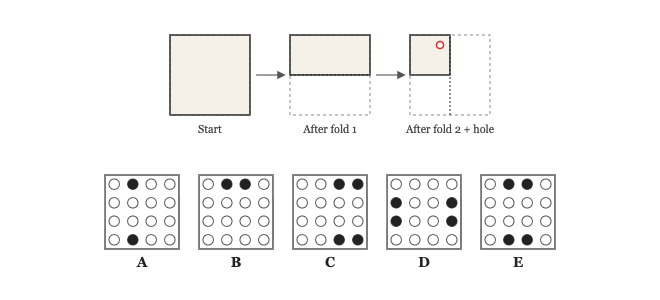
A flat square of paper is folded as shown in the image. The broken lines indicate the original position of the paper, and the solid lines indicate the position of the folded paper. The paper is never turned or twisted. The folded paper always remains within the edges of the original square. After the last fold, a hole is punched in the paper. Your task is to mentally unfold the paper and determine the position of the holes on the original square. Choose the pattern of black circles that indicates the position of the holes on the original square.
Choose the answer for which the black dots represent holes in the unfolded paper.
DAT Quiz
Practice Predict Locations On Unfolded Objects in DAT with focused quiz questions that help you check what you know, review explanations, and build confidence with test-style prompts.
This quiz focuses on Predict Locations On Unfolded Objects, giving you a quick way to practice the rules, question types, and explanations that matter most for DAT.
Try each quiz question before looking at the correct answer. Use the explanations to review missed ideas, then come back to similar questions until the pattern feels familiar.
A flat square of paper is folded as shown in the image. The broken lines indicate the original position of the paper, and the solid lines indicate the position of the folded paper. The paper is never turned or twisted. The folded paper always remains within the edges of the original square. After the last fold, a hole is punched in the paper. Your task is to mentally unfold the paper and determine the position of the holes on the original square. Choose the pattern of black circles that indicates the position of the holes on the original square.
Choose the answer for which the black dots represent holes in the unfolded paper.
A flat square of paper is folded as shown. The broken lines indicate the original position of the paper, and the solid lines indicate the position of the folded paper. The paper is never turned or twisted. The folded paper always remains within the edges of the original square. After the last fold, a hole is punched in the paper. Your task is to mentally unfold the paper and determine the position of the holes on the original square. Choose the pattern of black circles that indicates the position of the holes on the original square.
Choose the answer for which the black dots represent holes in the unfolded paper.
A flat square of paper is folded as shown. Broken lines indicate the original position of the paper, and solid lines indicate the position of the folded paper. The paper is never turned or twisted. The folded paper always remains within the edges of the original square. After the last fold, a hole is punched in the paper. Your task is to mentally unfold the paper and determine the position of the holes on the original square. Choose the pattern of black circles that indicates the position of the holes on the original paper.
Choose the answer for which the black dots represent holes in the unfolded paper.
A flat square of paper is folded as shown. Broken lines indicate the original position of the paper, and solid lines indicate the position of the folded paper. The paper is never turned or twisted. The folded paper always remains within the edges of the original square. After the last fold, a hole is punched in the paper. Your task is to mentally unfold the paper and determine the position of the holes on the original square. Choose the pattern of black circles that indicates the position of the holes on the unfolded paper.
Choose the answer for which the black dots represent holes in the unfolded paper.
A flat square of paper is folded as shown. The broken lines indicate the original position of the paper, and the solid lines indicate the position of the folded paper. The paper is never turned or twisted. The folded paper always remains within the edges of the original square. After the last fold, a hole is punched in the paper. Your task is to mentally unfold the paper and determine the position of the holes on the original square. Choose the pattern of black circles that indicates the position of the holes on the original square.
Choose the answer that corresponds to the image for which the black dots represent holes in the unfolded paper.
A flat square of paper is folded as shown. Broken lines indicate the original position of the paper, and solid lines indicate the position of the folded paper. The paper is never turned or twisted. The folded paper always remains within the edges of the original square. After the last fold, a hole is punched in the paper. Your task is to mentally unfold the paper and determine the position of the holes on the original square. Choose the pattern of black circles that indicates the position of the holes on the unfolded paper.
Choose the answer that corresponds to the image for which the black dots represent holes in the unfolded paper.
A flat square of paper is folded as shown. Broken lines indicate the original position of the paper, and solid lines indicate the position of the folded paper. The paper is never turned or twisted. The folded paper always remains within the edges of the original square. After the last fold, a hole is punched in the paper. Your task is to mentally unfold the paper and determine the position of the holes on the original square. Choose the pattern of black circles that indicates the position of the holes on the unfolded paper.
Select the answer that corresponds to the image for which the black dots represent holes in the unfolded paper.
A flat square of paper is folded as shown. Broken lines indicate the original position of the paper, and solid lines indicate the position of the folded paper. The paper is never turned or twisted. The folded paper always remains within the edges of the original square. After the last fold, a hole is punched in the paper. Your task is to mentally unfold the paper and determine the position of the holes on the original square. Choose the pattern of black circles that indicates the position of the holes on the unfolded paper.
Choose the letter that corresponds to the image for which the black dots represent holes in the unfolded paper.
A flat square of paper is folded as shown. Broken lines indicate the original position of the paper, and solid lines indicate the position of the folded paper. The paper is never turned or twisted. The folded paper always remains within the edges of the original square. After the last fold, a hole is punched in the paper. Your task is to mentally unfold the paper and determine the position of the holes on the original square. Choose the pattern of black circles that indicates the position of the holes on the original square.
Choose the letter that corresponds to the image for which the black dots represent holes in the unfolded paper.
A flat square of paper is folded as shown. The broken lines indicate the original position of the paper, and the solid lines indicate the position of the folded paper. The paper is never turned or twisted. The folded paper always remains within the edges of the original square. After the last fold, a hole is punched in the paper. Your task is to mentally unfold the paper and determine the position of the holes on the original square. Choose the pattern of black circles that indicates the position of the holes on the original square.
Choose the letter that corresponds to the image for which the black dots represent holes in the unfolded paper.
A flat square of paper is folded as shown in the image. The broken lines indicate the original position of the paper, and the solid lines indicate the position of the folded paper. The paper is never turned or twisted. The folded paper always remains within the edges of the original square. After the last fold, a hole is punched in the paper. Your task is to mentally unfold the paper and determine the position of the holes on the original square. Choose the pattern of black circles that indicates the position of the holes on the original square.
Choose the letter that corresponds to the image for which the black dots represent holes in the unfolded paper.
A flat square of paper is folded as pictured. Broken lines indicate the original position of the paper, and solid lines indicate the position of the folded paper. The paper is never turned or twisted. The folded paper always remains within the edges of the original square. After the last fold, a hole is punched in the paper. Your task is to mentally unfold the paper and determine the position of the holes on the original square. Choose the pattern of black circles that indicates the position of the holes on the unfolded paper.
Choose the letter that corresponds to the image for which the black dots represent holes in the unfolded paper.
A flat square of paper is folded as pictured. Broken lines indicate the original position of the paper, and solid lines indicate the position of the folded paper. The paper is never twisted or turned. The folded paper always remains within the edges of its original square. After the last fold, a hole is punched in the paper. Your task is to mentally unfold the paper and determine the position of the holes on the original square. Choose the pattern of black circles that indicates the position of the holes on the unfolded paper.
Choose the letter that corresponds to the image for which the black dots represent holes in the unfolded paper.
A flat square of paper is folded as shown. Broken lines indicate the original position of the paper, and solid lines indicate the position of the folded paper. The paper is never turned or twisted. The folded paper always remains within the edges of the original square. After the last fold, a hole is punched in the paper. Your task is to mentally unfold the paper and determine the position of the holes on the original square. Choose the pattern of black circles that indicates the position of the holes on the unfolded paper.
Identify the letter that corresponds to the image for which the black dots represent holes in the unfolded paper.
A flat square of paper is folded as shown. Broken lines indicate the original position of the paper, and solid lines indicate the position of the folded paper. The paper is never twisted or turned. The folded paper always remains within the edges of its original square. After the final fold, a hole is punched in the paper. Your task is to mentally unfold the paper and determine the position of the holes on the original square. Choose the pattern of black circles that indicates the position of the holes on the unfolded paper.
Choose the letter that corresponds to the image for which the black dots represent holes in the unfolded paper.
A flat square of paper is folded as pictured. Broken lines indicate the original position of the paper, and solid lines indicate the position of the folded paper. The paper is never twisted or turned. The folded paper always remains within the edges of the original square. After the last fold, a hole is punched in the paper. Your task is to mentally unfold the paper and determine the position of the holes on the original square. Choose the pattern of black circles that indicates the position of the holes on the unfolded paper.
Choose the letter that corresponds to the image for which the black dots represent holes in the unfolded paper.
A flat square of paper is folded as pictured. Broken lines indicate the original position of the paper, and solid lines indicate the position of the folded paper. The paper is never twisted or turned. The folded paper always remains within the edges of its original square. After the final fold, a hole is punched in the paper. Your task is to mentally unfold the paper and determine the position of the holes on the original square. Choose the pattern of black circles that indicates the position of the holes on the unfolded paper.
Choose the letter that corresponds to the image for which the black dots represent holes in the unfolded paper.
A flat square of paper is folded as shown in the image. The broken lines indicate the original position of the paper, and the solid lines indicate the position of the folded paper. The paper is never turned or twisted. The folded paper always remains within the edges of the original square. After the last fold, a hole is punched in the paper. Your task is to mentally unfold the paper and determine the position of the holes on the original square. Choose the pattern of black circles that indicates the position of the holes on the original square.
Choose the answer that corresponds to the image for which the black dots represent holes in the unfolded paper.
A flat square of paper is folded as shown. Broken lines indicate the original position of the paper, and solid lines indicate the position of the folded paper. The paper is never turned or twisted. The folded paper always remains within the edges of the original square. After the last fold, a hole is punched in the paper. Your task is to mentally unfold the paper and determine the position of the holes on the original square. Choose the pattern of black circles that indicates the position of the holes on the original square.
Choose the answer that corresponds to the image for which the black dots represent holes in the unfolded paper.
A flat square of paper is folded as shown. Broken lines indicate the original position of the paper, and solid lines indicate the position of the folded paper. The paper is never turned or twisted. The folded paper always remains within the edges of the original square. After the last fold, a hole is punched in the paper. Your task is to mentally unfold the paper and determine the position of the holes on the original square. Choose the pattern of black circles that indicates the position of the holes on the original square.
Choose the answer for which the black dots represent holes in the unfolded paper.