Question 1 of 25
In a triptych painting, the piece of art is composed of .
AP Art History
Practice Test 5 for AP Art History: real questions and explanations from the Varsity Tutors practice-test pool.
0%
0 / 25 answered
Question 1 of 25
In a triptych painting, the piece of art is composed of .
Question Navigator
In a triptych painting, the piece of art is composed of .
Explanation: The triptych was the most common form of altarpieces in Medieval art, usually being painted by the era's masters. A triptych features three separate panels that can fold up, all on some related theme. Usually, these would feature Jesus Christ in some form, as well as saints, angels, prophets, and even sometimes kings.
In a triptych painting, the piece of art is composed of .
Explanation: The triptych was the most common form of altarpieces in Medieval art, usually being painted by the era's masters. A triptych features three separate panels that can fold up, all on some related theme. Usually, these would feature Jesus Christ in some form, as well as saints, angels, prophets, and even sometimes kings.
Ancient Greek sculpture saw the perfection of the natural form in .
Explanation: The ancient Greeks saw the male nude form as the ultimate perfection in aesthetics, making it one of the most common subjects of Greek art. One of the key examples of this thought process is "The Dying Gaul," which portrays a dying Gaul, a man who was not Greek, laid out in perfect tension to show his body. This affection for the male nude was picked up by Renaissance and neoclassical artists, as demonstrated by works like Michelangelo's "David."
Picasso's massive painting Guernica commemorates an event in .
Explanation: During the Spanish Civil War, Francisco Franco's nationalist troops destroyed the Basque city of Guernica in a massive bombing campaign assisted by Nazi German and Italian Fascist troops. The painter Pablo Picasso made a massive black and white painting depicting the event in cubist and abstract imagery conveying sorrow and devastation. After Franco took over the reins of state in Spain in 1938, Picasso was not allowed in his native Spain.

The artist of this work is .
Explanation: Given the intense brush style and treatment of landscape and subject, this piece is a van Gogh. Manet and Monet were impressionists, and this work is post-impressionist. Schiele does not fit the time period or the style.
An American architect closely associated with the Prairie School was .
Explanation: The Prairie School was an architectural movement that grew around the turn of the nineteenth to the twentieth century in the American midwest. The Prairie School architects wished for a uniquely American form of architecture that could fit in with the natural landscape of America. Among the leading figures of the Prairie School was the famous architect Frank Lloyd Wright, whose early houses were all largely in the Prairie style.


Figure 3 Figure 4
The painting shown in Figure 4 portrays a(n) .
Explanation: Johannes Vermeer did title his painting The Astronomer, but the painting also gives many clues as to the nature of the individual's profession. The placement of the man working in a study with tools indicates he was some kind of scholar, and not a notable figure in his society. The use of a globe, and his looking out a window, indicate his interest in astronomy, which in the seventeenth century utilized "celestial globes" portraying stars. Figure 3: The Night Watch by Rembrandt van Rijn (1642) Figure 4: The Astronomer by Johannes Vermeer (1668)
Renaissance painting was different from medieval painting for all of the following reasons EXCEPT .
Explanation: The Renaissance saw an explosion in new forms of art, which explicitly sought a break from Medieval tradition. One of the chief features thematically was a revival in Classical subjects from ancient Greece and Rome. Renaissance artists also used new techniques and methods to create wider use of perspective and contrast in colors and light elements.

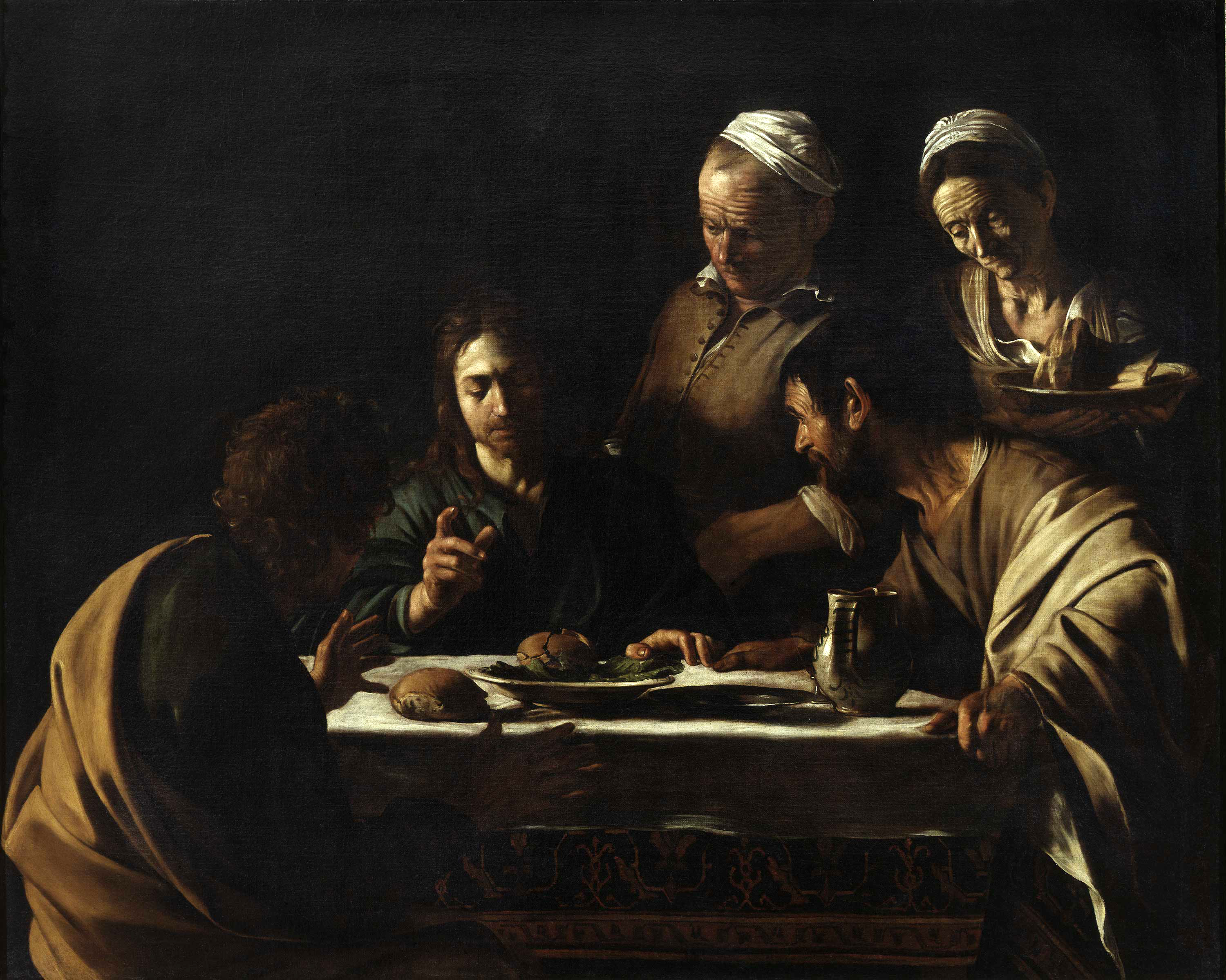
Figure 3 Figure 4
Images like the painting shown in Figure 3 were particularly important for Christians who were .
Explanation: Most people in Medieval Europe could not read or write, but the Catholic church had a vested interest in helping all of its members to become familiar with and understand the stories of the Bible. A painting like the one presented here by Fra Angelico not only shows the Angel Gabriel telling the Virgin Mary of her status as the mother of the Christ child, but gives a larger symbolic structure to the event. Figure 3: The Annunciation (Cortona) by Fra Angelico (1433) Figure 4: Supper at Emmaus (Milan) by Caravaggio (1606)
The large statues made from volcanic ash known as moai are found on .
Explanation: The moai of Easter Island are the small eastern Polynesian Island's most famous monuments, 887 statues with giant heads that are placed all around the island. While sharing much in common with other Polynesian sculpture, the remoteness of Easter Island and its intense tribal warfare make these symbolic monuments to ancestors larger and more stylized than other similar pieces of art.
Which one of the following cannot be found in the Palette of King Narmer?
Explanation: Hieratic scale is demonstrated by Narmer's overwhelming stature in comparison to the figures around him. Phonetic hieroglyphs at the center top of each side identify the name of the king. The bull symbolizes the power of the king. Many figures are portrayed in the composite pose: heads and legs are shown in profile while eyes and torsos are rendered frontally.
"Ukiyo-e" is a Japanese term for a piece of art produced through the use of .
Explanation: Ukiyo-e was the dominant form of Japanese art in the Edo period (1603-1867), and was aimed largely at the newly dominant upper middle classes by featuring images of geishas, sumo wrestlers, and kabuki actors. Ukiyo-e works were made from woodblock prints that allowed the artist to imprint a similar image on many different pieces of paper after creating just one block. Its handmade nature, however, allowed the pieces to be hand colored and shifted each time a new one was made.
In Yoruba art, the most important body part portrayed in statuary is the .
Explanation: The Yoruba culture of Southern Africa is one of the key artistic hubs of the region, and produces remarkable works in sculpture, jewelry, and masks. One chief feature is the usual focus on the head, which the Yoruba traditionally believe is the home of the entirety of the person. This belief is best reflected in Yoruba busts, which do not even feature necks or shoulders, only the head itself.
Ancient Mayan murals were most commonly created as .
Explanation: Only a handful of ancient Mayan murals survive to the present day, but they all are massive plaster frescos usually found in archaeological sites. The giant murals at Bonakmal depict the court life of an ancient Mayan king in great detail. The paintings were done quite quickly, as they had to be completed before the plaster dried.
A key difference between churches built after the Protestant Reformation and those before the Protestant Reformation in Protestant areas is that .
Explanation: Protestant theology greatly changed church architecture in Northern Europe after the sixteenth century. Catholic churches, even for the tiniest, poorest parishes, featured ornate statuary and imagery before the Reformation. The Protestant-built churches, by contrast, were much less ornate, featuring fewer images, with altars creating less of a barrier between clergy and congregants.
In medieval hagiographic paintings, a figure holding keys represents .
Explanation: In the Christian tradition, Jesus is said to have given Peter the keys to his Kingdom, which the Roman Catholic church interpreted as making Peter the first Pope. In the highly symbolic and representative religious art of the middle ages, illiterate viewers could recognize St. Peter in painting by seeing him holding a set of keys.
Triumphal Roman arches were made to celebrate and depict the success of leaders in .
Explanation: Roman triumphal columns were massive structures erected in the city of Rome to celebrate massive victories in battle against enemies. These arches were huge structures with minute details of the battle's events and signifiers of the people who were defeated. These triumphal arches were used as models for many later arches in European history, such as the Arc de Triomphe in Paris.
Who was responsible for OVERSEEING the construction of the Parthenon?
Explanation: Ictinus and Callicrates were the architects who designed the Parthenon, but Phidias oversaw the project and was one of its founding fathers as an iconic early Classical architect and sculptor.
Psyche Revived by Love's Kiss, sculpted by Antonio Canova in 1787, is an example of what style of sculpture?
Explanation: At first glance, Psyche Revived By Love's Kiss resembles an Ancient Greek sculpture from the Hellenistic period. Given that this sculpture was completed in 1787 - firmly in the 18th century, we must concede that it is neither Ancient Greek nor Ancient Roman. This sculpture is, in fact, an example of Neoclassical sculpture. Neoclassicism as an artistic style was inspired by Ancient Greek and Ancient Roman art and architecture. This style of sculpture is still being produced today.
Which of the following is NOT a key symbol in Buddhist iconography?
Explanation: The Lion symbolizes Buddha's royal status. The Wheel denotes Buddha's law. The Lotus is a symbol of Buddha's natural origins. Trees are not a key symbol in the iconographic scheme of Buddhist art.
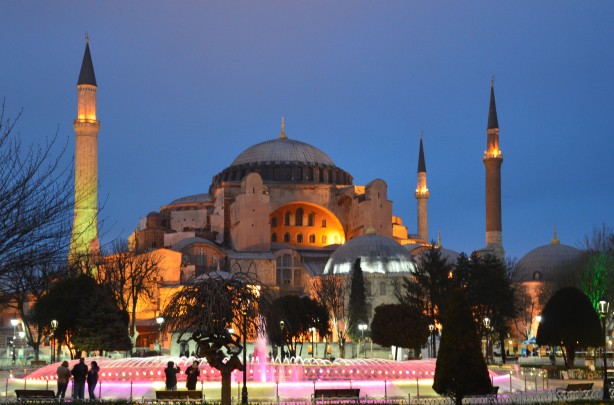
In what part of the world is this building located?
Explanation: This is the Hagia Sophia. It is located in Istanbul, on the Black Sea, in Turkey. There are hints of the location of the work in the style of the building. Consider the domed top, mixed with the towers on the corner. It is a unique blending of Greek and Islamic artistic influence. Image adapted from http://www.publicdomainpictures.net/hledej.php?hleda=hagia+sophia+5.
The main reason few ancient Roman paintings survive is .
Explanation: The visual arts in Ancient Rome were well-respected across a number of genres, including painting, sculpture, and ceramics. Painting, according to ancient sources, was valued as highly as the other forms of art, but very little of it has survived to the present day. Among the well-preserved examples of Roman painting are those from the sites of Pompeii and Herculaneum, which were all buried under volcanic ash, rather than having the paint exposed to the elements.
Which kinds of buildings best articulated the various features of Gothic architecture?
Explanation: Gothic architecture dominated between the fall of Rome in the fifth century CE and the rise of the Renaissance in the fifteenth century. Gothic architecture was notable for large, ornate stone structures with many elements and imposing figures. All of these are best seen in the many Gothic cathedrals that allowed architects and designers their most control over the shape of buildings.
Ornate calligraphy and designs featuring words and letters are stylistic features of art from .
Explanation: In the Quran, images of all kinds are proscribed, as they are too close to idolatry and attempting to act like God. As such, many Islamic artists focused on geometric shapes and calligraphy in their art. Over time, Islamic art began to be highly ornate and developed around these non-representational images.
The Prairie School of Architecture is strongly associated with the American region of .
Explanation: The Prairie School of Architecture developed in the Midwest in the 1890s as a reaction against the then-popular neo-Classicalism and Beaux-Arts styles. Prairie School Architects sought an authentically American style of architecture that reflected American landscapes. The term, "Prairie School," came about as a comment on the way the broad, plain style of architecture reflected the prairies of the Midwest.