All questions
Question 1
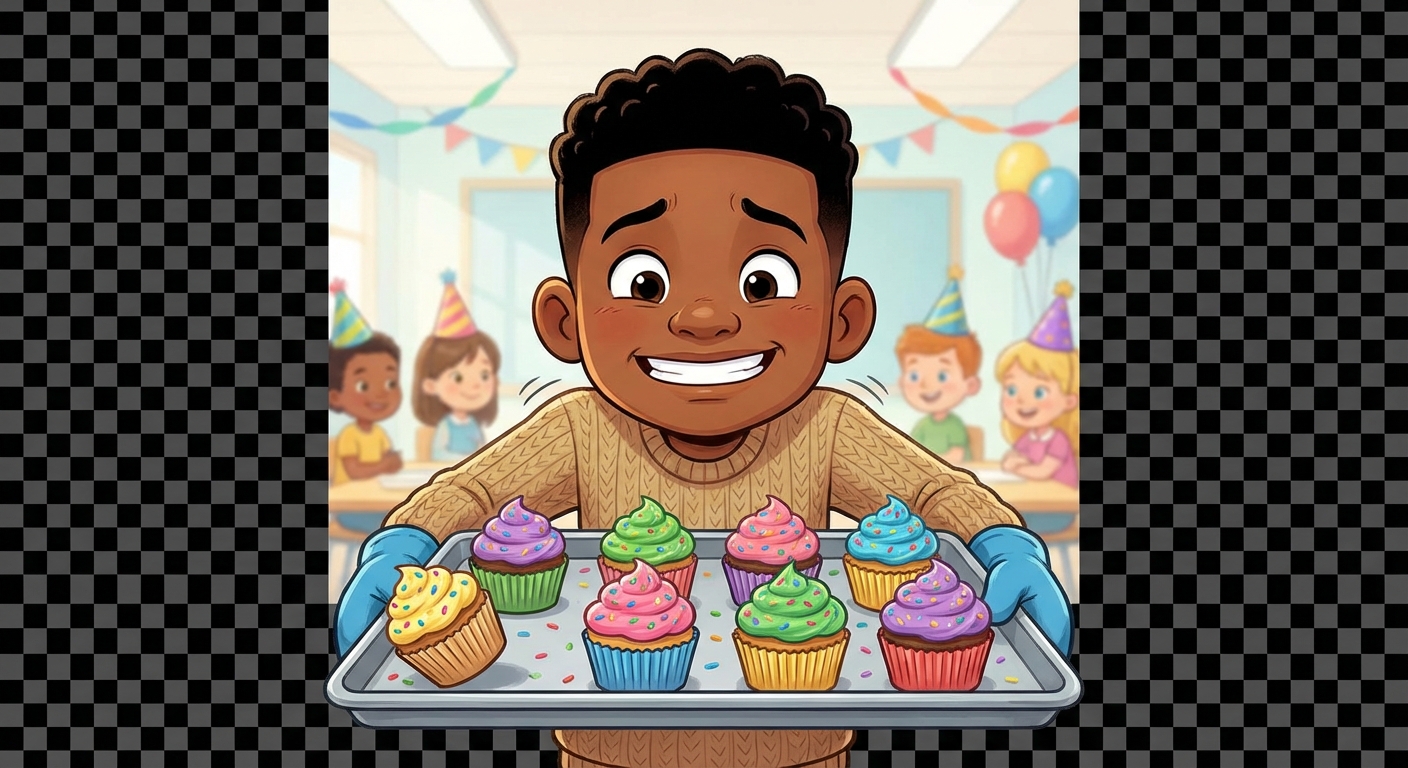
TEXT: Jamal carried a tray of cupcakes to the class party. He smiled, but he walked very slowly. "I really hope I don't drop them," he said.
ILLUSTRATION: In the picture, Jamal is shown close-up as he carries the tray. Around him, his classmates are blurred, so the reader looks right at Jamal in the bright room.
Read the story and look at the illustration. What does Jamal's expression in the illustration add?
- The illustration shows Jamal's raised shoulders and tight smile, emphasizing that he feels nervous about the tray. (correct answer)
- The illustration shows the blurred classmates behind Jamal, emphasizing that the party is going to be very loud and busy.
- The illustration shows the tray of cupcakes in his hands, emphasizing that Jamal baked all of them by himself at home.
- The illustration shows Jamal with a big open laugh, emphasizing that he feels silly and carefree at the party.
Explanation: Look closely at Jamal's face and body in the picture. His shoulders are raised and his smile is tight, which are body-language clues that he feels nervous. The words tell you he hopes not to drop the cupcakes, but the picture adds even more by showing how worried his body looks. That is why the choice about his raised shoulders and tight smile is the best answer.
The choice about the blurred classmates is wrong because the blur just helps you focus on Jamal, and nothing tells you the party is loud. The choice about the cupcakes is wrong because the story never says Jamal baked them himself, so the picture can't show that. The choice about a big open laugh is wrong because Jamal is not laughing; his smile is tight and nervous, not silly or carefree. When you read a picture, ask what a character's body and face show that the words alone do not say.
Question 2
TEXT: Maya tiptoed into the library and opened her new mystery book. She heard a tiny creak and froze. "It's probably nothing," she whispered, but her hands shook a little.
ILLUSTRATION: The illustration shows Maya holding the book close to her chest near a tall bookshelf. In the picture, her eyes are wide and her eyebrows tilt down, and she leans back as if listening. The colors are cool blues and grays with dim lighting, creating a tense, quiet mood. In the background, a long shadow stretches across the floor, making the library feel extra spooky.
Read the story and look at the illustration. How does the illustration create a worried mood?
- The illustration shows a big open window with sunshine, which makes the whole scene feel cheerful and playful instead of scary.
- The illustration uses shadowy lighting and quiet colors, which makes the whole scene feel nervous and uneasy for Maya. (correct answer)
- The illustration shows a smiling librarian waving hello, which makes the whole scene feel calm and friendly for Maya.
- The illustration shows Maya turning many pages quickly, which makes the whole scene feel busy and excited instead of worried.
Explanation: The right answer notices the shadowy lighting and quiet, dull colors and explains that these make the scene feel nervous and uneasy. That worried feeling matches Maya's shaking hands and frozen body, so the picture adds to the mood the words hint at. The choice about a big open window with sunshine is wrong because bright sunshine would make the scene cheerful, not scary — the opposite of a worried mood. The choice about a smiling librarian waving hello is wrong because a friendly, calm face would not create a nervous feeling, and it does not match what the picture actually shows. The choice about Maya turning pages quickly is wrong because a busy, excited feeling is not the same as a worried one, and it focuses on action instead of mood. Only the answer about shadowy lighting and quiet colors explains how the picture makes us feel worried.
Question 3
TEXT: Sofia and her dad walked into the forest for a short hike. "Stay close," Dad said. Sofia listened and kept her eyes open.
ILLUSTRATION: The illustration shows tall pine trees and a narrow trail with roots sticking out. In the picture, the light is greenish and shaded under the branches. Sofia steps carefully over a root, showing she is paying attention. In the background, a small wooden sign points to a creek, adding a detail not said in the text.
Read the story and look at the illustration. What does the illustration add about the setting?
- The illustration adds that the forest trail is narrow with roots to step over. (correct answer)
- The illustration adds that the forest trail is wide and smooth with no roots at all.
- The illustration adds that the forest is bright and sunny with no shade under the trees.
- The illustration adds that the forest has short bushes instead of any tall pine trees.
Explanation: The picture shows things about the setting that the words do not tell you. The text says they hiked in the forest, but it does not describe the path. The best answer is that the trail is narrow with roots to step over—you can see that in the illustration, and it matches Sofia carefully stepping over a root. The answer saying the trail is wide and smooth with no roots is wrong, because the picture clearly shows a narrow path with roots sticking out. The answer saying the forest is bright and sunny with no shade is wrong, because the light in the picture is greenish and shaded under the branches. The answer saying the forest has short bushes instead of tall pine trees is wrong, because the illustration shows tall pine trees, not bushes. To pick the right answer, look carefully at what the picture actually shows about the place, then choose the option that matches those details.
Question 4
TEXT: Chen stood at the top of the playground climbing wall. He took a deep breath. "I can do it," he said, and started down.
ILLUSTRATION: The illustration shows Chen high on the wall, with his legs stretched to reach the next hold. In the picture, his mouth is set in a serious line and his hands look tight on the grips. The view is from below, making the wall look tall and the action feel challenging. The sunny lighting shows it is daytime, even though the text doesn't say.
Read the story and look at the illustration. How does the illustration emphasize the difficulty?
- The picture shows Chen resting easily near the bottom, making the climb look simple and quick.
- The picture uses a low viewpoint and shows his straining body, making the climb look hard. (correct answer)
- The picture shows the sunny lighting and daytime sky, making the climb look calm and cheerful.
- The picture shows an empty playground around Chen, making the climb look lonely and quiet.
Explanation: The question asks how the picture shows that Chen's climb is difficult. The best answer says the picture uses a low viewpoint and shows his straining body to make the climb look hard. Looking up from below makes the wall seem tall, and his stretched legs, tight hands, and serious face show how much effort the climb takes. That matches what the story is really about—doing something brave and challenging. The choice about Chen resting easily near the bottom is wrong because the picture shows him high up and working hard, not relaxing, so it says the opposite of the difficulty. The choice about sunny lighting and a daytime sky names a real detail, but bright light shows the time of day, not how hard the climb is. The choice about an empty playground might make the scene feel lonely, but being alone is not the same as the climb being difficult. Only the low viewpoint and straining body show effort and challenge, so that is the answer.
Question 5
TEXT: Marcus found a new student sitting alone at lunch. He sat down and said, "Want to trade snacks?" The new student looked up and nodded.
ILLUSTRATION: The picture shows Marcus at the lunch table with the new student, and colors and lighting fill the busy cafeteria scene.
Read the story and look at the illustration. How does the illustration emphasize Marcus being helpful?
- The picture shows Marcus reaching out with an open hand, emphasizing his kindness toward the new student. (correct answer)
- The picture shows Marcus with crossed arms turning away, emphasizing that he wants to sit by himself.
- The picture shows a loud band on a stage, emphasizing that the noisy cafeteria is really a concert.
- The picture shows a close-up of lunch trays, emphasizing all the different foods everyone ate today.
Explanation: The right answer says the picture shows Marcus reaching out with an open hand toward the new student. This matches the story, where Marcus sits down and offers to trade snacks. An open hand and reaching toward someone are friendly body language, so the illustration adds meaning by showing us how kind and helpful Marcus is, even more than the words alone.
The choice about Marcus with crossed arms turning away is wrong because that body language would mean the opposite of helpful—it would show he wants to be left alone, which does not fit a boy who chooses to sit with someone new.
The choice about a loud band on a stage is wrong because there is no concert in this story; the cafeteria is just a lunchroom, and this detail is not about Marcus at all.
The choice about a close-up of lunch trays is wrong because showing the food everyone ate tells us nothing about whether Marcus is helpful. It focuses on the meal instead of on Marcus's kind actions.
When you study an illustration, look at what a character's hands, face, and body are doing. Those clues show feelings and actions that help explain the story.
Question 6
TEXT: Keisha loved making art from recycled things. She said, "Trash can turn into treasure!" She worked quietly at her table.
ILLUSTRATION: The illustration shows Keisha smiling with paint on her fingertips and a proud posture. In the picture, she is building a robot from a cereal box, bottle caps, and paper tubes. Warm, bright colors and sunny lighting create a happy, creative mood. The background includes a small bin labeled with a recycling symbol, showing her habit without the text saying it.
Read the story and look at the illustration. How does the illustration demonstrate Keisha's creativity?
- The illustration shows recycled objects becoming a robot, emphasizing her creative ideas. (correct answer)
- The illustration shows the recycling bin overflowing, emphasizing that Keisha needs to clean up.
- The illustration shows paint on her hands, emphasizing that Keisha made a messy mistake.
- The illustration shows a recycling symbol, emphasizing that saving items is the whole story.
Explanation: The picture does more than decorate the words. The text says Keisha turns trash into treasure, but it never shows what she makes. The illustration answers that by showing recycled objects—a cereal box, bottle caps, and paper tubes—becoming a robot. Seeing this transformation is how we know Keisha is creative, so the choice about recycled objects becoming a robot is the best answer.
The choice about an overflowing bin and needing to clean up focuses on tidiness, not on making something new, so it misses her creativity. The choice about paint on her hands calls it a messy mistake, but the picture shows paint as a happy sign of her working proudly, not an error. The choice about the recycling symbol says saving items is the whole story, but the symbol is only a small background detail—it shows her habit, while the robot shows her imagination. Only one choice explains how the picture reveals Keisha turning ordinary things into an original creation.
Question 7
TEXT: Carlos looked out the window before school. He grabbed his backpack and sighed. "I guess I need my boots today," he said.
ILLUSTRATION: The illustration shows the sky and the sidewalk outside Carlos's window. In the picture, Carlos wears his boots and a hooded jacket, even though the text only mentions boots. A small umbrella stand sits by the door, adding a detail about getting ready to leave.
Read the story and look at the illustration. What does the illustration add about the weather?
- The illustration adds that it is rainy, shown by wet drops on the glass and puddles by the door. (correct answer)
- The illustration adds that it is snowy, shown by white flakes falling and snow piled by the door.
- The illustration adds that it is sunny, shown by warm light and a clear blue sky by the door.
- The illustration adds that it is windy, shown by bent trees and leaves swirling by the door.
Explanation: The words tell you Carlos needs his boots, but they never say why. The picture is what gives you the weather clue. Look closely: there are wet drops running down the glass and puddles by the door, which tell you it is raining. That is the detail the words leave out, so the rainy choice is the best answer.
The snowy choice is wrong because you would need to see white flakes and piles of snow, not wet drops and puddles. The sunny choice is wrong because bright light and a clear blue sky would mean Carlos did not need boots or a hood at all. The windy choice is wrong because bending trees and swirling leaves show wind, not rain, and Carlos's boots do not point to wind. Only the rainy picture matches the drops and puddles you can actually see.
Question 8
TEXT: Amir walked into the classroom and stopped at the door. "Wow," he said softly. Today was the science fair.
ILLUSTRATION: The illustration shows colorful posters and tri-fold boards lining the room. In the picture, Amir's mouth is open in surprise and his eyes are wide. Bright lighting and many bold colors create an excited mood. The background includes a table with ribbons, which the text does not mention.
Read the story and look at the illustration. What does the illustration emphasize about Amir's feelings?
- The illustration shows Amir with wide eyes and open mouth, emphasizing surprise. (correct answer)
- The illustration shows Amir with pressed lips and tired eyes, emphasizing his boredom.
- The illustration shows Amir with a small smile and folded arms, emphasizing his patience.
- The illustration shows Amir with a wrinkled nose and squinting eyes, emphasizing his confusion.
Explanation: The words say Amir stopped and said "Wow," which tells us he felt amazed. The illustration adds to this by showing his face. Wide eyes and an open mouth are the way people look when something surprises them, so this choice matches both the picture and the word "Wow."
The choice about pressed lips and tired eyes is wrong because a bored face would look flat and sleepy, not amazed, and Amir clearly reacted with excitement. The choice about a small smile and folded arms is wrong because folded arms show calm waiting, not the shocked, mouth-open reaction the picture shows. The choice about a wrinkled nose and squinting eyes is wrong because squinting shows confusion, but Amir's eyes are wide open, which shows wonder instead of puzzlement.
When you explain how an illustration helps a story, look closely at the character's face and match it to what the words say. Here, wide eyes and an open mouth both point to surprise, so that is the best answer.
Question 9
TEXT: Yuki packed her lunch and checked the calendar. She bounced on her toes. "I've been waiting for this day!" she said.
ILLUSTRATION: The illustration shows Yuki wearing a light jacket and holding a small bouquet of flowers. In the picture, trees outside the window have pink blossoms, showing it is spring even though the text doesn't say. The colors are bright and fresh, creating a cheerful mood. A calendar on the wall has a big circle around today, helping show why she is excited.
Read the story and look at the illustration. What does the illustration add about the season?
- The illustration adds it is spring by showing pink blossoms on trees outside. (correct answer)
- The illustration adds it is winter by showing deep snow piled on the trees outside.
- The illustration adds it is fall by showing orange leaves scattered under the trees outside.
- The illustration adds it is summer by showing a sandy beach and bright sun outside.
Explanation: The words tell us Yuki is excited about a special day, but they never say what season it is. The picture fills in that missing clue. Pink blossoms on the trees outside the window tell us it is spring, which matches Yuki's light jacket and her little bouquet of flowers. That is why the choice about spring and pink blossoms is the best answer. The choice about winter is wrong because there is no deep snow in the picture; the trees have blossoms, not snow. The choice about fall is wrong because you cannot see any orange leaves on the ground; the trees are blooming instead. The choice about summer is wrong because there is no beach or hot sun in the picture, only a bright, fresh spring day. When you want to find the season, look closely at nature clues in the picture, like blossoms for spring, snow for winter, orange leaves for fall, and a sunny beach for summer.
Question 10
TEXT: Emma sat on the porch and listened. The neighborhood was quiet. She rocked slowly and watched the day end.
ILLUSTRATION: The illustration shows warm evening light across the porch. In the picture, Emma's face looks calm, with a small smile and half-closed eyes. In the background, fireflies glow near the grass, adding a detail not mentioned in the text.
Read the story and look at the illustration. How does the lighting in the illustration create mood?
- The illustration uses soft sunset light, which creates a peaceful and calm feeling. (correct answer)
- The illustration uses gray stormy light, which creates a worried and tense feeling.
- The illustration uses bright indoor lights, which creates a busy and excited feeling.
- The illustration uses bright morning light, which creates a fresh and hopeful feeling.
Explanation: Look at the light in the picture and think about how it feels. The soft sunset light glows warmly across the porch, matching Emma sitting quietly and rocking as the day ends. This gentle light makes the scene feel peaceful and calm, so that is the best answer. Gray stormy light would make a picture feel worried or tense, but nothing in this quiet evening scene looks stormy, so that choice is wrong. Bright indoor lights would suggest a busy, exciting place, but Emma is resting outside on a calm porch, not somewhere loud. Bright morning light might feel fresh and hopeful, but the story clearly says Emma is watching the day end, so it is evening, not morning. Only the soft sunset light matches both the picture and the quiet, restful mood of the story.