All questions
Question 1
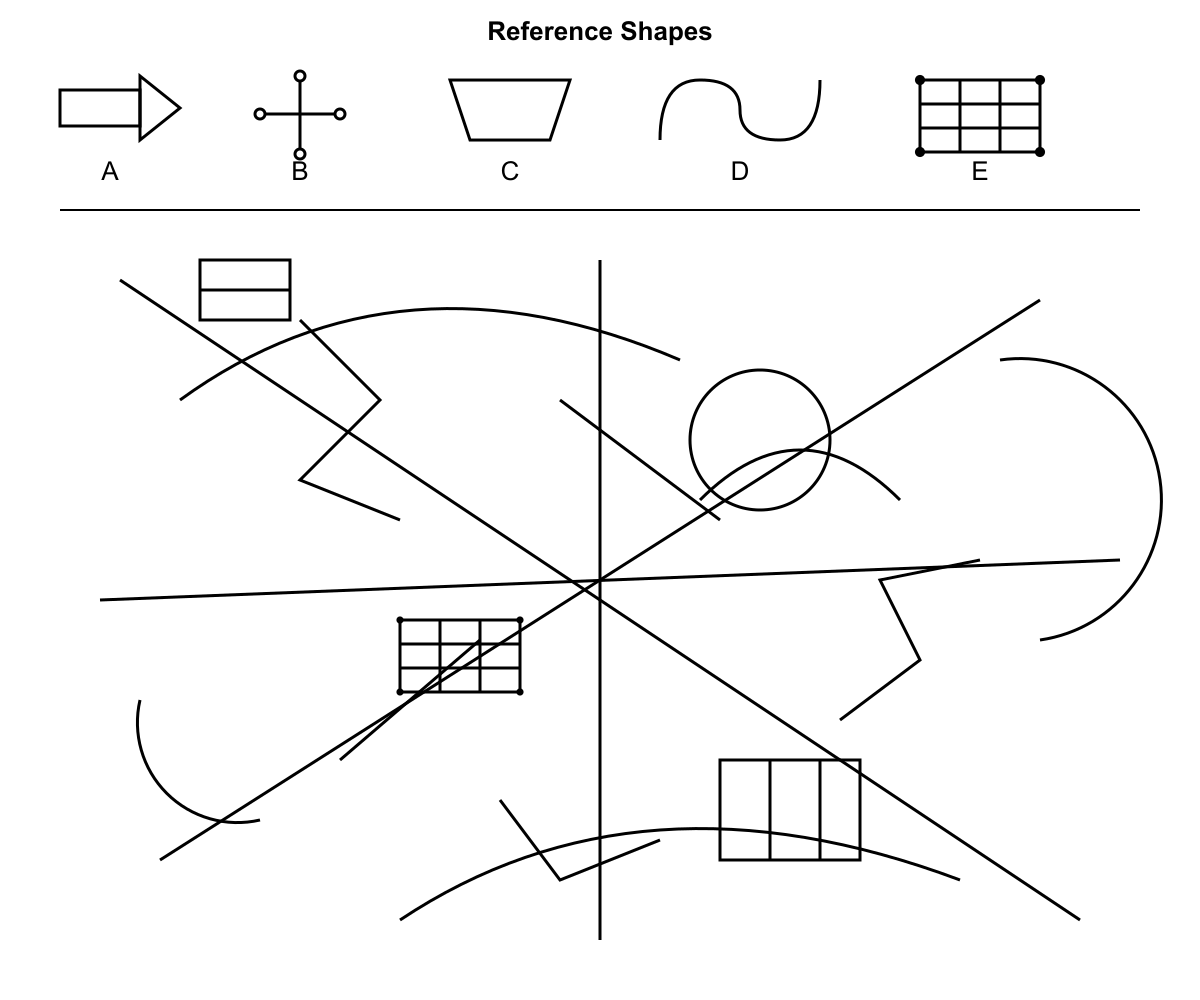
Study the detailed geometric composition shown below. Identify which of the five reference shapes is completely embedded within this complex arrangement.
- An arrow-shaped figure with rectangular shaft and triangular pointed head section
- A cross-shaped pattern with equal arms and circular endpoint decorations
- A trapezoidal form with parallel bases and angled connecting side segments
- A curved S-shape with symmetrical loops and connecting bridge elements
- A rectangular frame with internal grid divisions and corner reinforcement marks (correct answer)
Explanation: The rectangular frame with internal grid divisions and corner reinforcement marks (choice E) is embedded within the complex arrangement and can be identified by tracing the complete rectangular outline along with its internal grid structure and corner markings. Choice A is incorrect because no arrow-shaped figure with the described shaft and head components exists as a complete embedded shape. Choice B is wrong as no cross pattern with equal arms and circular endpoints can be fully traced within the composition. Choice C is incorrect since no complete trapezoidal form with the specified parallel and angled segments appears as an embedded shape. Choice D is incorrect because while there are curved elements, no S-shaped figure with symmetrical loops can be identified as a complete embedded form.
Question 2
Four simple figures are shown above a complex figure. Which of the simple figures (A, B, C, or D) is hidden in the complex figure?
- A
- B (correct answer)
- C
- D
- E
Explanation: The correct answer is B. Figure B, the plus sign, is located in the upper right quadrant of the complex figure. Its vertical bar is centered on the main vertical line of the complex figure, and its horizontal bar extends from the main vertical line to the right edge. Figure A is almost present in the top left, but its middle horizontal bar is missing. Figure C is almost present in the bottom right, but it is a mirror image. Figure D is not present.
Question 3
Four simple figures are shown above a complex figure. Which of the simple figures (A, B, C, or D) is hidden in the complex figure?
- A
- B
- C (correct answer)
- D
- E
Explanation: The correct answer is C. Figure C, the 'Z' shape, is located in the center of the figure, formed by a combination of lines from the overlapping diamond and square shapes. Figure A is not present. A shape similar to Figure B is in the top center, but it's not a true plus sign as the arms are of unequal length. A rotated version of Figure D is present, but not in the correct orientation.
Question 4
Four simple figures are shown above a complex figure. Which of the simple figures (A, B, C, or D) is hidden in the complex figure?
- A
- B (correct answer)
- C
- D
- E
Explanation: The correct answer is B. Figure B, the plus sign, is formed by the intersection of the two main cross-bars in the center of the complex figure. All other figures are only partially present or not in the correct orientation. For instance, a shape resembling Figure A is in the upper left, but it is a mirror image. Figure C is not present. Figure D is also not present in its entirety.
Question 5
Four simple figures are shown above a complex figure. Which of the simple figures (A, B, C, or D) is hidden in the complex figure?
- A
- B
- C (correct answer)
- D
- E
Explanation: The correct answer is C. The diamond shape is located in the upper portion of the figure, sharing a vertex with the top point of the star. Figure A, the '4' shape, is almost formed on the left side, but the diagonal line is too long. Figure B, the arrow, is not present. Figure D, the trapezoid, appears in the bottom portion of the star, but is missing its top line.
Question 6
Four simple figures are shown above a complex figure. Which of the simple figures (A, B, C, or D) is hidden in the complex figure?
- A
- B (correct answer)
- C
- D
- E
Explanation: The correct answer is B. The right-facing arrow is clearly visible on the right side of the complex figure, with its tail touching the central circle. Figure A is not present. A shape resembling Figure C (diamond) is present, but it is distorted and not a true diamond. Figure D (trapezoid) is located at the bottom, but it is inverted.
Question 7
Four simple figures are shown above a complex figure. Which of the simple figures (A, B, C, or D) is hidden in the complex figure?
- A
- B
- C
- D (correct answer)
- E
Explanation: The correct answer is D. The trapezoid is located at the base of the complex figure, formed by the bottom edge and two angled lines meeting a horizontal line above it. Figure A is partially visible but incomplete. Figure B is not present. A rotated version of Figure C is in the top portion, but it is not in the correct orientation.
Question 8
Four simple figures are shown above a complex figure. Which of the simple figures (A, B, C, or D) is hidden in the complex figure?
- A (correct answer)
- B
- C
- D
- E
Explanation: The correct answer is A. The '4' shape is embedded in the top left quadrant of the complex figure, using some of the lines that form the overlapping squares. Figure B (arrow) is hinted at on the right side, but the triangle part is incomplete. Figure C (diamond) is not present. Figure D (trapezoid) is also not present in the correct orientation.
Question 9
Four simple figures are shown above a complex figure. Which of the simple figures (A, B, C, or D) is hidden in the complex figure?
- A
- B
- C (correct answer)
- D
- E
Explanation: The correct answer is C. The diamond shape is formed by the intersection of four triangles in the center of the complex pattern. The other shapes are cleverly hidden as distractors. Figure A is almost present, but its vertical line is curved. Figure B is present, but it is pointing downwards, not to the right. Figure D is visible as the outline of one of the larger shapes, but it is much larger than the sample figure.
Question 10
Four simple figures are shown above a complex figure. Which of the simple figures (A, B, C, or D) is hidden in the complex figure?
- A
- B (correct answer)
- C
- D
- E
Explanation: The correct answer is B. The parallelogram is located on the right side of the figure, representing a single pane of glass in a larger shattered pattern. Figure A, the star, is present, but it is an eight-pointed star, not five-pointed. Figure C, the hexagon, is almost formed in the center but one side is bowed inward. Figure D, the fish, is not present.
Question 11
Four simple figures are shown above a complex figure. Which of the simple figures (A, B, C, or D) is hidden in the complex figure?
- A (correct answer)
- B
- C
- D
- None of the above
Explanation: The correct answer is A. The five-pointed star is located in the upper left, formed by the overlapping edges of five triangles. Figure B, the parallelogram, is not present. Figure C, the hexagon, is clearly visible in the center of the pattern, but it is much larger than the sample figure. Figure D, the fish, is not present.
Question 12
Four simple figures are shown above a complex figure. Which of the simple figures (A, B, C, or D) is hidden in the complex figure?
- A
- B
- C (correct answer)
- D
- E
Explanation: The correct answer is C. The hexagon is formed by the main body of the wrench head in the illustration. Figure A, the star, is not present. A shape similar to Figure B is present, but it has curved sides. Figure D is not present.
Question 13
In the complex figure shown below, which of the five lettered shapes (A through E) is embedded within the drawing? The embedded shape maintains its original size and orientation.
- A triangular shape with curved internal divisions and angular outer boundaries
- A rectangular form with diagonal cross-hatching and perpendicular line segments
- A circular pattern with radiating spokes and concentric ring elements
- A hexagonal outline with internal zigzag patterns and parallel edge markings
- A diamond-shaped figure with straight internal lines forming symmetric divisions (correct answer)
Explanation: The diamond-shaped figure with straight internal lines forming symmetric divisions (choice E) is clearly embedded in the complex drawing when you trace the continuous lines that form this specific pattern. Choice A is incorrect because no triangular shape with the described curved divisions exists in the figure. Choice B is wrong as the rectangular cross-hatched pattern is not present as a complete embedded shape. Choice C is incorrect since no circular pattern with radiating spokes appears in the complex figure. Choice D is incorrect because while there are angular elements, no complete hexagonal outline with the specified internal patterns can be traced.
Question 14
Analyze the elaborate drawing presented below to determine which simple shape from the reference collection is concealed within the complex pattern.
- A butterfly-like shape with symmetrical wings and central body dividing line
- A house outline with triangular roof section and rectangular base foundation
- A flower pattern with circular center and radiating petal arrangements
- A lightning bolt with zigzag segments and angular directional changes
- A parallelogram with slanted sides and internal diagonal support structures (correct answer)
Explanation: The parallelogram with slanted sides and internal diagonal support structures (choice E) can be traced within the elaborate drawing by following the specific line segments that form this complete geometric shape with its characteristic angled sides and internal diagonal elements. Choice A is incorrect because no butterfly-shaped figure with symmetrical wings and central division exists as a complete embedded shape. Choice B is wrong since no house outline with the described triangular roof and rectangular base can be fully traced. Choice C is incorrect as no flower pattern with circular center and radiating petals appears as an embedded complete shape. Choice D is incorrect because while there are angular elements, no lightning bolt with the specified zigzag pattern can be identified as a complete embedded figure.
Question 15
Four simple figures are shown above a complex figure. Which of the simple figures (A, B, C, or D) is hidden in the complex figure?
- A
- B
- C (correct answer)
- D
- E
Explanation: The correct answer is C. The hexagon is clearly visible in the center of the complex figure, representing the body of the bee from a top-down view. Figure A, the star, is not present. Figure B, the parallelogram, is used to form the wings of the bee, but there are two, not one. Figure D, the fish, is not present.
Question 16
Four simple figures are shown above a complex figure. Which of the simple figures (A, B, C, or D) is hidden in the complex figure?
- A
- B
- C
- D (correct answer)
- E
Explanation: The correct answer is D. The fish shape is cleverly hidden in the negative space between several curved lines on the left side of the figure. Figure A, the star, is not present. Figure B, the parallelogram, is present but rotated 45 degrees. Figure C, the hexagon, is present but it is elongated and not regular.
Question 17
Study the intricate geometric figure displayed below. Determine which simple shape from the provided reference set is embedded within this complex visual pattern.
- A crescent moon shape with curved outer boundary and concave inner edge contour
- A gear wheel with circular center and rectangular teeth projecting around perimeter
- A teardrop form with rounded bottom section and pointed upper tapering end
- A bowtie pattern with triangular sections connected by narrow central waist segment
- An equilateral triangle with internal altitude lines meeting at centroid intersection point (correct answer)
Explanation: The equilateral triangle with internal altitude lines meeting at centroid intersection point (choice E) is embedded within the complex visual pattern and can be identified by tracing the three equal sides that form the triangular outline along with the three internal lines that meet at the center point. Choice A is incorrect because no crescent shape with the described curved outer boundary and concave inner edge exists as a complete embedded figure. Choice B is wrong since no gear wheel with circular center and projecting rectangular teeth can be fully traced within the pattern. Choice C is incorrect as no teardrop form with the specified rounded bottom and pointed top appears as an embedded complete shape. Choice D is incorrect because while there are triangular and connecting elements, no bowtie pattern with the described triangular sections and central waist can be identified as a complete embedded figure.
Question 18
Four simple figures are shown above a complex figure. Which of the simple figures (A, B, C, or D) is hidden in the complex figure?
- A (correct answer)
- B
- C
- D
- E
Explanation: The correct answer is A. Figure A, the 'F' shape, is located in the bottom left of the complex figure, sharing its vertical line with the left edge of a large rectangle. Figure B is almost present in the upper right, but its left arm is too short. Figure C is not present in the correct orientation. Figure D is partially visible in the bottom right, but its right vertical side is missing.
Question 19
Examine the intricate pattern displayed below. Which simple geometric shape from the reference set is hidden within this complex design?
- A pentagonal star with internal connecting lines and pointed outer extensions
- An octagonal ring with alternating thick and thin boundary segments
- A triangular grid with internal subdivisions and parallel line arrangements
- A square spiral with curved corners and radiating outward elements
- A hexagonal pattern with intersecting diagonals and central convergence point (correct answer)
Explanation: The hexagonal pattern with intersecting diagonals and central convergence point (choice E) can be traced within the complex design by following the specific line segments that form this complete geometric shape. Choice A is incorrect because no pentagonal star configuration exists as a complete embedded shape in the pattern. Choice B is wrong since an octagonal ring with the described alternating segments cannot be fully traced. Choice C is incorrect as no triangular grid with the specified internal structure appears as an embedded complete shape. Choice D is incorrect because while there are curved and angular elements, no square spiral with the described characteristics can be identified as a complete embedded figure.
Question 20
Examine the complex visual arrangement shown below. Which of the reference shapes is fully contained within this intricate geometric design?
- A kite-shaped figure with pointed top vertex and curved lateral edge connections
- An oval ring with thick boundary walls and internal hollow spacing area
- A fan-shaped segment with curved outer edge and straight radiating internal lines
- A stepped pyramid with rectangular base layers and ascending triangular apex
- A rhombus with equal sides and intersecting perpendicular internal bisector lines (correct answer)
Explanation: The rhombus with equal sides and intersecting perpendicular internal bisector lines (choice E) is fully contained within the intricate design and can be traced by following the diamond-shaped outline with its characteristic equal sides and the perpendicular lines that bisect it internally. Choice A is incorrect because no kite-shaped figure with the described pointed vertex and curved connections exists as a complete embedded shape. Choice B is wrong since no oval ring with thick boundaries and hollow interior can be fully traced within the arrangement. Choice C is incorrect as no fan-shaped segment with the specified curved edge and radiating lines appears as an embedded complete shape. Choice D is incorrect because while there are angular and layered elements, no stepped pyramid with the described base and apex structure can be identified as a complete embedded figure.