Pathogens &
Infectious Diseases
Explore how bacteria, viruses, prions, and parasites cause disease, how they spread through populations, and why environmental factors shape emerging infectious diseases.
What Is a Pathogen?
A pathogen is any biological agent that causes disease in a host organism. Pathogens exploit the host's resources to reproduce, often damaging tissues and triggering immune responses in the process.
In environmental science, understanding pathogens matters because human activity: deforestation, urbanization, climate change, and global trade: creates new opportunities for pathogens to jump between species and spread across the globe.
Four Major Pathogen Types
How Infectious Diseases Spread
Explain what fecal indicators can and cannot establish.
Use this illustration to explore the concept described in its caption.
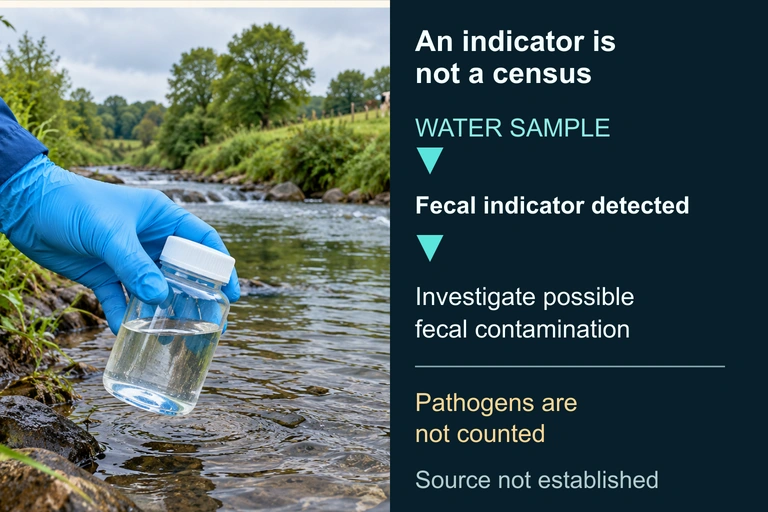
Environmental exposure routes are pathogen-specific
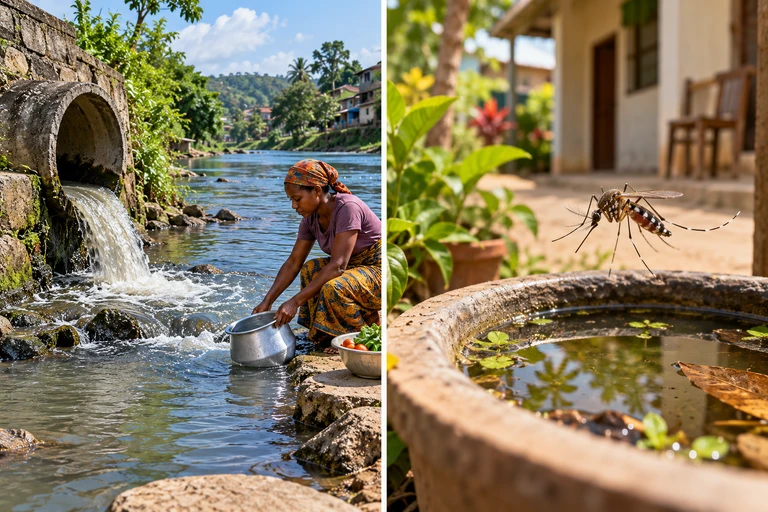 Environmental exposure pathways depend on the pathogen. Schistosoma includes a freshwater snail stage and can enter through skin, while mosquito-borne transmission and contaminated drinking water require different interruption strategies.
Ingestion, insect-vector transmission and skin penetration are distinct exposure pathways.
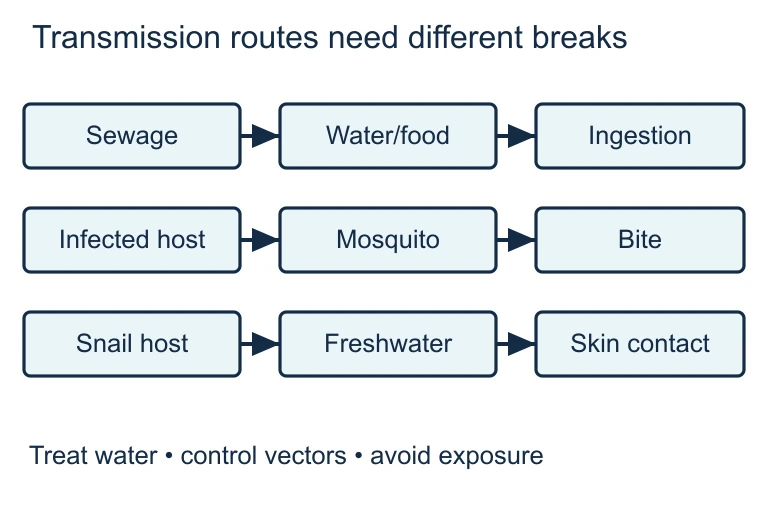 Environmental exposure pathways depend on the pathogen. Schistosoma includes a freshwater snail stage and can enter through skin, while mosquito-borne transmission and contaminated drinking water require different interruption strategies.
Endemic vs Epidemic vs Pandemic
The Disease Triangle
Virulence and Dose-Response
Virulence measures how severe a pathogen's effects are. A highly virulent pathogen causes serious illness at low doses, while a less virulent one requires larger exposure. The infectious dose is the minimum number of pathogen units needed to establish infection.
Bacteria vs Viruses
| Bacteria | Viruses | |
|---|---|---|
| Cell structure | Living, single-celled prokaryote | Non-living; protein coat + nucleic acid |
| Reproduction | Binary fission (independent) | Hijacks host cell machinery |
| Treatment | Antibiotics | Antivirals / Vaccines |
| Size | ~1,000 nm | ~20 to 300 nm |
| Examples | Cholera, TB, E. coli | Influenza, HIV, Ebola |
Emerging Infectious Diseases
An emerging infectious disease (EID) is one that has recently appeared in a population, is rapidly increasing in incidence, or is threatening to increase. Most EIDs are zoonotic: they originate in animal populations and jump to humans.
Environmental Drivers of Disease Emergence
Analyzing an Outbreak: Step by Step
Example: Cholera Outbreak
Scenario: After severe flooding in a low-income coastal city, hundreds of residents develop acute watery diarrhea. Water treatment facilities were damaged by the flood.
Example: Malaria Expansion
Scenario: A highland region in East Africa that historically had no malaria cases begins reporting infections. Average temperatures in the region have risen by \(1.5^\circ\text{C}\) over the past two decades.
Example: Antibiotic Resistance
Scenario: A hospital reports that Staphylococcus aureus infections are no longer responding to standard antibiotics. The surrounding agricultural region uses large quantities of antibiotics in livestock feed.
Common Mistakes
Pathogen Summary Table
| Bacteria | Viruses | Prions | Parasites | |
|---|---|---|---|---|
| Living? | Yes | No | No | Yes |
| Genetic material | DNA | DNA or RNA | None | DNA |
| Reproduction | Binary fission | Host cell | Misfolding | Sexual/asexual |
| Treatment | Antibiotics | Antivirals | None | Antiparasitics |
| Example | Cholera | Influenza | Mad cow (BSE) | Malaria |
Question 1 of 5
Which type of pathogen consists of misfolded proteins and contains no genetic material (DNA or RNA)?
Question 2 of 5
A disease that is constantly present at a baseline level in a specific geographic region is best described as:
Question 3 of 5
Climate change contributes to the spread of malaria primarily by:
Question 4 of 5
Observation: A coastal city experiences a major cholera outbreak after a hurricane damages water treatment infrastructure. Investigators find that Vibrio cholerae concentrations in the city's water supply are several hundred times higher than safe limits. Neighboring inland cities that share the same regional food supply but have intact water systems report no cholera cases.
Based on the information above, which vertex of the Disease Triangle was most directly altered to cause this outbreak?
Question 5 of 5
Antibiotic resistance in bacteria is best explained by which biological mechanism?