01 / 21

Invasive
Species

Explore how non-native organisms disrupt ecosystems, outcompete native species, and reshape biodiversity: from ecological mechanisms to real-world case studies.

AP Environmental Science

What Is an Invasive Species?

An invasive species is a non-native organism introduced to a new environment where it causes ecological or economic harm. Not every non-native species becomes invasive: the key factor is whether it disrupts the existing ecosystem.

Non-Native
Transported outside its native range by human activity or natural events
Established
Successfully reproduces and maintains a self-sustaining population
Harmful
Causes measurable damage to native biodiversity, ecosystems, or human interests

Distinguish non-native arrival from invasive ecological harm.

Use this illustration to explore the concept described in its caption.
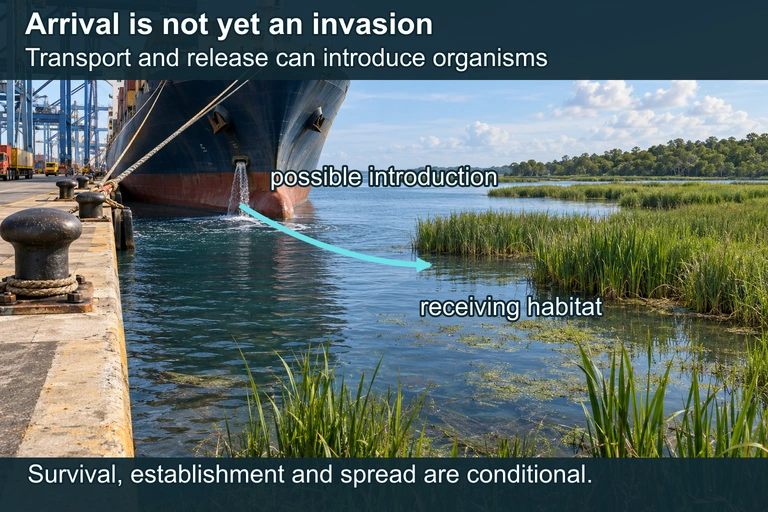
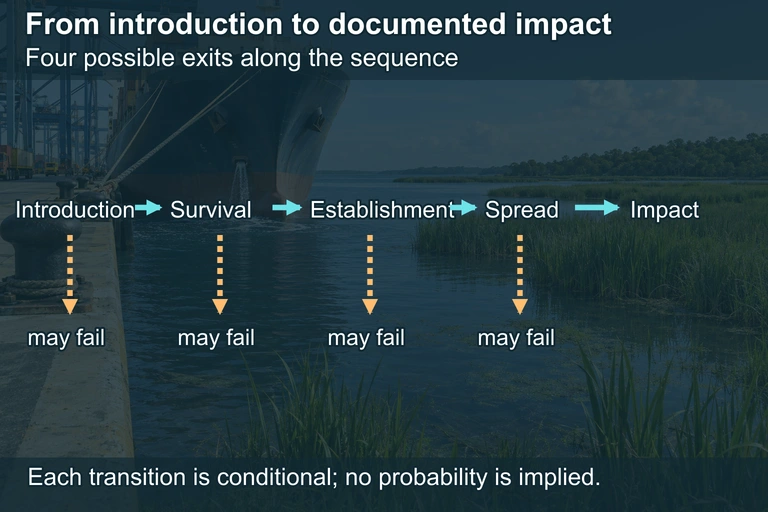
A ship and receiving habitat illustrate a possible introduction, with a companion showing conditional stages and four failure exits.
Introduction, survival, establishment, spread and harmful impact are separate conditional stages. Arrival outside a native range does not automatically establish an invasion.
Five invasion stages are connected in sequence with four may-fail exit branches.
Introduction, survival, establishment, spread and impact are distinct conditional stages; failure can occur between stages.

How Invasive Species Arrive

Invasive species reach new ecosystems through both intentional and accidental pathways. Understanding these vectors is essential for prevention.

1
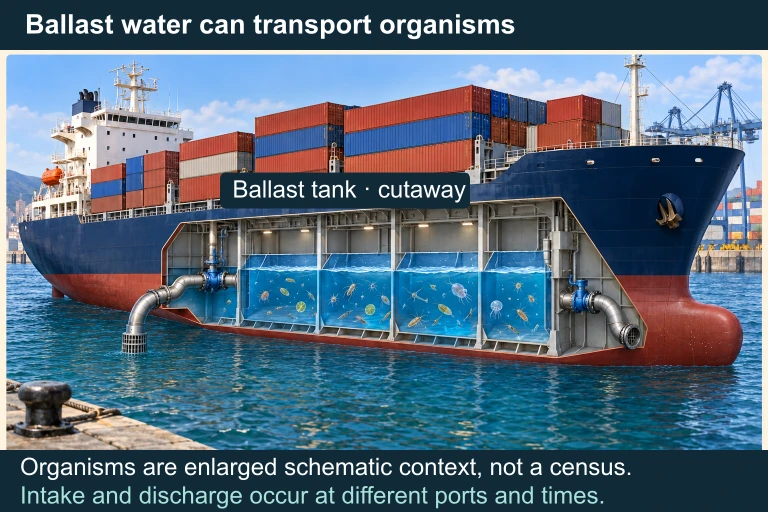
Ballast water: Ships take on water in one port and release it (with organisms) in another, spreading aquatic species globally.
2
Intentional introduction: Species brought in for agriculture, landscaping, pest control, or as pets (e.g., kudzu, Burmese pythons).
3
Cargo hitchhiking: Insects, seeds, and larvae stow away in shipping containers, packing materials, and produce.
4
Canal and corridor construction: Human-made waterways connect previously isolated ecosystems (e.g., the Suez Canal).

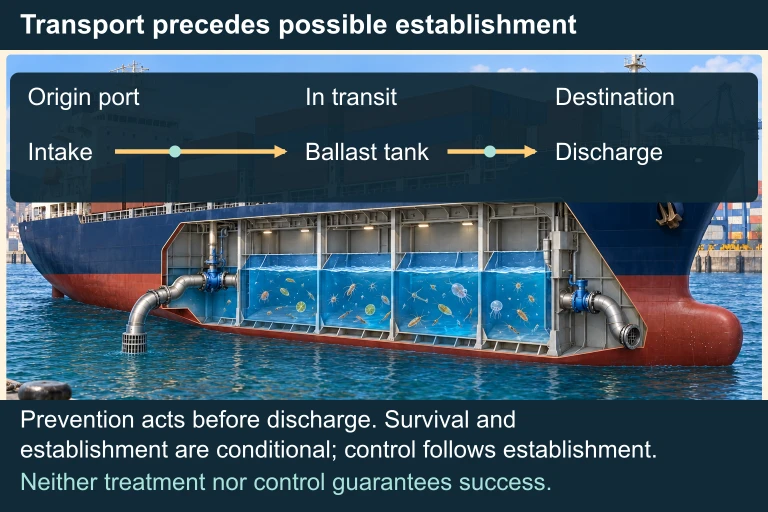
Identify a transport pathway and distinguish prevention from post-establishment control.

Use this illustration to explore the concept described in its caption.
Ballast water can carry organisms between ports; survival, establishment and ecological effects are conditional. Prevention before discharge differs from management after establishment.
A sequence shows origin-port intake, tank transit and destination discharge, with prevention before release.
Ballast-water transfer can introduce organisms; survival and establishment are conditional. Prevention acts before discharge.

Why Invasives Succeed

NATIVE ECOSYSTEM Predators Competitors Diseases Native Species Kept in check by natural controls NEW ECOSYSTEM No Predators No Diseases Invasive Species Unchecked growth

Enemy release is a testable mechanism,not a universal trait
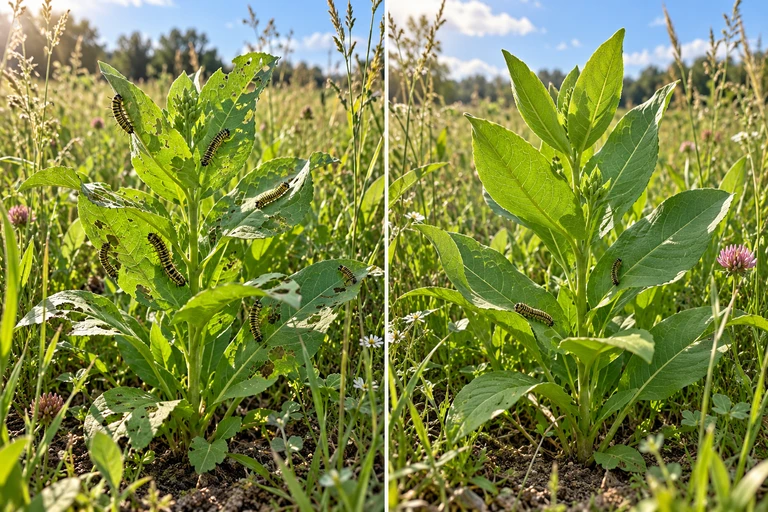
Matched hypothetical plants show different leaf damage and herbivore presence, alongside an authored hypothesis comparison.Test enemy release by comparing enemy pressure, survival and reproduction while accounting for climate and competition. Introduced species differ in whether release from enemies contributes to establishment or spread.

Lower enemy pressure can be tested as one mechanism of invasion.
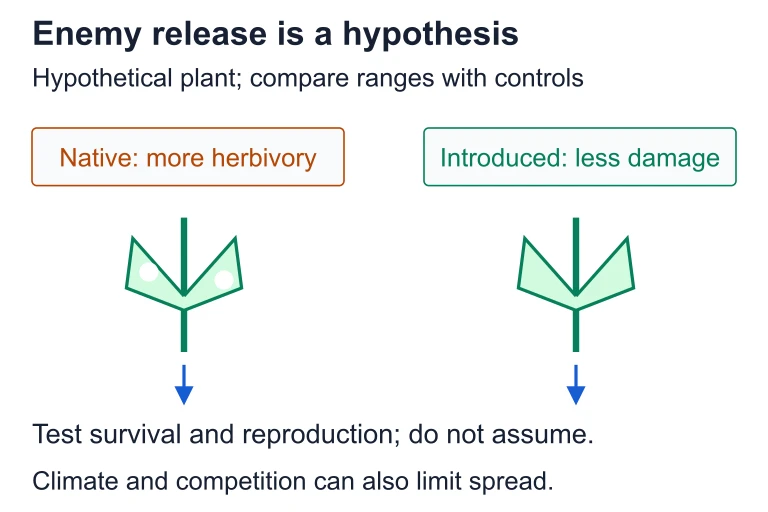
Lower enemy pressure can be tested as one mechanism of invasion.. Test enemy release by comparing enemy pressure, survival and reproduction while accounting for climate and competition. Introduced species differ in whether release from enemies contributes to establishment or spread.Test enemy release by comparing enemy pressure, survival and reproduction while accounting for climate and competition. Introduced species differ in whether release from enemies contributes to establishment or spread.

The Competitive Exclusion Principle

When two species compete for the exact same niche, one will inevitably outcompete and displace the other. Invasive species often win this competition because they possess superior traits in the new environment.

Time Population Native species Invasive species Crossover

Ecological vs. Economic Impact

Invasive species inflict damage across multiple dimensions. The AP exam expects you to distinguish between ecological and economic impacts and provide specific examples for each.

Ecological Impact Economic Impact
Biodiversity Displaces native species, reduces genetic diversity Fishery collapse, crop loss
Food Webs Disrupts trophic levels, alters energy flow Decline in commercial species
Habitat Degrades or transforms native habitats Infrastructure damage, water treatment costs
Scale Often irreversible once established ~$120 billion/year in the U.S. alone

An invasive grass can reinforce a changed fire regime
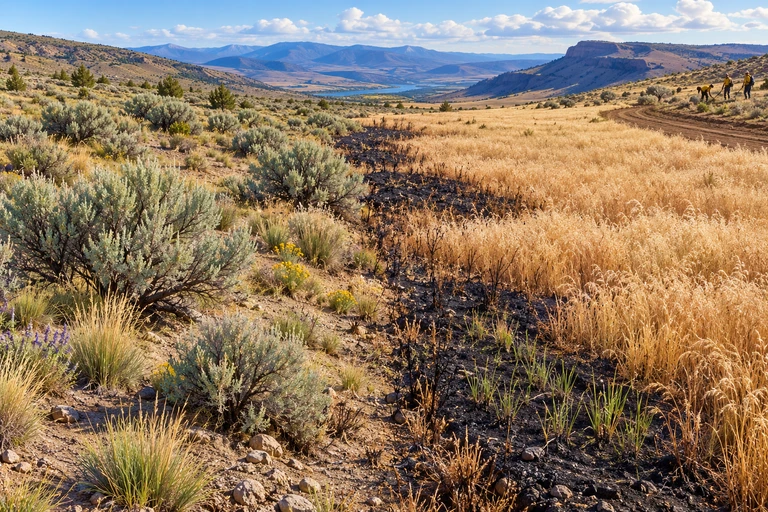
Native sagebrush habitat beside continuous dry annual grass and a burned strip.Cheatgrass can create continuous, early-drying fuel in sagebrush steppe. More frequent fires can constrain native recovery while cheatgrass rapidly returns, reinforcing the changed fire regime.

Cheatgrass can reinforce frequent fire
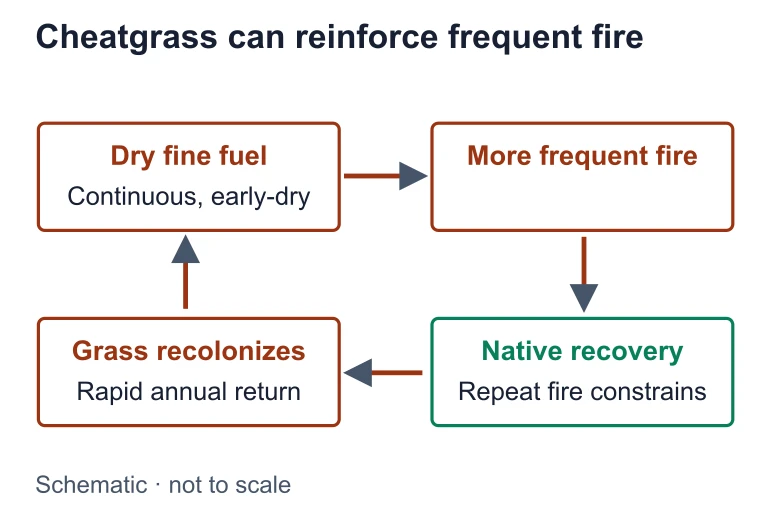
Cheatgrass can reinforce frequent fire. Cheatgrass can create continuous, early-drying fuel in sagebrush steppe. More frequent fires can constrain native recovery while cheatgrass rapidly returns, reinforcing the changed fire regime.Cheatgrass can create continuous, early-drying fuel in sagebrush steppe. More frequent fires can constrain native recovery while cheatgrass rapidly returns, reinforcing the changed fire regime.

Native vs. Non-Native vs. Invasive

These three terms are often confused on the AP exam. The critical distinction is that not all non-native species are invasive.

Native
Naturally occurs in the ecosystem without human introduction. Co-evolved with local species.
Non-Native
Introduced by humans (intentionally or not). May coexist without causing harm. Also called "exotic" or "alien."
Invasive
A non-native species that spreads aggressively and causes ecological or economic damage. Always non-native and harmful.

Identifying Invasive Risk

Ecologists use several traits to predict whether an introduced species is likely to become invasive. Here is a step-by-step assessment framework:

1
High reproductive rate: Does the species produce many offspring quickly? (e.g., r-selected traits)
2
Generalist diet/habitat: Can it thrive in a wide range of conditions and food sources?
3
No natural predators: Are predators, parasites, or diseases absent in the new environment?
4
Competitive advantage: Does it outcompete natives for resources like light, water, or prey?
5
Prior invasion history: Has the species been invasive elsewhere? Past behavior is the best predictor.

Case Study: Zebra Mussels

GREAT LAKES ECOSYSTEM Water Intake Zebra Mussels Clog water pipes Filter-feed phytoplankton Starve native mussels Origin: Caspian Sea (Eurasia) Vector: ballast water in cargo ships

Case Study: Kudzu

KUDZU COVERED KUDZU Kudzu Facts Origin: Japan Growth rate: ~30 cm / day Area covered: 3 million hectares Introduced: 1876 (intentional) Mechanism: Smothers canopy

Case Study: Burmese Pythons

Trophic Cascade in the Everglades Burmese Python Rabbits & Raccoons Opossums Marsh Rabbits -99% -99% -100% Cascading effects: unchecked insect populations, altered vegetation, disrupted seed dispersal, loss of scavenger food web

Methods of Invasive Control

Biological
Introduce a natural predator or pathogen from the species' native range. Risky: biocontrol agents can themselves become invasive.
Chemical
Herbicides or pesticides target the invasive species. Effective but can harm non-target organisms and pollute water.
Mechanical
Physical removal: trapping, hand-pulling, mowing, or dredging. Labor-intensive but precise, minimal collateral damage.
Prevention
Regulations, inspections, and ballast water treatment. Most cost-effective: preventing introduction is far cheaper than eradication.

Biological Control: Rewards and Risks

SUCCESS Cactoblastis Moth Introduced to Australia Prickly Pear Cactus Controlled effectively Minimal non-target effects ✓ vs. FAILURE Cane Toad Introduced to Australia Cane Beetles (target) Ignored target pest Became invasive itself, toxic to native predators ✕

Ecosystem Services at Risk

Invasive species don't just threaten biodiversity: they undermine the ecosystem services humans depend on. The AP exam frequently tests connections between invasives and service disruption.

1
Provisioning services: Invasive species reduce fish stocks, crop yields, and timber quality.
2
Regulating services: Loss of native vegetation increases erosion, reduces water filtration, and destabilizes flood control.
3
Supporting services: Altered nutrient cycling, disrupted pollination networks, and degraded soil health.
4
Cultural services: Loss of native landscapes diminishes recreational, aesthetic, and spiritual values.

Common Mistakes on the AP Exam

✕ All Non-Natives Are Invasive
Many introduced species coexist harmlessly. Only species that cause ecological or economic harm qualify as invasive.
✕ Invasives Are Always Animals
Plants (kudzu, water hyacinth), fungi, bacteria, and even diseases can be invasive. Know examples from all kingdoms.
✕ Biocontrol Always Works
The cane toad shows biocontrol can backfire. Always mention host specificity and risk assessment in free-response answers.

Summary: Key Invasive Species

Species Vector Impact Ecosystem
Zebra Mussel Ballast water Filter-feeds phytoplankton, clogs pipes Great Lakes
Kudzu Intentional (erosion) Smothers native vegetation SE United States
Burmese Python Pet trade escape 99% mammal decline, trophic cascade Everglades
Cane Toad Biocontrol (failed) Toxic to native predators Australia
Asian Carp Aquaculture escape Outcompetes native fish Mississippi River

Question 1 of 5

Which of the following best explains why invasive species often outcompete native species in a new environment?

Question 2 of 5

Zebra mussels were introduced to the Great Lakes primarily through which vector?

Question 3 of 5

The introduction of cane toads to Australia is an example of which type of invasive species management failure?

Question 4 of 5

A student claims that all non-native species are invasive. Which of the following statements best refutes this claim?

Question 5 of 5

Burmese pythons in the Everglades have caused a trophic cascade. Which of the following best describes this effect?