Impacts of
Mining
Explore how mining operations affect land, water, air, and ecosystems: from surface disruption to toxic runoff, and what environmental legislation seeks to mitigate.
What Is Mining?
Mining is the extraction of minerals, metals, and fossil fuels from the Earth's crust. It supplies the raw materials for construction, technology, and energy production: everything from iron and copper to coal and rare earth elements.
Types of Mining Operations
Why Study Mining Impacts?
For the AP Environmental Science exam, you need to connect resource extraction to its ecological footprint. Mining impacts span every environmental sphere:
The Mining Impact Cascade
Mining mobilizes dissolved and particle-bound material through different pathways
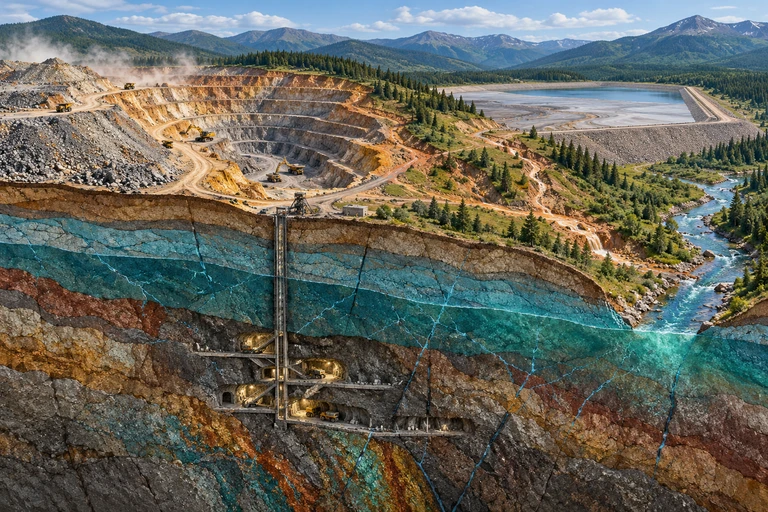
Mining can mobilize dust, sediment and dissolved material along different pathways. Mineralogy, water chemistry and hydrogeology determine how contaminants move and whether acid drainage forms.Mining mobilizes dissolved and particle-bound material through different pathways
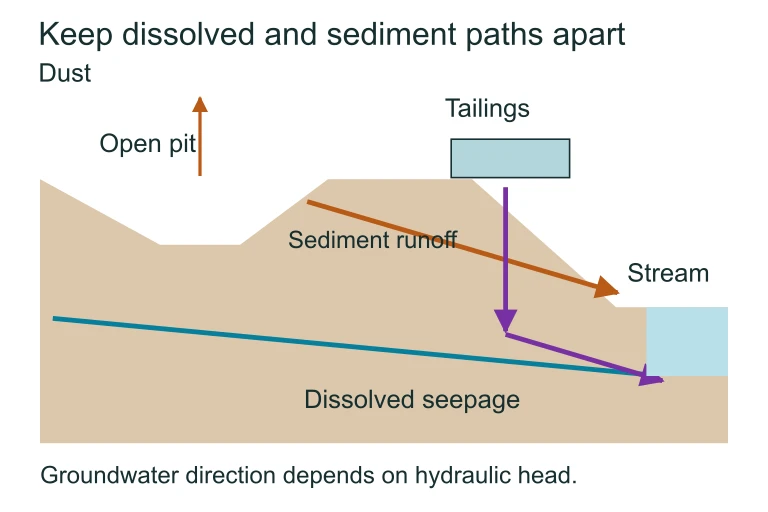
Mining can mobilize dust, sediment and dissolved material along different pathways. Mineralogy, water chemistry and hydrogeology determine how contaminants move and whether acid drainage forms.Surface vs Subsurface Mining
| Surface Mining | Subsurface Mining | |
|---|---|---|
| Depth | Shallow deposits | Deep ore bodies |
| Land Disruption | Extensive: removes entire landscapes | Moderate: smaller surface footprint |
| Water Impact | Runoff & sedimentation | Groundwater contamination |
| Worker Safety | Relatively safer | High risk: cave-ins, gas exposure |
| Cost | Lower per ton extracted | Higher per ton extracted |
| Waste | Large volumes of overburden | Tailings and acid drainage |
Acid Mine Drainage (AMD)
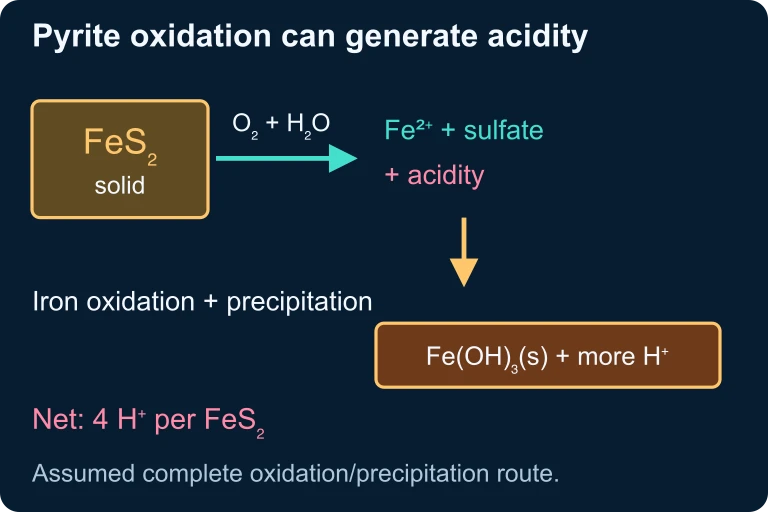
When sulfide minerals (especially pyrite, \( \text{FeS}_2 \)) are exposed to air and water during mining, they oxidize to produce sulfuric acid:
A mineral grain becomes a stream chemistry problem
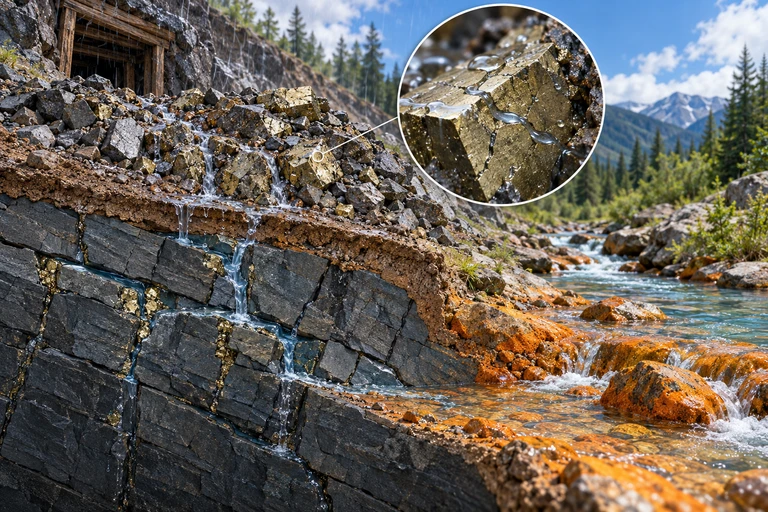
Pyrite oxidation and subsequent iron precipitation can generate acidity. Orange iron precipitate is a solid product; dissolved hydrogen ions determine acidity in the water.Pyrite oxidation can generate acidity
Pyrite oxidation and subsequent iron precipitation can generate acidity. Orange iron precipitate is a solid product; dissolved hydrogen ions determine acidity in the water.Acidity follows an atom-and-charge ledger
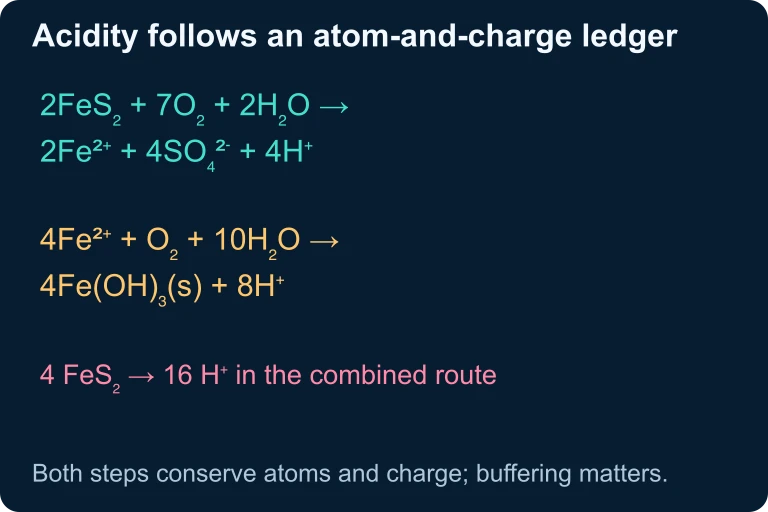
Separate pyrite oxidation from iron oxidation and precipitation. Following atoms and charge through these steps shows where hydrogen ions are produced.How to Analyze Mining Impacts
Example: Mountaintop Removal
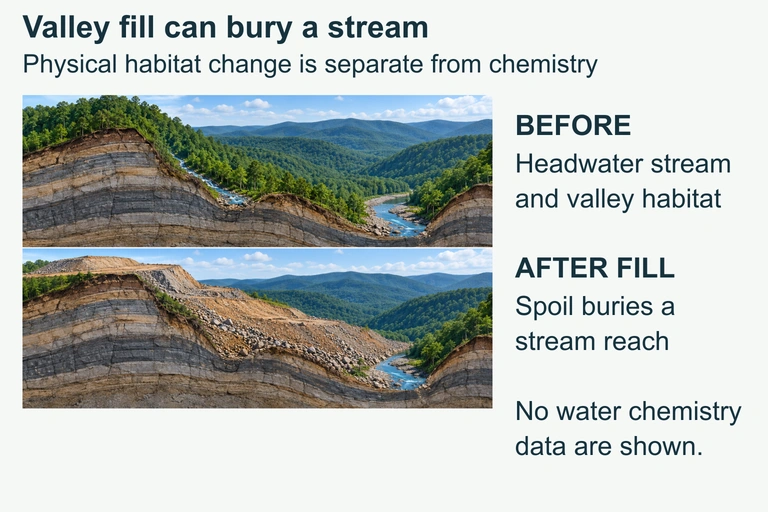
Distinguish physical habitat loss from contaminant toxicity.
Use this illustration to explore the concept described in its caption.
Example: Bioaccumulation from Mining
Example: Mine Reclamation
Reclamation can restore surface form while subsurface chemistry persists
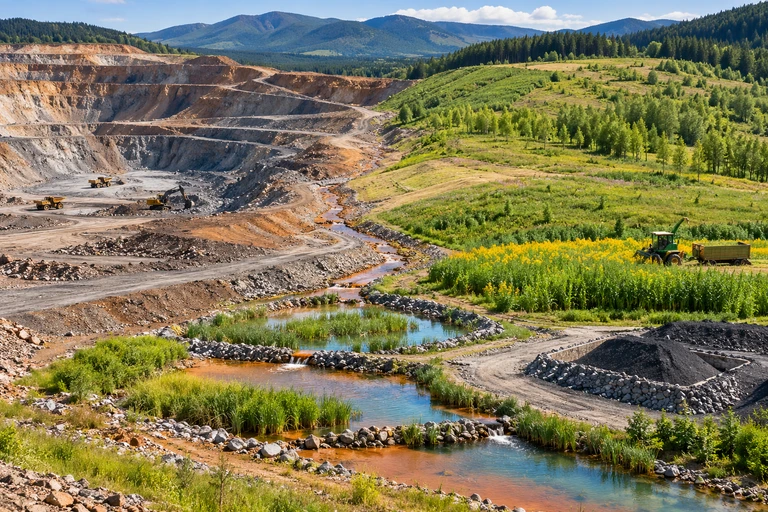
Regrading and revegetation can improve a mined surface while contaminated drainage continues to need treatment. Treatment transfers metals into managed residues or harvested biomass; it does not destroy them.Surface recovery can leave a water-treatment need
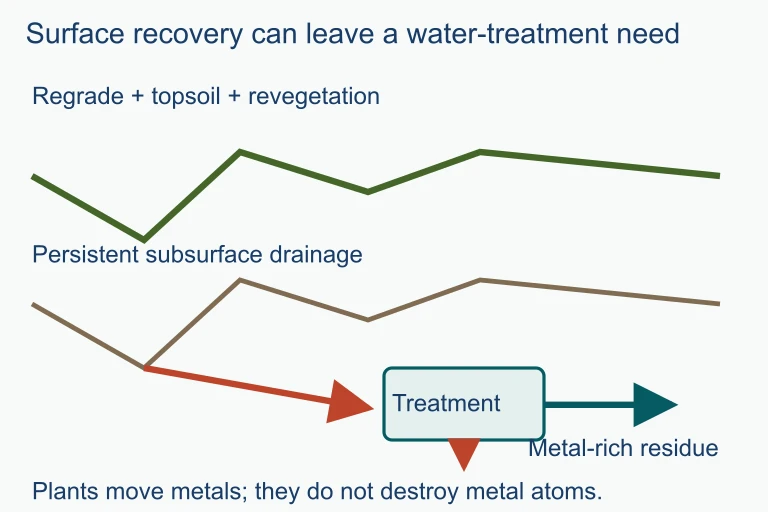
Regrading and revegetation can improve a mined surface while contaminated drainage continues to need treatment. Treatment transfers metals into managed residues or harvested biomass; it does not destroy them.Key Legislation
Tailings and Mining Waste
Tailings are the finely ground rock left over after valuable minerals are extracted from ore. They are stored in large impoundments (tailings dams) and present multiple hazards:
Social and Economic Impacts
Common Mistakes
Question 1 of 5
Acid mine drainage is primarily caused by the oxidation of which mineral when exposed to air and water?
Question 2 of 5
Which U.S. law specifically requires reclamation of surface-mined land to its approximate original contour?
Question 3 of 5
A mercury concentration of 0.001 ppm in lake water increases to 5.0 ppm in large predatory fish. This process is best described as:
Question 4 of 5
Mountaintop removal mining most directly causes which of the following environmental impacts?
Question 5 of 5
A student claims that subsurface mining has no environmental impacts because it occurs underground. Which is the strongest counterargument?