Endangered
Species
Explore the science behind species endangerment, conservation biology, and the ecological frameworks that explain biodiversity loss.
What Is an Endangered Species?
An endangered species is any species at serious risk of extinction throughout all or a significant portion of its range. The classification depends on population size, rate of decline, geographic range, and degree of population fragmentation.
The IUCN Red List Categories
Why Species Become Endangered
Biodiversity loss is driven by a set of interconnected threats. Conservation biologists use the acronym HIPPCO to remember the major drivers of species decline:
Minimum Viable Population
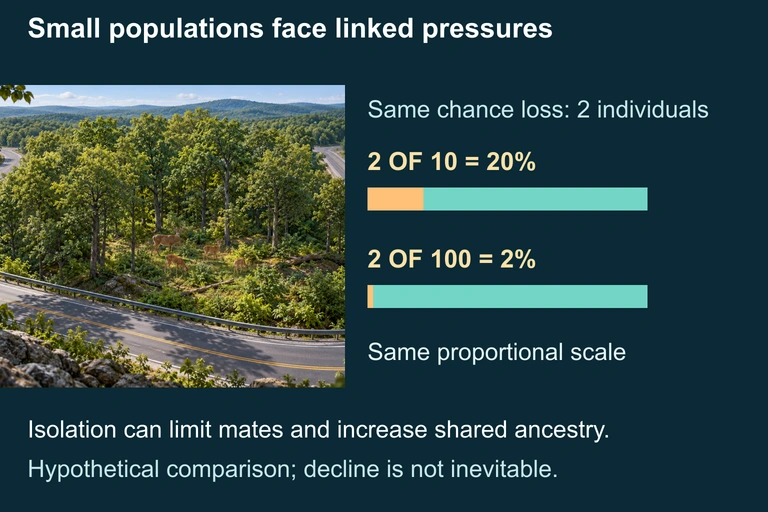
A Minimum Viable Population (MVP) is the smallest population size at which a species can survive in the wild over a specified time period (typically 1,000 years at 99% probability). Below the MVP, species face compounding risks:
The Extinction Vortex
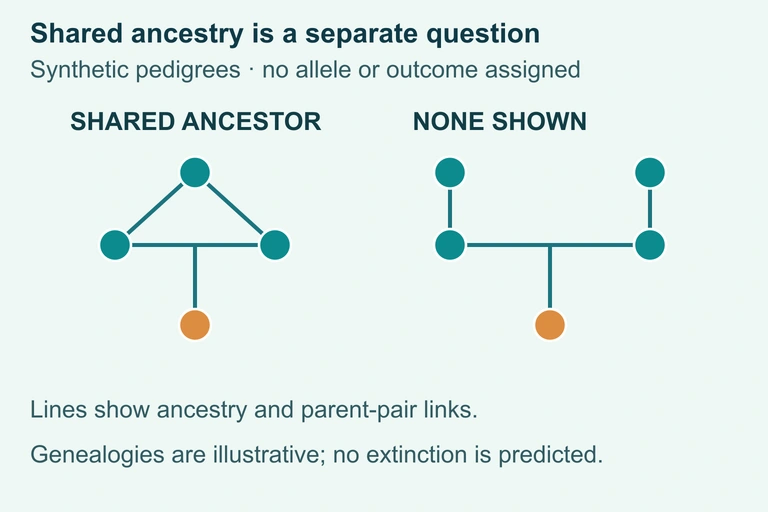
Explain why small population risk includes both genetic and demographic processes.
Use this illustration to explore the concept described in its caption.
Threatened vs. Endangered vs. Extinct
| Criterion | Threatened | Endangered | Extinct |
|---|---|---|---|
| Definition | Likely to become endangered in foreseeable future | In danger of extinction throughout all or significant range | No living individuals remain anywhere |
| ESA Protection | Moderate: prohibited take with exceptions | Maximum: full prohibition on take, trade, habitat destruction | Delisted: protections no longer apply |
| IUCN Equivalent | VU (Vulnerable) | EN or CR | EX or EW |
| Example | Polar bear | Black-footed ferret | Passenger pigeon |
Conservation Strategies
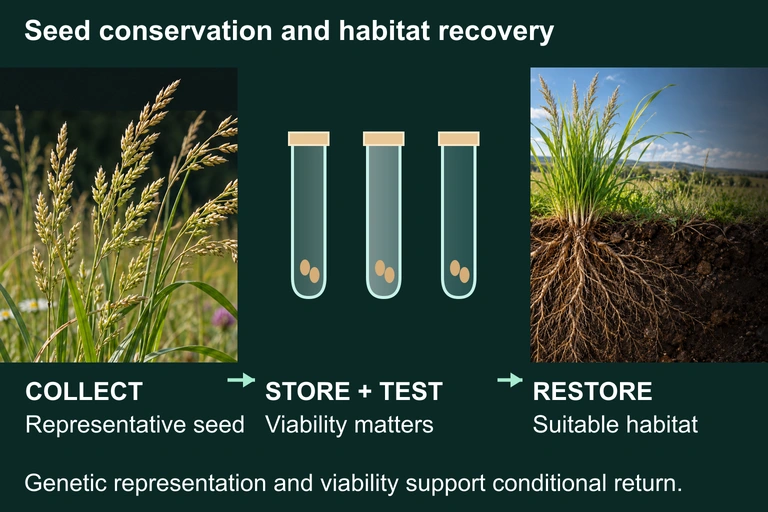
Distinguish ex-situ preservation from in-situ ecological recovery.
Use this illustration to explore the concept described in its caption.
Habitat fragmentation, corridors and gene flow
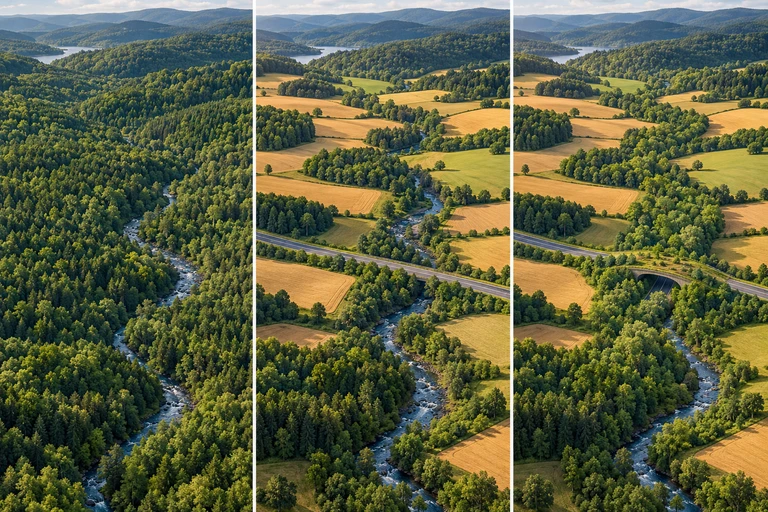 A habitat corridor can permit movement between patches. Gene flow additionally requires migrants to reproduce successfully in the receiving population.
A corridor enables movement
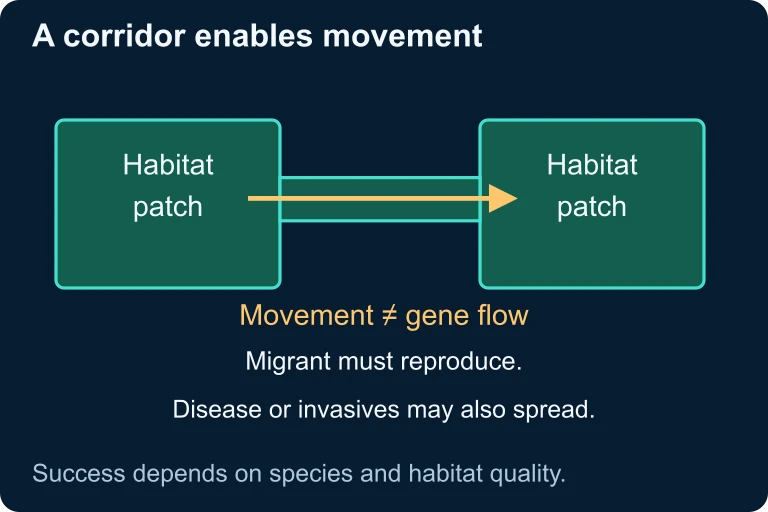 A habitat corridor can permit movement between patches. Gene flow additionally requires migrants to reproduce successfully in the receiving population.
The Endangered Species Act Framework
How to Analyze a Species Case
Case Study: California Condor
Case Study: Gray Wolf Reintroduction
Case Study: Coral Reef Decline
Coral reefs support approximately 25% of all marine species despite covering less than 1% of the ocean floor. Multiple species associated with coral ecosystems are now endangered due to interconnected threats:
Biodiversity Hotspots
A biodiversity hotspot is a biogeographic region that is both a significant reservoir of biodiversity and is threatened with destruction. To qualify, a region must meet two criteria:
Common Mistakes on the AP Exam
Summary: Key Concepts at a Glance
| Concept | Definition | AP Exam Tip |
|---|---|---|
| HIPPCO | Six major threats to biodiversity | Memorize all six: name, mechanism |
| MVP | Smallest population ensuring long-term survival | Link to genetic drift, Allee effect |
| Extinction Vortex | Positive feedback loop toward extinction | Explain the cycle, not just name it |
| Trophic Cascade | Top predator's effect through food web | Yellowstone wolves: the classic example |
| Biodiversity Hotspot | Region with high endemism + severe threat | Two criteria: 1,500 endemic plants + 70% lost |
| ESA | U.S. law protecting T & E species | Know Sections 7 and 9, listing process |
Question 1 of 5
Which of the following is the single greatest threat to biodiversity worldwide?
Question 2 of 5
A population of endangered frogs numbers only 40 individuals. Scientists are most concerned about inbreeding depression. What does this mean?
Question 3 of 5
The reintroduction of gray wolves to Yellowstone National Park is an example of which ecological concept?
Question 4 of 5
To qualify as a biodiversity hotspot, a region must meet which two criteria?
Question 5 of 5
Scenario: A captive breeding program has successfully increased the population of the California condor from 27 individuals in 1987 to over 500 by 2020. However, condors released into the wild continue to face high mortality from lead poisoning (ingestion of lead ammunition in carcasses) and collision with power lines. Genetic analysis shows that the captive-bred population retains only about 80% of the original genetic diversity present in the founding 27 birds.
Based on this scenario, what is the most significant long-term challenge for condor recovery?