01 / 21

Le Chatelier's
Principle

Discover how chemical systems at equilibrium respond to disturbances: changes in concentration, pressure, and temperature.

AP Chemistry

What is Chemical Equilibrium?

A reversible reaction reaches equilibrium when the rate of the forward reaction equals the rate of the reverse reaction. At this point, concentrations of reactants and products remain constant over time: they are not necessarily equal, but they are unchanging.

The Equilibrium Expression

For a general reaction \( aA + bB \rightleftharpoons cC + dD \), the equilibrium constant \( K \) is defined as:

A large \( K \) (\( K \gg 1 \)) means products are favored at equilibrium. A small \( K \) (\( K \ll 1 \)) means reactants are favored. The value of \( K \) changes only with temperature.

Why Does Equilibrium Matter?

★ Industrial Chemistry
The Haber process for ammonia synthesis depends on shifting equilibrium to maximize yield.
★ Biochemistry
Hemoglobin binding oxygen is an equilibrium: altitude shifts it, explaining altitude sickness.
★ Environmental Science
Ocean acidification involves the \( \text{CO}_2 \)/carbonate equilibrium shifting as \( [\text{CO}_2] \) rises.

The Core Principle

EQUILIBRIUM Reactants Products STRESS Shift left Shift right

Three Types of Stress

1 Concentration
Adding or removing a reactant or product changes the ratio \(Q\) vs \(K\), causing a shift.
2 Pressure / Volume
Changing volume shifts equilibrium toward the side with fewer moles of gas.
3 Temperature
Raising temperature favors the endothermic direction. This is the only stress that changes \(K\).

Stress 1: Concentration Changes

\( \text{N}_2(g) + 3\text{H}_2(g) \rightleftharpoons 2\text{NH}_3(g) \)
BEFORE
\( \text{N}_2 \)
\( \text{H}_2 \)
\( \text{NH}_3 \)
Add \( \text{N}_2 \)
AFTER SHIFT
\( \text{N}_2 \)
\( \text{H}_2 \)
\( \text{NH}_3 \)
Shift RIGHT → more products
\( Q < K \) → system shifts forward to restore \( K \)

Stress 2: Pressure and Volume

For gas-phase equilibria, changing the volume of the container changes the total pressure. The system shifts toward the side with fewer moles of gas to reduce that stress.

LOW PRESSURE More gas moles Decrease V (Increase P) HIGH PRESSURE Fewer gas moles
\( \text{N}_2 + 3\text{H}_2 \)
\(\rightleftharpoons\)
\( 2\text{NH}_3 \)
\( 4 \text{ mol} \rightarrow 2 \text{ mol} \)
Shift → products

Stress 3: Temperature Changes

Temperature is the only stress that changes the value of \(K\). Think of heat as a reactant (endothermic) or a product (exothermic).

★ Exothermic (\( \Delta H < 0 \))
\( A + B \rightleftharpoons C + \text{heat} \)

Increasing \(T\): shift left (toward reactants), \(K\) decreases.
★ Endothermic (\( \Delta H > 0 \))
\( A + B + \text{heat} \rightleftharpoons C \)

Increasing \(T\): shift right (toward products), \(K\) increases.

Blue cobalt complex solution
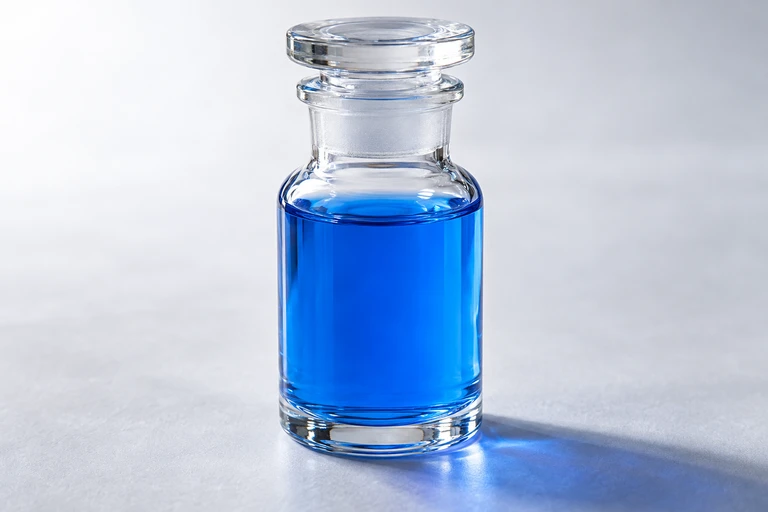
Blue cobalt complex solutionThe blue cobalt chloride complex is favored by increased chloride concentration; temperature changes can also shift its equilibrium with the pink hydrated cobalt complex.

\(Q\) vs \(K\): The Predictive Tool

The reaction quotient \(Q\) has the same form as \(K\) but uses current concentrations rather than equilibrium concentrations. Comparing \(Q\) and \(K\) tells us which way the reaction will shift.

\(Q < K\)
Too few products. System shifts right (forward) to make more products.
\(Q = K\)
System is at equilibrium. No net shift occurs.
\(Q > K\)
Too many products. System shifts left (reverse) to make more reactants.

How to Apply Le Chatelier's

1
Write the balanced equation. Include states (g, l, s, aq) and note any enthalpy information (\(\Delta H\)).
2
Identify the stress. Is it a change in concentration, pressure/volume, or temperature?
3
Determine the shift direction. The system shifts to counteract the stress: toward products (right) or toward reactants (left).
4
Predict the outcome. State what happens to concentrations of each species and, if temperature changed, the new value of \(K\).

Example 1: Adding a Reactant

1
Identify the stress: \( [\text{H}_2] \) increases, so \(Q < K\).
2
Direction: System shifts right (toward products) to consume extra \( \text{H}_2 \).
3
Result: \( [\text{CH}_3\text{OH}] \) increases, \( [\text{CO}] \) decreases, \( [\text{H}_2] \) decreases from its peak (but remains higher than original). \(K\) is unchanged.

Example 2: Decreasing Volume

1
Count gas moles: Reactant side = \(3 \text{ mol}\) gas. Product side = \(2 \text{ mol}\) gas.
2
Direction: Increased pressure shifts toward fewer moles of gas: shift right (toward \( \text{SO}_3 \)).
3
Result: \( [\text{SO}_3] \) increases, \( [\text{SO}_2] \) and \( [\text{O}_2] \) decrease. \(K\) is unchanged (no temperature change).

Example 3: Raising Temperature

1
Identify: The reaction is exothermic (\( \Delta H < 0 \)). Treat heat as a product.
2
Direction: Adding heat (raising \(T\)) shifts left to absorb heat: the reverse (endothermic) direction is favored.
3
Result: \( [\text{NH}_3] \) decreases, \( [\text{N}_2] \) and \( [\text{H}_2] \) increase. The value of \(K\) decreases.

Common Mistakes

✕ Catalyst Changes \(K\)
A catalyst speeds up both forward and reverse reactions equally. It does not shift equilibrium or change \(K\).
✕ Inert Gas Shifts It
Adding an inert gas at constant volume does not change partial pressures. No shift occurs.
✕ All Stresses Change \(K\)
Only temperature changes the value of \(K\). Concentration and pressure changes shift the position but not \(K\).

Summary: Stress and Response

Stress Applied Shift Direction Effect on \(K\)
Add reactant Right → No change
Remove product Right → No change
Add product ← Left No change
Decrease volume (gas) Toward fewer moles No change
Increase \(T\) (exo) ← Left Decreases
Increase \(T\) (endo) Right → Increases
Add catalyst No shift No change
Add inert gas (const. V) No shift No change

Question 1 of 5

For the equilibrium \( \text{PCl}_5(g) \rightleftharpoons \text{PCl}_3(g) + \text{Cl}_2(g) \), what happens when additional \(\text{Cl}_2\) is added at constant temperature?

Question 2 of 5

For the reaction \( 2\text{NO}_2(g) \rightleftharpoons \text{N}_2\text{O}_4(g) \), the container volume is decreased. Which direction does the equilibrium shift?

Question 3 of 5

The reaction \( \text{CaCO}_3(s) \rightleftharpoons \text{CaO}(s) + \text{CO}_2(g) \) is endothermic. If the temperature is increased, what happens?

Question 4 of 5

A catalyst is added to the reaction \( \text{N}_2(g) + 3\text{H}_2(g) \rightleftharpoons 2\text{NH}_3(g) \). Which statement is correct?

Question 5 of 5

For \( 2\text{SO}_2(g) + \text{O}_2(g) \rightleftharpoons 2\text{SO}_3(g) \), the current concentrations give \(Q = 50\) and \(K = 200\). What will happen?