
SECTION 1
Historical Context & Motivation
The study of chemical equilibrium underwent a profound transformation in the latter half of the nineteenth century, driven by the rapid industrialization of chemical manufacturing and the need to optimize product yields. Early chemists recognized that many reactions did not proceed to completion but instead reached a state in which both reactants and products coexisted in fixed proportions. The challenge of predicting how this balance would shift when external conditions changed motivated some of the era's most important theoretical work. Henri Louis Le Chatelier, a French chemist and mining engineer, synthesized decades of experimental observations into a single elegant principle that remains central to modern chemistry, biochemistry, and chemical engineering.
1864 • Guldberg & Waage Propose the Law of Mass Action
1884 • Le Chatelier Publishes His Principle
1888 • Karl Ferdinand Braun's Independent Formulation
1909 • Fritz Haber Demonstrates Industrial Application
1960s–Present • Extension to Biological and Environmental Systems
The central question Le Chatelier addressed is deceptively simple: if we disturb a system that has already reached equilibrium, in which direction will the reaction shift to re-establish balance? Answering this question requires understanding equilibrium not as a static endpoint but as a dynamic balance between forward and reverse reaction rates—a perspective that transforms how we control and predict chemical processes.
SECTION 2
Core Principles & Definitions
Before applying Le Chatelier's principle, it is essential to have a firm grasp of the underlying equilibrium concepts. A reversible reaction reaches dynamic equilibrium when the rate of the forward reaction equals the rate of the reverse reaction—net macroscopic change ceases, yet molecular-level transformations continue in both directions. The equilibrium constant (K) encodes the ratio of product to reactant concentrations (or partial pressures) at equilibrium and is fixed at a given temperature. Le Chatelier's principle provides a qualitative prediction method. When a stress—a change in concentration, pressure, or temperature—is applied, the system shifts to partially oppose that stress and establish a new equilibrium position.
Concentration Stress
Pressure / Volume Stress
Temperature Stress
Role of a Catalyst
KEY TAKEAWAY
SECTION 3
Visualizing Equilibrium Shifts
The diagram below illustrates how the concentration of reactants and products changes over time when a stress is applied to a system already at equilibrium. The example uses the generic reversible reaction A ⇌ B + C. Initially the system is at equilibrium, then at a specific time the concentration of A is increased (a stress). The system responds by shifting toward products, consuming some of the added A while increasing B and C, until a new equilibrium is established.
Several features of this diagram deserve emphasis. First, the value of K does not change because the temperature is constant—only the equilibrium position (the set of concentrations) changes. Second, the new equilibrium concentrations of B and C are higher than the originals, meaning that some of the added A was indeed consumed, but the final [A] is still higher than the original [A]—the system only partially offsets the perturbation. Third, the curves flatten out as the new equilibrium is approached, reflecting the gradual equalization of forward and reverse rates.
SECTION 4
Mathematical Framework: Q vs. K
Le Chatelier's principle is a qualitative guide, but the quantitative underpinning comes from comparing the reaction quotient Q with the equilibrium constant K. The reaction quotient has the same mathematical form as K but is evaluated at any set of concentrations, not just equilibrium concentrations. By comparing Q to K, we can predict the direction the system will shift.
REACTION QUOTIENT
Q is calculated from the current (non-equilibrium) concentrations. The exponents a, b, c, d are stoichiometric coefficients. At equilibrium, Q = K.
PREDICTING SHIFT DIRECTION
When a stress changes concentrations, Q deviates from K. The reaction proceeds in the direction that drives Q back toward K.
TEMPERATURE AND K — VAN 'T HOFF EQUATION
ΔH° = standard enthalpy change (J·mol⁻¹), R = 8.314 J·mol⁻¹·K⁻¹, T₁ and T₂ are absolute temperatures (K). For an exothermic reaction (ΔH° < 0), increasing T decreases K. For an endothermic reaction (ΔH° > 0), increasing T increases K.
The van 't Hoff equation provides the quantitative relationship that Le Chatelier's principle describes qualitatively for temperature changes. Notice the key distinction: changes in concentration or pressure alter Q while K remains fixed (at constant T), but changes in temperature alter K itself. This is why temperature is the only stress that actually changes the equilibrium constant. In an AP Chemistry context, you will frequently use the Q vs. K comparison to justify the direction of shift, and the van 't Hoff equation to predict how K changes with temperature.
AP Exam Tip
SECTION 5
Detailed Breakdown of Stress Types
The following diagram summarizes how each type of stress affects an equilibrium system, using the exothermic synthesis of ammonia (the Haber process) as a concrete example. This reaction is one of the most commonly tested equilibria on the AP Chemistry exam and illustrates every category of Le Chatelier stress.
| Stress Applied | Direction of Shift | Effect on K | Reasoning (Q vs. K) |
|---|---|---|---|
| Add reactant | → (toward products) | No change | Q < K (denominator increased) |
| Remove product | → (toward products) | No change | Q < K (numerator decreased) |
| Decrease volume (increase P) | Toward fewer gas moles | No change | All concentrations increase; Q shifts in favor of side with fewer moles |
| Increase T (exothermic rxn) | ← (toward reactants) | K decreases | Heat treated as product; adding heat shifts left |
| Increase T (endothermic rxn) | → (toward products) | K increases | Heat treated as reactant; adding heat shifts right |
| Add catalyst | No shift | No change | Forward and reverse rates increase equally; Q = K maintained |
Summary of stresses, predicted shifts, and effects on K
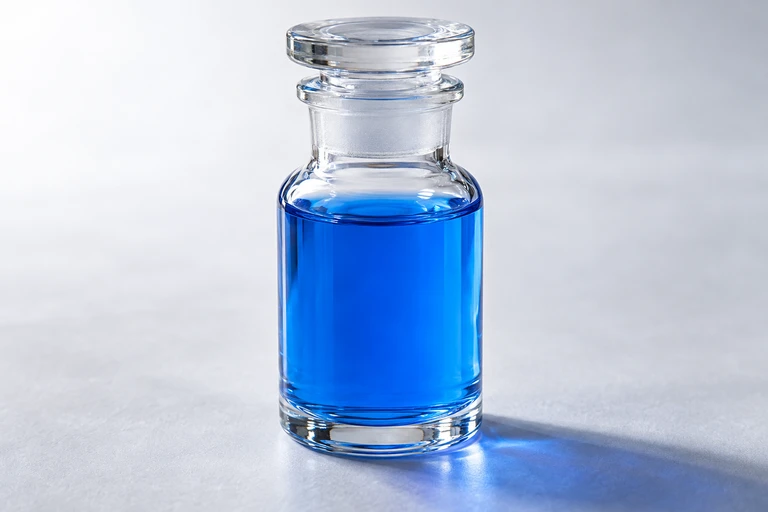 The blue cobalt chloride complex is favored by increased chloride concentration; temperature changes can also shift its equilibrium with the pink hydrated cobalt complex.
SECTION 6
Worked Example: Applying Le Chatelier's Principle
Consider the following gaseous equilibrium at 500 K:
REACTION
This is an endothermic dissociation reaction. At equilibrium, [PCl₅] = 0.80 M, [PCl₃] = 0.12 M, [Cl₂] = 0.28 M. Predict the direction of shift and qualitatively describe the new equilibrium if (a) 0.50 mol of Cl₂ is added to the 1.0 L vessel, and (b) the temperature is raised to 600 K.
Part (a): Adding Cl₂
- 1
Step 1 — Calculate Q After the Stress
After adding 0.50 mol Cl₂ to the 1.0 L container, the new [Cl₂] = 0.28 + 0.50 = 0.78 M. The concentrations of PCl₃ and PCl₅ have not changed instantaneously. Therefore: Q = [PCl₃][Cl₂] / [PCl₅] = (0.12)(0.78) / (0.80) = 0.117.Q = 0.117 - 2
Step 2 — Compare Q to K
Since Q = 0.117 > K = 0.042, the product-to-reactant ratio is too large. The system must shift to the left (toward reactants) to reduce Q back to K.Q > K → shift left (toward PCl₅) - 3
Step 3 — Describe the New Equilibrium
As the system shifts left, some PCl₃ and Cl₂ recombine to form PCl₅. At the new equilibrium: [PCl₅] will be higher than 0.80 M, [PCl₃] will be lower than 0.12 M, and [Cl₂] will be lower than 0.78 M but still higher than the original 0.28 M (because the added Cl₂ is only partially consumed). The value of Kc remains 0.042 because temperature is unchanged.K unchanged; equilibrium position shifts left
Part (b): Increasing Temperature to 600 K
- 1
Step 1 — Identify the Reaction Enthalpy
ΔH° = +87 kJ/mol, so the forward reaction (dissociation of PCl₅) is endothermic. Heat can be conceptually treated as a 'reactant' on the left side of the equation: heat + PCl₅ ⇌ PCl₃ + Cl₂.Endothermic: heat is a 'reactant' - 2
Step 2 — Predict the Shift
Raising the temperature is equivalent to 'adding heat.' Since heat acts as a reactant for the forward direction, the equilibrium shifts to the right (toward products). This means K increases—at 600 K, K will be larger than 0.042.Shift right; K increases at 600 K - 3
Step 3 — Describe the New Equilibrium
At the new equilibrium (600 K): [PCl₅] will be lower, while [PCl₃] and [Cl₂] will both be higher than at 500 K. The new K value is larger, reflecting the thermodynamic reality that endothermic reactions become more product-favored at higher temperatures.New K > 0.042; more dissociation at higher T
SECTION 7
Strengths and Limitations of Le Chatelier's Principle
Le Chatelier's principle is an enormously useful qualitative tool, but like all simplified models, it has boundaries. Understanding both its power and its limitations will help you apply it correctly on the AP exam and avoid common pitfalls.
| Strengths | Limitations |
|---|---|
| Quickly predicts the direction of shift without any calculation—ideal for conceptual reasoning on MCQs. | Does not predict the magnitude of the shift; cannot tell you exact new equilibrium concentrations without an ICE table. |
| Universally applicable: works for gaseous, aqueous, and heterogeneous equilibria, as well as solubility, acid-base, and complex-ion systems. | Can give ambiguous predictions for simultaneous stresses (e.g., both temperature and pressure change at once). |
| Seamlessly integrates with the Q vs. K framework for rigorous justification. | The 'treat heat as a reactant/product' shortcut can be misleading; heat is not a chemical species and does not appear in the equilibrium expression. |
| Provides intuitive physical reasoning: the system 'opposes' the stress. | Does not account for kinetics—predicts equilibrium position but not how fast the system reaches the new equilibrium. |
Strengths vs. limitations of Le Chatelier's principle
KEY TAKEAWAY
SECTION 8
Connection to Thermodynamics and Advanced Equilibrium
Le Chatelier's principle, while powerful at the qualitative level, is grounded in the more general thermodynamic framework of Gibbs free energy. At equilibrium, ΔG = 0 and the system resides at a minimum in the Gibbs energy landscape. Any perturbation moves the system away from this minimum, and the spontaneous return toward the new minimum is precisely the 'shift' described by Le Chatelier. The relationship ΔG = ΔG° + RT ln Q provides the quantitative bridge: when Q ≠ K (because ΔG° = −RT ln K), ΔG is nonzero and the system has a thermodynamic driving force to shift.
| Feature | Le Chatelier's Principle (Qualitative) | Gibbs Energy / Thermodynamic Treatment (Quantitative) |
|---|---|---|
| Predicts direction of shift | Yes — qualitatively from the type of stress | Yes — from sign of ΔG when Q ≠ K |
| Predicts magnitude of shift | No | Yes — ICE table + K expression gives exact concentrations |
| Explains why K changes with T | Heuristic ('treat heat as a species') | Rigorously via van 't Hoff equation and ΔG° = ΔH° − TΔS° |
| Handles simultaneous stresses | Can be ambiguous | Yes — compute new Q and compare to new K |
| AP Exam utility | Heavily tested; required for conceptual justifications on FRQs | Required for quantitative equilibrium calculations (ICE tables) |
Le Chatelier's qualitative principle vs. the full thermodynamic treatment
As you advance through the AP Chemistry curriculum, you will encounter topics—solubility equilibria (Ksp), acid-base buffers (Henderson–Hasselbalch), and electrochemistry (the Nernst equation)—that all rely on Le Chatelier's reasoning. In each case, a perturbation moves Q away from K, and the system shifts to restore equilibrium. Mastering Le Chatelier's principle now provides a unifying conceptual lens through which every subsequent equilibrium topic becomes more transparent.
SECTION 9
Practice Problems
Question 1: CONCEPTUAL
- A. Increasing the temperature at constant pressure
- B. Adding a catalyst to the reaction vessel
- C. Decreasing the volume of the container at constant temperature
- D. Removing some SO₂ from the reaction vessel
Show answer (C)
Question 2: BASIC CALCULATION
- A. Q = 32; Q < K, so the reaction shifts toward products.
- B. Q = 32; Q < K, so the reaction shifts toward reactants.
- C. Q = 32; the system is at equilibrium.
- D. Q = 64; Q > K, so the reaction shifts toward reactants.
Show answer (A)
Question 3: INTERMEDIATE
- A. The equilibrium shifts toward products because total pressure increases.
- B. The equilibrium shifts toward reactants because total pressure increases.
- C. There is no shift because the partial pressures of N₂O₄ and NO₂ are unchanged.
- D. The equilibrium shifts toward products because the mole fractions of reactants decrease.
Show answer (C)
Question 4: APPLIED
5 ptsShow answer
Question 5: CRITICAL THINKING
4 ptsShow answer
SUMMARY
Lesson Summary
Summary
Le Chatelier's principle states that a system at dynamic equilibrium, when subjected to a stress—a change in concentration, pressure/volume, or temperature—will shift in the direction that partially counteracts that stress to establish a new equilibrium position. The quantitative underpinning comes from comparing the reaction quotient Q with the equilibrium constant K: if Q < K the system shifts right (toward products), and if Q > K it shifts left (toward reactants). Crucially, only a change in temperature alters K itself—concentration and pressure stresses change Q while K remains constant.
For gaseous equilibria, decreasing volume favors the side with fewer moles of gas. A catalyst speeds attainment of equilibrium but does not shift its position. The van 't Hoff equation provides the quantitative link between temperature and K. On the AP exam, always justify predicted shifts using the Q vs. K framework and connect temperature effects to the sign of ΔH°. Le Chatelier's principle serves as the conceptual backbone for every equilibrium topic you will encounter, from solubility and acid-base buffers to electrochemical cells.