Introduction to
Macromolecules
Explore the four major biological macromolecules that form the foundation of all living systems: their structure, function, and the reactions that build them.
What Are Macromolecules?
Macromolecules are large, complex molecules built from smaller subunits called monomers. When monomers join together, they form long chains called polymers. These giant molecules carry out the essential functions of life: storing energy, providing structure, catalyzing reactions, and encoding genetic information.
Monomers and Polymers
Dehydration Synthesis vs Hydrolysis
The Four Classes of Macromolecules
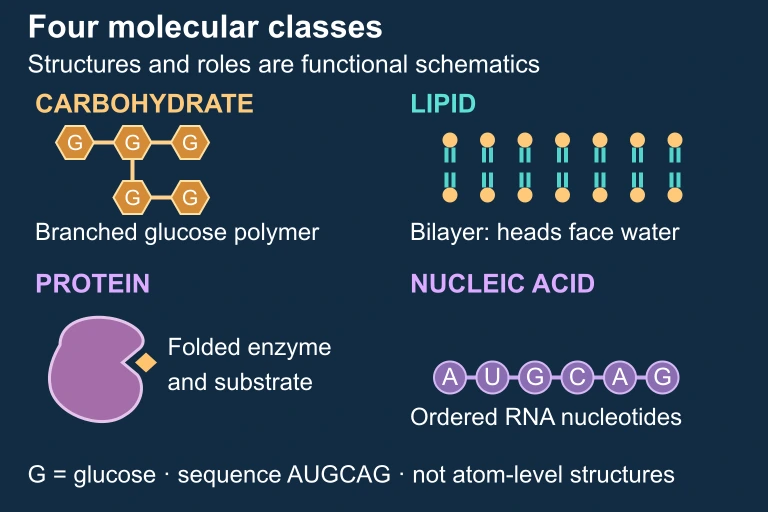
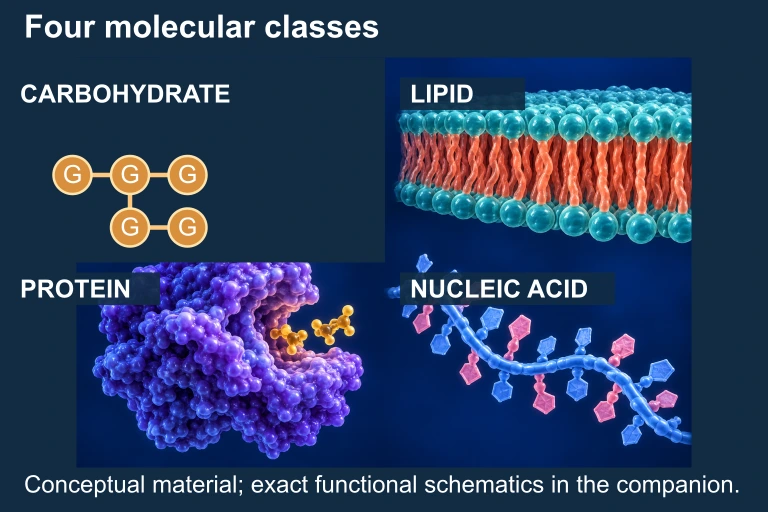
Carbohydrates: Structure and Function
Lipids: Not True Polymers
Saturated vs Unsaturated Fats
| Saturated | Unsaturated | |
|---|---|---|
| Carbon bonds | All single bonds | One or more double bonds |
| Shape | Straight chains: pack tightly | Kinked chains: cannot pack |
| State at room temp | Solid (butter, lard) | Liquid (olive oil) |
| Source | Mostly animal fats | Mostly plant and fish oils |
Proteins: The Workhorses of the Cell
Four Levels of Protein Structure
Nucleic Acids: The Information Molecules
Energy Storage: Carbs vs Lipids
| Carbohydrates | Lipids | |
|---|---|---|
| Energy per gram | 4 kcal/g | 9 kcal/g |
| Access speed | Fast: quick energy source | Slow: requires more processing |
| Storage form | Glycogen (animals), Starch (plants) | Adipose tissue (body fat) |
| Water solubility | Soluble (hydrophilic) | Insoluble (hydrophobic) |
| Best for | Short-term energy | Long-term energy storage |
Glycogen and fat store the same energy in different physical packages
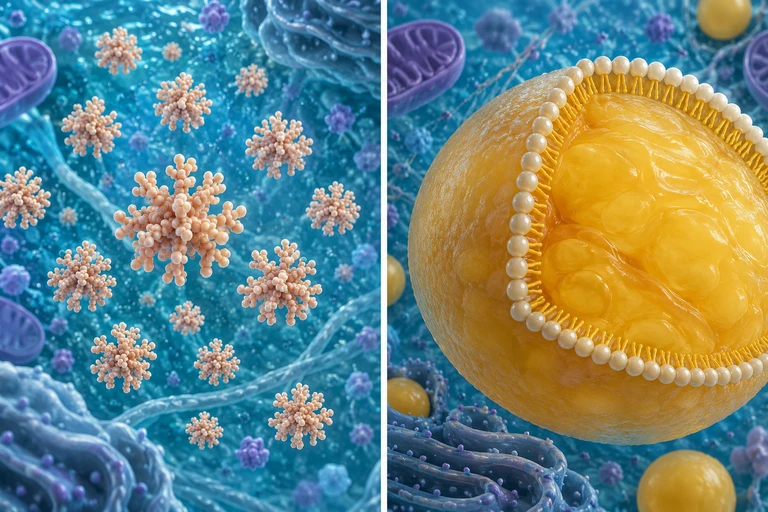 Using approximate nutritional energy densities of 4 and 9 kcal/g, 100 kcal requires 25 g of dry glycogen or 11.1 g of fat. If glycogen carries 2 g of water per gram, its total storage mass is 75 g; hydration varies.
Compare the same energy target
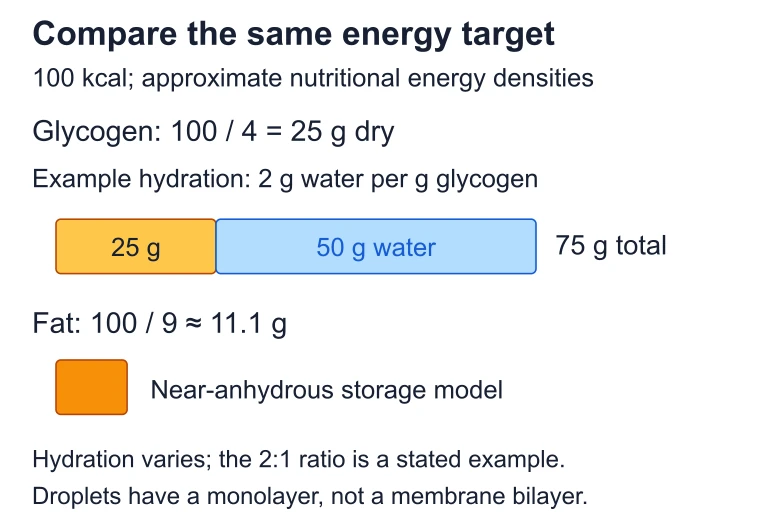 Using approximate nutritional energy densities of 4 and 9 kcal/g, 100 kcal requires 25 g of dry glycogen or 11.1 g of fat. If glycogen carries 2 g of water per gram, its total storage mass is 75 g; hydration varies.
How to Identify a Macromolecule
Example: Identifying Glycogen
A molecule is found to be a highly branched polymer of glucose stored in liver and muscle cells. What type of macromolecule is it?
Example: Why Shape Matters in Proteins
Example: The Phospholipid Bilayer
Common Mistakes to Avoid
Summary: All Four Macromolecules
| Carbs | Lipids | Proteins | Nucleic Acids | |
|---|---|---|---|---|
| Monomer | Monosaccharide | Glycerol + fatty acids | Amino acid | Nucleotide |
| Bond | Glycosidic | Ester | Peptide | Phosphodiester |
| Elements | C, H, O | C, H, O | C, H, O, N, S | C, H, O, N, P |
| Key function | Quick energy | Long-term energy, membranes | Enzymes, structure | Genetic info |
| Example | Starch, Cellulose | Triglycerides | Hemoglobin | DNA, RNA |
Question 1 of 5
Which reaction builds polymers by removing a water molecule?
Question 2 of 5
A molecule contains C, H, O, N, and P. Which macromolecule class does it most likely belong to?
Question 3 of 5
What type of bond links amino acids together in a protein?
Question 4 of 5
Why are lipids not considered true polymers?
Question 5 of 5
An enzyme loses its ability to catalyze a reaction after being exposed to extreme heat. What has occurred?