
SECTION 1
Historical Context & Motivation
The study of how organisms derive energy from food has occupied scientists for centuries, beginning with fundamental questions about the nature of breathing and combustion. Early investigators recognized that animals consumed something in the air and released another substance, but the chemical identity of these gases and the biochemical pathways involved remained unknown for generations. The gradual elucidation of cellular respiration — the catabolic process by which cells oxidize organic molecules to generate ATP — represents one of the most significant achievements in the history of biochemistry, bridging physiology, organic chemistry, and thermodynamics into a unified framework of bioenergetics.
1770s • Lavoisier & Respiration as Combustion
1930s • Glycolysis Elucidated (Embden–Meyerhof–Parnas)
1937 • Krebs Cycle Described
1961 • Mitchell's Chemiosmotic Hypothesis
1994 • ATP Synthase Structure Resolved
The central question that cellular respiration answers is deceptively simple: how do cells convert the potential energy stored in the covalent bonds of organic molecules into a form that can drive endergonic cellular processes? The answer, as we will see, involves a carefully orchestrated series of redox reactions, electron transfers, and proton gradients, culminating in the synthesis of approximately 30–32 ATP per glucose molecule under aerobic conditions.
SECTION 2
Core Principles & Definitions
Cellular respiration is fundamentally an exergonic process that releases free energy (ΔG < 0) by oxidizing glucose and reducing oxygen, coupling this energy release to the endergonic phosphorylation of ADP to ATP. Rather than releasing all the energy at once — which would be thermodynamically wasteful and potentially destructive — cells channel this energy through a series of intermediate carriers and stepwise electron transfers, maximizing the efficiency of ATP production while maintaining cellular homeostasis.
Redox Chemistry Drives Energy Transfer
Substrate-Level vs. Oxidative Phosphorylation
Three Major Stages
Compartmentalization Matters
KEY TAKEAWAY
SECTION 3
Overview of Cellular Respiration Pathway
As the diagram illustrates, the overall process can be summarized by the net equation: C₆H₁₂O₆ + 6O₂ → 6CO₂ + 6H₂O + energy (ATP + heat). However, this equation belies the extraordinary complexity of the underlying mechanism, which involves dozens of enzymes, multiple membrane-embedded protein complexes, and a series of tightly regulated feedback loops. Each stage passes electrons to progressively more electronegative carriers, releasing free energy in controlled increments rather than in a single combustive burst. The final electron acceptor, molecular oxygen, is reduced to water at Complex IV of the electron transport chain — the reason organisms require oxygen for aerobic respiration.
SECTION 4
Detailed Mechanism: Glycolysis, Pyruvate Oxidation & the Citric Acid Cycle
Glycolysis: The Universal Pathway
Glycolysis (from the Greek glykys, sweet, and lysis, splitting) is a ten-step enzymatic pathway that occurs in the cytoplasm of virtually all living cells, reflecting its ancient evolutionary origin. The pathway has two phases: the energy investment phase (steps 1–5), which consumes 2 ATP to phosphorylate glucose and split it into two three-carbon molecules of glyceraldehyde-3-phosphate (G3P), and the energy payoff phase (steps 6–10), which produces 4 ATP and 2 NADH per glucose, for a net yield of 2 ATP and 2 NADH. The key regulatory enzyme is phosphofructokinase (PFK), which catalyzes the committed step (step 3) and is allosterically inhibited by ATP and citrate while being activated by AMP, ensuring that glycolysis accelerates when cellular energy is low.
Pyruvate Oxidation: The Bridge Reaction
Before pyruvate can enter the citric acid cycle, it must be transported into the mitochondrial matrix and converted to acetyl-CoA by the pyruvate dehydrogenase complex, a massive multi-enzyme assembly. This irreversible oxidative decarboxylation removes one carbon as CO₂, reduces NAD⁺ to NADH, and attaches the remaining two-carbon acetyl group to coenzyme A. Since each glucose yields two pyruvates, this step produces 2 NADH and 2 CO₂ per glucose, and it serves as the committed entry point into the mitochondrial stages of respiration.
The Citric Acid Cycle (Krebs Cycle)
The citric acid cycle begins when acetyl-CoA (2C) condenses with oxaloacetate (4C) to form citrate (6C), catalyzed by citrate synthase. Through eight sequential reactions, two carbons are released as CO₂, three NAD⁺ are reduced to NADH, one FAD is reduced to FADH₂, and one GTP (equivalent to ATP) is produced by substrate-level phosphorylation. The cycle regenerates oxaloacetate, allowing continuous operation. Per glucose molecule (two turns of the cycle), the net products are 6 NADH, 2 FADH₂, 2 ATP (via GTP), and 4 CO₂. The cycle is regulated at three key points: citrate synthase, isocitrate dehydrogenase, and α-ketoglutarate dehydrogenase, all of which respond to the cell's ATP/ADP ratio and NADH/NAD⁺ ratio.
OVERALL REACTION OF CELLULAR RESPIRATION
C₆H₁₂O₆ = glucose; O₂ = molecular oxygen (final electron acceptor); CO₂ = carbon dioxide (waste product); H₂O = water (produced at Complex IV); ΔG°' = −686 kcal/mol (−2870 kJ/mol). The actual ATP yield varies by cell type and shuttle mechanism used.
NET GLYCOLYSIS
Pᵢ = inorganic phosphate; net yield accounts for the 2 ATP invested in the energy investment phase. This reaction is exergonic (ΔG°' = −146 kJ/mol).
SECTION 5
Electron Transport Chain & Oxidative Phosphorylation
The electron transport chain (ETC) consists of four large protein complexes (I–IV) and two mobile electron carriers (ubiquinone/coenzyme Q and cytochrome c) embedded in or associated with the inner mitochondrial membrane. As electrons pass from NADH and FADH₂ through these complexes to O₂, the released free energy is used to pump protons (H⁺) from the matrix into the intermembrane space, establishing an electrochemical gradient known as the proton-motive force (Δp). This gradient has two components: a concentration gradient (ΔpH) and an electrical potential (ΔΨ). Protons flow back down this gradient through ATP synthase (Complex V), a rotary enzyme that catalyzes the phosphorylation of ADP to ATP at a rate of approximately 100 ATP molecules per second per synthase complex.
A crucial point for the AP exam is that NADH and FADH₂ contribute different amounts of ATP because they feed electrons into the chain at different points. NADH donates electrons to Complex I, which pumps 4 H⁺, then electrons proceed through the full chain. FADH₂ donates electrons to Complex II (succinate dehydrogenase), which does not pump protons, so electrons bypass one proton-pumping site. Current estimates suggest approximately 2.5 ATP per NADH and 1.5 ATP per FADH₂, though these numbers depend on the P/O ratio, which can vary between tissues and organisms.
| Stage | Location | ATP (per glucose) | NADH produced | FADH₂ produced |
|---|---|---|---|---|
| Glycolysis | Cytoplasm | 2 (substrate-level) | 2 | 0 |
| Pyruvate Oxidation | Mitochondrial matrix | 0 | 2 | 0 |
| Citric Acid Cycle | Mitochondrial matrix | 2 (via GTP) | 6 | 2 |
| Oxidative Phosphorylation | Inner mitochondrial membrane | 26–28 | — | — |
| TOTAL | — | 30–32 | 10 | 2 |
ATP and electron carrier yield per stage of aerobic cellular respiration (per glucose molecule)
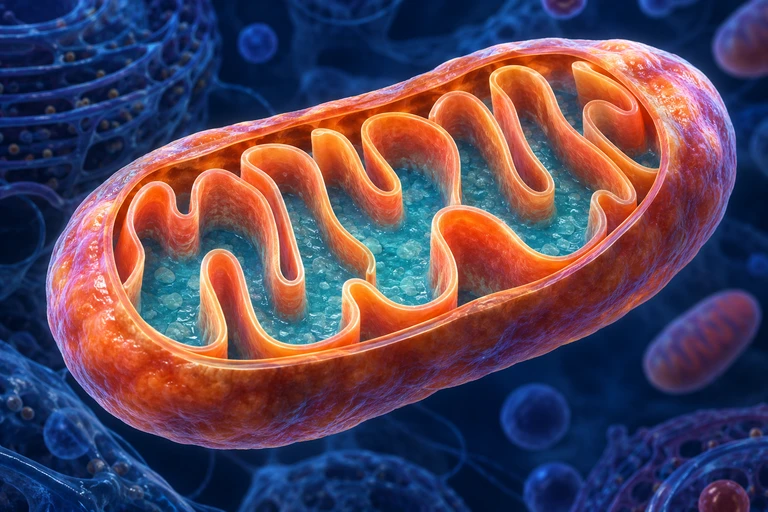 The folded inner mitochondrial membrane separates the matrix from the intermembrane space and provides the surface for oxidative phosphorylation.
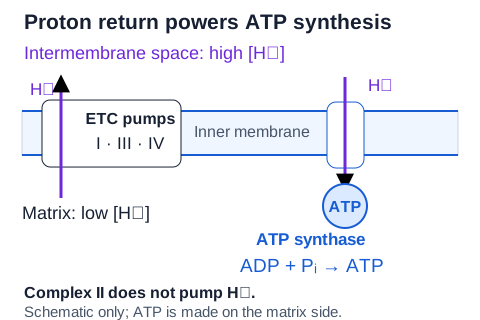 Complexes I, III and IV pump protons from the matrix into the intermembrane space. Proton return through ATP synthase drives ATP production on the matrix side; Complex II does not pump protons.Open full diagram
SECTION 6
Worked Example: Calculating ATP Yield
Calculate the maximum ATP yield from complete aerobic oxidation of one molecule of glucose
- 1
Step 1 — Tally substrate-level phosphorylation
Glycolysis produces a net of 2 ATP, and the citric acid cycle produces 2 GTP (≈ 2 ATP). Together, substrate-level phosphorylation yields 4 ATP per glucose.Substrate-level phosphorylation: 4 ATP - 2
Step 2 — Count NADH molecules produced
Glycolysis: 2 NADH; pyruvate oxidation: 2 NADH; citric acid cycle: 6 NADH. Total: 10 NADH per glucose. Each NADH yields approximately 2.5 ATP via oxidative phosphorylation.10 NADH × 2.5 ATP/NADH = 25 ATP - 3
Step 3 — Count FADH₂ molecules produced
The citric acid cycle produces 2 FADH₂ per glucose. Each FADH₂ yields approximately 1.5 ATP because it enters the ETC at Complex II, bypassing the first proton-pumping site.2 FADH₂ × 1.5 ATP/FADH₂ = 3 ATP - 4
Step 4 — Account for NADH shuttle variability
The 2 NADH from glycolysis are produced in the cytoplasm and cannot directly cross the inner mitochondrial membrane. If shuttled via the malate-aspartate shuttle (liver, heart), they enter as NADH → 2.5 ATP each. If shuttled via the glycerol-3-phosphate shuttle (skeletal muscle, brain), they enter as FADH₂ → 1.5 ATP each. This creates a range of 2 ATP difference.Shuttle-dependent range: 3–5 ATP from cytoplasmic NADH - 5
Step 5 — Sum the total
Substrate-level: 4 ATP + oxidative phosphorylation from 8 mitochondrial NADH: 20 ATP + 2 FADH₂: 3 ATP + 2 cytoplasmic NADH: 3–5 ATP = 30–32 ATP total. The actual yield may be slightly lower in vivo due to proton leakage across the membrane and use of the proton gradient for other transport processes.Maximum ATP yield per glucose: 30–32 ATP
SECTION 7
Aerobic vs. Anaerobic Respiration & Fermentation
When oxygen is unavailable or in limited supply, cells cannot run the electron transport chain, and NADH accumulates. To regenerate NAD⁺ and allow glycolysis to continue, cells employ fermentation pathways. Fermentation does not produce additional ATP beyond the 2 net ATP from glycolysis, but it recycles NAD⁺ so that glycolysis can persist. The two most common forms in eukaryotes are lactic acid fermentation (in animal muscle cells and some bacteria) and alcohol (ethanol) fermentation (in yeast and some plant cells). Some prokaryotes use anaerobic respiration, which employs an electron transport chain but uses an inorganic molecule other than O₂ (such as NO₃⁻ or SO₄²⁻) as the terminal electron acceptor, yielding less ATP than aerobic respiration but more than fermentation.
| Feature | Aerobic Respiration | Fermentation | Anaerobic Respiration |
|---|---|---|---|
| Final electron acceptor | O₂ | Organic molecule (pyruvate or acetaldehyde) | Inorganic ion (NO₃⁻, SO₄²⁻, etc.) |
| ATP yield per glucose | 30–32 | 2 (net, from glycolysis only) | Variable (less than aerobic) |
| ETC present? | Yes | No | Yes |
| Products | CO₂ + H₂O | Lactate or ethanol + CO₂ | Varies (e.g., N₂, H₂S) |
| Organisms | Most eukaryotes, many prokaryotes | Yeast, muscle cells (temporary), some bacteria | Certain archaea and bacteria |
Comparison of aerobic respiration, fermentation, and anaerobic respiration
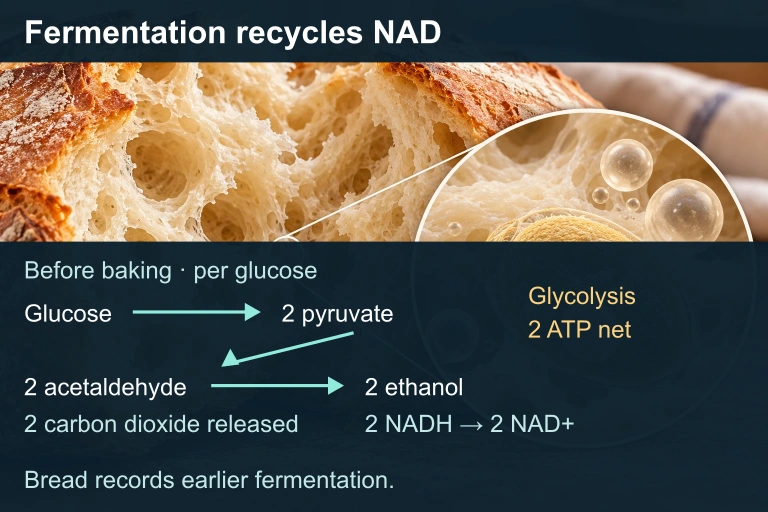 Yeast fermentation in dough releases CO₂ and regenerates NAD⁺ before baking. The baked crumb records earlier gas formation; living or actively fermenting yeast in finished bread is not implied. Net two ATP per glucose arise in glycolysis.
KEY TAKEAWAY
SECTION 8
Metabolic Regulation & Integration with Other Pathways
Cellular respiration does not operate in isolation; it is intricately connected to the catabolism of lipids and proteins, and its rate is tightly regulated by allosteric enzymes that respond to the cell's energetic state. Three key regulatory enzymes act as metabolic checkpoints: hexokinase (step 1 of glycolysis, inhibited by glucose-6-phosphate), phosphofructokinase (the primary regulatory point, inhibited by ATP and citrate, activated by AMP and fructose-2,6-bisphosphate), and pyruvate kinase (inhibited by ATP). In the citric acid cycle, isocitrate dehydrogenase and α-ketoglutarate dehydrogenase are likewise sensitive to the NADH/NAD⁺ ratio and ATP levels, forming a coordinated feedback network that adjusts metabolic flux to cellular demand.
| Feature | Cellular Respiration | Photosynthesis |
|---|---|---|
| Overall process | Catabolic — breaks down glucose | Anabolic — builds glucose from CO₂ |
| Energy transformation | Chemical → chemical (ATP) + heat | Light → chemical (glucose) |
| Reactants | C₆H₁₂O₆ + O₂ | CO₂ + H₂O + light energy |
| Products | CO₂ + H₂O + ATP | C₆H₁₂O₆ + O₂ |
| Organelle | Mitochondria (+ cytoplasm) | Chloroplasts |
| Electron carriers | NADH, FADH₂ | NADPH |
| Chemiosmosis | H⁺ pumped to intermembrane space | H⁺ pumped to thylakoid lumen |
Cellular respiration versus photosynthesis: complementary processes
On the AP Biology exam, expect questions that probe the connections between respiration and other metabolic pathways. Fats are catabolized via β-oxidation to produce acetyl-CoA, which enters the citric acid cycle directly — this is why fats yield more ATP per gram than carbohydrates. Amino acids can be deaminated and their carbon skeletons fed into glycolysis or the citric acid cycle at various entry points. Importantly, these pathways are bidirectional at the level of metabolic intermediates: the citric acid cycle and glycolytic intermediates also serve as biosynthetic precursors for amino acids, fatty acids, and nucleotides, illustrating the concept of metabolic versatility — the same pathways can be catabolic or anabolic depending on the cell's needs.
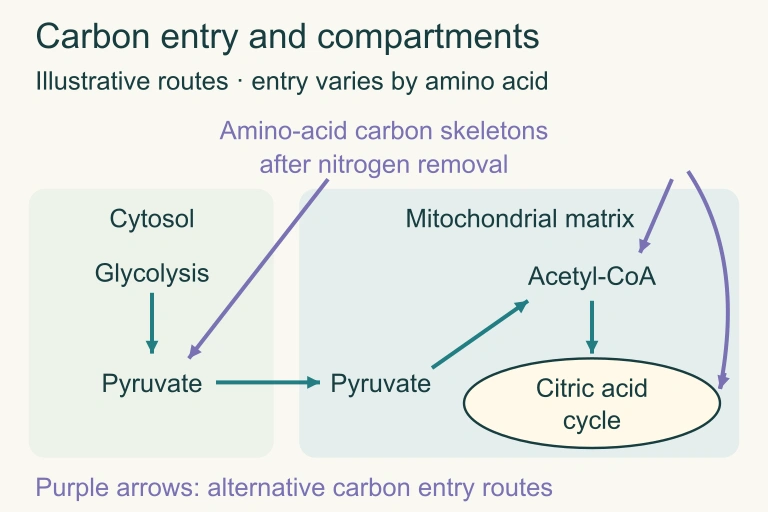 Alternative entry nodes and compartments
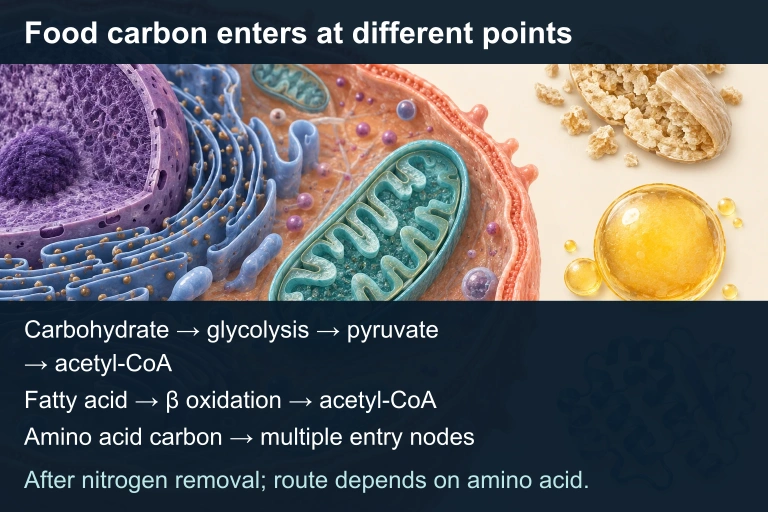 Carbohydrates, fatty acids and amino-acid carbon skeletons enter metabolism at different points. Their diverse structures do not have one universal ATP yield.
AP Exam Tip
SECTION 9
Practice Problems
Question 1: CONCEPTUAL
- A. Glycolysis will immediately stop because it requires ATP from oxidative phosphorylation.
- B. The proton gradient across the inner mitochondrial membrane will dissipate, and ATP synthase will cease producing ATP.
- C. The citric acid cycle will increase its rate to compensate for the reduced electron transport.
- D. FADH₂ will continue to be oxidized at Complex II, maintaining partial ATP production.
Show answer (B)
Question 2: BASIC CALCULATION
- A. 6 ATP
- B. 36 ATP
- C. 90–96 ATP
- D. 120–128 ATP
Show answer (C)
Question 3: INTERMEDIATE
- A. Fermentation generates more ATP per glucose molecule than aerobic respiration during high-demand conditions.
- B. Fermentation regenerates NAD⁺ so that glycolysis can continue to produce ATP in the absence of sufficient O₂.
- C. Lactate is a more efficient energy source than pyruvate and can be directly used by the mitochondria.
- D. Lactic acid fermentation produces CO₂, which stimulates increased breathing rate to bring in more O₂.
Show answer (B)
Question 4: APPLIED
4 ptsShow answer
Question 5: CRITICAL THINKING
4 ptsShow answer
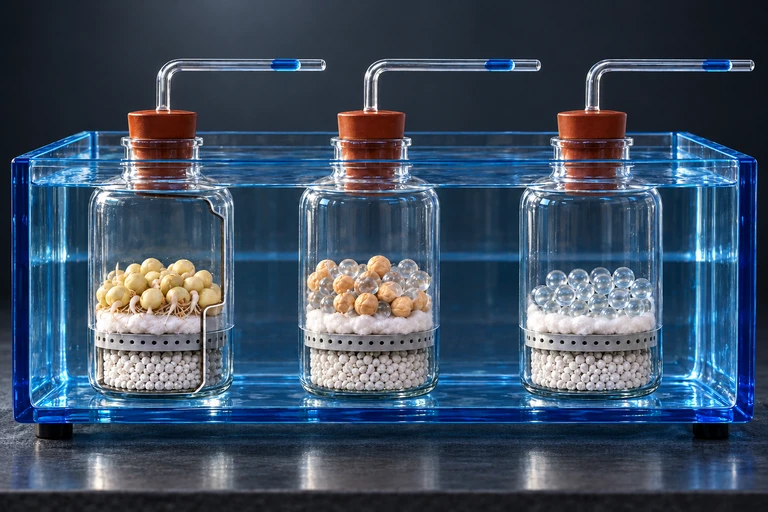 With carbon dioxide absorbed below a separating barrier, oxygen consumption reduces the enclosed gas volume and moves the capillary indicator toward the seeds. Matched chambers share a constant-temperature bath; the bead control measures physical drift.
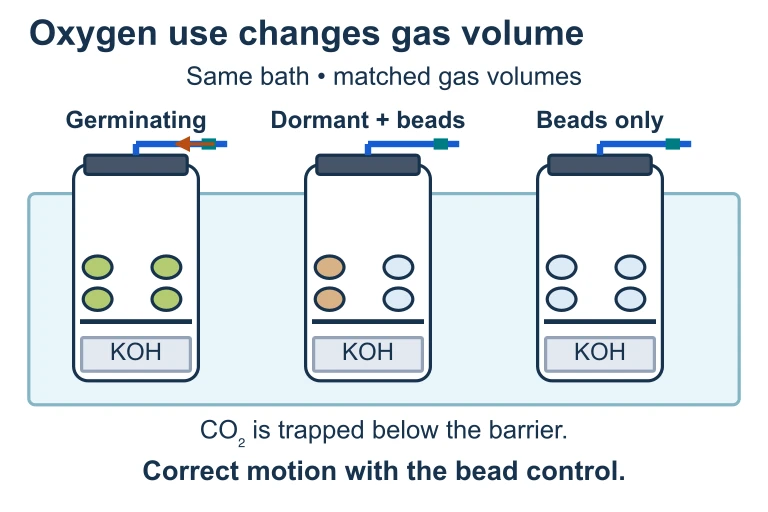 With carbon dioxide absorbed below a separating barrier, oxygen consumption reduces the enclosed gas volume and moves the capillary indicator toward the seeds. Matched chambers share a constant-temperature bath; the bead control measures physical drift.
SUMMARY
Cellular Respiration — Summary
Summary
Cellular respiration is the catabolic process by which cells oxidize glucose (C₆H₁₂O₆) to CO₂ and H₂O, producing 30–32 ATP per glucose under aerobic conditions. The process proceeds through three major stages: glycolysis (cytoplasm; 2 net ATP, 2 NADH), the citric acid cycle (mitochondrial matrix; 2 ATP, 6 NADH, 2 FADH₂), and oxidative phosphorylation (inner mitochondrial membrane; 26–28 ATP). The electron transport chain passes electrons from NADH and FADH₂ through Complexes I–IV to O₂, pumping protons to create the proton-motive force that drives ATP synthase.
When O₂ is absent, cells use fermentation (lactic acid or ethanol) to regenerate NAD⁺ and sustain glycolysis, yielding only 2 ATP per glucose. Key regulatory enzymes — especially phosphofructokinase — respond to ATP/ADP and NADH/NAD⁺ ratios, ensuring metabolic flux matches cellular energy demand. Cellular respiration is complementary to photosynthesis: both use chemiosmosis and electron transport chains, but one is catabolic (releasing energy) while the other is anabolic (storing energy). Understanding these interconnected processes is essential for interpreting experimental data on metabolic rates, the effects of inhibitors and uncouplers, and the evolution of bioenergetic systems.