
Section 1
Historical Context & Motivation
The idea that certain mathematical operations can be "reversed" is as old as arithmetic itself. When a child learns that adding 5 to a number can be undone by subtracting 5, they have encountered the concept of an inverse operation. The formalization of this idea into the language of functions, however, required centuries of mathematical development and several key breakthroughs in how mathematicians think about mappings between sets of numbers.
Understanding the history of inverse functions shows us why verification by composition became the gold standard for confirming that two functions truly reverse each other. It is not merely a classroom exercise — it is a foundational technique that underpins calculus, cryptography, and modern data science.
~1600s • Early Function Concept
1748 • Euler's Introductio
1837 • Dirichlet's Definition
20th Century • Set Theory & Formalization
Today • Algebra 2 & Beyond
The central question that this lesson addresses is deceptively simple: Given two functions f and g, how can we prove — with absolute certainty — that g is the inverse of f? Guessing, graphing, or checking a few points is never enough. The answer lies in function composition, a technique that tests every possible input simultaneously.
Section 2
Core Principles & Definitions
Before we can verify that two functions are inverses, we need to understand four foundational ideas. Each builds on the previous one, creating a logical chain from the concept of a function all the way to the composition test.
One-to-One Functions
Inverse Function f⁻¹
Function Composition
The Identity Function
Key Takeaway
Section 3
Visual Explanation
The best way to understand inverse verification is to see it as a "round-trip" journey. A value enters function f, gets transformed, then enters f⁻¹, and must arrive back at the starting point. The diagram below illustrates this round-trip for a specific pair of inverse functions: f(x) = 2x + 3 and f⁻¹(x) = (x − 3)/2.
Notice that the diagram tests two specific inputs (x = 7 and x = 4) as illustrations, but the algebraic verification we perform in Section 4 will prove the result for all values of x simultaneously. This is the power of composition: rather than checking infinitely many individual numbers, we substitute the entire expression for one function into the other and simplify. If the algebra reduces to just "x," the proof is complete.
Also observe that both directions matter. It is theoretically possible for f(g(x)) to equal x while g(f(x)) does not, particularly when domains are restricted. A rigorous verification always checks both f(g(x)) = x and g(f(x)) = x.
Section 4
Mathematical Framework
The formal definition of inverse functions can be stated entirely in terms of composition. This section presents the key equations and then walks through the algebraic technique step by step.
Definition of Inverse Functions
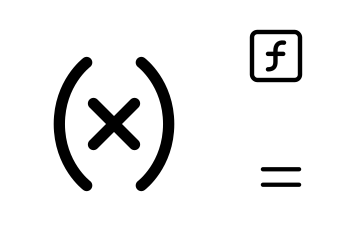
Two functions f and g are inverses of each other if and only if f(g(x)) = x for all x in the domain of g, and g(f(x)) = x for all x in the domain of f.
In shorthand notation using the composition symbol ∘, this becomes:
Composition Notation
Read "f composed with f⁻¹ of x" and "f⁻¹ composed with f of x." Both must equal the identity function I(x) = x.
The algebraic procedure for verification follows a clear pattern. Given two functions f(x) and g(x) that you suspect are inverses:
Step-by-Step Verification Method
Let us apply this to a concrete pair. Consider f(x) = 3x − 5 and g(x) = (x + 5)/3.
Direction 1: f(g(x))
Direction 2: g(f(x))
Since both compositions simplify to x, we have conclusively verified that f and g are inverse functions. The beauty of this method is its generality: no matter how complex the functions are — involving radicals, fractions, or higher-degree expressions — the same two-direction composition test applies.
Section 5
Detailed Breakdown & Classification
Different families of functions require different algebraic strategies when verifying inverses by composition. The table below catalogs the most common function types encountered in Algebra 2, along with the typical inverse form and the key algebraic move needed during simplification.
| Function Type | Example f(x) | Inverse f⁻¹(x) | Key Simplification Step |
|---|---|---|---|
| Linear | f(x) = mx + b | f⁻¹(x) = (x − b)/m | Cancel m by division; cancel b by subtraction |
| Rational Linear | f(x) = (ax + b)/(cx + d) | f⁻¹(x) = (dx − b)/(−cx + a) | Cross-multiply, combine like terms, factor out x |
| Cubic / Cube Root | f(x) = x³ + k | f⁻¹(x) = ∛(x − k) | Cube and cube root cancel: (∛u)³ = u |
| Square Root (restricted) | f(x) = √(x − h), x ≥ h | f⁻¹(x) = x² + h, x ≥ 0 | Square and square root cancel with domain restriction |
| Exponential / Logarithmic | f(x) = aˣ | f⁻¹(x) = log_a(x) | Use alog_a(x) = x and log_a(aˣ) = x |
The second major visual below shows how inverse functions relate graphically. Every pair of inverse functions exhibits a beautiful symmetry: their graphs are mirror images across the line y = x. This geometric property is a direct consequence of the composition identity — if f(a) = b, then f⁻¹(b) = a, meaning the points (a, b) and (b, a) are swapped.
The graphical reflection property provides a useful visual check, but it is not a proof. Two curves might appear symmetric without actually being perfect inverses (especially with limited graphing resolution). The algebraic composition test remains the only rigorous verification method.
Section 6
Worked Example
Let us verify that f(x) = ∛(x − 4) and g(x) = x³ + 4 are inverse functions by performing both directions of composition.
Verifying f(x) = ∛(x − 4) and g(x) = x³ + 4
- 1
Step 1 — Set Up Direction 1: f(g(x))
We need to substitute g(x) = x³ + 4 into every occurrence of x in f(x) = ∛(x − 4).f(g(x)) = f(x³ + 4) = ∛((x³ + 4) − 4) - 2
Step 2 — Simplify Direction 1
Inside the cube root, the +4 and −4 cancel:= ∛(x³ + 4 − 4) = ∛(x³)Since the cube root and the cube are inverse operations, ∛(x³) = x for all real numbers:= x ✓ - 3
Step 3 — Set Up Direction 2: g(f(x))
Now substitute f(x) = ∛(x − 4) into every occurrence of x in g(x) = x³ + 4.g(f(x)) = g(∛(x − 4)) = (∛(x − 4))³ + 4 - 4
Step 4 — Simplify Direction 2
Cubing a cube root yields the original radicand:= (x − 4) + 4 = x − 4 + 4= x ✓ - 5
Step 5 — Conclusion
Both f(g(x)) = x and g(f(x)) = x. Therefore, f(x) = ∛(x − 4) and g(x) = x³ + 4 are verified inverse functions. Notice how the cube root and cube operations cancel each other, while the constants +4 and −4 cancel as well — a hallmark of linear transformations within inverse pairs.
Section 7
Strengths, Limitations & Common Pitfalls
The composition method is the most powerful tool in your Algebra 2 toolkit for verifying inverses, but like any technique, it has both strengths and limitations that you should understand.
| Strengths | Limitations & Pitfalls |
|---|---|
| Definitive proof: If both compositions equal x, the functions are provably inverses — no ambiguity. | One direction isn't enough: Students often check only f(g(x)) and skip g(f(x)). Both are required for a complete proof. |
| Works for all function types: Linear, rational, radical, exponential, logarithmic — the same method applies. | Domain restrictions: For functions like f(x) = x², the inverse only exists on a restricted domain (x ≥ 0). Composition may "work" algebraically but fail outside the valid domain. |
| Catches errors in inverse-finding: If you derived a candidate inverse and the composition doesn't simplify to x, you know there's an algebra mistake. | Complex algebra: For rational functions with multiple terms, the simplification can be lengthy and error-prone. |
| No graphing tools needed: Pure algebraic method that works on paper. | Confusing notation: Students sometimes compute f(x) × g(x) (multiplication) instead of f(g(x)) (composition). |
| Builds algebraic fluency: The substitution and simplification practice strengthens core skills. | f⁻¹ ≠ 1/f: The notation f⁻¹(x) does not mean the reciprocal 1/f(x). This is the single most common misconception. |
Key Takeaway
Section 8
Connection to Advanced Theory
The concept of verifying inverses by composition is not confined to Algebra 2 — it extends into nearly every branch of higher mathematics. Understanding this connection now will give you a significant head start when you encounter more abstract formulations later in your studies.
| Concept | Algebra 2 Version | Advanced Version |
|---|---|---|
| Inverse element | f⁻¹ is the function that undoes f | In group theory, every element g has an inverse g⁻¹ such that g · g⁻¹ = e (the identity element) |
| Identity | I(x) = x, the identity function | The identity matrix I in linear algebra: A × A⁻¹ = I |
| Composition test | f(f⁻¹(x)) = x and f⁻¹(f(x)) = x | Matrix inverse: verify A × B = I and B × A = I where B = A⁻¹ |
| One-to-one requirement | Horizontal line test; restrict domain if needed | A matrix must have nonzero determinant (be "non-singular") to have an inverse |
| Application | Solving equations, undoing transformations | Cryptography (RSA encryption), solving systems of equations, computer graphics transformations |
In calculus, the inverse function theorem provides conditions under which a differentiable function has a differentiable inverse, and it uses the composition identity f(f⁻¹(x)) = x to derive the formula for the derivative of the inverse: (f⁻¹)′(x) = 1 / f′(f⁻¹(x)). This powerful result depends entirely on the same composition relationship you are learning now.
In linear algebra, finding the inverse of a matrix and verifying it through multiplication (the matrix analogue of function composition) is one of the most fundamental operations. The verification A × A⁻¹ = I is structurally identical to f(f⁻¹(x)) = x — the same principle, expressed in a different mathematical language.
Mastering the composition verification technique in Algebra 2 therefore gives you a conceptual framework that transfers directly into calculus, linear algebra, abstract algebra, and applied fields like data science and cryptography.
Section 9
Practice Problems
Work through these five problems in order. Each builds on the skills practiced in the previous one. Try to solve each completely before revealing the answer.
Question 1: Problem 1 — Conceptual
Show answer
Question 2: Problem 2 — Basic Verification
Show answer
Question 3: Problem 3 — Intermediate
Show answer
Question 4: Problem 4 — Applied / Multi-Step
Show answer
Question 5: Problem 5 — Critical Thinking
Show answer
Summary
Lesson Summary
Summary
Verifying inverse functions by composition is the definitive algebraic technique for proving that two functions perfectly undo each other. The method rests on four core ideas: a function must be one-to-one to have an inverse; the inverse function f⁻¹ reverses every input-output pair of f; composition f(g(x)) means substituting one function's entire expression into the other; and the identity function I(x) = x is the benchmark result that confirms cancellation. The verification requires checking both directions — f(f⁻¹(x)) = x and f⁻¹(f(x)) = x — because either direction can fail independently, especially when domain restrictions are involved.
The technique applies uniformly across linear, rational, radical, and exponential/logarithmic function families. Graphically, inverse functions are reflections across the line y = x, but this visual check is never a substitute for algebraic proof. The composition method you have learned here is structurally identical to the matrix inverse verification in linear algebra (A × A⁻¹ = I), the group inverse in abstract algebra, and the foundation of the inverse function theorem in calculus — making it one of the most transferable concepts in all of mathematics.