
SECTION 1
Historical Context & Motivation
Long before anyone wrote equations with an x in them, ancient civilizations needed to solve problems that we now recognize as quadratic. Babylonian scribes, Egyptian engineers, and Greek geometers all wrestled with questions like: "What length and width give a rectangle with a fixed perimeter and a known area?" The technique they developed—completing the square—is one of the oldest algebraic methods still taught today, and it remains the foundation from which the quadratic formula is derived.
~1800 BCE • Babylonian Clay Tablets
~300 BCE • Euclid's Elements
~825 CE • Al-Khwarizmi's Algebra
1637 • Descartes & Symbolic Algebra
Today • CCSS A-REI.4.a
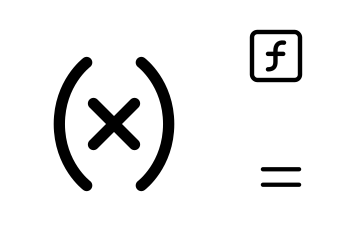
So here is the central question this lesson answers: given a general quadratic equation like 2x² + 12x + 7 = 0, how do we systematically rewrite it in the form (x − p)² = q so that we can solve for x by simply taking a square root? And once we master that process for any specific equation, how does repeating it with letters instead of numbers give us the quadratic formula itself?
SECTION 2
Core Principles & Definitions
Before diving into the procedure, you need a solid grasp of a few foundational ideas. Each one builds on what you already know from Algebra 1, so think of this section as connecting familiar concepts in a new way.
Perfect Square Trinomial
Standard Form vs. Vertex Form
The "Half-and-Square" Rule
Leading Coefficient Must Be 1
Same Solutions Guarantee
KEY TAKEAWAY
SECTION 3
Visual Explanation — The Geometry of Completing the Square
The name "completing the square" is not a metaphor—it literally comes from geometry. Consider the expression x² + 6x. Geometrically, x² is a square with side length x, and 6x is a rectangle with sides x and 6. If you split that rectangle into two strips of width 3 and attach them to two sides of the square, you almost form a bigger square with side length (x + 3). The only missing piece is a tiny 3 × 3 square in the corner—that's the 9 you add to complete it.
This geometric picture makes the algebra feel natural. Whenever you see x² + bx, imagine an x-by-x square with a rectangle of area bx attached to it. Split that rectangle in half, rearrange the two strips, and you will always need a square of area (b/2)² to fill the gap. That is the number you add to both sides of the equation.
SECTION 4
Mathematical Framework — The Procedure Step by Step
Now let's formalize the technique. Suppose you have a general quadratic equation in standard form. The goal is to rewrite it so one side is a perfect square.
STANDARD FORM
where a, b, and c are real numbers with a ≠ 0.
The Completing-the-Square Algorithm
- Step 1 — Isolate the variable terms. Move the constant to the other side: ax² + bx = −c.
- Step 2 — Make the leading coefficient 1. Divide every term by a: x² + (b/a)x = −c/a.
- Step 3 — Compute (half the linear coefficient)². That's (b/(2a))² = b²/(4a²).
- Step 4 — Add that value to BOTH sides. x² + (b/a)x + b²/(4a²) = −c/a + b²/(4a²).
- Step 5 — Factor the left side. It's now (x + b/(2a))².
- Step 6 — Simplify the right side and solve. Combine fractions, then take the square root of both sides (remembering ±).
TARGET FORM
where p = −b/(2a) and q = (b² − 4ac)/(4a²). The solutions are x = p ± √q.
Deriving the Quadratic Formula
If you carry out the six steps above on the general equation ax² + bx + c = 0 without substituting specific numbers, you derive the quadratic formula. After completing the square, you reach (x + b/(2a))² = (b² − 4ac)/(4a²). Taking the square root of both sides gives x + b/(2a) = ±√(b² − 4ac)/(2a). Subtracting b/(2a) from both sides yields the formula below.
QUADRATIC FORMULA
The expression under the radical, b² − 4ac, is called the discriminant. It determines whether the solutions are real or complex.
Why This Derivation Matters
SECTION 5
Detailed Breakdown — Completing the Square with Specific Numbers
Let's trace through two concrete examples side by side so you can see how the algorithm adapts. The first example has a leading coefficient of 1 (the simpler case), and the second has a leading coefficient other than 1. Pay attention to how each step maps to the general procedure from Section 4.
A few things to notice in both examples. First, the value you add to both sides is always the square of half the coefficient of x after the leading coefficient has been made 1. Second, the sign inside the squared binomial matches the sign of the linear term: +8x gives (x + 4), and +6x gives (x + 3). Third, the ± symbol in the final step is essential—without it, you would only find one of the two solutions.
Common Pitfall
SECTION 6
Worked Example — From Standard Form to Solutions
Let's work through one more example from start to finish with full detail. We will solve 3x² − 18x + 10 = 0 by completing the square.
Solve 3x² − 18x + 10 = 0 by Completing the Square
- 1
Step 1 — Move the Constant to the Right Side
Subtract 10 from both sides to isolate the variable terms on the left.3x² − 18x = −10 - 2
Step 2 — Divide Every Term by the Leading Coefficient
The leading coefficient is 3. Divide all terms by 3 so that x² has a coefficient of 1.x² − 6x = −10/3 - 3
Step 3 — Compute (Half the Linear Coefficient)²
The linear coefficient is −6. Half of −6 is −3. Squaring −3 gives 9. This is the value we need to add.(−6/2)² = (−3)² = 9 - 4
Step 4 — Add 9 to Both Sides
Adding 9 to the left side completes the perfect square trinomial. Adding 9 to the right side keeps the equation balanced.x² − 6x + 9 = −10/3 + 9 = −10/3 + 27/3 = 17/3 - 5
Step 5 — Factor the Left Side as a Perfect Square
x² − 6x + 9 is the expansion of (x − 3)². Rewrite the left side in factored form.(x − 3)² = 17/3 - 6
Step 6 — Take the Square Root of Both Sides and Solve
Apply the square root property, remembering the ± sign. Then isolate x by adding 3 to both sides. The exact solutions are below, and you can rationalize the denominator if desired: √(17/3) = √51/3.x = 3 ± √(17/3) or equivalently x = 3 ± √51/3 (approximately x ≈ 5.38 or x ≈ 0.62)
Verification Tip
SECTION 7
Comparing Solving Methods — Strengths & Limitations
Completing the square is one of several strategies for solving quadratic equations. Understanding when each method shines—and where it struggles—will help you choose the most efficient approach for any given problem.
| Method | Best Used When… | Limitations |
|---|---|---|
| Factoring | Coefficients are small integers and the trinomial factors easily (e.g., x² + 5x + 6). | Many quadratics don't factor over the integers. Doesn't help when solutions are irrational or complex. |
| Completing the Square | You need exact solutions, want to convert to vertex form, or are deriving the quadratic formula. Works on every quadratic. | Can be tedious with messy fractions when a, b, or c are large or non-integer. Requires careful arithmetic. |
| Quadratic Formula | A reliable "catch-all" that works for every quadratic. Great when factoring is hard or impossible. | Requires memorizing the formula. Gives less geometric insight than completing the square. Easy to make sign errors. |
| Graphing | You need approximate solutions or a visual overview of the parabola's behavior (vertex, axis of symmetry). | Gives only approximate solutions (depends on graph precision). Cannot reveal exact irrational or complex roots. |
Comparison of quadratic solving methods
KEY TAKEAWAY
SECTION 8
Connection to Advanced Theory — The Discriminant & Complex Numbers
Completing the square does more than solve specific equations—it opens the door to deeper ideas you will encounter later in Algebra 2 and precalculus. The most important of these is the discriminant, the expression b² − 4ac that appears under the radical in the quadratic formula. Because the quadratic formula is derived from completing the square, understanding the square-completion process helps you see why the discriminant controls the nature of solutions.
| Discriminant Value | What It Means for (x − p)² = q | Number & Type of Solutions |
|---|---|---|
| b² − 4ac > 0 | q is positive, so √q is a real number. | Two distinct real solutions |
| b² − 4ac = 0 | q = 0, so (x − p)² = 0 ⟹ x = p. | One repeated real solution (double root) |
| b² − 4ac < 0 | q is negative, so √q involves i = √(−1). | Two complex (non-real) solutions |
The discriminant determines solution type
Looking ahead, completing the square also appears when you study conic sections (circles, ellipses, parabolas, hyperbolas) in Algebra 2 and precalculus, because the equations of these curves involve squared terms that need to be rewritten in standard form. In calculus, completing the square is used to simplify certain integrals. The technique you are learning right now will keep paying dividends throughout your mathematical career.
SECTION 9
Practice Problems
Test your understanding with the following five problems, arranged from conceptual to challenging. Try each one on your own before reading the answer.
Question 1: CONCEPTUAL
Show answer
Question 2: BASIC CALCULATION
Show answer
Question 3: INTERMEDIATE
Show answer
Question 4: APPLIED
Show answer
Question 5: CRITICAL THINKING
Show answer
SUMMARY
Lesson Summary
Summary
Completing the square is an algebraic technique that transforms any quadratic equation in standard form (ax² + bx + c = 0) into the equivalent (x − p)² = q form, which can be solved by taking a square root. The six-step process begins by isolating the variable terms, making the leading coefficient 1, then applying the half-and-square rule to create a perfect square trinomial on one side of the equation. Geometrically, you are literally completing a square shape by adding the missing corner piece.
When the same process is carried out on the general equation ax² + bx + c = 0 using letters, it produces the quadratic formula: x = (−b ± √(b² − 4ac)) / (2a). The expression b² − 4ac, called the discriminant, tells you whether solutions are real or complex. Completing the square is not just one method among many—it is the foundational method from which the quadratic formula is derived, and it appears again in conic sections, calculus, and beyond.